
El Niño winter could bring heavy rain and flooding
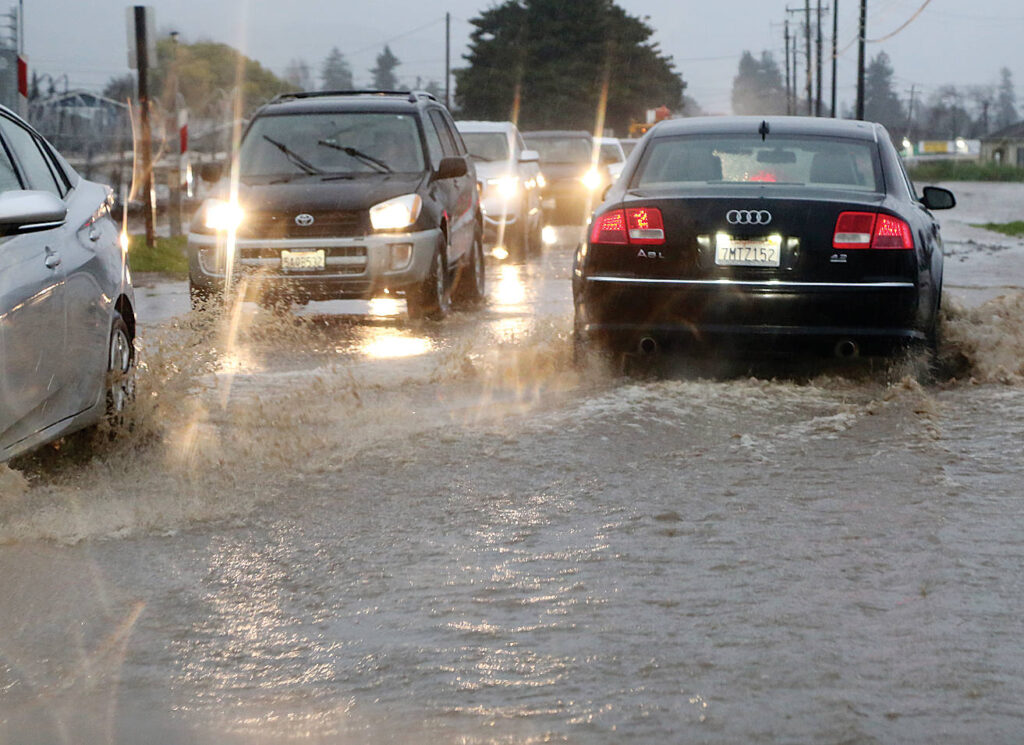
Meteorologists are predicting a wet El Niño winter this year, with above-normal ocean temperatures potentially bringing heavy rain and flooding.
“We are in a very strong El Niño index right now where we are seeing above-normal temperatures along the coast,” said National Weather Service meteorologist Anamaria Navarrete.
Robert Lund, a statistical climatologist at UC Santa Cruz, told KSBW that “we are probably looking at the strongest El Niño in our recorded lifetime.”
Navarrete said the warming conditions can contribute to elevated sea levels.
“With warmer waters, swells from distant hurricanes in combination with possible winter atmospheric rivers, we could face major consequences,” she said. “This could also bring on astronomical tide activities, major beach erosion and damage to area harbors. We can’t say for sure, but it is something we are keeping an eye on.”
Navarrete added that National Weather Service forecasters are projecting above-average precipitation, with a chance of wetter-than-normal conditions.
She advised the public to stay aware of changing weather conditions, especially during severe weather, by visiting weather.gov/bayarea.
People in low-lying areas should remain especially aware, Navarrete added.
The public can also get valuable alerts and information by signing up to CRUZ AWARE at CruzAware.org.
Grizzlies suffer first loss of the season | Girls flag football
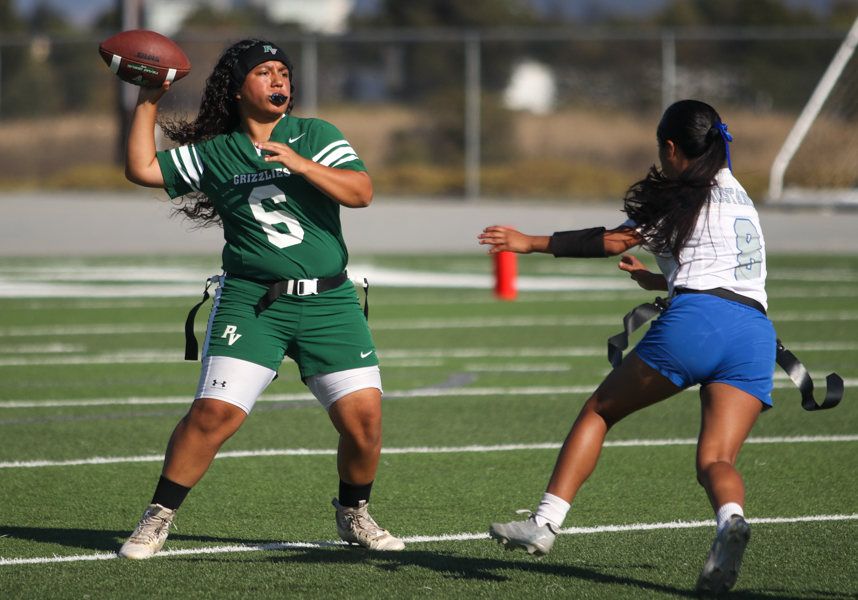
The Pajaro Valley High girls flag football team was confidently aiming to close out this week with a couple of short-term goals in mind: keep their perfect record intact and push further ahead in the league standings.
But, the Grizzlies were served a sliver of humble pie following a 26-12 defeat to King City High in Pacific Coast Athletic League Mission Division action Wednesday afternoon.
“I got to give it to them, they were tough,” PV head coach Cesar Rojas said. “Really, really good team.”
With the loss, PV dropped to a 4-1 overall record. They are now tied with King City and Watsonville with a 2-1 record in Mission Division play.
The Grizzlies were coming off a pair of victories against Watsonville and Alvarez high schools on Monday and Tuesday, respectively, giving them all the confidence required to take on the Mustangs.
“I think we got too confident after beating the cross-town rivals,” said Rojas about the win over Watsonville, which defeated King City on Sept. 8. “King City came, put up a show. They did their thing.”
PV junior Denise Magallon was visibly upset after Wednesday’s game, mostly because she felt they didn’t play to their full potential like they usually do.
“I thought that we had it,” Magallon said. “But I guess we got in our heads too much. I don’t understand why, but we got in our heads too much, and that kind of messes up real bad.”
Magallon gave credit to King City for the way they took care of business, but she thinks a lack of communication and execution played a big part in their first loss of the season.
“They were doing really good passes in the middle, and once again, I think we messed up on that because we’ve had conversations about focusing on the middle,” Magallon said. “We struggled with that a few games ago, and we thought we had it again, but I guess not.”
The Grizzlies began the 2026 fall campaign with a four-game win streak. However, Rojas echoed his star player by saying they continue to fail to communicate with each other, and it showed during Wednesday’s game.
It began in the first quarter with a pair of interceptions thrown by junior quarterback Aaliyah Suarez. One of those turnovers resulted in a touchdown for King City.
PV’s defense also allowed a touchdown just before going into halftime, allowing the Mustangs to push ahead at 19-6 at the break.
Some players looked confused and Rojas attempted to calm them down, yet at times it almost seemed impossible for him.
“They need to understand our formations,” Rojas said. “They need to understand our style of play, and it’s important to work with them. That’s gonna build our program in the long run.”
With youth comes inexperience. Still, Rojas is confident this particular group will learn from their mistakes after a tough loss.
The Grizzlies have key returning players in seniors Jezlynn Calderon, Perla Rivera and Analia Vazquez, along with juniors Nadia Renteria, Xitlali Pozos and Elizabeth Zamora.
Magallon said having a good core of players coming back from last year is great because they have a familiarity. But it’s also great to have new players coming in and helping out in any way possible.
“I think we just gotta work on them more and help them out to help us out,” Magallon said.
The underclassmen include sophomores Sofia Arenas and Khloe Cisneros, along with five new freshmen: Maya Cigala, Damaris Cortez, Aryana Gonzalez, Amarely Magdeleno and Mariyah Vazquez.
“We are a small roster, but I think it’s full of potential,” Rojas said.
The season is still young. Rojas emphasized, though, that he needs to include more team bonding, which he admits they haven’t done much of this year.
PV’s third-year head coach believes doing out-of-school activities that includes the parents and guardians is what keeps teams together.
“I think we gotta get back to it,” Rojas said. “Take the girls to the beach, they love going to the beach. I think we were working way too hard in our practices.”
In 2025, they were in a similar situation after losing to Pacific Collegiate School and North Monterey County High early in the campaign.
The Grizzlies turned it around by winning the final 10 games of the regular season en route to the program’s first-ever PCAL Mission Division title.
They intend to defend the Mission Division crown as King City, Watsonville, PCS, Soledad High and North Salinas High look to dethrone them.
“We still have a big chance,” Rojas said. “It’s there for everybody.”
Next up, Pajaro Valley (4-1, 2-1) plays at Soledad (4-2, 1-1) in Mission Division play Sept. 22 at 5:45pm.
#tdi_1 .td-doubleSlider-2 .td-item1 { background: url(https://pajaronian.com/wp-content/uploads/2026/09/PAJ2638-PV-girls-flag-football-update-WEB-1-80x60.jpg) 0 0 no-repeat; } #tdi_1 .td-doubleSlider-2 .td-item2 { background: url(https://pajaronian.com/wp-content/uploads/2026/09/PAJ2638-PV-girls-flag-football-update-WEB-2-80x60.jpg) 0 0 no-repeat; } #tdi_1 .td-doubleSlider-2 .td-item3 { background: url(https://pajaronian.com/wp-content/uploads/2026/09/PAJ2638-PV-girls-flag-football-update-WEB-3-80x60.jpg) 0 0 no-repeat; } #tdi_1 .td-doubleSlider-2 .td-item4 { background: url(https://pajaronian.com/wp-content/uploads/2026/09/PAJ2638-PV-girls-flag-football-update-WEB-4-80x60.jpg) 0 0 no-repeat; } #tdi_1 .td-doubleSlider-2 .td-item5 { background: url(https://pajaronian.com/wp-content/uploads/2026/09/PAJ2638-PV-girls-flag-football-update-WEB-5-80x60.jpg) 0 0 no-repeat; } #tdi_1 .td-doubleSlider-2 .td-item6 { background: url(https://pajaronian.com/wp-content/uploads/2026/09/PAJ2638-PV-girls-flag-football-update-WEB-6-80x60.jpg) 0 0 no-repeat; } #tdi_1 .td-doubleSlider-2 .td-item7 { background: url(https://pajaronian.com/wp-content/uploads/2026/09/KCR2639-KC-girls-flag-football-update-WEB-1-80x60.jpg) 0 0 no-repeat; } #tdi_1 .td-doubleSlider-2 .td-item8 { background: url(https://pajaronian.com/wp-content/uploads/2026/09/KCR2639-KC-girls-flag-football-update-WEB-2-80x60.jpg) 0 0 no-repeat; } #tdi_1 .td-doubleSlider-2 .td-item9 { background: url(https://pajaronian.com/wp-content/uploads/2026/09/KCR2639-KC-girls-flag-football-update-WEB-3-80x60.jpg) 0 0 no-repeat; } #tdi_1 .td-doubleSlider-2 .td-item10 { background: url(https://pajaronian.com/wp-content/uploads/2026/09/KCR2639-KC-girls-flag-football-update-WEB-4-80x60.jpg) 0 0 no-repeat; } 1 of 10
Pajaro Valley High junior quarterback Aaliyah Suarez has been under center for the Grizzly girls flag football team this fall campaign. (Juan Reyes/The Pajaronian)
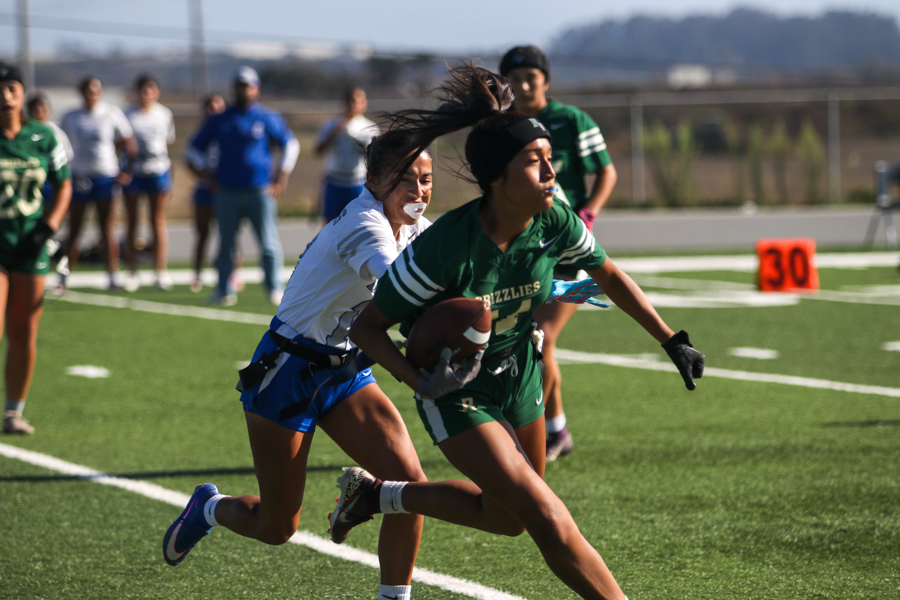 Pajaro Valley High junior Denise Magallon is one of several key returning players for the Grizzly girls flag football team this fall campaign. (Juan Reyes/The Pajaronian)
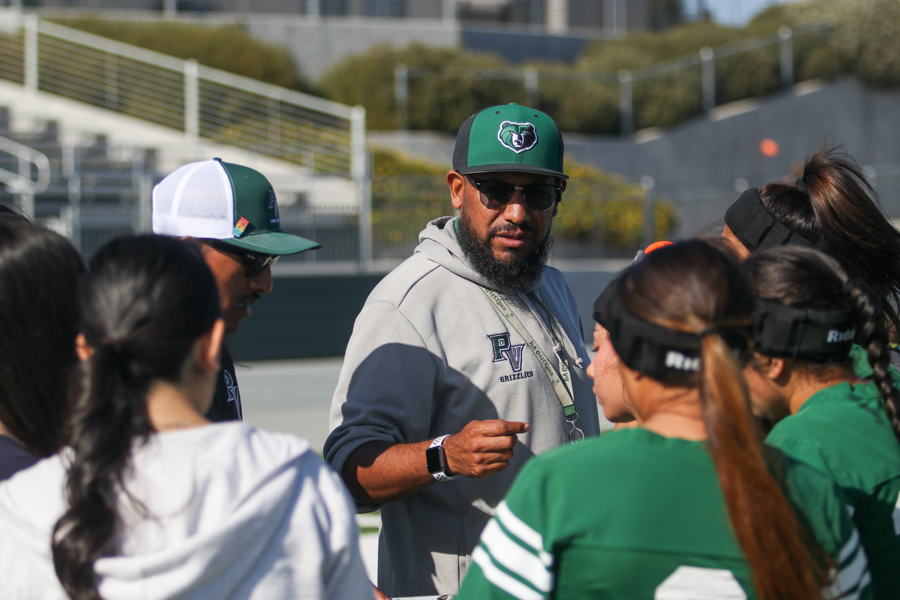 Pajaro Valley High girls flag football head coach Cesar Rojas enters his third season with the progam. (Juan Reyes/The Pajaronian)
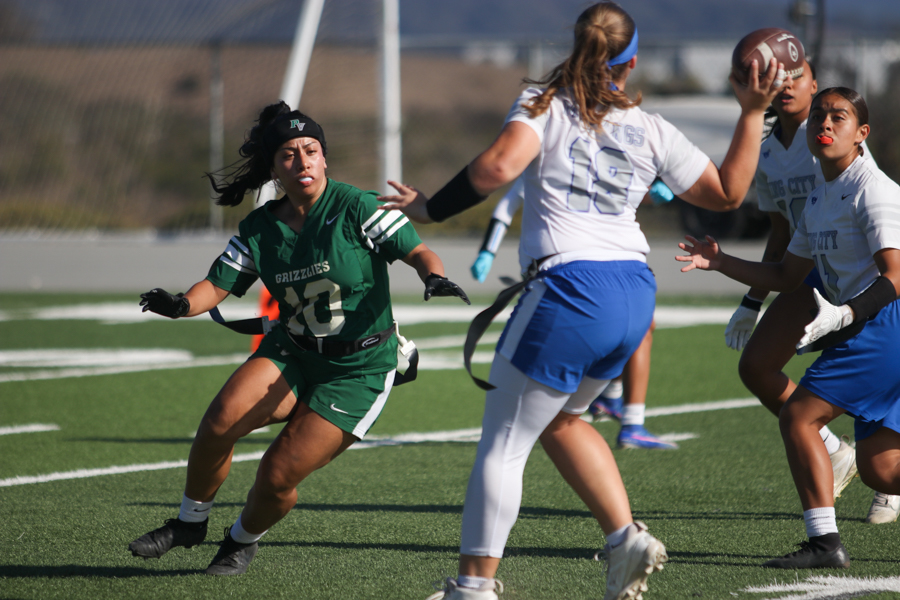 Pajaro Valley High senior Perla Rivera, No. 10, is a speedy defensive rusher for the Grizzly girls flag football team this fall campaign. (Juan Reyes/The Pajaronian)
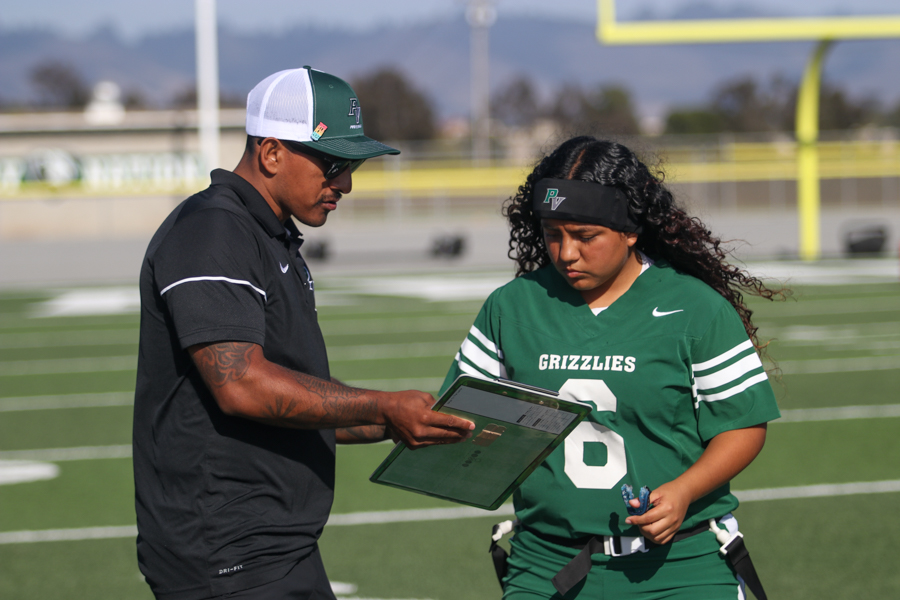 Pajaro Valley High junior quarterback Aaliyah Suarez, right, checks in with assistant head coach Jordan Ruiz during a game against King City High on Sept. 15. (Juan Reyes/The Pajaronian)
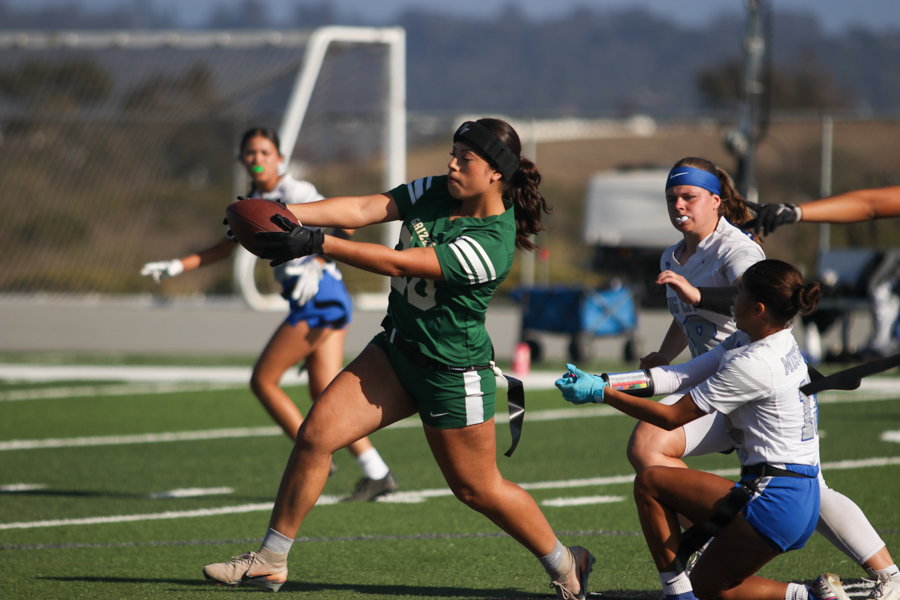 Pajaro Valley High senior Analia Vazquez is one of several key returning players for the Grizzly girls flag football team this fall campaign. (Juan Reyes/The Pajaronian)
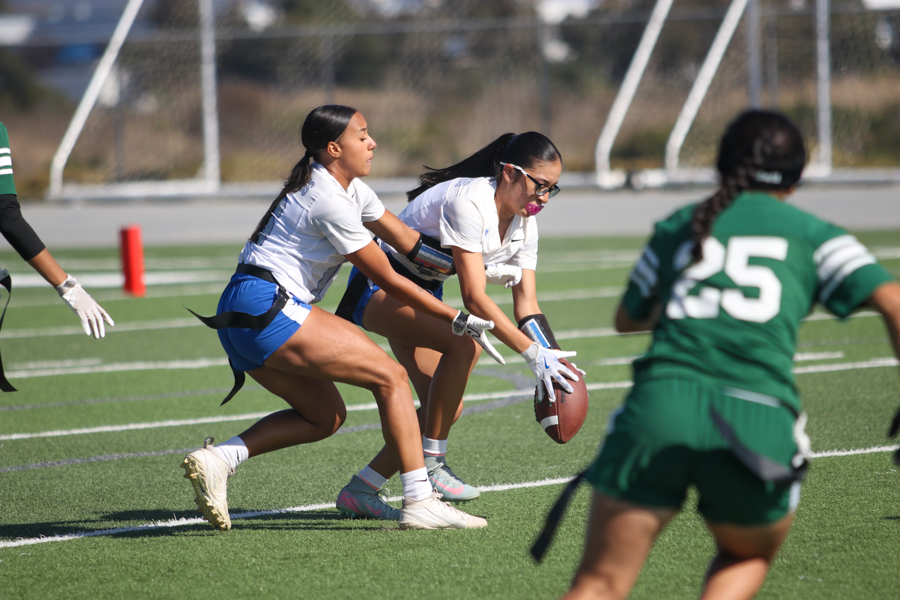 King City High junior Marali Ortiz, right, and teammate senior Shyrah McDonald both reach for the ball at an attempt to make the interception during a girls flag football game against Pajaro Valley High on Sept. 15. (Juan Reyes/King City Rustler)
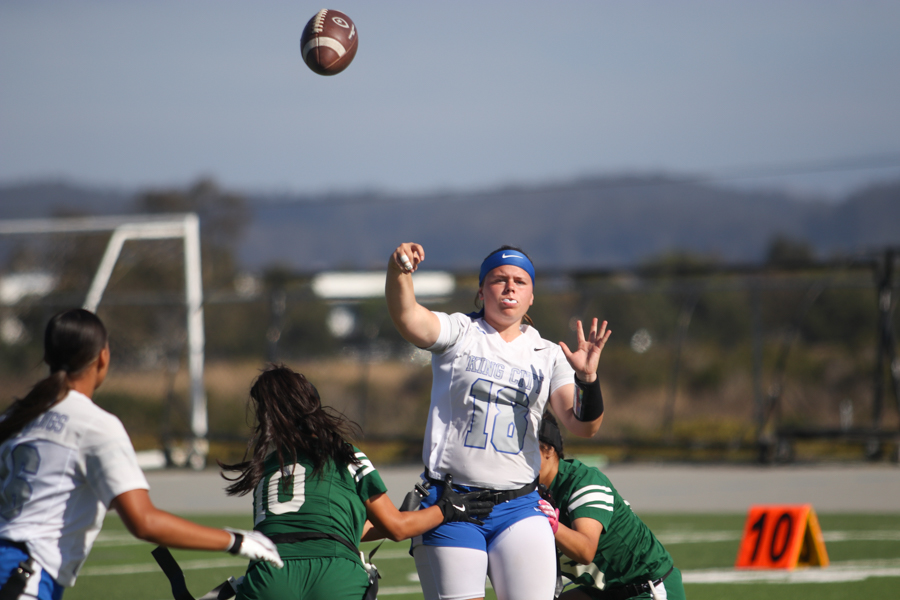 King City High senior Katia Slama tosses the ball during a girls flag football game against Pajaro Valley High on Sept. 15. (Juan Reyes/King City Rustler)
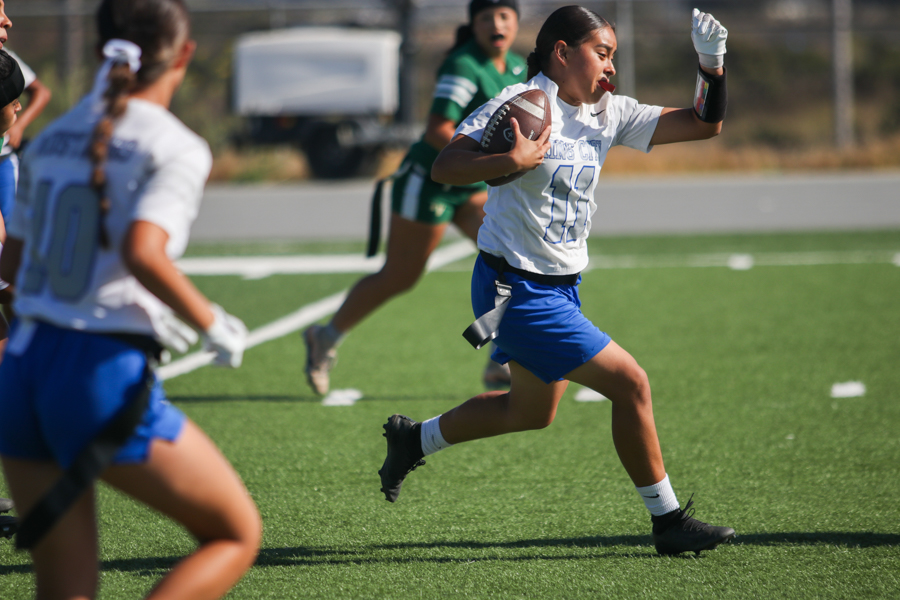 King City High sophomore Alondra Herrejon sprints past the defense during a girls flag football game against Pajaro Valley High on Sept. 15. (Juan Reyes/King City Rustler)
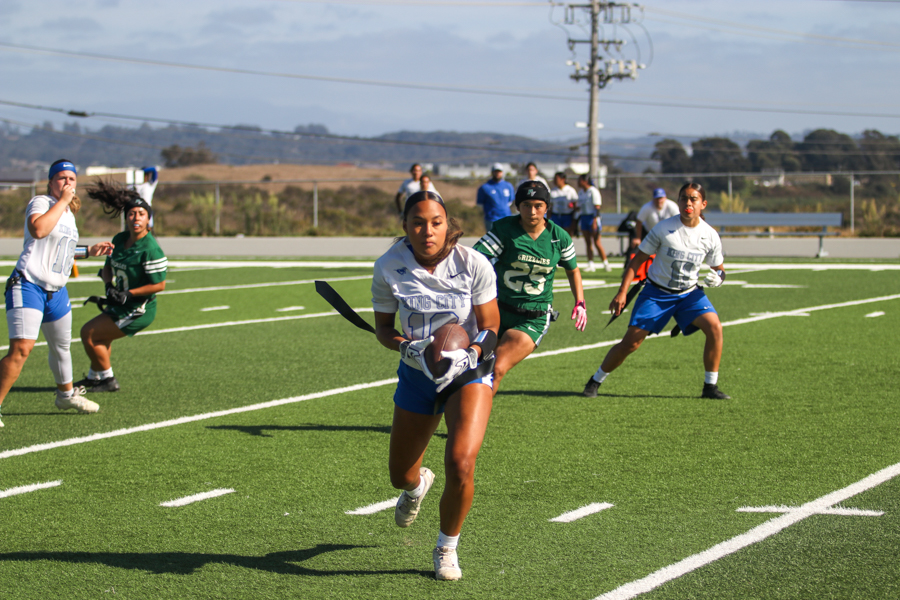 King City High senior Shyrah McDonald hauls in a catch during a girls flag football game against Pajaro Valley High on Sept. 15. (Juan Reyes/King City Rustler)
Khosla-backed Mazama Energy just raised $135M to drill deeper into super-hot-rock geothermal
Crusoe raises $3.9B to build massive data centers and small modular “AI factories”
Google DeepMind launches institute to widen the AGI debate
Marvell pushes GlobalFoundries to light up wafer production
Wendy’s Brings Back Nostalgic Yellow Packaging This Fall
- In a bid to appeal to nostalgic Millennials who fondly recall the ’90s, Wendy’s is bringing back its iconic bright yellow packaging for a limited time.
- The bright yellow color scheme will once again adorn French fry cartons and drink cups, just like it did back in the day.
- Nerdist’s take: Wendy’s hopes the retro packaging will make its customers think of simpler times, and it will probably work.
The world outside our windows is one in constant turmoil. We suppose you can say that about any era, but it feels especially bad lately. So in times like these, people always turn to the comfort of nostalgia. They’re nostalgic about movies, TV, toys, fashion, and, for some reason, drinking out of the garden hose. But that nostalgia also extends to fast food chains. Earlier this year, McDonald’s brought back their friend apple pies after decades off the menu. And now, via Today, we’ve learned that Wendy’s is bringing back their iconic bright yellow packaging, after years of using a minimalist red and white motif.
 Wendy’s
The return of the classic yellow color scheme at Wendy’s locations begins later this month. It arrives several years after the fast food giant decided that the bright yellow was too dated and not hip, even though it was their visual calling card. In a statement, a Wendy’s spokesperson said, “Fans have been asking for its return for years, making it one of the most requested comebacks in Wendy’s history. Yellow has been part of Wendy’s since the very beginning and is something many fans instantly recognize.” The yellow packaging isn’t permanent, and the regular color scheme returns in early 2027.
The iconic yellow will soon appear on Wendy’s French fry cartons, cups, and more. This is sure to make nostalgic Millennials and Gen Xers flock to their local Wendy’s establishments, have a Frosty, and remind themselves of simpler times in the ’90s, before it felt like everything was going to hell in a handbasket. Sadly, the actual Wendy’s locations probably won’t go back to their ‘ 90s-era look, which would be amazing. Several Pizza Hut locations are doing that very thing, and going back to their original old look. Wendy’s fans will just have to settle for a bright yellow cup for their sodas. At least for now.
Eric Diaz is a staff writer at Nerdist and a Swiss Army knife of fandoms. Eric loves DC, Marvel, horror movies, and even Star Wars and Star Trek equally.The post Wendy’s Brings Back Nostalgic Yellow Packaging This Fall appeared first on Nerdist.
Amazon-owned Zoox’s 100-robotaxi limit in Nevada is about to disappear
GOP may cut and run from these key Senate races
We’ve reached the point in the midterms election cycle where political operatives start to make difficult decisions about where their financial resources are best spent. With dozens of races and a finite amount of money, political campaign committees and super PACs eventually decide to cut their losses in elections that look unwinnable, moving their ad spending to contests where they think…
Friend of the oligarch
A cartoon by Clay Jones. Related | Democrats demand answers on Don Jr.’s ‘wedding gift’ from Russia…
AI coding agents' 0-click RCE flaw could hand attackers keys to the kingdom
PrismML hopes its tiny LLM could change how we all use AI
The FAA’s plan to fix air traffic? $875 million worth of AI

Trump’s latest attack on the Smithsonian is dumb and expensive
Since taking office again, President Donald Trump has been tarnishing the image of Washington, D.C., but perhaps no entity has felt his wrath quite like the Smithsonian Institution. Earlier this summer, following an absurd report that criticized the museum for erasing America’s “heritage,” Trump ordered that signs be installed outside the Smithsonian to warn visitors of what he claims is…
Greta Gerwig’s First NARNIA Movie Is a Bowie-Inspired ‘Rock Opera’
- Greta Gerwig says her first Chronicles of Narnia movie, The Magician’s Nephew, is a “rock opera” without music inspired by ’60s British glam.
- Gerwig cites Aslan singing Narnia into existence and her love of David Bowie and other iconic musicians as the inspiration for her film.
- Nerdist’s Take: A non-musical rock opera take on The Chronicles of Narnia is a choice we have no idea will work or not.
Whatever I expected from Greta Gerwig’s Chronicles of Narnia movies, I promise “non-musical rock opera inspired by David Bowie” was not among my predictions. But that’s exactly what she plans to deliver with her first film in the franchise, the upcoming Narnia: The Magician’s Nephew. She will transport fans to the fantasy realm by giving it a British glam makeover.
Just, again so it’s clear, it will not be a musical. Just completely inspired by music and musicians.
EXCLUSIVE 🪩
Greta Gerwig’s Narnia: The Magician’s Nephew is a rock inspired fantasy nodding to David Bowie and The Who.
“Narnia is literally a world made out of music,” she tells Empire. “Rock’n’roll to me felt like a world made out of music.”
Read more:… pic.twitter.com/nGp4soDYuf
The Barbie and Lady Bird director told Empire all about the personal inspiration behind her upcoming take on C.S. Lewis’ iconic fantasy series. “I wanted a rock opera,” she said. “I wanted it to be big and transporting.” Specifically she’s moving Lewis’ story from around the turn of the 20th century to 1950s Great Britain. When the children in the story then travel to other realms they will see a world inspired by the British glam scene of the ’60s and ’70s. The colorful, glitzy first images from the film show what that will look like.
 Netflix/Peter Mountain-David Bowie
Gerwig said the idea came from the musicians who she credits with “saving” her life, legends like David Bowie, Paul McCartney, David Gilmour, Pete Townshend, Jimmy Page, and Robert Plant. “Narnia is literally a world made out of music,” she said. And because Aslan (whom Meryl Streep will voice) sand that magical world into existence, Gerwig made her version out of the of rock and roll she loves so much.
Despite being a “rock opera” her first Narnia movie is not a musical. It sounds like a musical, yes, but it’s musical in style-only. Not in songs. Which…you know….it’s a choice. All of this is very much a choice.
🚨WORLD-EXCLUSIVE FIRST LOOK 🚨
Greta Gerwig opens the doors to Narnia: The Magician’s Nephew in the new issue of Empire – detailing her revolutionary rock’n’roll adaptation.
Here’s your first look at Aslan – and he’s voiced by the legendary Meryl Streep.
On sale Thurs… pic.twitter.com/zsXC1yRkJD
Will it work? As someone who has read all of Lewis Narnia books I feel confident saying, “I have no idea.” It’s not that Gerwig’s comments mean nothing or that I don’t have faith in her. It’s that they only tell us about her concept and inspiration. Everything that makes sense to her might not land with audiences. Or it might feel, well, inspired.
We won’t find out whether a music-less rock opera opera approach works or not until Narnia: The Magician’s Nephew arrives in theaters February 12, 2027.
Mikey Walsh is a staff writer at Nerdist. You can follow Mikey on Bluesky at @burgermike. And also anywhere someone is ranking the Targaryen kings.The post Greta Gerwig’s First NARNIA Movie Is a Bowie-Inspired ‘Rock Opera’ appeared first on Nerdist.
Cory Mills’ Career Imploded. Then His Grenade Factory Exploded.
Last month, Cory Mills’ career in Congress imploded when the Florida Republican lost his primary by 13 points. Now part of a weapons facility operated by a company that Mills co-owns has exploded.
The incident occurred on Wednesday evening at a Pacem Defense facility in northern Florida and caused no injuries, the Taylor County Sheriff’s Office said in a statement. Mills, who entered Congress in 2023, has said that he stepped away from running his arms companies years ago, but he still owns a majority stake in Pacem Defense, according to his most recent congressional financial disclosure.
The explosion at Pacem Defense, which specialized in making and selling high explosive grenades to foreign militaries, was apparently massive. The Taylor County Sheriff’s Office said in its statement that one building at the Pacem facility sustained “significant damage” in the explosion, adding on Facebook that “[m]any residents heard and felt” it. One person who lives about three miles away from the facility wrote on the site that her brick home started shaking.
The sheriff’s office said that neither of the workers who were at Pacem Defense at the time of the explosion was harmed. It added that the Bureau of Alcohol, Tobacco, Firearms and Explosives, the Department of Defense, and the Florida state Fire Marshal’s office are now involved in the investigation.
The blowup is only the latest challenge for Mills. Since 2025, the scandal-plagued Florida man has been accused of stealing valor, placed under a restraining order by a judge after subjecting an ex-girlfriend to “dating violence” via cyberstalking, and was nearly arrested after being accused of domestic assault by a different girlfriend. (That partner later retracted the allegation, and no charges were filed.) As I reported in a February profile of Mills, the full list is much longer.
Nevertheless, Mills managed to secure Donald Trump’s “Complete and Total Endorsement” earlier this year. Despite that support, Mills was easily defeated in his August primary by Ryan Elijah, a former local TV news anchor.
In late 2025, Pacem indefinitely furloughed many of its employees after racking up tens of millions of dollars in debt, according to court records. It has remained largely shuttered since then, a former employee told me on Thursday. (In March, Craig Pittman called the Pacem facility a “ticking time bomb.”)
According to a Florida court filing, Pacem ended up owing a Canadian lender more than $66 million. In another case, Pacem is subject to an order under which it is obligated to pay $8 million to an arms company that bought grenades from Pacem but never received them. A status update submitted in federal court on Wednesday states that Pacem has still not “paid any portion of the judgment amount.”
Mills’ financial disclosure states that he also maintains a 100 percent interest in Pacem Estate Holdings, the real estate entity that owns the site where the explosion on Wednesday occurred. According to court records, Pacem Estate Holdings continued to receive $12,000 per month in rent from another Pacem entity while the company’s employees were out of work.
Last Thursday, after remaining mostly silent on social media in the wake of his primary defeat, Mills struck a defiant tone on X—posing in front of a wall of fire and water in a tight polo with a Swiss watch that can sell for tens of thousands of dollars.
A Phoenix rises from the ashes. Our fight is far from over!  pic.twitter.com/wVa4rB5LhP
“A Phoenix rises from the ashes,” Mills declared. Six days later, the ashes appear to have become real.
RFK Jr. is more concerned with ‘vaccine injuries’ than measles deaths
Health and Human Services Secretary Robert F. Kennedy Jr. delivered remarks at the Children’s Health Defense conference in Washington, D.C., on Thursday. The anti-vaccine advocacy organization, once led by Kennedy, was excited to hear that Kennedy is still dismissive of the measles outbreak that has claimed the lives of both children and adults. “We care about every child who dies from…
Huawei's next-gen Ascend NPUs could become China's best option
LEGO’s JURASSIC PARK Jeep Caused Me an Unexpected Conundrum
- LEGO’s fantastic Jurassic Park Jeep Wrangler set is fantastic, but one of the best things about it also caused me an unexpected problem.
- You can complete this 18+ model in one of four ways, so you can choose the version from the movie you like best.
- Nerdist’s Take: The challenging LEGO’s Jurassic Park Jeep Wrangler is perfect so long as you can accept your display being slightly less than fully accurate.
Earlier this year, LEGO sent me its new Jurassic Park Jeep Wrangler set. Even though it doesn’t feature any dinosaurs it’s still my favorite release yet from LEGO’s ever-expanding dinosaur collection because it celebrates a truly iconic cinematic automobile. That jeep, seen in various forms, is a big part of multiple memorable moments from an all-time great film. And this versatile set celebrates exactly that by letting you build it four different ways. It lets you recreate and easily switch between the exact model seen during your favorite moment in Jurassic Park.
That’s also why this LEGO Jeep Wrangler has caused me a problem I will never be able to solve.
 Nerdist
The 1924-piece, 1:10 scale model LEGO Jurassic World: Jurassic Park Jeep Wrangler set is essentially perfect outside of its lengthy official name and an issue that will only impact absurd people like me. It comes with two booklets of instructions that are generally easy to follow. However, this 18+ set is still a challenge to construct. There are also a few especially difficult elements that can be extra tricky. The windshield area requires a deft touch. The same is true of the footboard that runs along each side. And the front side of the set includes a grappling hook on a working winch that also features my most dreaded LEGO element, a small string. (Not joking. LEGO strings and me are not pals.)
There are also so many wonderful little details that snap in without much support that I sometimes knocked them off when I was a little too careless. The good news is that those are generally easy to reattach.
One of my favorite touches is that this jeep works. The front wheels move and can be covertly controlled by the spare tire on the back. It’s a clever little way to let you operate the vehicle without trying to turn the tiny steering wheel inside. It also boasts working doors, movable headrests, and a liftable hood complete with a full engine. While I am keeping mine as a display model, those interactive aspects means it also works as a very fun toy.
It also comes with a perfect Dennis Nedry minifig. Dodgson’s pal comes with a tiny fake bottle of shaving cream, a head mold with two faces, and removable hood and hair pieces. (There’s a spot to hide the unused one behind the plaque.) The set also comes with a replica of the map he knocked over in the rainstorm while trying to flee with the stolen embryos. And yes, it spins so he’ll never know the right direction.
 Nerdist
This collection really does has everything both a LEGO and Jurassic Park fan could want short of an actual dinosaur. Technically it has more because this is unlike most LEGO sets. You can finish it multiple ways. The instructions and extra pieces allow you to complete yours in one of four different models. Well, it’s really three, with one having two variations that only change the jeep’s number and nothing else.
One of those models is the way the jeep is first seen in Jurassic Park, when John Hammond brings his experts to see dinosaurs for the first time. This open-air version has roll bars. It’s the version of the Jurassic Park jeep I picture in my mind when I think about it because I think that’s Spielberg’s greatest sequence ever.
It’s easier to build those roll bars than you might think. However, I did initially screw it up by not paying attention. They snap in easily and they come off without any problem if you want to change your LEGO jeep. (The biggest pains when switching are the little tag hanging from the rearview mirror and the hood piece with the jeep’s number.) This version also comes with two variations, as there are stickers and plates for both the jeep number Hammond was in and the one the doctors were in.
Why anyone would choose Hammond and his lawyer’s car (#29) over Grant, Sattler, and Malcolm’s (#18) I do not know. I don’t need to know, either. I’ll just assume you’re related to the late Richard Attenborough because that’s the only thing that makes sense.
 Nerdist
The second (technically third) variation is the #12 version of the jeep seen during Nedry’s failed escape. There’s a reason the company used this as the model for the front of the box. This iteration includes both a canopy tarp and flood lights attached to the windshield. Those lights only go on this version and not the others. The canopy is also so much easier to put on and take off then I expected.
I love how this one looks. It looks great. The same is true of the headlights. They are a great example of the care and design that went into this set.
(I genuinely had so much fun putting it together for the same reasons I loved putting together LEGO’s Jaws Orca boat. You get to appreciate both the engineering of LEGO masters and the engineering that goes into a vehicle.)
 Nerdist
The flood lights aren’t exactly a breeze to remove because the windshield is among the most delicate parts. But it’s not exactly that hard, either. Even when I accidentally removed more pieces than I wanted I was able to fix everything quickly enough.
The only downside to the nighttime-rain Jeep is that it contributes to the conundrum I can’t solve.
 Nerdist
The final version of the Wrangler (#10) has the most variation of all the models. It’s the jeep used to pick up an injured Malcolm, the one from the iconic T-Rex chase scene. This variation loses the canopy, the floodlights, and also the roll bars. Instead it gets boxes you can open to reveal tools (and a rubber duck) for extra authenticity. It also comes with a mini video camera, because like I said this is a set by people who love the movie for people who love the movie.
 Nerdist
This is also the version with maybe the single most fun detail. The driver’s side-view mirror has a special sticker of the T.rex chasing the car as seen in the film.
It’s the best. It’s perfect. And it’s the single reason this set has caused me a problem I can’t avoid without hitting the lottery.
 Nerdist
The are four different sets of pieces for the parts that require number stickers. (The hood, two for each door, and one for both the front and the back.) However, there are only two side-view mirrors total. No matter which of the four versions of the Wrangler you make, you will always have a rear view mirror that shows the T-Rex running you down. You see the problem, right?
The T-Rex doesn’t chase the #29, #18, or #12 jeeps. It only chases the #10. It only chases the number 10.
If you want to display yours in that style, it’s great. No problem! The side-view mirror is exactly right and always will be. Only, the plaque and mini-figure really go with the #12. So in either case your display is not 100% right.
Even worse for me? I don’t prefer either. I want celebrate my favorite Spielberg scene with the #18 jeep. And that’s a major issue because I also suffer from “dumb brain?” (Self-diagnosed.) I can’t display this jeep in anyway that is 100% “right,” but my preferred version is the most “wrong.”
This is an impossible situation I will think about for the rest of my life because there’s no solution. I mean, it’s not really a problem for most people but for those of you like me? You get it. You get it.
 Nerdist
I mean, technically there is a solution. It’s just not feasible. Ideally, I would simply buy multiple versions at $199.99 each so I could display all four models. I would also buy extra sets so I could get three extra side-view mirror stickers for authenticity. But that is definitely not happening.
Unlike John Hammond, I will spare some expense.
Ultimately I opted to go with my beloved #18, which is now proudly on display in my home proudly, a testament to a great movie, a great movie car, and a great LEGO set. I just wish it wasn’t also a testament to the silly problems my brain will create for itself.
Mikey Walsh is a staff writer at Nerdist. You can follow Mikey on Bluesky at @burgermike. And also anywhere someone is ranking the Targaryen kings.The post LEGO’s JURASSIC PARK Jeep Caused Me an Unexpected Conundrum appeared first on Nerdist.