
The best things I ate and drank in Santa Cruz County in October
Santa Cruz County business: Biotech company acquired; Joby lands more Air Force funding
The 2026 Lookout List: Food & Drink Experiences
New governor begins the ‘Becerra era’ by making nice with Capitol Democrats

This story was originally published by CalMatters. Sign up for its newsletters.
Welcome to the “Becerra era,” where the incoming governor doesn’t share specific policy ideas, but really wants you to know that he’ll play nicely with Democratic leaders in the Legislature.
“We’ve tried to make it very clear, through the fact that we are standing here just a couple of days after the election, to say, ‘We’re going to work together. This will be a partnership,’” Democratic Gov.-elect Xavier Becerra proclaimed to a crowd of reporters in the Capitol rotunda last week.
“Get used to this,” he added, standing shoulder-to-shoulder with Senate President Pro Tem Monique Limón and Assembly Speaker Robert Rivas.
Together, Becerra, Limón and Rivas — known collectively as the Big Three — will hold the ultimate decisionmaking power over California’s policy priorities. So far, all three have refrained from committing to any concrete legislative proposals on the major issues that lawmakers will confront when they return in January.
California policymakers must navigate new federal restrictions, including cuts to Medi-Cal, the state program that provides healthcare to disabled and low-income Californians, that could cause more than 1 million to lose coverage starting Jan. 1. Lawmakers also need to resolve a debate over who pays for the damage from wildfires caused by utility equipment after a last-minute deal failed this year. Then there are the mandates voters gave Democrats this election cycle to rein in artificial intelligence, root out corruption, lower everyday costs and increase available housing.
Becerra’s pledge to partner closely with the California Legislature from the get-go marks a pivot from Gov. Gavin Newsom’s signature approach: jamming big policy proposals down the Legislature’s throat as legislative deadlines approach, using the time crunch to generate urgency while leaving as little room as possible for opposition to surface.
The tactic backfired earlier this year when Newsom tried to push through major changes to the way utilities and insurance companies bear the cost of damages when utility equipment sparks wildfires. But for years prior, his last-minute maneuvers resulted in legislation to speed up infrastructure construction by limiting legal challenges and to carve out exemptions to environmental review for urban apartments and other projects.
Rivas – whose district includes part of Santa Cruz County – acknowledged that legislators have been irritated by Newsom’s last-minute jams for years, despite the speaker’s repeated efforts to communicate that early engagement is key to winning lawmakers’ support.
“It’s pretty clear, based on the engagement we’ve had thus far, that it’s going to be a different type of relationship than what this Legislature has experienced over the past eight years,” Rivas said.
“I fully expect and trust the governor-elect when he says that he’s going to do his best to work with the Legislature and do his best to not drop stuff on us unexpectedly.”
 Assembly Speaker Robert Rivas during the swearing-in ceremony for Senate President Pro Tem Monique Limón in the Senate chambers at the state Capitol in Sacramento on Jan. 5, 2026. Credit: Miguel Gutierrez Jr. / CalMatters/Pool
Becerra’s experience as an assemblymember and member of Congress enables him to be an “empathetic partner” to Limón and Rivas, said Richard Stapler, a Democratic political strategist and former senior aide to state Sen. John Laird of Santa Cruz. Having served as the leader of the congressional Hispanic caucus, Stapler added, Becerra can appreciate the difficulties of managing a diverse caucus where members have conflicting priorities and policy ideas.
“The success of his governorship will largely ride on his ability to have a sound, thoughtful working relationship with the Legislature,” Stapler said.
Former Assembly Speaker Anthony Rendon said some tension between the two branches of government should be expected, no matter how harmonious they appear. He said when lawmakers chafed at what they called overreach from Newsom or his predecessor, Gov. Jerry Brown, it was often because they had given up their own power to push back, such as when lawmakers left Sacramento in the early days of the COVID-19 pandemic.
“It’s easier for one person to act than an entire body,” he said.
Since advancing from the primary as the sole Democratic candidate for governor, Becerra has met individually with several legislators, as well as the Senate and Assembly Democratic caucuses.
Last month he joined Assembly appropriations committee chair Buffy Wicks, Democrat of Oakland, on a tour of a new transit-oriented affordable housing complex made possible through a 2025 housing law.
Wicks, who has made housing policy one of her signature issues, said she told Becerra she plans to reintroduce a bill that died this year that will seek to increase the construction of condominiums — an important entry option for new home buyers — by updating state construction defect liability laws that have made developers reluctant to build new condos altogether.
“Because he’s been a legislator, he understands the pace and cadence of a legislative body, and you know, he also understands how we get very attached to our ideas — we get married to our bills, as they say,” Wicks told CalMatters. “Having more collaboration at the front end I think is going to be important and certainly welcome from the Legislature.”
When Sirat Attapit first started as director of legislative affairs in then-Attorney General Becerra’s office in 2017, her new boss instructed her to try to meet with all 120 California legislators and develop a rapport.
“Coming in as a former legislator … he really wanted to build a relationship with them,” Attapit told CalMatters earlier this year.
She described Becerra as finely attuned to the smallest details of policy proposals. He would direct staff to mark bills as having a “fiscal impact” on the state even if it would only cost a few thousand dollars, or part of a full-time employee’s time, per year.
Becerra previously said he hopes to reduce the number of bills legislators introduce so the state has a clearer and more cohesive legislative agenda. Lawmakers showed slight restraint in 2026, introducing just under 1,850 bills as compared to the more than 2,100 they introduced in 2024 and 2025.
“That requires me to come to them early,” he told KCRA last month, “to talk to them, so they don’t feel like they have to plow forward and then find out at the end that I didn’t like what they were doing.”
 Gov.-elect Xavier Becerra addresses the media during a news conference at the state Capitol on Nov. 5. Credit: Miguel Gutierrez Jr. / CalMatters
Becerra has repeatedly played it safe, avoiding specifics on his agenda and instead opting for broad promises to prioritize issues like “affordability” and “fighting for working families” by making sure that “everyone pays their fair share.”
When asked if he would commit to reversing Newsom’s rollback of healthcare benefits for undocumented immigrants, which he seemed to endorse in an interview with KQED, Becerra bristled and lectured reporters for “playing politics” by asking him to make commitments before he knows all the details, such as the latest budget projections.
“Guys, don’t play this game about asking me to commit, because I didn’t get elected doing that,” Becerra said. “A lot of other folks make these wild promises, and they’re not the governor-elect.”
Pressed for details on how Becerra would differ from Newsom, Rivas said he didn’t know if their policies would diverge. Like Becerra himself, the speaker pointed mostly to the governor-elect’s experiences as a former lawmaker and a son of immigrants.
One area where the three Democratic leaders have signalled early agreement is the Fair Share tax proposal, an idea pushed by liberal lawmakers to tax large corporations whose workers make so little that they qualify for public benefits like Medi-Cal.
Facing federal cuts and budget deficits, Newsom began cutting Medi-Cal in recent years with lawmakers’ approval. Some in the Legislature pushed instead for the tax to backfill revenues. But Newsom is generally unwilling to raise taxes, and the Legislature compromised by instead directing the state to study how to implement such a tax. A report by the Department of Finance is due in March.
Sen. Lola Smallwood-Cuevas, a Los Angeles Democrat who chairs the Senate labor committee, said she discussed the Fair Share plan with then-candidate Becerra early in the year. When she ran into him at an event for Black leaders last month, she said he told her he was all in on the idea.
“He stopped me and he said, ‘I really want to work on Fair Share. I want to get that done. I believe that that is important to how we move forward coming out of Trump’s attack on our healthcare system,’” she said.
“That was very encouraging, that he remembered the conversation, he remembered me raising that point, and that he sought me out,” she said.
 Sen. Lola Smallwood-Cuevas chats with a lawmaker during a floor session at the state Capitol in Sacramento on Aug. 29, 2024. Credit: Florence Middleton / CalMatters
Rivas said he, Limón and Becerra have a “natural alignment and a willingness to do something” on the issue. But all three are waiting to see what the finance department recommends before proposing anything concrete.
Legislative leaders were more restrained on another idea that Becerra proposed during the campaign, this one to require utilities to give low-income households two hours of free electricity during low-usage daytime hours.
Limón said she believes such programs work “in the short term” to give families facing high power bills some relief and that her caucus “has always welcomed every idea.”
Rivas said he still needed to consult Assembly Democrats on the details.
“Could there be alignment?” he said. “Possibly.”
Have something to say? Lookout welcomes letters to the editor, within our policies, from readers. Guidelines here.
The post New governor begins the ‘Becerra era’ by making nice with Capitol Democrats appeared first on Lookout Santa Cruz.
Rippling Rivers

Street Talk
Free Will Astrology

Nourishing Generations

Between the Notes

In the Fast Lane

Letters

The Editor’s Desk

Fête Feats

Flavor Notes

Things to do in Santa Cruz

Can Musicians Survive?

Results Pending

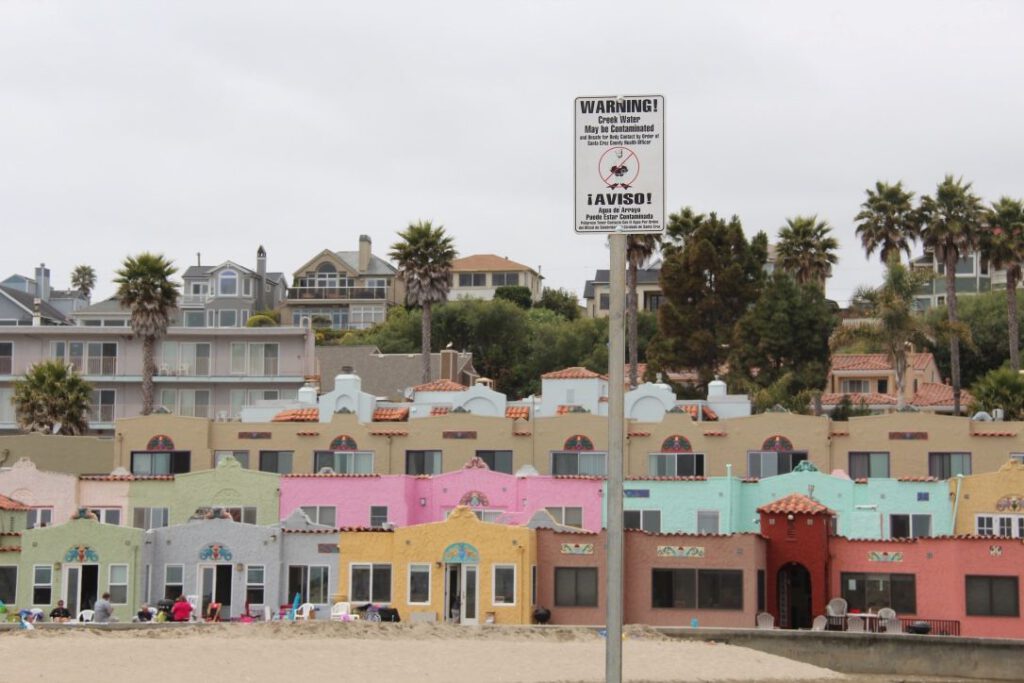
Capitola Beach Closed Due to E. Coli Risk
Honoring our veterans on Veterans Day

Two military veterans whose service took them from combat zones overseas to helping their communities at home will be honored Wednesday during Watsonville’s annual Veterans Day Parade and Ceremony.
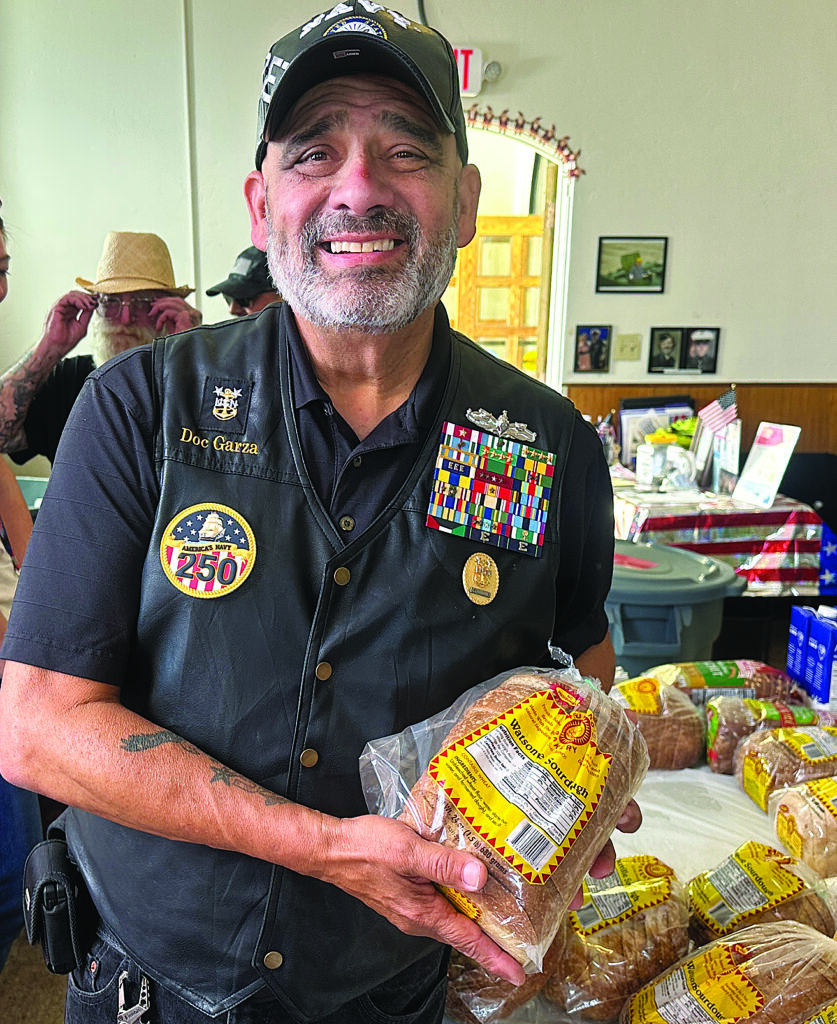
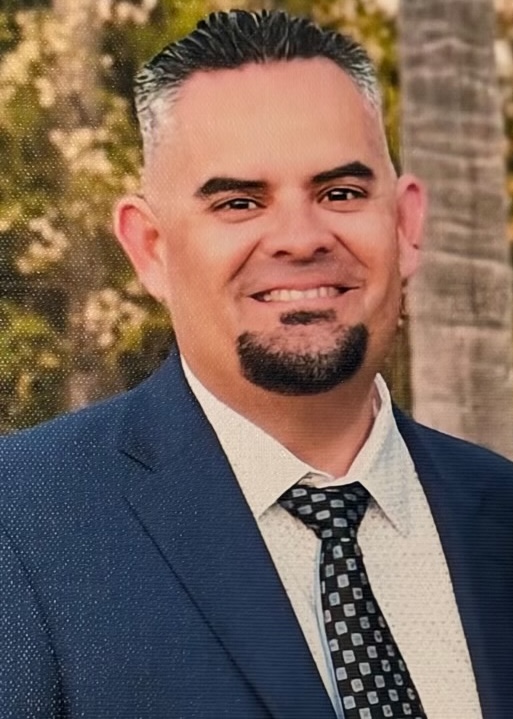
Retired Navy Command Master Chief Roland “Doc” Garza, selected as Veteran of the Year by American Legion Post 121, and Marine Corps veteran Jesus J. Ramirez, chosen by Veterans of Foreign Wars Post 1716, will be recognized for their military careers and their continued dedication to helping others.
The Veterans Day parade begins Nov. 11 at 10am at St. Patrick’s Catholic Church in Watsonville, followed by a ceremony at the Henry J. Mello Center for the Performing Arts from 11am to noon.
The ceremony will feature retired U.S. Army Lt. Col. Harry Wiggins, who will present “WWII Operation Magic Carpet: Home Alive by ’45!” about the massive effort to bring American service members home after World War II.
For Garza and Ramirez, the recognition comes after military careers that spanned different generations and branches of the armed forces, but shared a commitment to service that continued long after they took off their uniforms.
A lifetime of service
Garza spent 30 years in the Navy, serving through four wars and participating in humanitarian missions around the world.
 Garza
Born and raised in McAllen, Texas, he enlisted in 1980 and began his military career as a hospital corpsman at Camp Pendleton, providing medical care to Marines.
His career included assignments aboard several Navy vessels, combat deployments and medical training duties.
He also served as command master chief aboard the USNS Mercy hospital ship during humanitarian missions following the devastating 2004 Indian Ocean earthquake and tsunami.
When he retired in July 2010, Garza had earned numerous military honors, including two Meritorious Service Medals, five Navy and Marine Corps Commendation Medals and the Combat Action Ribbon.
But retirement did not mean an end to serving others.
After moving to Watsonville from Texas to help his daughter care for her newborn twins, Garza met Korean War veteran Lois Rae Gin, who helped establish a food pantry at the Veterans Memorial Building on East Beach Street.
Gin, now 98, encouraged Garza to volunteer.
“She asked the right guy,” Garza said. “My wife and I stepped up.”
For the past two and a half years, Garza and his wife, Violet, have operated the pantry, providing food, clothing and other necessities to veterans in need.
When Gin and fellow veteran James started the program, it served roughly eight to 12 people weekly. That number has since grown to about 120.
The pantry receives food from Second Harvest Food Bank and serves many Korean and Vietnam War veterans, some now in their 70s and 80s.
Garza said helping those who served before him is a responsibility that does not disappear with retirement.
“When you finish, it’s not over,” he said. “You still got to remember the people that were veterans when you were a young sailor.”
With the Garzas planning a return to Texas, Dawn Collier, who oversees a veterans food pantry in Santa Cruz, is preparing to take over the Watsonville operation.
“You still give back,” Garza said. “Because they’re the ones that helped you when you were first starting out.”
Watsonville roots
For Ramirez, the path to military service began in Watsonville, where he grew up working alongside his father as a painter on weekends and during summer vacations.
 Ramirez
Born in March 1982 to Luis and Amelia Ramirez, immigrants from Zacatecas, Mexico, he attended McQuiddy Elementary School, E.A. Hall Middle School and Watsonville High School.
After graduating, Ramirez enlisted in the Marine Corps, serving as an infantryman and attaining the rank of corporal.
His military career included service in support of Operation Enduring Freedom and the Global War on Terrorism, including a deployment to Iraq.
He earned the Combat Action Ribbon and the Navy and Marine Corps Achievement Medal.
After leaving the military, Ramirez attended community college in San Diego before transferring to UC San Diego, where he earned a degree in structural engineering.
He worked for a general contractor for four years before founding JXR Constructors in 2012.
Despite building his career in Southern California, Ramirez has maintained ties to Watsonville, supporting the local VFW post and seeking opportunities to help fellow veterans.
He lives in San Diego with his wife, Hilda, and their three children.
His selection as Veteran of the Year recognizes not only his combat service, but also his continued commitment to the community where he grew up.
A day of recognition
Wednesday’s parade and ceremony will give the community a chance to thank the men and women who served their country, while honoring Garza and Ramirez for their contributions both in and out of uniform.
Their stories are a reminder that for many veterans, service does not end when military duty does.
Cover 3 Sports Podcast: Fall Season Finale Drama and CCS Football Postseason Matchups

In this week’s episode, Juan Reyes and John Devine will recap the regular season-finale of the 2026 fall season.
Then the guys will chop it up with San Lorenzo Valley High head football coach Dave Grant to talk about the Cougars’ upcoming game in the Central Coast Section playoffs.
And finally, they’ll cap off the show with the high school football Games of the Week and a look into the Top 10 rankings.
We’ll have all this and more on… the Cover 3 Sports Podcast.
(music by Bensound.com)
 High School Football Top 10 Rankings – Week 11 (Image generated by ChatGPT)