
PVUSD school board candidate Curt Wilcox charged with felonies related to candidacy filing
A place to turn: The 41st Annual Mountain Affair keeps support close to home

On October 30, neighbors will gather under the redwoods to preserve the food assistance, counseling, crisis response and disaster recovery services that help ensure San Lorenzo Valley families have somewhere to turn when they need it most.
“Community Bridges helped me hold my family, this house, and my own wellbeing together.”
For Merritt Grooms, that support came at a moment when one crisis was quickly becoming many.
After a January 2023 disaster caused major damage to her San Lorenzo River home, Merritt faced nearly $30,000 in repairs after her insurance claim was denied.
That’s when Mountain Community Resources stepped in.
With help from our dedicated MCR Advocate Suzie, Merritt secured grant funding to make the repairs possible. The center also loaned her industrial dehumidifiers to address water and mold damage while the work was being arranged.
But repairing the house was only part of what her family needed.
Merritt was raising two teenagers as a single mother, working full-time and caring for her own mother. As those responsibilities mounted, Mountain Community Resources connected her with a therapist so she would not have to carry everything alone.
More recently, the center has helped her search for affordable housing that would allow her children to finish high school in the community they call home.
Merritt’s experience illustrates something Mountain Community Resources sees everyday: how a difficult moment rarely arrives by itself.
 Merrit Grooms and her child received the assistance they needed from Mountain Community Resources dedicated team.
Damage to a home can quickly become a financial crisis. Financial pressure can affect a parent’s emotional well-being. Housing instability can disrupt a child’s education and separate a family from the people and places that anchor their lives.
That’s exactly why having a trusted place to turn matters.
Support That Changes with the MomentFor 43 years, Mountain Community Resources has helped San Lorenzo Valley residents navigate challenges that rarely fit neatly into a single category.
A family may first walk through the doors for food and discover help applying for public benefits. A parent looking for housing assistance may also find counseling, parenting support, or a legal consultation. When disaster strikes, residents can turn to local professionals who already know their community and are prepared to help them take the next step.
That flexibility is at the heart of the center’s work. Mountain Community Resources staff listen first, build trust and help people navigate what comes next, because lasting stability.
 The Mountain Affair provides an opportunity for the San Lorenzo Valley community to reconnect and hear about successes and growing need.
Mountain Community Resources roots stretch back to the community response following the devastating 1982 mudslides. Since then, the center has continued to work alongside residents, local organizations and emergency responders, to help the Valley prepare for and recover from fires, storms and other disasters.
Today, Mountain Community Resources directly serves 744 community members whose households include 1,809 people, including 376 children and teenagers.
Last year alone, the center provided:
- 5,170 bags of food
- 575 crisis-support visits
- 427 hours of counseling
Behind every number is a neighbor experiencing something deeply personal: groceries brought home to a family, a parent finding support through a safe conversation during a crisis, or a person hearing the reassurance they need the most, “You don’t have to figure this out alone.”
One Evening with an Impact All YearOn Friday, October 30, that spirit of neighbors helping neighbors will fill Highlands Park & Senior Community Center in Ben Lomond for the 41st Annual Mountain Affair, Mountain Community Resources’ signature fundraiser and a celebration of the people that make the San Lorenzo Valley special.
“Mountain Community Resources has been part of the San Lorenzo Valley for more than four decades because this community has always understood the importance of neighbors taking care of neighbors,” said Community Bridges CEO Raymon Cancino. “MCR is a trusted place to turn. Mountain Affair gives people a chance to celebrate this community while making sure that support will be here when a neighbor needs it.”
Guests will gather for food prepared by Chef Marina Camarlinghi and grill master Victor Cuevas-Sanchez of Barbara & Company Catering, wines from Alfaro Family Wines, live music, and a silent auction showcasing the generosity of local businesses and community partners.
Every ticket, sponsorship, and Fund-a-Need investment helps keep food assistance, counseling, parenting education, housing navigation, public-benefits enrollment, emergency preparedness, disaster recovery, and crisis support available throughout the year.
More Than a Night OutA ticket to Mountain Affair is more than admission to an event.
It can help put food on a neighbor’s table. It can connect a parent with counseling before stress becomes a crisis. It can help a family understand its options after a disaster. And it can keep trusted advocates available when a resident feels unsure where to turn.
 Every week, Mountain Community Resources welcomes hundreds of community members for various services such as our weekly food distribution.
Merritt’s story illustrates the difference that kind of support can make. Mountain Community Resources could not undo the damage to Merritt’s home or erase the pressures facing her family. But its staff could deeply listen, help her identify resources, and remain beside her as her needs changed.
That is what community care looks like: not a single intervention, but a relationship that helps someone keep moving forward.
When San Lorenzo Valley residents fill the room at Mountain Affair, they make that relationship possible for the next neighbor who needs it.
Join the 41st Annual Mountain AffairFriday, October 30, 2026
6:30–9:30 p.m.
Highlands Park Senior & Community Center
8500 Highway 9, Ben Lomond
Individual tickets are $120, and sponsorship opportunities are available.
Purchase tickets, explore sponsorship opportunities or make a donation at communitybridges.org/mountainaffair.
For more information, contact donations@cbridges.org or 831-688-8840 ext. 205.
Come raise a glass, share a meal and help keep trusted support close to home.

The post A place to turn: The 41st Annual Mountain Affair keeps support close to home appeared first on Lookout Santa Cruz.
Santa Cruz County business filings: Week of Sept. 29

Businesses operating in Santa Cruz County must register with the county clerk. Lookout Santa Cruz reviews the public filings from local businesses to report on new businesses starting in the area.
Here is what’s new in local business recently.
New businesses- GROUND TRUTH TECH was registered at 19100 Big Basin Way, Boulder Creek, by Stacy C. Hagge-Bennett as an individual business on Sept. 14.
- MODERN BY NATURE was registered at 1609 Escalona Dr., Santa Cruz, by Nicole Van Vleck as an individual business on Sept. 14.
- NORMAS HOUSECLEANING was registered at 95 Pennsylvania Dr., #43, Watsonville, by Normas Housecleaning LLC as a limited liability company on Sept. 15.
- THE ADU ATTORNEY was registered at 413 Lake Ave., Suite 104, Santa Cruz, by Jessica Sommer Grigsby as an individual business on Sept. 16.
- CAS CONSTRUCTION was registered at 471 Jolon Dr., Watsonville, by Luis Castaneda as an individual business on Sept. 17.
- COLOR MY WORLD STYLING was registered at 312 Brewington Ave., Watsonville, by Ines Cecilia Odegaard as an individual business on Sept. 17.
- SANTA CRUZ OCC MED was registered at 616 Frederick St., Santa Cruz, by Danette L. Sutton as an individual business on Sept. 17.
- WINTERVINE GARDEN & GROUNDS was registered at 1031 Cayuga St., Apt. B, Santa Cruz, by Wintervine Garden & Grounds LLC as a limited liability company on Sept. 17.
- Aaliyah’s Catering was registered at 24 Ford St., Apt. G, Watsonville, by Laura Terriquez Gonzalez as an individual business on Sept. 18.
- AR HAULING JUNK REMOVAL was registered at 180 Marigold Ave., Freedom, by Ramiro Sosa Avalos as an individual business on Sept. 18.
- SURVIVORS CYCLE SALVAGE was registered at 1345 Brommer St., Santa Cruz, by Isaac Santos as an individual business on Sept. 18.
- SANTA CRUZ CYCLE SALVAGE was registered at 1345 Brommer St., Santa Cruz, by Isaac Santos as an individual business on Sept. 18.
- H&A BOOKKEEPING SERVICES was registered at 61 Conference Dr., Felton, by Alexander R. Faulk as an individual business on Sept. 18.
- JOHNNY MARTINI PRIVATE CHEF was registered at 220 Miller Ct., Santa Cruz, by John Paul Martinez Jr. as an individual business on Sept. 18.
- WHOLEHEARTED EARLY LEARNING SOLUTIONS was registered at 1020 West Cliff Drive, Santa Cruz, by Diana Stephens as an individual business on Sept. 18.
- TIDE AND TIMBER HANDYMAN SERVICES was registered at 1020 West Cliff Dr., Santa Cruz, by David C. Stephens as an individual business on Sept. 18.
- JAY HOWE MASONRY was registered at 144 Bradley Dr., Santa Cruz, by Linda Howe as an individual business on Sept. 18.
- COOPER & COOPER ASSOC. was registered at 19 Mountain View Rd., Corralitos, by Fred Lewis Cooper as an individual business on Sept. 18.
- SABORCITO APARICIO was registered at 1975 Chanticleer Ave., Santa Cruz, by Kay Guadalupe Aparicio Hernandez as an individual business on Sept. 18.
- LUNA SHEET METAL was registered at 612 Calle Cuesta, Watsonville, by Luis Gonzalez-Carrillo as an individual business on Sept. 18.
- L & L MAINTENANCE was registered at 1343 Orchard Dr., Santa Cruz, by Craig Bray Lawrie as an individual business on Sept. 21.
- SUPERCOMMUNICATORS was registered at 142 Phelan Court, Santa Cruz, by Duhiggalter Corp as a corporation on Sept. 21.
- PACIFIC SKIN CARE was registered at 2628 Soquel Dr., Santa Cruz, by Elijah Kai Crowell as a business operated by a married couple on Sept. 21.
- PIVOT CRISIS INTERVENTION was registered at 1824 Soquel Ave., Suite A, Santa Cruz, by Intelvio, LLC, as a limited liability company on Sept. 21.
- TNT REGISTRATION SERVICES was registered at 2636 S. Rodeo Gulch Rd., Unit C, Soquel, by Richard B. Oliveira as an individual business on Sept. 22.
- AUTO SPA was registered at 720 Capitola Ave., #c, Capitola, by Juan Manuel Monjaraz as an individual business on Sept. 22.
- SANTA CRUZ SALSA BACHATA KIZOMBA, SANTA CRUZ SBK, SC SBK was registered at 2431 Richmond Dr., Apt. 4, Santa Cruz, by Miaheyyun Morningflower as a business operated by a married couple on Sept. 23.
- FREQLIFE BAITS was registered at 530 Cathedral Dr., Aptos, by Brendan Smith as an individual business on Sept. 23.
- NIGHTOWL MAINTENANCE was registered at 320 East Lake Ave., Watsonville, by Miguel Alejandro Cerda as an individual business on Sept. 24.
- CALIBRATE CONSULTING, REENTER FLOW FITNESS was registered at 337 7th Ave., Santa Cruz, by Julia Katrin Ryan as an individual business on Sept. 24.
- CENTRAL COAST CIRQUE FEST was registered at 1855 41st Ave., Suite G9, Capitola, by 6lackeys, LLC, as a limited liability company on Sept. 24.
- CENTRAL COAST AERIAL FEST was registered at 1855 41st Avenue, Suite G9, Capitola, by 6lackeys, LLC, as a limited liability company on Sept. 24.
- THE WASH & DRY PLACE was registered at 222 Mount Hermon Rd., #b, Scotts Valley, by Sweet Rockie Properties LLC as a limited liability company on Sept. 25.
- BLUE SKY BUILDING SERVICES was registered at 601 Tuttle Ave., #6, Watsonville, by Martin Dennis Carroll as an individual business on Sept. 25.
Have news that should be in Lookout Briefs? Send your news releases, including contact information, to news@lookoutlocal.com.
MORE LOCAL COVERAGEThe post Santa Cruz County business filings: Week of Sept. 29 appeared first on Lookout Santa Cruz.
State funding supports UC Davis/UC Santa Cruz program to train future Central Coast physicians

New state funding is helping to further advance a partnership between UC Santa Cruz and UC Davis to train physicians to serve the Central Coast.
The two campuses last year announced the new UC Programs in Medical Education Central Coast (PRIME Central Coast). Applications to the program opened in May, with the inaugural cohort of students set to begin their studies in July 2027.
The 2026-27 California budget includes $3.3 million to support PRIME Central Coast in hiring employees who will further build the program and in delivering professional development opportunities for Central Coast physicians who will be part of the program.
“UC Santa Cruz is committed to improving the health of our region and we deeply appreciate the support of the legislature and governor,” Chancellor Cynthia Larive said. “Sen. John Laird’s advocacy and support is helping to change the trajectory of health care in our region. PRIME Central Coast will train talented students from our own communities and prepare them to serve those communities as physicians.”
The University of California’s Programs in Medical Education (UC PRIME) is a successful and unique medical school program that supplements standard training with an additional curriculum tailored to meet the needs of California’s communities that lack sufficient access to health care. PRIME graduates go on to work in these medically underserved regions, expanding health care services with an increased understanding of the regional needs.
“UC Santa Cruz has a long-term goal of establishing a medical school, which would be a great boost to the Monterey Bay Area’s medical system,” said State Sen. John Laird (D-Santa Cruz). “Last year, I worked to get money in the state budget for the first students—now being recruited—who will return to the Central Coast for their clinical coursework and residency.
“I am pleased that the budget we just approved provides an additional $3.3 million for the next round of students. This will be a long process over the coming years, and I look forward to continuing to be a partner in this effort.”
Students interested in PRIME Central Coast should apply to UC Davis School of Medicine through the American Medical College application Services (AMCAS). If invited to complete a secondary application, they may indicate interest in PRIME Central Coast at that time. Students must first be admitted to UC Davis School of Medicine before being considered for a second interview for PRIME Central Coast.
“The UC Davis School of Medicine is eager to train students from the Central Coast who are committed to returning to their communities to address physician workforce shortages and improve the health of the people they serve,” said Melody Tran-Reina, MD, executive director, Community Health Scholars Programs at UC Davis.
As with other students, their first half of medical school will focus on curriculum and their second half on patient care experience. Unlike traditional students, PRIME students will frequently return to the Central Coast for their clinical rotations under the supervision of physicians at area hospitals and clinics. Studies show that more than half of physicians practice within a 100-mile radius of where they trained in residency, highlighting the need to expand clinical training opportunities in areas of need. PRIME Central Coast aims to cultivate a physician workforce that is from the Central Coast, trained in the Central Coast, and stays in the Central Coast, addressing health disparities in the region.
UC PRIME is helping to address a growing health care crisis in California. By 2030, the state will have 11.5 percent fewer physicians than needed, with the Central Coast and Central Valley regions facing an even more severe 18.7 percent shortfall in primary care doctors—one of the worst gaps in the state. Currently, 60 percent of Californians who pursue medical education must leave the state for their training. PRIME Central Coast will help retain more of the state’s talent by developing medical training opportunities in communities where doctors are most needed.
With a multi-prong strategy for educating and training health professionals, UC Santa Cruz is building a pipeline of talented and compassionate physicians and medical leaders who are committed to serving California’s Central Coast communities.

The post State funding supports UC Davis/UC Santa Cruz program to train future Central Coast physicians appeared first on Lookout Santa Cruz.
Newsom signs new laws to rein in immigration agents as Trump’s deportation campaign escalates

This story was originally published by CalMatters. Sign up for its newsletters.
The largest planned deportation program in U.S. history swept up more than 38,000 people in California since February 2025. The federal government purchased detention facilities, in part to avoid scrutiny from local governments. Protests erupted against the detentions and the facilities, and police dispersed those protests with the help of stun grenades.
Gov. Gavin Newsom on Tuesday signed a package of immigration bills that Democrats aim to disrupt the deportation program in California, limit the tactics of immigration enforcement agencies and open up federal agents to civil liability. The most significant bills will likely be tested in federal court.
They range from prohibiting immigration agents from using electric shock gloves to creating a bill of rights for people held in detention and extending the state’s power to investigate conditions inside detention centers.
The new laws come in the midst of an escalation in Trump’s deportation plan with weekly immigration arrests hitting new records across the state.
“This is about stepping up where the federal government has failed our communities,” Newsom said in a written statement. “We will continue protecting our people, upholding the rule of law, and making clear that if the federal government operates in California, we will hold them accountable.”
The most sweeping change would allow anyone to sue federal agents for violations of their constitutional rights. Under federal law, the only legal relief available now to people who sue agents of the U.S. government is a “Bivens” action, named after the 1971 U.S. Supreme Court case in which a man successfully sued drug enforcement agents who violated his Fourth Amendment right against illegal search and seizure.
Supporters of the bill, which they call the No Kings Act, say it “closes that accountability gap [by] providing for a clear statutory pathway to sue any official — federal, state, or local — who violates the Constitution.”
U.S. Customs and Immigration Enforcement (ICE) “and Border Patrol have terrorized California communities with impunity. That ends today,” Sen. Scott Wiener, the San Francisco Democrat who wrote the law, said in a written statement after Newsom signed it.
The bill’s opponents, which include dozens of California law enforcement agencies, argue that the law isn’t necessary, and that it will “promote second-guessing of a public employee’s actions made in good faith.”
The actions of immigration enforcement agents — including whether they are acting within their duties when detain or kill someone, and whether they are following the laws of the state in which they’re operating — are at the center of court battles between California and the Trump administration.
The January fatal shootings of two American citizens, Renee Good and Alex Pretti, who were protesting the Trump administration’s deportation program in Minneapolis underscored the stakes for California Democrats who demanded more accountability of federal agents. Dozens of people have been injured in protests, or when the agents misidentify a person as a deportation target.
When an unarmed person in California is shot and killed by a police officer, the state attorney general can investigate the shooting under a 2020 program. Newsom signed a law that duplicates that legislation, but applies it to immigration agents who kill unarmed people.
The state program would face an immediate legal problem stemming from an 1890 U.S. Supreme Court case which forbids states from prosecuting federal law enforcement officers acting in the course of their duties. That case played a critical role earlier this year when the 9th U.S. Circuit Court of Appeals ruled against a California law Newsom signed last year that tried to compel masked federal agents to identify themselves.
Other new California laws focus on conditions in immigrant detention centers. Detainees have complained of filthy drinking water, among other issues — most of them confirmed by investigations by counties and civil liberties groups. The private detention facilities provide water for sale in their canteens, but the prices were significantly marked up.
A bill would set a 35% maximum markup for all canteen items. It faced no opposition in the Legislature
Another new law extends California’s authority to investigate private detention centers, a power it uses for annual reviews of medical care inside the facilities.
Here are some of the immigration-related bills Newsom signed into law:
- Civil lawsuits against federal agents: Senate Bill 747, the so-called No Kings Act, allows civil lawsuits against officers over alleged civil rights violations.
- Banning electric shock gloves: Assembly Bill 2760 prohibits federal agents from using electric shock gloves. Lawmakers advanced the bill quickly in response to reports that Immigration and Customs Enforcement bought thousands of the weapons.
- Civil rights for detainees: SB 942 declares a bill of rights of people held in immigrant detention centers, including access to healthcare and healthy food.
- State investigations: SB 1399 extends a law that empowers state agencies to investigate conditions in immigrant detention centers.
- 911 calls: SB 423 requires government agencies to release details of emergency calls coming from immigrant detention centers. The bill was prompted by CalMatters’ reporting on alleged sexual assaults at Otay Mesa Detention Center.
- Access to state property: AB 1807 prohibits immigration agents from using state-owned property.
- Shooting investigations: AB 1806 requires state prosecutors to investigate shootings by federal immigration agents.
- Crowd control: SB 937 forbids law enforcement agencies from using flash-bang grenades to break up protests.
CalMatters reporter Wendy Fry contributed to this story.
Have something to say? Lookout welcomes letters to the editor, within our policies, from readers. Guidelines here.
The post Newsom signs new laws to rein in immigration agents as Trump’s deportation campaign escalates appeared first on Lookout Santa Cruz.
Aptos steamrolls in lopsided win over Alvarez | High school football roundup

The Aptos High football team saw nine different players record one touchdown en route to a 60-7 crushing victory over Alvarez High in nonleague play Sept. 25.
Xander Gonzalez, Anthony Najera, Magnus Vitten, Johnny Martinez, Jasiah Thompson, Bryce Boudreault and Preston Carvalho each had one rushing touchdown for the Mariners, who improved to a 2-3 overall record in the 2026 fall campaign.
Aptos junior quarterback Jared Verdia-Moya connected with senior Parker O’Hara for a 12-yard touchdown reception, while junior Ivan Cortes returned a blocked punt 25 yards for a TD in the first half.
Carvalho was credited for the blocked punt, while Martinez recorded one interception on defense.
Next up, Aptos (2-3) plays at Monte Vista Christian (4-1) in the teams’ Pacific Coast Athletic League Mission North Division opener Oct. 3 at 7:30pm.
King City 34, at Monte Vista Christian 14: Senior quarterback Evan Vessey tallied 368 yards passing and a pair of touchdowns in the Mustangs’ loss to King City in nonleague play Sept. 25.
Vessey also tossed five interceptions, including three that were returned for touchdowns. Teammate senior Jordan Ramirez had 10 receptions for 115 yards and one touchdown, while Johnny Finney had 10 receptions and 103 yards receiving.
James Tipton hauled in a 30-yard touchdown for MVC just before halftime, cutting the deficit in half at 14-7.
Reece Walker tallied 15 total tackles, one sack and recovered two fumbles, while Finney and Bryson Boles each had one interception for MVC, which dropped to a 4-1 overall record this season.
Sophomore RJ Ayon recorded a 38-yard punt return for a touchdown, and had a 98-yard pick-six late in the fourth quarter that sealed the deal for King City.
Teammate senior Nathan Vega had an 80-yard interception return for a TD also in the fourth quarter, while Kody Lambert had a pick-six in the second stanza.
Senior running back Carson Tidwell finished with 42 yards rushing and one touchdown on seven carries for King City, which improved to a 5-0 overall record this season.
Next up, MVC (4-1) hosts Aptos (2-3) in the teams’ PCAL Mission North Division opener and Homecoming Night on Oct. 3 at 7:30pm.
Harbor 14, at Pajaro Valley 7: Senior running back Adrian Mendoza-Torres scored in the fourth quarter for the Grizzlies but it wasn’t enough in a defeat against the Pirates in PCAL Santa Lucia Division action Sept. 26.
Pajaro Valley dropped to 0-2 in league play this season, and are currently on a three-game losing streak.
Hudson Bare tossed a 60-yard TD pass to Diego Diaz-Cashatt, while teammate Ryan Reager added a rushing touchdown from 1-yard out that put Harbor ahead at 14-0 going into halftime.
With the win, the Pirates remain undefeated at 2-0 in league play and improved to a 4-0 overall record this season.
Next up, Pajaro Valley (2-3, 0-2) plays at Seaside (3-2, 2-0) in PCAL Santa Lucia Division play Oct. 2 at 7:30pm.
Stevenson 21, at St. Francis 20: The Sharks failed to score on a 2-point conversion attempt late in the game that resulted in a loss against the Pirates in nonleague play Sept. 26.
Senior quarterback Max Madrigal hit senior wide receiver Keon Barcinas-Hill for a touchdown reception in the fourth quarter that pulled St. Francis to within one point.
Madrigal also had a touchdown pass to Nicholas Fantl in the third quarter, while Frankie Ortiz added a rushing TD in the fourth.
Junior defensive back Jacob Fonseca recovered a pair of fumbles for St. Francis, which dropped to a 2-3 overall record this season.
Junior quarterback Lincoln Clymo completed 14 of 26 pass attempts for 223 yards and one touchdown for Stevenson, which improved to a 3-2 overall record.
Clymo added 63 yards rushing and one touchdown on 16 carries, while teammate senior Barak De La Rosa had three receptions for 101 yards and one TD.
Next up, St. Francis (2-3) plays at Watsonville (2-3) in the teams’ PCAL Mission North Division opener Oct. 2 at 7:30pm.
Soledad 21, at Watsonville 14: Senior Mark Flores had one touchdown pass and an 85-yard kickoff return for a score in the Wildcatz’s loss to the Aztecs in nonleague play Sept. 25.
Flores connected with Christopher Sigala for a 77-yard TD reception in the second quarter that tied the game at 7-all going into halftime.
Aaron Dominguez and Daniel Garcia each scored in the third quarter for Soledad, which improved to a 1-4 overall record this season.
Next up, Watsonville (2-3) hosts St. Francis (2-3) in the teams’ PCAL Mission North Division opener Oct. 2 at 7:30pm.
Editor’s note: Check back for an updated version with quotes.
Tuesday morning traffic: Highway 9, Highway 1 and Highway 152 lane closures today

Here’s what’s happening on Santa Cruz County roads this morning…

▼︎ new incidents
Road incidents as of 6 a.m. on September 29- There are alternating lane closures on Highway 9 at Pool Drive in the San Lorenzo Valley because of bridge work. This is expected to continue until April 30, 2027.
- The on-ramp to southbound Highway 1 from Park Avenue in Capitola is facing closures for paving work. The closure is scheduled to last until Nov. 19.
- A lane is closed on Highway 152 at Main St./Lake St. in Watsonville because of curb, gutter and sidewalk work. The closure is scheduled last until 2:59 p.m. tomorrow.
- A lane on Highway 9 at El Solyo Heights Drive in the San Lorenzo Valley is closed for utility work. The closure is expected to end at 11:59 p.m. today.
- One lane is closed on south Highway 9 at Encinal Street in the Harvey West area of Santa Cruz because of electrical work. The closure is expected to end at 3:01 p.m. today.
Disclosure: Traffic incidents are partially generated by artificial intelligence. We are constantly working to improve the accuracy and quality of our AI-generated content. However, there may still be errors or inaccuracies. If you have any questions or concerns, please contact us.
The post Tuesday morning traffic: Highway 9, Highway 1 and Highway 152 lane closures today appeared first on Lookout Santa Cruz.
Monterey Bay’s fishing industry is changing: Here’s what Santa Cruz fishers are catching now
Pajaro Valley school board Area V race: Alicia Jimenez, Curt Wilcox vie for open seat
Santa Cruz journalist Martha Mendoza goes inside the global scam industry for new PBS documentary
A century of sand debt comes due in Malibu

This article originally appeared on Inside Climate News, a nonprofit, nonpartisan news organization that covers climate, energy and the environment. Sign up for its newsletter here.
On a clean summer swell, the wave at Malibu’s Surfrider Beach arrives from the south, wraps around a cobblestone point and unspools toward the pier in a long, shimmering wave that can carry a surfer for hundreds of feet. It breaks slowly, forgivingly, over rounded stones that were delivered by Malibu Creek across millennia.
The beach plays an outsized role in American and surf culture, inspiring the films “Gidget” and “The Endless Summer” and the songs of the Beach Boys. The point produced the longboarding style that still bears the place’s name: In Australia, longboards are called “Malibus.”
Kassia Meador has been reading this wave for nearly 30 years. She was 15 the summer she first paddled out at Surfrider Beach, and she has spent the decades since becoming one of the most recognizable longboarders in the world. She calls it, without hesitation, the best wave on the planet.
Lately, when Meador paddles out, something is missing beneath her: the beach. The sand at Surfrider Beach has thinned to the point where, at high tide, the ocean reaches almost to the Pacific Coast Highway. The wave itself has changed shape; the three distinct points that made Malibu’s Surfrider Beach have collapsed into one, she said. “It bunches everybody together,” she said. There’s more crowding and more tension in the water, and less of the wave that made the place worth protecting.
What’s happening at Malibu is about human intervention—a century of dams, seawalls and paved-over rivers that have starved this coastline of the sediment that builds its beaches. But it is becoming a climate story, fast, because a coast stripped of its natural defenses is a coast with nothing left to absorb what’s coming. And what’s coming this winter is a lot.
NOAA’s Climate Prediction Center has an El Niño advisory in effect and puts the odds of a very strong event this fall and winter at greater than 90% — it recently broke the highest surface temperature recorded for this phenomenon, months before the projected peak. California Gov. Gavin Newsom declared a statewide emergency last Monday in anticipation of heavy rainfall, high waves and flooding the phenomenon could bring.
Malibu’s First Point is one of 57 surf breaks a team of scientists, working with the conservation group Save the Waves, assessed in a study published this year in the journal Climatic Change. Their finding was blunt: Globally significant surf breaks are vulnerable to climate change, with 89% at medium or high risk from the loss of shoreline resilience and 79% from sea-level rise. Malibu made the list. But Malibu is only a single, visible instance of a reckoning unfolding along the entire California coast, where the sand that builds beaches has been cut off at nearly every source: trapped behind dams in the rivers that used to deliver it and sealed behind seawalls in the bluffs that used to shed it.
Holding back the sandA beach is less a fixed place than a slow river of sand, fed by creeks and eroding bluffs and carried along the shore by waves. At Malibu, that sand and the cobble beneath it also shape the wave itself. Less sand means a thinner beach and a wave with less to stand on. To understand why the supply has dried up, you have to look inland, to a hundred-year-old dam few Californians have heard of.
Rindge Dam was built across Malibu Creek in 1926 and filled completely with sediment within about three decades — sediment that once washed down the watershed every winter and rebuilt the beach every summer. It cut the creek’s sand delivery to the coast from roughly 41,000 cubic meters a year to about 14,000.
About 780,000 cubic yards of sediment sit behind the dam today, roughly half of it sand suitable for beaches, according to California State Parks.
It is a small piece of a statewide pattern. California’s major coastal dams have trapped an estimated 152 million cubic meters of sand that would otherwise feed the state’s beaches since 1885, according to research by Gary Griggs, a coastal geologist at UC Santa Cruz who has spent five decades documenting the state’s disappearing shoreline. In Southern California, he’s found, the natural sand supply has been cut roughly in half.
Elle Overs, a marine biology Ph.D. student and a longtime Malibu surfer, sees the same mechanism everywhere she looks. “It’s a current problem that stems from a hundred years of sediment being stored up behind the Rindge Dam,” she said, and behind the concrete channels that entomb the Los Angeles and Santa Ana Rivers. “Naturally, those rivers should be bringing dirt and sand to their respective beaches.”
Further complicating the situation in Malibu is California State Parks’ 2013 restoration of the Malibu Lagoon that reconfigured the channels behind the beach to improve water quality. By most accounts, the project succeeded in doing so, but many local surfers, Meador among them, blame the project for wrecking the wave. She argues the lagoon’s mouth was never properly reset afterward, so for more than a decade it has opened toward First Point rather than at the western end of the beach, near Third Point, cutting into the sand.
California State Parks has no plan to manage the lagoon’s mouth. Its statewide policy is to let lagoons open and close naturally, said Richard Van Sant, the Rindge Dam project manager, because breaching them artificially can flush lagoon species into the ocean and kill them. Van Sant, who joined State Parks after the restoration, said he could not speak to the project itself.
Not everyone in the water agrees. Tom Ford, CEO of The Bay Foundation, which was involved in the restoration, said the wave was already changing before 2013. “Those changes started long before that restoration project,” he said, declining to assign it a single cause, noting that he isn’t a coastal modeler. Overs goes further, pushing back on her own community. “Everyone’s very quick to blame the lagoon and State Parks,” she said. “State Parks is doing the best they can.” The real problem, in her view, is upstream and statewide.
A people problemBeaches erode; it’s what they do. The problems come from the ways humans have built around them, and what happens when there’s nowhere left for beaches to retreat.
Or, as Zach Plopper of the Surfrider Foundation puts it, “erosion is a people problem. It’s not a nature problem.”
Charles Lester spent 20 years at the California Coastal Commission, the last five as its executive director, and now directs the Ocean and Coastal Policy Center at UC Santa Barbara. Most of California’s shoreline has been receding for thousands of years, he said, and beaches are simply the buffer that migrates landward as it goes.

“If you build a seawall, you stop the movement at the back of the beach, and so the ocean’s continuing to rise, but the back of the beach is not moving, and eventually the beach is squeezed out.” Geologists call it passive erosion. “If we want beaches,” Lester said, “we don’t want seawalls generally on our beaches.”
And yet the seawalls keep going up, because as beaches thin and storms — powered by climate change — reach farther, a wall is the quickest way to protect homes and roads already sitting at the water’s edge. Roughly 14% of California’s coast was armored as of 2018, up from 2.5% in 1971, and nearly 38% across the four most developed southern counties.
Lester’s explanation is less about science losing than about law and inheritance. California’s Coastal Act drew a line: Development that already existed when the law took effect can be granted a seawall if it’s in danger, while anything built afterward must be sited so it never needs one.
In Southern California, where the shoreline was largely built out before the law arrived, the grandfathered category is enormous. “It’s been hard to say no in those cases,” Lester said, “because of the way the law was written.”
Now add a record El Niño. El Niño years can raise sea level along the California coast independent of long-term climate change — 6 to 12 inches, Lester notes, from the added heat and energy in the system — and bring bigger storms on top of it.
“I really think,” Plopper said, “the 2026-2027 winter is going to be the year of reckoning for the Southern California coastline.”
Lester has watched this cycle for five decades, and he’ll tell you how it ends. “It’s a pretty good bet that this time next year we’ll be looking back at a lot of emergency permits that were approved for new rock and new seawalls,” he said.
He isn’t cynical about it; he’s been the person signing those permits. When houses are actively falling into the ocean, an agency approves the emergency armor. But emergency decisions, he said, “usually don’t get you where you want to be in the bigger picture.”
Property values aren’t always part of the legal test, Lester said, but they shape the options, and in Malibu, prices are high. The Commission always asks first whether a building can be moved back, Lester said, which is much easier for a mobile home than for a mansion on a narrow lot. The problem, he said, is an inherited coastline of expensive development “right on the edge in hazardous places.”


Lechuza Point, at the western end of Malibu’s Broad Beach, in 1972 (left) and 2024. What was once a wide sandy beach with little development is now lined with homes and has almost no beach left.
Finding a solution that preserves the wave, the beach and surrounding properties is far from easy.
Australia’s Gold Coast offers one option, and a caution against tidy narratives. Kirra, once a similarly world-famous barreling wave, was an accident of engineering: Training walls extended across the nearby Tweed River in the 1960s starved the coast, and a groyne built at Kirra Point in 1973 to fix that unintentionally sculpted the wave surfers still mourn. Then a sand-bypassing system—pumping roughly the natural transport rate of half a million cubic meters a year across the river mouth—over-supplied the coast and buried Kirra beneath the vast sandbar known as the Superbank.
But Kirra came back. As the excess sand redistributed and managers restored the groyne’s original length, the wave returned, “especially during big swells,” said Griffith University coastal scientist Darrell Strauss, “when many other breaks do not.”
When Cyclone Alfred battered the Gold Coast this year, eroding some four million cubic meters of sand, the city had a plan ready: a buried seawall as last defense, beaches nourished as the first. The southern points came through fine. “Apparently the surfing was fantastic at Kirra during the event,” said Griffith coastal engineer Rodger Tomlinson.
Tomlinson approaches the armoring question from the opposite end of Griggs and Lester: “Seawalls don’t cause erosion, erosion causes seawalls,” he said. The Gold Coast’s answer was not to renounce hard protection but to bury it beneath a beach it commits to maintaining, and to fold surf outcomes into coastal planning — even designing an artificial reef with surfing “front and centre.” California, in Malibu, is still dropping emergency rock and hoping.
Lester is skeptical that naming waves in planning documents is the fix, though he doesn’t dismiss it. The Coastal Commission has protected surfing for decades, he notes, mostly by protecting access; a permit for a mile-long seawall at Santa Cruz’s Pleasure Point carried conditions requiring future impacts to the surf break to be analyzed. Formally designating breaks “could be a good idea,” he said, in the same way naming a wetland raises its profile.
Meador doesn’t want a wall. She wants a plan for the sediment to be released from Rindge Dam over time and the lagoon managed so the beach can rebuild itself. Half of that is on its way, slowly. If funding comes through, the dam will start coming down in 2029, in stages over six to seven years, with about half its sediment trucked to nearby beaches, according to California State Parks.
“Water moves fast,” Meador said, “but it could move fast in the right way, if you do it in the right way.” The surfers who are in the water every day have been asking for that for years, she said, while the people making the decisions “don’t even come down to the beach.”
Lester, from the other side of that table, lands somewhere similar. Planning exists, he said, “to try to get ahead of the things that we want to do a good job of responding to.” This winter will test how much of that California has done.
Have something to say? Lookout welcomes letters to the editor, within our policies, from readers. Guidelines here.
The post A century of sand debt comes due in Malibu appeared first on Lookout Santa Cruz.
What will California’s next governor do about healthcare? Here are Becerra and Hilton’s plans
Medina faced sexual misconduct allegations in settled lawsuit
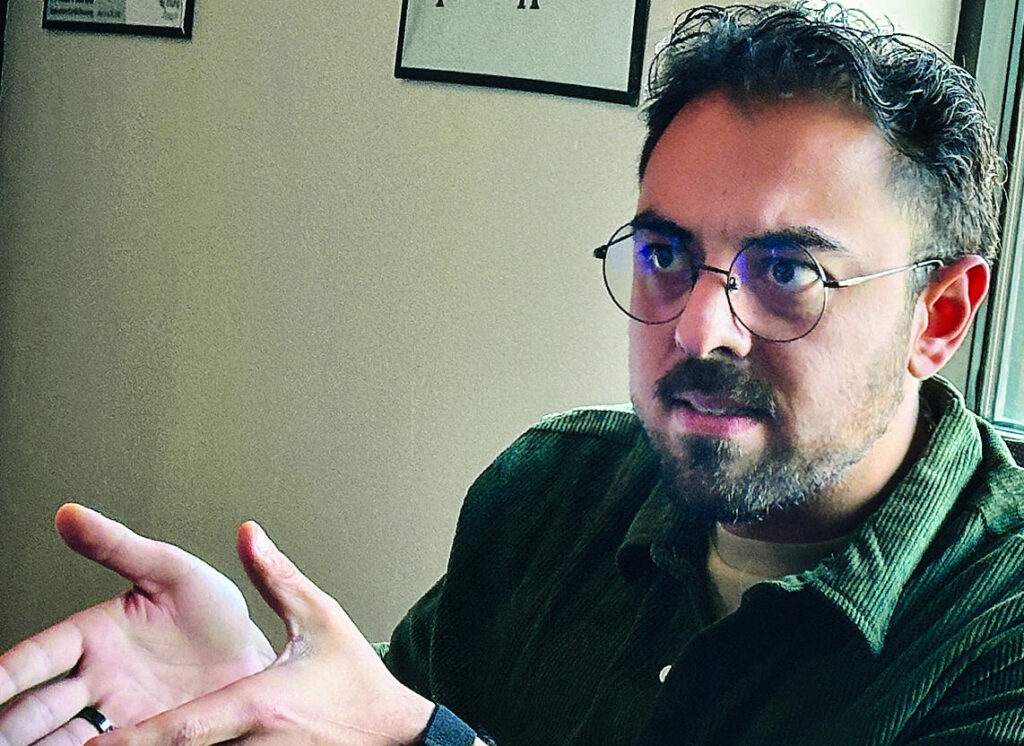
The Digital NEST tech nonprofit settled a sexual harassment lawsuit centered on allegations against Pajaro Valley Unified School District Trustee Gabriel Medina, according to court documents. A former employee filed the 2020 court action that involved incidents before Medina was elected to the public school oversight board.
The former employee—The Pajaronian withholds names of people who report sexual assaults—accused the Watsonville-based 501(c)(3) of enabling an alcohol-fueled sexualized workplace and of failing to adequately address Medina’s alleged sexual misconduct.
As Digital NEST’s assistant program director and digital arts and technology manager, Medina was the accuser’s supervisor. The accuser says the nonprofit later retaliated against him after he complained. In a response filed by the San Jose law firm Hopkins & Carley, Digital NEST denied the conduct and said the plaintiff engaged in conduct that could have resulted in his termination.
According to the lawsuit, Medina referred to himself as the “gay Trump” at a September 2018 wine-tasting event and said, “I grab guys by the balls.”
In October of that same year, Medina told coworkers about a trip to New York, in which “he had a man snort cocaine off of his penis in the men’s restroom then received oral fellatio from that man.”
The accuser said he found Medina’s comments “vulgar and offensive” but did not complain because supervisors were present and he believed doing so would be futile.
Later, at an April 19, 2019, employee retreat, employees drank mimosas at breakfast before participating in a scavenger hunt that ended at the home of then-Deputy Director Steve Bean.
Bean no longer works for Digital Nest. He could not be reached for comment.
The accuser alleged that an apparently intoxicated Medina arrived and continued drinking, despite Bean’s warning that they were at a work event and should moderate their consumption.
The complaint alleges that Medina made sexual comments about another male employee, grabbed and slapped the co-worker’s “glutes” and later pressed his pelvis against another male employee from behind.
The former employee said he believed that Digital NEST did not adequately address his concerns and eventually asked him to resign.
He sued the nonprofit in Santa Cruz County Superior Court in May 2020, alleging hostile work environment, retaliation, failure to prevent unlawful conduct and constructive wrongful termination.
Allegations denied
Digital NEST denied the accusations. Founder and CEO Jacob Martinez declined to comment for this story. He was not named in the allegations.
The accuser also opted not to provide comments, citing a nondisclosure provision in the settlement.
His attorney, Santos Gomez, similarly said he was bound by the agreement not to discuss the case. Gomez said only that his office does not file lawsuits unless it believes the cases have merit.
Court records show the parties agreed to settle in late 2021, and the case was subsequently dismissed with prejudice, meaning it cannot be refiled.
Sources familiar with the matter said the payout was in the six figures.
A successful nonprofit
Founded in 2014, Digital NEST (Nurturing Entrepreneurial Skills with Technology) was created to offer a range of technology classes to young people aged 12-24 and prepare them for an evolving job market.
The topics range from video and sound production to computer programming.
The nonprofit had $384,094 in revenues and $248,277 in expenses in 2014, according to public filings. Its budget grew to $4.7 million by 2024.
The organization’s mission is to provide “equal access to technology and resources.” Martinez has said he wants members to enter the job market with several industry contacts under their belts, along with real-world experience.
The organization expanded rapidly, with support from Silicon Valley Community Foundation, the Packard Foundation, the Gilroy Foundation and others. In addition to Watsonville, it also operates in Gilroy, Modesto and Stockton. Martinez said about 4,800 young people have come through its five centers.
A recent Pajaronian story featured a former student who has found success as a software engineer.
Allegations of harassment
The accuser was hired in July 2018 to work with Latino youth. His immediate supervisor was Medina.
The lawsuit alleged that Digital NEST “maintained an environment of alcoholism and unprofessionalism” and described several incidents involving Medina.
The most extensive allegations stemmed from the April 19, 2019, retreat.
During the employee retreat, the accuser alleged that Medina approached him as he tried to avoid Medina.
According to the complaint, Medina put an arm around the accuser’s chest and his right hand on his face. The accuser said he then felt Medina’s fingers moving toward his lips. When he tried to avoid the contact, the complaint states, Medina laughed and stumbled away.
The accuser later complained to Bean, who told him that other employees had also complained and that an investigation would be conducted, according to the lawsuit. The complaint alleged, however, that Digital NEST subsequently minimized what happened.
Medina responds
In an interview with the Pajaronian, Medina disputed significant portions of the accuser’s account while acknowledging that alcohol affected his behavior at the retreat.
Medina said employees had been drinking during the event and that he became intoxicated. He described himself as affectionate when drinking and said he remembered hugging people, but said he did not remember grabbing anyone’s buttocks or engaging in the other sexual touching alleged in the lawsuit.
“I don’t remember grabbing anybody’s glutes,” Medina said.
Asked specifically about allegations of sexual touching described in the complaint, Medina said, “I do not remember any of that.”
Medina said he was going through a difficult period at the time and was using alcohol to cope. He said the incident became a turning point, after which he went to therapy and eventually stopped drinking.
He also said he apologized to the accuser.
“If you felt like that, I already gave him my full apology,” Medina said. “Those were never my intentions.”
Asked about the allegation that he called himself the “gay Trump” and said he grabbed men by the genitals, Medina said he did not remember making the remark but added, “I’m always joking. So if it was said, I’m pretty sure it was a joking banter.”
Complaint and investigation
According to the lawsuit, Digital NEST placed Medina on administrative leave while an investigation was underway. The organization also arranged for the accuser to see a psychologist at its expense.
Medina returned to work May 9, 2019 after Bean said there were several tasks that Medina needed to return to the office to finish, according to the complaint.
The accuser alleged that because the two worked in the same office, he worried about being left alone with Medina and feared retaliation or another confrontation.
The complaint also describes a series of restorative justice meetings involving the accuser, Medina and other employees. The complainant alleged that the process made him feel pressured to forgive Medina and that his concerns were not adequately addressed.
At one meeting, according to the lawsuit, Medina acknowledged behaving inappropriately and attributed his behavior to drinking and blacking out. “I don’t know, I guess I was horny that night,” he joked.
Staff members laughed at that, the complaint says, and none of the facilitators interrupted to correct the remark.
The complaint says the accuser “felt disgusted, angered and paralyzed” by Medina’s behavior.
Medina told the Pajaronian that he does not remember many of the actions attributed to him.
“I don’t recognize the person that you all are telling me,” he said.
Retaliation alleged
The accuser alleged that after he complained about Medina, Digital NEST increasingly focused on his job performance and recruitment numbers.
He said he was uncomfortable recruiting young people into programs in which they might interact with Medina. The complaint states that he told the organization he did not want to recommend programs to parents and minors because he could not guarantee they would be free of harassment.
Medina disputed the suggestion that the accuser’s recruitment performance was scrutinized because of his complaint.
He said the accuser was generally a strong recruiter and “fantastic” with students but struggled with outreach to some groups, including the LGBTQ+ community.
“He was great at recruiting and going out to like sports events and clubs,” Medina said. “Other than that, he was fantastic.”
Medina said he turned supervision of the accuser over to others after the incident because he did not want him to believe that subsequent criticism amounted to retaliation.
The accuser formally resigned in October 2019 after being asked to do so. He later alleged that the circumstances amounted to constructive wrongful termination.
Digital NEST denies allegations
Digital NEST issued a general denial when it formally responded to the lawsuit in July 2020, disputing “each and every allegation” and denying that the former employee suffered damages for which the organization was legally responsible.
The response did not give Digital NEST’s account of the underlying incidents or specifically respond to each allegation against Medina. Instead, the organization raised 17 affirmative defenses.
Among other things, Digital NEST said that it took reasonable steps to prevent and correct harassment and retaliation and that the plaintiff failed to take advantage of available preventive or corrective measures. It also maintained that employment decisions involving him were based on legitimate, nondiscriminatory and nonretaliatory reasons.
Digital NEST further argued that the accuser’s own conduct may have contributed to his claimed damages, and it raised several procedural defenses. The court never ruled on those allegations or defenses because the case was settled and dismissed.
The settlement ended the litigation without a trial or adjudicating the truthfulness of the allegations.
Defense attorneys Ernest Malaspina and Jennifer Coleman did not respond to a request for comment.
Stepping away from the desk and giving back with Second Harvest Food Bank

Last week, four of my Lookout Santa Cruz colleagues and I stepped away from our desks for two hours to volunteer at Second Harvest Food Bank of Santa Cruz County. In those two hours, we packed more than 200 bags of groceries for local families – and left with an even greater appreciation for the people who make this work possible every day.
Our goal that morning was simple: help pack as many grocery bags as we could. Second Harvest aims to prepare around 600 bags in a single day to help serve families in our community who are experiencing food insecurity. While our group was busy filling bags, other volunteers were preparing and packaging fresh vegetables, bread and other groceries, working together to keep everything moving.
What stood out to me most was the pace and dedication of everyone in the room. Volunteers worked quickly and efficiently, knowing that every bag, box and package would eventually make its way to someone in our community who needs it. There was a real sense of purpose behind the work. Everyone had a job to do, and everyone was committed to doing it well.
It was also a reminder that giving back doesn’t always require a huge time commitment. Two hours may not sound like a lot, but together, our small group was able to help prepare more than 200 bags of groceries. Multiply that by the many volunteers who show up throughout the year, and the impact becomes significant.
For me, this experience was another meaningful opportunity to put into practice something I’ve been thinking about more and more: how can we, as a local company, continue to show up for the community we serve?
At Lookout Santa Cruz, we spend our days telling stories about this community, highlighting local organizations and businesses, and helping connect our readers with the people and places that make Santa Cruz County special. But there are also opportunities to step away from our desks and experience that community firsthand.
Volunteering at Second Harvest was one of those opportunities.
I was grateful to work alongside my colleagues and see firsthand the incredible amount of coordination, effort and care that goes into getting food from the food bank to local families. The work happening behind the scenes is admirable, and it takes an entire community of staff, volunteers, donors and partners to make it possible.
If you’ve ever considered volunteering with Second Harvest, I’d encourage you to give it a try. Whether you have a few hours to spare or are looking for a regular way to give back, it’s a tangible way to support local families and be part of something bigger than yourself.
I’m looking forward to continuing to find ways for our Lookout team to volunteer throughout Santa Cruz County. From packing groceries to cleaning up our beaches and supporting other local organizations, every opportunity to lend a hand is another opportunity to strengthen the community we’re lucky enough to call home.
Sometimes, making a difference starts with simply stepping away from your desk, rolling up your sleeves and asking, “How can I help?”
The post Stepping away from the desk and giving back with Second Harvest Food Bank appeared first on Lookout Santa Cruz.
Driver pleads not guilty to killing bicyclist in Soquel crash

A Santa Cruz man pleaded not guilty Monday to felony vehicular manslaughter, impaired driving and suspended license charges for a recent fatal collision involving a bicyclist in Soquel Village.
Eric Joseph Poore, 41, appeared Monday before Santa Cruz County Superior Court Judge Nancy de la Pena.
The California Highway Patrol arrested Poore after a 3:45 p.m. crash Friday, Sept. 11, on Soquel Drive near Porter Street. He had been driving a 2017 Chevrolet Silverado that collided with a bicycle.
The bicyclist, James Lynn Meeks, 57, died in a local hospital the next day. A spokeswoman for the county Coroner’s Unit of the Santa Cruz County Sheriff’s Office said she could not provide details of his residency and could say only that his family had been notified.
Some details were included in a criminal complaint filed by the Santa Cruz County District Attorney’s Office, though the final accident report has not been released.
Prosecutor Alex Byers stated Poore was leaving Sir Froggy’s Pub when he made an unsafe turn onto Soquel Drive and struck the bicycle. Poore did stop and participate in the investigation, Byers said in court Monday.
Yet he allegedly had a blood alcohol level of .011%, and was also under the influence of an unnamed drug, according to the criminal complaint. He had posted a $100,000 bail bond and remains out of custody.
Poore appeared to be alone in the courtroom. Noting the felony manslaughter charge, de la Pena told him she thought he needed an attorney and asked whether he agreed. Poore said he was “hoping to speak to a public defender.”
After he filled out a court form, she agreed. Poore said he was employed.
Byers asked the judge to “reevaluate [Poore’s] custody status,” given his large number of driving offenses. They date to 2008 and include five allegations of driving on a suspended license, including a pending 2023 hit-and-run case in Watsonville that caused property damage.
According to court records, Poore has received more than 15 traffic violations, including several tickets for speeding, an improper turn, and seat belt, insurance and registration violations.
The current case is more serious.
“This is a crime involving violence,” Byers said, adding that Poore’s record points to the potential for more to come.
But public defender Manuel Nieto disagreed, saying it was unclear what caused the accident and that the current, initial report is filled with blanks, including no mention of witnesses. He sidestepped a question from de la Pena about whether his client had a driver’s license, saying they were not disputing that allegation.
De la Pena left the bail bond intact but strengthened the conditions, telling Poore he could not sit behind the wheel of a vehicle—much less drive it—and could not even possess car keys.
She also told him he could not drink, must submit proof of “alcohol diversion” sessions or meetings at least three times per week and had to stay away from all bars, including Sir Froggy’s. She told him he could be tested or searched by law enforcement officers at any time.
Poore, dressed in blue jeans and a plaid button-down shirt, said “yes, ma’am” several times as the judge admonished him. He is due back in court Nov. 2.
Byers said he hoped to have the CHP’s accident reconstruction report by then.
Photo story: Hit-and-run driver injures woman

Emergency officials prepare to whisk an 80 year old woman to the hospital early Monday rafter she was struck by an SUV in the senior neighborhood of Pajaro Village in Watsonville. She was walking across Cynthia Drive at Tuttle Street around 6:20am when the white newer model SUV smashed into her and knocked her onto the pavement. As she began yelling for help the SUV sped off. Watsonville Police are investigating the incident. Anyone with information is asked to call 831.471.1151
Monday morning traffic: Highway 1 on-ramp at Park Avenue closed; Highway 9 lane closures

This post is updated throughout the day to reflect the latest incidents. It was last updated at 10:01 a.m..
Here’s what’s happening on the roads this morning…

▼︎ new incidents
Road incidents as of 10 a.m. on September 28- The on-ramp to southbound Highway 1 at Park Avenue in Capitola is facing closures for paving work. The closure is expected to last until Nov. 19.
- Alternating lanes are closed on Highway 9 at Pool Drive in the San Lorenzo Valley because of bridge work. The closure is expected to last until April 30, 2027.
Disclosure: Traffic incidents are partially generated by artificial intelligence. We are constantly working to improve the accuracy and quality of our AI-generated content. However, there may still be errors or inaccuracies. If you have any questions or concerns, please contact us.
The post Monday morning traffic: Highway 1 on-ramp at Park Avenue closed; Highway 9 lane closures appeared first on Lookout Santa Cruz.