
Tuesday morning traffic: Hwy 1 at Park Ave. closed for paving in Capitola

This post is updated throughout the day to reflect the latest incidents. It was last updated at 6:31 a.m..
Here’s what’s happening on the roads this morning…

▼︎ new incidents
Road incidents as of 6:30 a.m. on October 6- South Highway 1 at Park Avenue in Capitola / Soquel is facing closures for paving work. The closure is expected to end at 7:01 a.m. on Nov. 19.
- Highway 9 at Pool Drive in San Lorenzo Valley has alternating lane closures because of bridge work. The closures are expected to end at 6:59 a.m. on April 30, 2027.
- CHP helped Caltrans with scheduled maintenance work at the intersection of Highway 9 and Middleton Avenue in San Lorenzo Valley. The work started at 6:06 a.m. today.
Disclosure: Traffic incidents are partially generated by artificial intelligence. We are constantly working to improve the accuracy and quality of our AI-generated content. However, there may still be errors or inaccuracies. If you have any questions or concerns, please contact us.
The post Tuesday morning traffic: Hwy 1 at Park Ave. closed for paving in Capitola appeared first on Lookout Santa Cruz.
Pajaro Valley school board Area I race: Meet Andrew Goldenkranz, Robin Sukow and Meilin Obinata
Santa Cruz shaped Ben Flocks’ jazz career. Now he’s returning to Kuumbwa
Say yes to Measure E: A temporary commitment to protect the community we share
5 tax measures are on the California ballot. Here’s how to make sense of them all
New California law aims to stop ‘predatory’ developers from moving in on wildfire-ravaged community

This article originally appeared on Inside Climate News, a nonprofit, nonpartisan news organization that covers climate, energy and the environment. Sign up for its newsletter here.
Sylvie Andrews walks among the brilliant white poppies, purple California grapes and olive-green thorns surrounding her Altadena yard’s blackened pizza oven—one of the only things that survived last year’s devastating Eaton fire. But her eyes scan the block beyond, ever-aware of changes to her neighborhood.
Andrews says virtually all of her neighbors have received unsolicited offers for the empty plots of land where their homes burned as part of a recent push from developers moving into the wildfire-ravaged area.
She hasn’t herself yet, and Senate Bill 1090 — the Keep Altadena Land in Altadena Hands Act — signed last week by California Gov. Gavin Newsom, will make it less likely that she does.
But that doesn’t address the developments that have already been approved.
Will Andrews rebuild the home she lost in the blaze — completed in 2018 with Nick Wright, her partner at the time — in the place she has loved all her life?
“We don’t know,” the 46-year-old told Inside Climate News.
“We have to factor in questions about what our neighborhood will look like in five years. Will I rebuild my bungalow only to find that a developer buys the lot across the street, builds out to the property line and up two stories and blocks my view?” said Andrews, who is determined to never sell to a developer.
Andrews supports affordable housing and multi-family homes but doesn’t want her neighbor “to be some private-equity LLC shell corporation.”
The worry is not unfounded. Outside parties have advanced development more quickly in Altadena than owners of homes that burned have, interviews, local permitting records and data reviewed by Inside Climate News showed. While projects are also moving fast in the Pacific Palisades, Altadena’s older housing stock, historic layout and relatively lower fire risk have attracted droves of developers to an area with already strained infrastructure in the wake of the Eaton fire.
“There’s too many question marks right now,” said Andrews, who works helping businesses and seniors, mostly in Altadena, with computer tasks. “Like a lot of people, we’re waiting for the [Southern California] Edison lawsuit to settle, so we find out how much money we’re looking at. But that’s not the only factor.”
 A pizza oven is one of the only things on Sylvie Andrews’ property that survived the Eaton fire in early 2025. Credit: Carlin Stiehl / Inside Climate News
Another is how long it will take Altadena’s infrastructure to recover to make living tenable and affordable after the Eaton fire. The wildfire, which officials reported was sparked by an old Southern California Edison transmission line, burned over 14,000 acres, resulted in 19 deaths, destroyed more than 9,000 structures and damaged over 1,000 others.
Los Angeles County has issued more than 3,600 building permits within the Eaton fire burn scare between February 2025 and late September 2026.
SB 1090, signed by Newsom as the legislative session came to a close last week, limits controversial high-density development in two Altadena ZIP codes. In a letter accompanying his signing, Newsom said he recognized the community’s “desire for stability” as it charts its recovery.
But homeowners say plenty of projects have already slipped through the cracks. Inside Climate News has learned that as many as 60 new housing proposals — the vast majority from developers outside of the community, representing between 200 and 300 new structures — have already been approved in Altadena. SB 1090 does not affect any proposed developments with plans submitted prior to Oct. 1.
Laws to ease housing crisis complicate rebuildingLocal government officials and families allege that developers have seized on other state legislation, taking advantage of the development opportunities provided by Senate Bill 1123 and Senate Bill 9, in a community still in recovery.
SB 9, passed in 2021, allows lots to be split and additional residential development on qualifying single-family lots. SB 1123, which took effect four years later, allows for construction of up to 10 small homes on plots zoned for single-family homes.
The bills, created to help alleviate California’s crippling housing shortage, also make it more feasible for a property to be split into smaller parcels that can then be individually sold to multiple businesses or people.
Various proposals for duplexes and bungalow courts have moved forward in Altadena despite criticism from residents still getting back on their feet. They worry that new units will add strain to the already limited parking options and stray from the craftsman homes that traditionally dotted the community.
These projects also deviate from a development plan the community itself had worked on just before the Eaton fire and “welcome wholeheartedly,” said Shawna Dawson Beer, a longtime community organizer and one of the founding members of grassroots group Altadena for Accountability. The West San Gabriel Valley plan already included adding more housing, creating mixed-used corridors and walkable dense residential neighborhoods with infrastructure to support them.

Elizabeth Vazquez, a spokesperson for Los Angeles County Public Works — citing ongoing litigation — did not comment on permits issued under the senate bills passed to increase housing density before the Eaton fire.
She defended the county’s pace of advancing projects for ordinary homeowners, which some residents have called too slow.
“Our permitting departments have shortened review turnaround timelines and deferred or refunded more than $33 million in permitting fees for wildfire impacted residents,” Vazquez said in an email, noting the county has also piloted new programs to make the process smoother.
Vazquez said work to preserve and restore Altadena’s historic look and character “will inherently require more time and planning to rebuild.”
Matthew Lewis, a spokesman for California YIMBY, argues that SB 1090’s three-year pause on dense development will speed up the displacement it’s meant to prevent. He pointed to a Los Angeles Times analysis of permits from California fire zones, which found that only 38% of burned homes were rebuilt five years later.
Lewis, whose housing advocacy organization has more than 80,000 members, says the math is simple. Many Altadenans were underinsured and are now facing modern building costs, leaving rebuilding out of reach as they face years of “carrying the financial burden of an empty lot they can’t afford to build on,” he said.
“All a delay of three years achieves is it breaks the bank of the people who have to wait,” continued Lewis, who believes that SB 1090 has limited the options for property owners who can’t afford to finance a rebuild nor wait three years for the ban to end. “That seems like a very effective way to force people to sell.”
The middle-income families who made up much of Altadena won’t be able to come back, claimed Lewis, pointing out that lot splits and small multiplexes are often the only way owners can afford to stay after these incidents.
He described where Altadena residents stand today as “oppositional grief” that has become denial. “People have suffered a profound traumatic loss … I feel so bad that they’re in this place where they’re still so traumatized that they’re afraid to face that change.”
Nic Arnzen, who is on the Altadena council and whose own home burned down in the Eaton fire, was critical of the “Yes In My Backyard” contingent.
“We are more than doing our part in assisting with the state housing crisis and are on track to be building back well over 1,000 more units from what we had before,” Arnzen said. “While I usually appreciate the YIMBY intent, it’s way off base and out of line in this circumstance. This is a community still traumatized by the disaster we went through and to have come at us in this way is shameful.”
 Maryrose Smyth shows a picture on her phone of her home before it was destroyed in the Eaton fire. Credit: Nina Dietz / Inside Climate News
 Maryrose Smyth displays a completed piece of knotwork she saved from the Eaton fire. Credit: Nina Dietz / Inside Climate News
For Maryrose Smyth, the headaches on the ground continue to pile up. An artist — and the primary caregiver for her 18-year-old son, Sawyer, who has a rare genetic disease — Smyth likened building back in Altadena to sitting in a lifeboat and suddenly being told you don’t get oars.
In addition to the rebuilding hurdles, Altadena waited the longest of any community for federal disaster recovery funds.
“We’ve been living out of boxes now for 18, 19 months,” said Smyth, 66, who also shared that securing a builder has been challenging due to developers working on a glut of projects in the area.
“There are people who have a similar situation,” Smyth said, “where we’re caregivers. I’m a caregiver for our son, who has developmental limitations and challenges that we have to now create a new way around.”
Smyth, once an interior designer who curated her home with husband Mark Pickett, opposes much of the proposed development in the area, but would welcome affordable housing “if it’s done right.” She noted the community has not been consulted much amid the rebuild, and said she knows she’s likely to face a battle not unlike the one over affordable housing someday soon, when the time comes to find a group home for Sawyer.
“We need more affordable housing, but that’s what urban planning is for — not corporate developers and private equity,” said Smyth. “It should be done thoughtfully, so it is part of the community.”
“Stop the land grab”The signs, banners and posters jutting out of lawns, held at press conferences by wildfire survivors and hanging off chain-link fences are not subtle.
“Save Altadena. Stop the Land Grab.” “10 Houses on Single Family Lots All Over Altadena.” “Altadena Not For Sale.”
Just under 200 of the nearly 7,000 housing units destroyed in the Eaton fire have been fully rebuilt, according to the latest data from the L.A. County permitting office, leading survivors to complain of a painfully slow recovery from the disaster.
That’s left the region’s future unclear, and residents fearful that its historically diverse character may be in peril.
Nestled at the threshold of the Angeles National Forest, Altadena has been a bastion of Black homeowners for decades — 74% of Black households in the community owned their homes, versus 34% of Black households across Los Angeles County.
Only 18% of Altadena’s overall population is Black, but 11 of the 19 people killed in the Eaton fire were Black and nearly half of all Black households in Altadena experienced significant damage or lost their home entirely. The historically Black community in Altadena is located west of Lake Avenue — an area that has seen an influx of Latino families in the past 20 years and experienced some of the heaviest losses.
These are some of the communities bound to be displaced if developer trends continue at the current pace, locals say.
Newsom’s executive order from July 2025 — which gave local agencies the power to reject new duplexes in high-risk fire zones like the Pacific Palisades — did not apply to most of Altadena. Only the sliver of Altadena within the San Gabriel foothills sits within Fire Zone 0—the new Cal Fire designation of very high fire-hazard severity zone that requires property owners to create an ember-resistant barrier zone for the first five feet around their homes. Most of the area burned was considered so low-risk that the properties are not in any fire zone at all.
However, both the bills allowing multiple units to be built on parcels where a single home formerly stood, were specifically drafted for use on single lots in already dense residential areas, not to be deployed across large swaths of neighborhoods still in the midst of rebuilding, giving the Los Angeles County permitting office some leeway to block 1123 applications in Altadena.
As it stands, there is nothing stopping developers from buying a property and leaving it undeveloped for a few years while the rest of the neighborhood rebuilds, then applying for an 1123 permit. Some real estate influencers have promoted this form of disaster capitalism as a savvy investment move on Instagram and TikTok.
SB 1090 will be in effect from Oct. 1 through Jan. 7, 2030. Primarily sponsored by Sen. Sasha Renée Pérez, D-Pasadena, 1090 creates a three-year cooling-off period that will exempt Altadena from SB 1123. SB 9 can still be used by developers applying for projects.
“Altadena is a very working-class Black and Brown community, where they feel as though they’ve been treated very differently in this process,” Pérez told Inside Climate News shortly after the bill advanced. “I recognize that Altadena is not in a high-fire severity zone, but it was burnt down all the same.”
Making space and buying timeThe community has rallied around the local land trusts and cooperatives who wanted to use SB 1090 to create affordable housing that could help displaced fire survivors return to Altadena. The version of SB 1090 Newsom signed includes a carve-out for these groups, allowing them to use SB 1123 to create accessible housing.
Dawson Beer, the longtime community organizer, took issue with California YIMBY’s characterization of SB 1090 as legislation that will fast-track the displacement the bill aims to prevent.
“We removed SB 9 and got the county to expedite the bungalow court ordinance, to address the meaningful opposition issues,” Beer told Inside Climate News. “We reached a compromise that bars only the most egregious of these developments. And the ban only lasts three years.”
That’s not nearly long enough, she added.
Once all the lawsuits and insurance claims following the Eaton fire have been settled and residents have had time to rebuild, developers are welcome to consider any vacant parcels for future projects, she said.
Pérez did not rule out future bills and other resources to further help community members and shield them from what she called “predatory speculators” as Altadena recovers.
“We’ve not been in [this] kind of situation before, and so it’s caused us to have new conversations about how we define what urban infill is and how we want to approach rebuilding efforts like this one,” Pérez said.
Arnzen, the Altadena council member, said that since this spring, developers have ramped up efforts to push projects in Altadena through the permitting process.
Unable to keep up financially, some families have either moved away or begun to rebuild without knowing if they will be able to afford to finish without being heavily in debt.
An analysis by Inside Climate News done in August relying on data from grassroots groups in Altadena, property data aggregators and L.A. County’s own data found multi-home projects located in narrow thoroughfares and clusters of 10-unit developments set to break ground next to single-family bungalows.
The influx of properties themselves are only one way that the multi-home developments will change the area, residents warn.
Altadena — which local arborists say has already lost between 75 to 80% of its tree canopy to the fire and subsequent debris removal — could now lose even more as contractors clear land and bring in excavators and tractors to build large complexes in places locals say were not designed to accommodate them.
Roadway safety in the midst of potential future fires, if multi-unit homes take up narrow nooks around the community, is another worry.
The largest number of those new developments trace back to Ocean Development Inc, a Simi Valley-based company. Other projects have been connected to over 100 different companies, some with ties to private equity, and located out of state.
Inside Climate News did not hear back from several developers involved in local projects, including Ocean Development.
Los Angeles County has informed Altadena Town Council members of over 60 housing proposals permitted through a streamlined system set up by existing laws, Arnzen told Inside Climate News.
“It’s not like they’re going through a long, drawn-out and thoughtful permitting process,” said Arnzen, confirming that those projects represent 200 to 300 structures.
“They pretty much can’t be stopped,” Arnzen said. “There’s nothing we can do retroactive.”
But even the developers who got in before the governor signed SB 1090 will have more battles ahead of them.
Arnzen intends “to shame incoming predatory” development companies before they break ground. Residents will “make sure that they know we’re going to speak up through their entire process,” he said.
Have something to say? Lookout welcomes letters to the editor, within our policies, from readers. Guidelines here.
The post New California law aims to stop ‘predatory’ developers from moving in on wildfire-ravaged community appeared first on Lookout Santa Cruz.
PVUSD Superintendent Heather Contreras leaving for another role
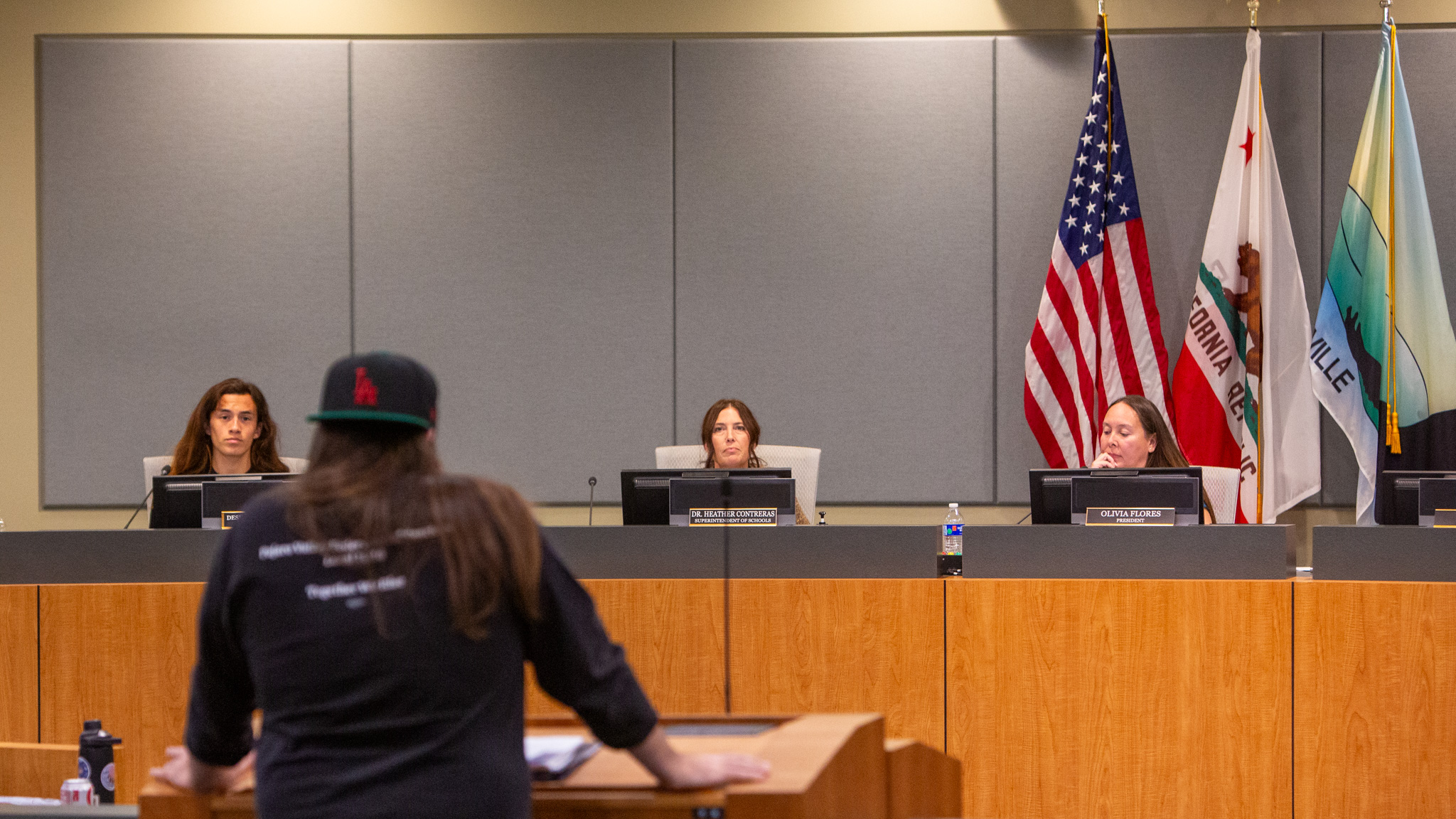
Superintendent of Pajaro Valley Unified School District, Heather Contreras, will leave her position once her contract ends in June. (Amaya Edwards — Santa Cruz Local/CatchLight Local)
WATSONVILLE >> Superintendent Heather Contreras is leaving the Pajaro Valley Unified School District after her contract expires in June. It was announced Monday afternoon that Contreras will be taking up the role of superintendent at San Luis Coastal Unified School District.
The announcement came after Mandy Dawson, executive assistant to the current Superintendent at SLCUSD, sent a message to San Luis Obispo families and the community announcing Contreras’ new role.
“Following a comprehensive search and input from parents, students, employees, and community members, our Board of Education has selected Dr. Heather Contreras,” the statement read. Contreras will begin her position as new superintendent at San Luis Coastal Unified School District July 1.
(function() { window.mc4wp = window.mc4wp || { listeners: [], forms: { on: function(evt, cb) { window.mc4wp.listeners.push( { event : evt, callback: cb } ); } } } })(); Stay informed on Santa Cruz County’s biggest issues. Santa Cruz Local’s newsletter breaks down complex local topics and shows residents how to get involved. Email address:mc4wp.forms.on('subscribed', function(form) { // gtag.js if(form.id == '6954') { gtag('event', 'subscribe', {'event_category': 'newsletter_prompt', 'event_label':'top_of_story'}); } }); Leave this field empty if you're human:
Contreras, who began her term as PVUSD superintendent in May 2024, agreed to a three-year contract with the largest school district in Santa Cruz County, with an annual base salary of $242,000 a year, with a 2% raise after one year.
Contreras and Alejandro Chavez, PVUSD’s public information officer, did not respond to repeated requests for comments.
In her nearly three years in the role, Contreras found herself at the center of many difficult decisions. She came under scrutiny concerning the overall health of the school district, and faced scrutiny from the Board of Trustees and the Pajaro community on many of her decisions.

Pajaro Valley Unified School District Superintendent Dr. Heather Contreras listens as community members speak at a PVUSD Board of Trustees meeting in Watsonville on Oct. 22, 2025. (Amaya Edwards — Santa Cruz Local/CatchLight Local)
One decision that upset community members was the hiring of Mark Herbst as deputy superintendent, after many stated that the job position was not made available to the public to review. Those in opposition also took issue with his $228,000 annual salary, saying those funds could have been better used elsewhere in the district.
Other decisions helmed by Contreras in the last year included laying off 130 full-time equivalent staff positions district-wide — jobs in special education, mental health and counseling clinicians — as well as numerous consultant contracts that came under scrutiny.
Contreras was responsible for the passage of Measure M, the $315 million bond that was approved by voters in 2024 to help fund construction and renovation of projects throughout the district. She also encouraged student involvement in district boards, and was essential in creating the “Core Six” — a group of students who met with her before board meetings to review agendas and provide feedback.
At the time she took the role, Contreras was the school district’s third superintendent within a three-year span. She’s focused much of her time on trying to fix a $15.3 million shortfall as a result of declining enrollment and the expiration of pandemic-era funding.
Brandon Diniz, president of the Pajaro Valley Federation of Teachers, told Santa Cruz Local that he could not comment on pending employment decisions regarding other districts, but that “our focus remains on collaborating with the PVUSD on our members’ working conditions, our students’ learning conditions, and advocating tirelessly that our students be put first.”
Prior to joining PVUSD, Contreras was an elementary school principal and assistant superintendent at Modesto City Schools, and was hired as PVUSD’s superintendent after Michelle Rodriguez announced her departure in June 2023.
The SLCUSD Board of Trustees is meeting on Oct. 6 to publicly announce Superintendent Contreras’ new appointment and contract. The search for a new superintendent came after Eric Prater, the longtime leader of San Luis Obispo schools, announced he will be retiring.
Questions or comments? Email info@santacruzlocal.org. Santa Cruz Local is supported by members, major donors, sponsors and grants for the general support of our newsroom. Our news judgments are made independently and not on the basis of donor support. Learn more about Santa Cruz Local and how we are funded.
Learn about membership Santa Cruz Local’s news is free. We believe that high-quality local news is crucial to democracy. We depend on locals like you to make a meaningful contribution so everyone can access our news. Learn about membershipThe post PVUSD Superintendent Heather Contreras leaving for another role appeared first on Santa Cruz Local.
Lookout in the Community: October events & ways to connect

With next month’s midterm elections on the horizon and Halloween fast approaching, the months are flying by! Luckily, October hosts an abundance of opportunities for locals to stay connected, informed, and even entertained, so don’t be scared of missing out on anything this spooky season. With a Trivia Night hosted by Wallace Baine and two public election forums, here are some places you’ll find Lookout this month.
At Lookout, we believe local journalism is about more than publishing stories. It’s about bringing people together, creating opportunities for conversation and helping our community stay informed and engaged. And if you value this kind of local journalism and community connection, become a Lookout member and help support the work we do across Santa Cruz County.
Lookout Mobile Newsroom | Oct. 6
We’re popping up at Abbott Square! Stop by to meet members of the Lookout team, ask questions, tell us what you’d like to see covered and learn more about how we serve the Santa Cruz community.
Capitola City Council Candidate Forum | Oct. 7
Join Lookout Santa Cruz for a public forum featuring candidates for Capitola City Council. It’s an opportunity to hear directly from the candidates about their priorities, perspectives and plans for the community ahead of the November election.
Felton Fire Candidate Forum | Oct. 13
Lookout Santa Cruz is hosting a public forum featuring the candidates running for two seats on the Felton Fire Protection District Board. Come hear directly from the candidates about their perspectives on the fire district’s future, their priorities and the issues facing the community.
Lookout Trivia Night | Oct. 14
Put your local knowledge to the test at our next Trivia Night at Abbott Square, hosted by Lookout’s Wallace Baine. Gather your team, brush up on everything from Santa Cruz history to pop culture and get ready for a fun night with fellow community members.
We’re proud to partner with local organizations to highlight events that reflect the heart of Santa Cruz County. It’s all part of our mission to make local news a living, breathing part of community life. And we couldn’t do it without our marketing partners, who help us spotlight key happenings across the county. Interested in joining our media sponsorship program? Contact Duffy Barrett at duffy@lookoutlocal.com.
Here are some great October events to check out from our partners:
Explore Santa Cruz County’s creative community during the 41st annual Open Studios Art Tour. More than 350 local artists will open their studios to the public over three weekends: South County was Oct. 3-4, North County is Oct. 10-11 and countywide is Oct. 17-18. The tour runs 11 a.m. to 5 p.m. each day.
Save our Shores: Annual Coastal Cleanup Day | Oct. 12Give back to our coastline during Save Our Shores’ annual coastal cleanup. Grab your friends and family and spend part of the day helping keep Santa Cruz County’s beaches and waterways clean while connecting with fellow community members.
Festival of Monsters – Hosted by UCSC | Oct. 14-18Get into the Halloween spirit with UCSC’s Festival of Monsters, a celebration of all things monstrous, mysterious and supernatural. Hosted by the Center for Monster Studies, the festival brings together events and activities exploring the cultural history and enduring fascination with monsters.
Trick or Treat at Capitola Mall | Oct. 30Get a head start on Halloween with a free family-friendly trick-or-treating event at Capitola Mall. Kids can dress up in their favorite costumes and visit participating stores for treats and Halloween fun.
The post Lookout in the Community: October events & ways to connect appeared first on Lookout Santa Cruz.
Body found on Larkin Valley Road
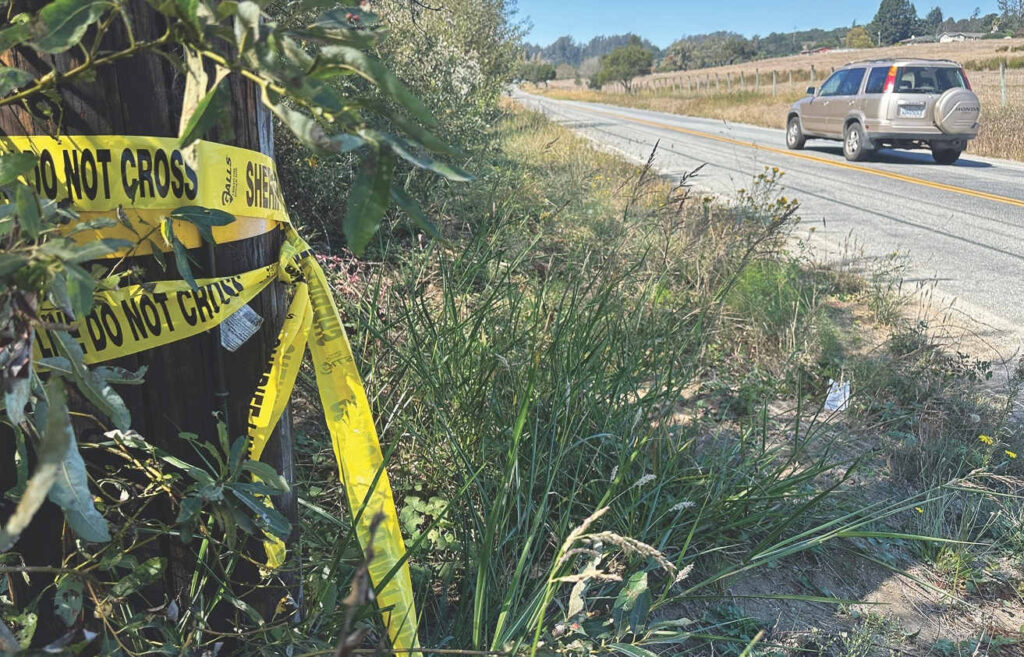
The Santa Cruz County Sheriff’s Office has opened an investigation after deputies found a body on Larkin Valley Road.
On Oct. 3 at approximately 6:59pm, deputies responded to reports of an unresponsive male on Larkin Valley Road near Windsong Way in the unincorporated area of Watsonville.
When first responders arrived they found the victim dead.
The death is being investigated as a homicide, The Sheriff’s Office said.
The victim’s identity will be released once family members have been notified.
No arrests have been made.
Anyone with information is asked to call 831.471.1121.
PVUSD Superintendent Heather Contreras leaving for San Luis Obispo district

Two and a half years after taking the helm of Pajaro Valley Unified School District, Superintendent Heather Contreras will be leaving for a new post.
Contreras has been selected to become superintendent of San Luis Coastal Unified School District on July 1, 2027, following the retirement of current Superintendent Eric Prater, according to a Facebook post by SLCUSD Trustee Michael Glavan.
The SLCUSD Board of Trustees is scheduled to vote on her appointment Tuesday night.
“We are excited to welcome Dr. Contreras to San Luis Coastal Unified School District (SLCUSD),” Glavan wrote. “With 25 years of experience in public education and a strong commitment to students, educators, and community, she brings a wealth of leadership and dedication to our district.”
Contreras did not respond to a request for comment Monday.
Her departure will come a little more than three years after she took the helm of PVUSD on May 1, 2024.
Contreras began her tenure with what she called a “Look, Listen and Learn” tour, meeting with students, teachers, community members, nonprofit organizations and law enforcement officials to assess the state of the district.
In a 2025 interview with The Pajaronian, Contreras said those meetings generated more than 1,500 responses that helped shape district goals covering academics, professional development, fiscal responsibility and employee recruitment and retention.
Much of Contreras’ tenure has been dominated by PVUSD’s financial challenges, including declining enrollment and the expiration of one-time federal Covid-19 relief funding that had been used to pay for employees.
As the district faced millions of dollars in reductions, Contreras oversaw the creation of the Sustainable Budget Team, a 24-member group tasked with examining the district’s finances and recommending cuts.
Contreras told The Pajaronian in 2025 that the process was designed both to involve the community in difficult budget decisions and to help the public better understand school finance.
“School finance is really complex,” she said at the time. “There are so many rules that govern how we spend our money. So I think it’s been a real educational tool for people.”
Her tenure also included the passage of Measure M, the $315 million general obligation bond approved by voters in November 2024 to fund construction and renovation projects throughout the district.
Contreras has also worked to increase student involvement in district governance. That included creating the “Core Six,” a group of students who meet with the superintendent before Board of Trustees meetings to review agendas and provide feedback to the district’s student trustee.
PVUSD has also worked under Contreras to address declining enrollment by expanding programs and looking for ways to keep students in the district. Those efforts have included expanding Mar Vista Elementary School to serve transitional kindergarten through eighth grade, restructuring Pacific Coast Charter School and exploring an early-college partnership with Cabrillo College.
At the same time, the district has continued to struggle with academic performance, particularly in math, as students recover from learning losses associated with the Covid-19 pandemic.
Contreras’ time with the district has also been marked by turmoil on the Board of Trustees, where discussions have at times veered away from district business and into disputes among board members.
The Pajaronian will update this story as more information becomes available.
County brings voter services to local libraries through Ballots & Books
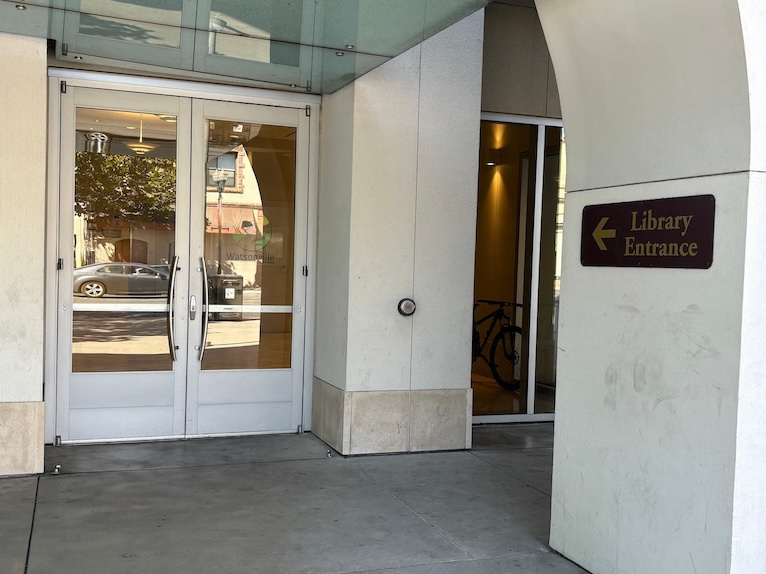
Santa Cruz County residents will be able to register to vote, obtain replacement ballots and get other election services at eight local libraries this month.
The Santa Cruz County Clerk/Elections Office is holding its Ballots & Books events throughout October in preparation for the Nov. 3 General Election.
Residents can register to vote, drop off completed ballots, obtain replacement ballots and vote using an accessible ballot. Elections staff will also be available to answer questions and provide information about voting.
Activities for children will be offered to give families an opportunity to learn about elections together.
The South County events are Oct. 17 from noon-4pm at the Watsonville Public Library, 275 Main St., and the Freedom Branch Library, 2021 Freedom Blvd.
The full Ballots & Books schedule is:
Oct. 15, 1:30-5:30pm
Boulder Creek Library
13390 West Park Ave., Boulder Creek
Oct. 16, 12:30-4:30pm
Capitola Library
2005 Wharf Road, Capitola
Oct. 17, noon-4pm
Watsonville Public Library
275 Main St., Watsonville
Oct. 17, noon-4pm
Freedom Branch Library
2021 Freedom Blvd., Freedom
Oct. 21, 1:30-5:30pm
Downtown Santa Cruz Library
224 Church St., Santa Cruz
Oct. 23, 12:30-4:30pm
Branciforte Library
230 Gault St., Santa Cruz
Oct. 24, 12:30-4:30pm
Aptos Library
7695 Soquel Drive, Aptos
Oct. 26, 1:30-5:30pm
Live Oak Library
2380 Portola Drive, Santa Cruz
For information, visit votescount.santacruzcountyca.gov or contact a participating library.
Monday morning traffic: Highway 9 lane closures, Highway 1 paving, Highway 236 delays

Here’s what’s happening on Santa Cruz County roads this morning…

▼︎ new incidents
Road incidents as of 6 a.m. on October 5- Highway 9 at Pool Drive in the San Lorenzo Valley has alternating lane closures because of bridge work. This is expected to continue until April 30, 2027.
- The on-ramp from Park Avenue to southbound Highway 1 in Capitola is facing closures for paving work. The closure is expected to end on Nov. 19.
- There is one-way traffic control on Highway 236 at Boulder Brook Drive in the San Lorenzo Valley because of pavement repair. The closure is expected to end at 1:59 p.m. today.
- A lane on eastbound Highway 152 at Clifford Drive/Ohlone Parkway in Watsonville is closed for core drilling. The closure is expected to end at 2:01 p.m. today.
Disclosure: Traffic incidents are partially generated by artificial intelligence. We are constantly working to improve the accuracy and quality of our AI-generated content. However, there may still be errors or inaccuracies. If you have any questions or concerns, please contact us.
The post Monday morning traffic: Highway 9 lane closures, Highway 1 paving, Highway 236 delays appeared first on Lookout Santa Cruz.
Santa Cruz mayor race: We fact-checked two disputed claims about Ami Chen Mills and Ryan Coonerty
Carmageddon: Aptos Village property dispute over rail trail heads to trial Oct. 19
California colleges don’t have enough housing for students. Will these four new laws help?

This story was originally published by CalMatters. Sign up for its newsletters.
Many California college students struggle to find affordable housing. Gov. Gavin Newsom signed a package of four bills last week meant to speed up the process of building student housing and reduce the cost for developers.
Newsom also signed a law earlier this month giving former foster youth and unhoused students priority for student housing. The law also allows those students to defer their student housing payment until they receive their financial aid.
“It’s really about a package of laws to try and handle the demand that exists for students,” said Assemblymember David Alvarez, a Democrat from Chula Vista and author of one of the laws, Assembly Bill 1732, the marquee bill of the package that exempts student housing projects from the California Environmental Quality Act.
Additionally, the laws include incentives for developers to build affordable housing. They also reduce obstacles to student housing projects by exempting them from local ordinances and blocking frivolous lawsuits.
Shaun Chilton, president of the Associated Students of Cuesta College in San Luis Obispo, said he’s heard from students who say it’s difficult to find housing, and they sometimes cram themselves together four to a room.
With the limited housing, San Luis Obispo can be an expensive place to live. A five bedroom, 2,400-square-foot house near Cuesta College costs $12,000 a month to rent, according to rent.com, which also lists one-bedroom studios for $1,900 to $2,600 a month.
“We see a lot of uncomfortable housing situations at ridiculously high price points,” Chilton said.
All five laws were sponsored by the Student Housing Coalition. Four of them help developers overcome barriers to building more affordable student housing units. The coalition started in 2022 by what outgoing coalition chair Kate Rodgers described as a group of student “housing nerds” who saw a need for a pro-housing movement.
Student housing is “kinda seen as small potatoes” compared to larger statewide development problems, according to Rodgers, who is now the legislative director of California YIMBY in Sacramento.
“Our counterpoint as an organization to that is, the University of California and the California State University are far and away the largest public institutions that house people,” Rodgers said.
Laws from 2025 are moving housing projects alongBoth on- and off-campus student housing projects have faced multiple delays in the past due to zoning restrictions and lawsuits. Rodgers identified several projects where new laws have helped developments avoid similar issues.
According to Rodgers, a UC Santa Barbara development that is underway did not have to meet California Coastal Commission minimum parking requirements due to a law signed in 2025 compelling the commission to defer to state or private colleges and universities when determining parking needs for residents of their housing projects.
Construction began in June and the university plans to move students in by fall 2028.
In another example, Santa Monica College and the Student Homes Coalition co-sponsored a successful bill in 2025 exempting California community colleges from local zoning requirements for student housing projects on land owned or leased by the college.
Now the college is moving forward with a project to house 750 students. It will be developed through a public-private partnership between Santa Monica Community College District and Michael’s Student Living.
Additionally, the San Bernardino Community College District utilized the same new law when it filed for exemption from local zoning laws for its Legacy Village housing development. The project includes 452 student beds, 180 workforce housing units, and retail space.
Rodgers said Student Homes Coalition’s core strategy is to work with developers every step of the way when putting together bills to address developer-side construction costs and delays. “We do not want to be spending our time on something that is not going to produce units,” she said.
Student housing now exempt from CEQA reviewAs part of the latest round of new laws, the Student and Faculty Housing Opportunity Act adds public colleges and universities to a law passed last year allowing CEQA exemptions for affordable housing developments. However, because public university properties are under the jurisdiction of the state, they didn’t qualify for the exemption under that law.
CEQA requires local and state agencies to provide a report assessing the potential impacts of a large project on the environment and take steps to lessen those impacts. Developers can be sued over allegedly inadequate findings or mitigation measures in these reports, which can slow down or halt projects entirely. The exemption aims to streamline affordable housing projects.
Alvarez told CalMatters that this bill in particular is intended to apply to on-campus housing projects at universities with adequate capacity.
“But some universities don’t have on-campus capacity, so they will be allowed to utilize this tool to streamline the construction of [housing] off campus,” he said.
 An aerial view of the new family student housing development near the base of the UC Santa Cruz campus in April 2025. Credit: Kevin Painchaud / Lookout Santa Cruz
Numerous organizations and individuals supported the bill, including California YIMBY, Student Homes Coalition and the University of California Student Association.
Kai Wang, a first-year political science major at UC Davis, spoke in support of the bill before members of the Assembly Committee on Housing and Community Development on April 13.
“Higher education should be opening doors, not leaving students searching for one,” Wang said.
Even with the CEQA exemption, developments remain open to litigation that can slow or stop them. Democratic state Sen. Angelique Ashby of Sacramento wrote Senate Bill 916, which will help prevent bad-faith lawsuits against student housing developments.
Current law allows courts to require a plaintiff to put up bond money for lawsuits against low- or moderate-income housing projects when a court finds the lawsuit frivolous or meant solely to slow or stop a project. The new law extends this same protection for student housing projects.
One new law, Assembly Bill 2118, streamlines the approval process for building mixed-income housing along commercial corridors. Another new law, Assembly Bill 2480, adds incentives for developers when they set aside part of their projects for affordable housing.
Currently, off-campus housing developments that set aside 20% of their units for low-income students qualify for these incentives, which include the ability to add more units and reduce parking. The new law gives even more incentives for dedicating at least 24% of the units for low-income students.
Foster youth, unhoused students get priority housingSome of California’s most vulnerable college students, those who are unhoused or in the foster system, now have priority for on-campus student housing. Newsom signed Assembly Bill 2766 on Sept. 14, adding the state’s community colleges to the list of campuses required to give priority housing to those students.
The bill also requires community colleges and California State University campuses to identify eligible students via housing applications, advertise housing benefits on their websites, and defer fees and housing deposits until students receive their full financial aid.
They must also prioritize eligible students for the NextUp foster youth support program, which provides them support and can include housing.
The University of California campuses are requested to do the same, but cannot be required due to their being constitutionally independent.
Diana Karageozian, lead clinical case manager at Fresno State’s Center for Essential Needs, said she’s looking forward to this law.
“I think people kind of forget about college students and how hard it is,” Karageozian said.
More funding for affordable student housing will be on the California ballot this November. Proposition 1 would allow the state to borrow $11.25 billion in bonds to fund housing projects across California. Some of that would go to efforts like student housing, tribal housing and farmworker housing.
Aaron Friesen and Anahid Valencia are contributors with the College Journalism Network, a collaboration between CalMatters and student journalists from across California. CalMatters higher education coverage is supported by a grant from the College Futures Foundation.
Have something to say? Lookout welcomes letters to the editor, within our policies, from readers. Guidelines here.
The post California colleges don’t have enough housing for students. Will these four new laws help? appeared first on Lookout Santa Cruz.
Fact check: Could California lawmakers expand the billionaire tax to everyone?
Missing 14-year-old found safe in Mexico; father arrested

A 14-year-old girl who disappeared with her father while authorities investigated the death of her newborn daughter has been found safe in Mexico, and her father has been arrested, the Monterey County Sheriff’s Office announced Sunday.
The victim was rescued by Mexican law enforcement, according to the Sheriff’s Office. Her father, Sergio Galvez Perez, 38, was arrested during the operation after authorities allegedly found him in possession of narcotics.
Mexican authorities are also aware that Galvez Perez faces charges in Monterey County for alleged crimes against the victim, Sheriff Tina Nieto said.
“Monterey County Sheriff’s Office detectives have worked closely with the FBI and Mexican authorities to secure [the victim’s] safe rescue,” Nieto said.
The victim is currently in the care of authorities in Mexico. The Sheriff’s Office did not say when or where in Mexico she was found, or when she could return to the United States. The investigation remains active, and officials said additional information will be released at a future press conference.
The Pajaronian does not generally identify victims of sexual assault. Although authorities have publicly released the girl’s name in connection with the investigation and the Amber Alert, The Pajaronian is withholding her name because she is an alleged victim of sexual abuse.
The discovery ends a search that began as investigators looked into the Aug. 1 death of a newborn girl, whom authorities have called “Baby Angelita.”
The baby was found dead alongside Struve Road in north Monterey County. Investigators later determined that the victim, who was 14, had given birth alongside the road and left the newborn there. A post-mortem examination found signs of traumatic injury, according to the Sheriff’s Office. The victim was subsequently identified as a suspect in the baby’s death.
But investigators have also described the girl as the victim of alleged sexual abuse by her father.
Sheriff’s investigators previously said Galvez Perez is the biological father of both the victim and Baby Angelita. Authorities allege that he sexually abused and impregnated the girl when she was 13. Warrants were issued for his arrest on suspicion of incest, lewd or lascivious acts with a child under 14, lewd acts with a minor, unlawful sexual intercourse, child concealment and child endangerment.
The victim’s mother, Ofelia Garcia Ortega, 36, was previously arrested on suspicion of felony child endangerment. Investigators said the charge stemmed in part from allegations that she failed to obtain medical care for the girl when circumstances should have prompted her to do so.
The search intensified in early September after investigators discovered surveillance footage showing the victim and Galvez Perez together in the Salinas area in a white Nissan Altima without license plates. The footage allowed authorities to confirm that the two were together and provided enough information to request an Amber Alert. They had last been seen in Salinas at about 2am Aug. 4.
At the time, investigators said they did not know whether the girl was with her father voluntarily or against her will.
The Sheriff’s Office said Sunday that a press conference will be scheduled to provide more details about the investigation, the victim’s rescue and Galvez Perez’s arrest.
PVUSD trustees to consider teacher contract
Pajaro Valley Unified School District trustees on Wednesday will consider final approval of a three-year contract with the district’s teachers union that includes ongoing salary increases while the district continues to grapple with substantial deficit spending.
The Pajaro Valley Federation of Teachers has already ratified the tentative agreement, which covers the 2025-26 through 2027-28 school years. Board approval would finalize the agreement and resolve negotiations between the district and union.
The agreement gives PVFT members a 2% ongoing salary increase retroactive to July 1, 2025, followed by 1% increases in 2026-27 and 2027-28. Because these increases compound, salaries will be about 4.05% higher by 2027-28.
Because PVUSD already closed its books for 2025-26, the retroactive 2% increase will be paid during 2026-27. Combined with the current-year increase, that produces a 5.02% disbursement impact in 2026-27.
The AB 1200 financial disclosure estimates the compensation increase for roughly 1,051 represented employees at about $2.51 million for 2025-26, $2 million in 2026-27 and $2.81 million in 2027-28.
The agreement also restores a $250 classroom-supply reimbursement beginning in 2026-27, increases instructional aide support for general-education kindergarten classrooms and makes numerous changes to workload, hours, leaves, evaluations, transfers and other working conditions.
Beginning in 2027-28, Aptos High School will move from seven periods to six and eliminate its additional collaboration period. PVUSD projects the change will reduce staffing by eight full-time-equivalent teachers and could affect the number and types of courses offered.
The agreement would also resolve two pending unfair labor practice cases, which the district and union have agreed to withdraw with prejudice after final approval.
The settlement comes as PVUSD continues to face significant financial challenges.
The district says the agreement will create deficit spending in the current year and increase deficit spending in subsequent years. The ongoing costs will be funded primarily through the district’s unrestricted fund balance and reductions in some operating expenses.
For the combined general fund, the settlement adds about $6.64 million in expenditures to the 2026-27 budget. After other budget revisions, PVUSD projects its fund balance will decline by about $14.18 million this year, $24.65 million in 2027-28 and $17.58 million in 2028-29. The combined general-fund ending balance is projected to fall from about $86.6 million this year to $44.3 million in 2028-29.
Those projections assume PVUSD will implement $20 million in additional funding or ongoing expenditure reductions by 2027-28. That budget-balancing target existed before the settlement and has not increased as a result of the agreement.
Despite the projected deficits, PVUSD says it can afford the agreement. The district projects reserves of 3.04% in 2026-27, 3.12% in 2027-28 and 3.01% in 2028-29, remaining just above California’s 3% minimum reserve requirement.
The Board of Trustees will meet on Wednesday at 6pm in the PVUSD Boardroom at 294 Green Valley Road in Watsonville. For information, visit bit.ly/4rJdK3C
Watsonville releases General Plan 2050

The City of Watsonville has released its General Plan 2050, a sweeping update that will guide development, housing, transportation and conservation in the city for the next quarter-century.
The plan replaces the city’s 2005 General Plan and establishes policies governing Watsonville’s growth and investment through 2050.
Under the plan’s buildout projections, Watsonville could accommodate as many as 5,980 new homes and approximately 2.67 million square feet of new commercial and other nonresidential development.
The plan focuses much of the city’s future growth in downtown Watsonville, along the Freedom Boulevard and East Lake Avenue corridors and in designated new growth areas.
It also calls for a wider variety of housing, new employment and commercial development, regional retail, visitor-serving businesses and recreational uses.
Other goals include preserving agricultural land and natural open space, improving parks and community facilities, making streets more accessible to different modes of transportation and rerouting truck traffic around the city.
The General Plan also updates Watsonville’s land-use map and establishes goals, policies and implementation measures that will guide decisions on future development.
The city will hold a community open house Oct. 14 from 5:30-7:30pm in the Civic Plaza Community Room. A presentation is scheduled for 6pm.
Following the presentation, attendees can visit stations focusing on the city’s growth strategy, land use, transportation, parks and conservation, public services and safety, and the Watsonville Municipal Airport.
The draft General Plan is available at watsonville.gov/2440/General-Plan-Update.
Information about participating in the General Plan process is available at bit.ly/WatsonvilleGPUGetInvolved.