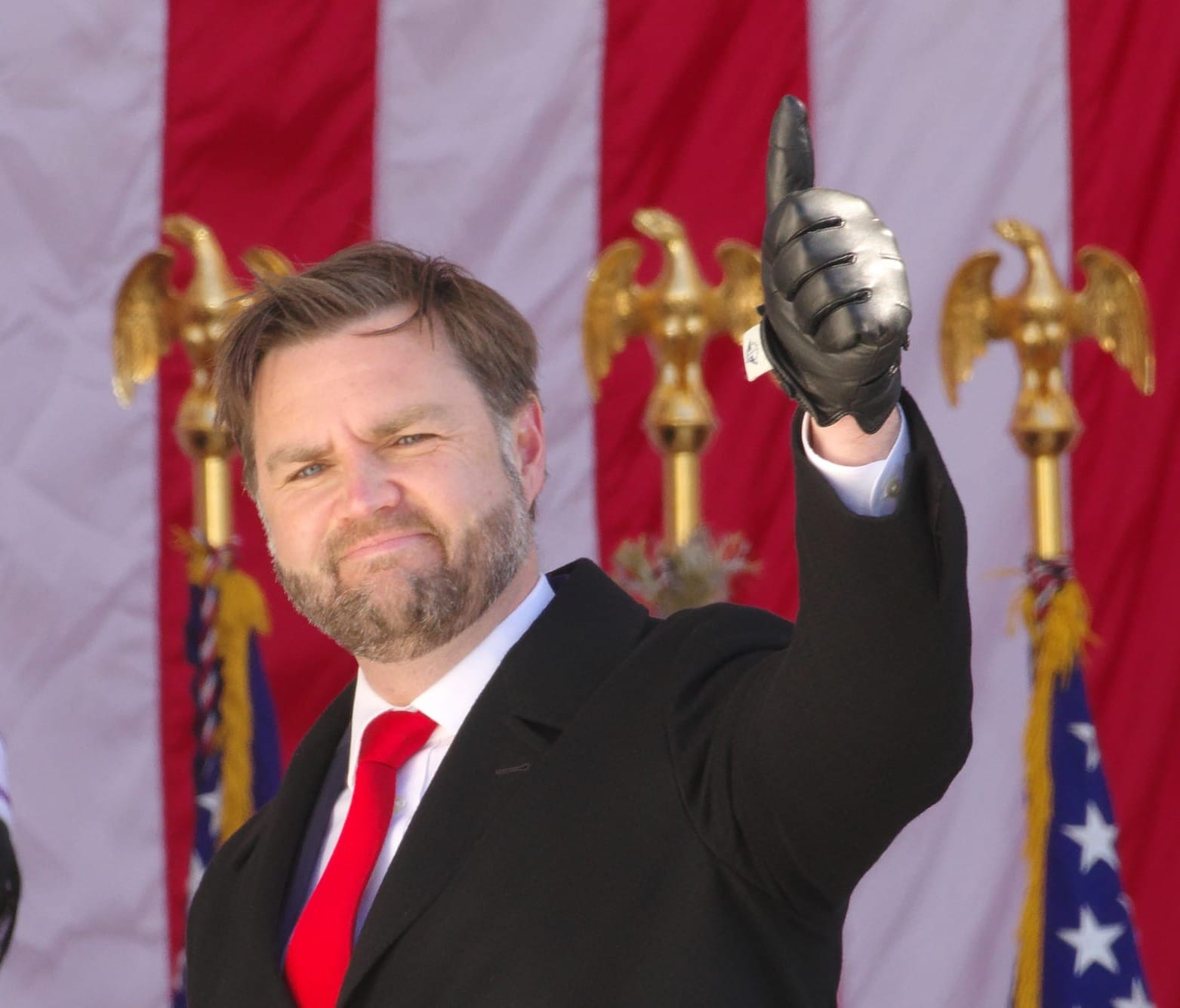
Trump, 80, Appears to Forget That He Blew Up Canada Trade Talks

The New Republic - Wed, 08/26/2026 - 07:38

Does President Donald Trump even know how trade talks with Canada fell apart?

After negotiations with Canada imploded last week, both sides started pointing fingers. U.S. officials, like JD Vance, blamed Canada for introducing new asks late in the talks, while Canadian officials claimed that it was the U.S. who brought unreasonable 11th hour demands to the table.

In a phone call, CNN’s Jim Sciutto asked Trump whether the U.S. had been the ones to make late-stage demands. The president seemed to have no recollection of these events.

“That sounds like me,” he said, adding “They have to pay a fair amount. And if they don’t pay a fair amount, we won’t make a deal. That’s fine.”

Right before the deadline, American negotiators reportedly walked back their promise to drop tariffs on Canadian automobiles from 25 to 15 percent, revealing that they planned to exclude medium and heavy-duty trucks. They also tried to restrict Canada’s ability to strike trade deals with other countries. It was also reported that one reason Canadian negotiators walked away was that the U.S. made what were, in their view, unreasonable demands restricting French-language product documentation.

“Our culture, our language, is central to our identity, and it is important to exclude that from the negotiating table,” Canadian Premier Christine Fréchette said, “Even though we are threatened with different tariffs, it won’t change. We will stay the way we are.”

Trump has since threatened to double tariffs to 50 percent on roughly $28 billion worth of products starting on January 1. In response, Canadian Prime Minister Mark Carney, announced a slate of retaliatory tariffs on about 700 products up to 50 percent that will go into effect on September 8.

Categories: Political News

Judge Overturns Drag Show Ban, Tells Those Offended “Just Don’t Go”

The New Republic - Wed, 08/26/2026 - 07:35

A federal judge struck down a Texas ban on drag shows on Tuesday, ruling it was unconstitutional—and that anyone who really has that much of a problem with it just shouldn’t go.

The law known as Texas Senate Bill 12, which is supported and enforced by Attorney General and Republican Senate nominee Ken Paxton, would have fined business owners up to $10,000 for hosting events with “sexually oriented performances.” The performers themselves faced the potential of a Class A misdemeanor, which can carry up to a year in jail.

U.S. District Judge David Hittner, a Reagan appointee, ruled that the law was a vague and unconstitutional restriction on free speech.

“For those who find such activities as described in this case offensive, the solution is relatively simple ... just don’t go,” he wrote.

Hittner also used Elvis Presley, Miley Cyrus, and recently deceased country music legend Dolly Parton as examples of why the drag ban was unconstitutional.

“Just as many people criticized Elvis’s signature hip gyrations and were offended by his display of male sexuality, chastised Dolly Parton as a voluptuous sex symbol because of her big hair, flamboyant clothes and breast exposure, and shamed Miley Cyrus for ‘twerking’ on stage during a live performance at the 2013 MTV Video Music Awards, there are ‘erotic’ elements in countless popular performances that could be subject to both civil and criminal penalties under S.B. 12,” he wrote.

“The Texas drag ban was blocked the same day we lost Dolly Parton. I couldn’t have ever guessed this day,” said Brigitte Bandit, a drag queen and plaintiff in the case who often performed as Parton. “Drag is free speech, bitch.”

Categories: Political News

Trump Just Used a $500 Million Clean Steel Grant to Fund a Coal Furnace

Mother Jones - Wed, 08/26/2026 - 07:30

This story was originally published by Canary Media and is reproduced here as part of the Climate Desk collaboration.

A $500 million Biden-era grant to decarbonize steelmaking has been refashioned by the Trump administration to upgrade a coal-fueled blast furnace in southern Ohio.

On Friday, Cleveland-Cliffs confirmed that the US Department of Energy had changed the scope of the previously awarded funding for Cliffs’ Middletown steel mill—the longtime economic engine of Vice President JD Vance’s hometown. Vance and Energy Secretary Chris Wright visited the plant on Friday to tout the federal investment.

“The DOE’s support for this project is a testament to the importance of preserving the blast furnace route to produce automotive-exposed grade steels in the US,” Cliffs CEO Lourenco Goncalves said in a statement. The Middletown plant makes steel used in the exposed parts of cars, trucks, and SUVs.

Today’s announcement makes official what Cliffs has been signaling would happen in recent months. The change of plans has drawn pushback from green-steel advocates and some Middletown residents, who say they are dismayed that funding meant to slash industrial emissions could potentially amp up local air pollution instead.

“Cleveland-Cliffs and JD Vance need to get rid of coal and go back to the original project that would clean up the air we breathe and improve our health,” Donna Ballinger, who lives in the shadows of the Middletown steel mill, said Friday in a news release shared by the Sierra Club.

Cliffs initially planned to use its half-billion-dollar award to replace its aging blast furnace with cleaner, hydrogen-ready technology and electric furnaces. In March 2024, the Biden administration’s DOE chose Middletown as the place to unveil its broader, $6.3 billion program for decarbonizing key US manufacturing sectors, which was primarily funded by the 2022 Inflation Reduction Act.

Globally, iron and steel production generates roughly 9 percent of human-caused CO2 emissions every year, and the vast majority of that pollution comes from using coal in blast furnaces. Replacing the centuries-old technology is considered key to limiting the worst impacts of climate change, and global efforts to clean up steelmaking are advancing, though in fits and starts.

Cliffs’ original project would’ve replaced coal with natural gas—and eventually hydrogen—eliminating roughly 1 million tons of planet-warming emissions. But after President Donald Trump took office in 2025, the Ohio-based steelmaker recommitted itself to using ​“beautiful coal” at the Middletown steel mill.

Under its current plan, Cliffs says it will refurbish and optimize the 73-year-old blast furnace so that it can run for potentially another two decades. The manufacturer will also install a cogeneration plant that uses waste gases from the blast furnace to generate steam and electricity for the steel mill’s operations. Cliffs said it will invest $500 million of its own money to match DOE’s grant.

Cliffs first outlined the new direction in a February air-permit application submitted to Ohio’s environmental regulator. It wasn’t clear then whether this work would be funded by the DOE, given the nature of the grant program.

However, in July, Goncalves said during an earnings call that the company aimed to redirect the $500 million grant to align with the Trump administration’s priorities. Friday’s announcement cements those plans, with the DOE having ​“established a framework for Cliffs to finalize negotiations and implementation plans” for the Middletown project, Cliffs said.

In a news release, the DOE said the company ​“determined that the business case for the original project scope no longer made sense given customers’ unwillingness to pay a ​‘green premium’ for steel. Working with the DOE, Cleveland-Cliffs identified a viable alternative that will upgrade and improve the efficiency of its existing coal-fired blast furnace” while also capturing waste gas.

A former DOE official noted that Congress legally mandated that the grant funding be used to, in the words of the Inflation Reduction Act, enable ​“advanced industrial technology”—defined as something ​“designed to accelerate greenhouse gas emission reduction progress to net-zero at an eligible facility.”

The Middletown project’s revised scope will move the steel mill away from achieving net-zero emissions, not toward it, the former official said.

As Cliffs sees it, the steelmaker is ​“going above and beyond a standard blast furnace reline, to include the most advanced technology available,” Goncalves said in Friday’s statement, referring to the cogeneration plant and other planned energy-efficiency improvements.

“Cleveland-Cliffs is making a decisive investment in the future of American steelmaking and manufacturing,” he said.

Categories: Political News

Aug. 26: Trump’s trade war gets stupider … and more!

Daily Kos - Wed, 08/26/2026 - 07:29

6 minutes agoWalter EinenkelRepublican blames Iran for making Trump sad. Copy linkShare on FacebookShare on XShare via email 9 minutes agoWalter EinenkelTrump adviser blames Canada for making Trump sad. Copy linkShare on FacebookShare on XShare via emailTickarooLive Blog Software…

Source

Categories: Political News

Memes and Machine Guns: How Brandon Herrera Built a Path to Congress

Mother Jones - Wed, 08/26/2026 - 07:24

If you want to get acquainted with Brandon Herrera, the gun influencer currently favored to win a tight congressional race in South Texas, his YouTube channel offers many opportunities. You could feast your eyes on his most-watched video, with 13 million views, wherein he uses a rifle and head and torso ballistics models to recreate the assassination of JFK. Or there’s the one where he calls a World War II-era machine gun the “original ghetto blaster” and goose-steps to the tune of Nazi military songs. In an episode of his podcast, he brags about owning a copy of Hitler’s Mein Kampf, and, departing from his interest in Nazis, he has also appeared with the neo-Confederate group Sons of Confederate Veterans and calls the Civil War the “War of Northern Aggression.”

In an article about Herrera’s excesses and his successes, the New York Times declined to print some of his most profane viral statements “because this is a family newspaper.” I suspect Mother Jones readers may prefer the unabridged edition, so here goes: In a 2023 video, Herrera referred to children as “cum trophies.” Of mothers’ views on current events, he said, “Just because you let somebody creampie you doesn’t mean I have to give a shit about your political opinions.” When Austin-American-Statesman reporter Faith Bugenhagen asked the Herrera campaign about those remarks, the team replied with a photo of a cream pie (the baked good, to be clear).

Herrera, whose campaign slogan, naturally, is “Let’s Go Brandon,” is what’s known in online parlance as an edgelord—an influencer whose entire brand consists of off-color jokes and offensive remarks designed to titillate, outrage, and garner attention. This gambit is not new; the shock jocks of talk radio’s glory days (think early Howard Stern) figured this formula out decades ago—though at 30, he wouldn’t remember all that.

But these days, shit posting alone is not enough to win votes; witness the recent crashing and burning of James Fishback, the Florida groyper who lost the Republican gubernatorial primary with only 10 percent of the vote. Or the case of Casey Putsch, the Ohio challenger to Vivek Ramaswamy’s run for governor whose campaign included antisemitic dogwhistles. In that primary, Putsch got just 17.5 percent of the vote. 

What sets Herrera apart from these mere provocateurs is his massive online fanbase: 4.2 million subscribers on YouTube, where he is known as the AK Guy, after the abbreviation for Avtomat Kalashnikova, the Russian phrase for automatic rifle. His 12-year-old channel is a mix of gun history, memes, and genuine feats of engineering. In 2024, wearing a “More Liberty Less Government” t-shirt, he successfully built and fired the prototype of an AK-50, a long-range rifle that has long been the holy grail of automatic weapon enthusiasts.

A man wearing ear and eye protection aims a large rifle equipped with a scope and bipod while resting it on a white folding table at an outdoor shooting range.Herrera in his AK-50 video.YouTube

Herrera’s success proves that a candidate can harness an online following into a formidable campaign—one whose true supporters are not voters in his district but rather a geographically dispersed, chronically online group of (mostly-male) fans. This model is adjacent to the “network state,” a concept coined by Silicon Valley entrepreneur and investor Balaji Srinivasan, a close friend of PayPal founder Peter Thiel and a former colleague of venture capital titan Marc Andreessen. In Srinivasan’s vision, digital networks can amass physical land, forming new sovereign nations. Herrera’s campaign proves they can do something potentially even more powerful: They can accumulate an impressive amount of political capital—thus transforming a scattered online audience into a powerful base and financing juggernaut.

Indeed, Herrera’s campaign is funded almost entirely by people outside his district. In recent months, he has solicited campaign donations on his YouTube channel, sometimes offering donors entry into a raffle for a Cold War-era collector’s item, an AC-556 machine gun. What he does with his donations is unclear; they are funneled through an unregistered opaque entity. Jacob Ware, an extremism researcher with Georgetown University and the author of the 2025 book God, Guns, and Sedition: Far-Right Terrorism in America, has observed this phenomenon firsthand. “In the past people would have idiosyncratic or individual ideas but wouldn’t be able to build political movements on that because they were just so disparate,” he said. But now, thanks in large part to social media, this scattered group of people can come together around a shared interest to back “a local candidate and pour their resources and hopes and dreams into him, thinking this is a foothold in the national political picture.”

What makes the success of this impassioned Second Amendment advocate even more improbable is that his district includes the sites of two high-profile mass shootings: Uvalde, where a gunman killed 19 children and two teachers in 2022, and El Paso, where a white supremacist killed 23 people in a Walmart in 2019. A poll earlier this year conducted by the gun control advocacy group Giffords surveyed 600 likely Texas Republican voters in the Senate runoff and found overwhelming support for firearm safety policies like background checks and red-flag laws.

Despite those headwinds, as of mid-August, Herrera was leading his opponent, Democrat Katy Padilla Stout, by six points. He has also garnered powerful endorsements from like-minded celebrities, including right-wing podcasters Tim Pool and Benny Johnson as well as a motley crew of organizations: the Freedom Caucus Fund, MAHA Action, and the National Women’s Prayer and Voting Army, to name a few.

Conspicuously absent is the National Rifle Association, which Herrera has criticized for being a fusty boomer relic that is overly accommodating to gun safety groups. After initially supporting Tony Gonzales, Herrera’s opponent in the primary, House Speaker Mike Johnson did an about-face this summer and began campaigning for Herrera. As someone who has tirelessly promoted traditional family values, Johnson is an awkward spokesman for a candidate whose statements about children and mothers are profane enough to exclude them from the pages of the New York Times. No such awkwardness faces President Donald Trump, who endorsed Herrera in a March post on Truth Social: “Brandon is strongly supported by many Highly Respected MAGA Warriors in Texas, and Republicans in the US House,” he wrote. “HE WILL NEVER LET YOU DOWN!”

Raised in a military family in the Fort Bragg-adjacent community of Fayetteville, North Carolina, Herrera’s interest in firearms began in middle school and obviously never waned. He dabbled in building guns as a teen. After a short undergrad stint as a pre-law student at a nearby Christian college, he dropped out to focus full time on manufacturing firearms through his business, The AK Guy Inc., and building his YouTube channel. In 2020, he moved to Texas, where he plugged into a thriving community of firearms enthusiasts and launched his gunsmithing company. The following year, he built and fired the AK-50, a move that immediately increased his prestige in the firearms world.

“If you vote against our interests, if you vote against gun rights, if you vote against the Constitution. We will challenge you, we will primary you, and we will win. We will take your fucking job.”

The Uvalde school shooting happened two years after Herrera moved to Texas, and in response, lawmakers in the state introduced new legislation to tighten firearm regulation. Tony Gonzales, the Republican who represented Texas’ 23rd district, was the only Republican to vote in favor of the new law—so Herrera took it upon himself to unseat him. “If you vote against our interests, if you vote against gun rights, if you vote against the Constitution,” he warned Gonzales at a 2024 gun rights rally in Colorado, “we will challenge you, we will primary you, and we will win. We will take your fucking job.”

Herrera did not, in fact, take Gonzales’ fucking job in the 2024 election cycle—he lost, but barely. Gonzales won by 1 percent, a margin of about 400 votes. Two years later in this election cycle, Herrera ran another extremely tight race, drawing 41 percent of the vote to Gonzales’ 43 percent, thus triggering a runoff. But two days after the primary, Gonzales suspended his campaign (and later resigned) after being accused of having had a sexual relationship with an employee who later committed suicide. In his victory speech, Herrera thanked “all those #TX23 constituents that support our campaign.”

Two men in suits stand on a stage in front of an American flag, smiling as they hold their joined hands high and point toward each other.Florida Congressman Matt Gaetz raises Brandon Herrera’s hand after both speak at a rally for Herrera in March 2024. Herrera was campaigning with Matt Gaetz before his runoff against US Rep. Tony Gonzales.Jessica Phelps/San Antonio Express-News; Getty

In reality, the support of all those #TX23 constituents appears to be dwarfed by the support of internet randos. Just shy of 96 percent of individual contributions to his campaign came from donors outside his district—and 84 percent were from a different state. The Federal Election Commission’s database revealed donors from nearly every state, from many walks of life. Top individual donors included former Florida Republican congressman Matt Gaetz and billionaire and current NASA administrator Jared Isaacman, each of whom has given the maximum individual donation of$12,000. Other donors of more than $1,000 included Silicon Valley managers, a Campbell’s soup factory worker, a technician at a Toyota plant, an associate producer at National Public Radio, and many retirees.

Herrera’s fundraising isn’t the only unconventional part of his campaign finance activities. His federal disclosures list a single mysterious entity as the recipient of more than 99 percent of the campaign’s spending—more than $2.7 million. That entity, a business called Texas Strategy Group, doesn’t appear to be listed in any registry as a commercial vendor. In May, the election spending watchdog Campaign Legal Center filed a complaint about Herrera’s campaign with the FEC, alleging that Texas Strategy Group is “a mere shell entity established to serve as a payment clearinghouse for the committees to conceal who they are actually paying.”

Herrera’s campaign didn’t respond to questions from Mother Jones about the Texas Strategy Group or anything else. The FEC, meanwhile, is unlikely to act on the allegations any time soon—because the agency currently has only two commissioners, and four are required to enforce campaign spending rules. This lack of oversight has created a free-for-all, creating a gray area for rules around campaign transparency, said Campaign Legal Center’s director for federal campaign finance reform, Saurav Ghosh. His organization has documented several other such cases recently—but the proportion of spending that Herrera’s campaign sends to Texas Strategy Group, he said, puts it “really at the far end of the spectrum.”

It’s unclear whether Herrera’s far-flung donors are concerned about where their money is going. David Meyers, a researcher with the campaign watchdog group Open Secrets, told me the nationalization of local races has become increasingly common, but even in that context, Herrera’s reliance on donors outside of his own district is “an outlier.” His YouTube following was likely playing a key role in driving those out-of-district contributions, Meyers said, and noted, “Having that kind of presence on an issue that people care about is going to help drive those donations.”

Real estate developer and investor Josh Abbotoy has thought a lot about the qualities that allow online communities to amass real-world power. Abbotoy is the founder of the Highland Rim Project, an initiative from a Christian venture capital firm called New Founding. The company seeks to build neighborhoods with Christian values in rural America in which, as it has outlined in the “philosophy” section of its website, “our patrimonial civic rights, chiefly those of property, free political speech and civilian armament, can be maintained and perpetuated.”

Tapping into communities that share those values has worked to Abbotoy’s advantage—he has sold land to friend groups “that wanted to go in together to buy a property somewhere, but they could never quite reach critical mass,” he said. “But then when you build like a neighborhood like that, they’re like, ‘Oh, we’ll just all buy in there.’” The people who have coalesced around Abbotoy’s Highland Rim Project are not the same as Herrera’s gun-fanatic followers, but both are striking examples of the increasing political and economic relevance of shared-interest digital communities: in Abbotoy’s case, an IRL community, and in Herrera’s, a formidable, galvanized political force.

Of course, there are other reasons for Herrera’s success. Jason Blazakis, a researcher who oversees Middlebury College’s Center on Terrorism, Extremism, and Counterterrorism, sees House Speaker Mike Johnson’s endorsement as a shrewd political move aimed at uniting an increasingly fractured national base. Johnson’s endorsement of Herrera, he added, could even be interpreted as an “olive branch” between the pro-Israel camp, which Johnson supports, and Herrera-aligned America-first anti-interventionists. “It makes sense to see someone like Johnson try to prop up someone like Herrera to show that there is a broad tent within the Republican Party,” despite Herrera’s profane persona being out of step with Johnson’s wholesome image, he said.

When news outlets have confronted Herrera with his most controversial statements, Herrera has dismissed them; he was obviously being ironic, he says, and if you didn’t understand that, you are clearly a humorless scold. As he told the New York Times, “I know the difference between the way that you speak in a comedy performance, so to speak, and the way that you speak in a political environment.”

But some of his followers appear to be taking him literally. Take Robin Westman, the gunman who killed two children and injured 17 people at a Catholic church in Minneapolis before taking his own life last year. In a video he made shortly before his deadly rampage, Westman spoke favorably of Herrera. “He and I had a conversation, a brief conversation,” Westman said. “We agreed on a lot of things. So, y’all should vote for Brandon Herrera for president.”

Herrera later said in a tweet he didn’t remember meeting Westman, and that he was “sickened and angry about this clearly hate-motivated attack on innocent children, and disgusted that my name came out of this demon’s mouth.”

But his followers, more than a thousand of whom rushed to defend him in the comments on that tweet, didn’t appear to be concerned. “You were clearly only singled out by the shooter as a ridiculous attempt to smear your name,” tweeted an X account named Roman Helmet Guy.  “They will always come for the most effective voices in any natural freedom movement,” added a user named Patri0t. “This is planned.” A third saw it as a political sign. “If this isn’t a sign that Brandon Herrera is the right guy for the job,” the user wrote, “I don’t know what is.”

Categories: Political News

Did the Lindsay Clancy Trial Need to Happen?

Mother Jones - Wed, 08/26/2026 - 07:23

Over the course of nearly a month, Lindsay Clancy has stood trial for the January 2023 killings of her three young children, a catastrophic tragedy that has riveted the country. The scenes unfolding in Judge William Sullivan’s courtroom in Plymouth, Massachusetts, have been excruciating.

“I can’t do this,” Clancy sobbed at one point, as testimony about the fatal injuries she inflicted on her children was delivered. Patrick, Clancy’s former husband, who has publicly forgiven her, took the stand amid viral conspiracy theories suggesting that he was the one who really killed their children. Then there were the family members, including Clancy’s mother and sister, who testified to Clancy’s declining mental health in the months before she killed her children, forcing them to relive the pain of a loved one struggling to get the help she begged for. Meanwhile, outside the courtroom, hundreds of people, mostly women, have turned up to support Clancy. Many argue they could have easily been in her place because of the systemic failures around maternal health. Indeed, postpartum psychosis affects roughly one to two out of every 1,000 women after giving birth.

One must wonder if prosecutors ever regret the decision to go to trial.

“It’s a witch hunt for fame,” forensic psychologist Leslie Dobson told a criminal justice podcast in early August, arguing that prosecutors should have offered a plea agreement and civil commitment rather than push a murder trial. “If the prosecutors think they’re winning by winning, they’re horrible people.” The rage resonates across social media, where threads pondering the same themes are rampant, and the prosecution’s strategies, including invoking “mortal sin” in questioning Patrick Clancy’s mother, have been roundly condemned. “This prosecution is a malicious circus with no benefit,” one observer wrote on Facebook.

Lindsay Clancy, a woman with long brown hair wearing a peach-colored blouse, hangs her head in her hands while seated at a table. On the table in front of her are stacks of folders, photo albums, and a box of tissues. Lindsay Clancy holds her head as she listens to a description of her children’s injuries during her murder trial August 18, 2026, in Plymouth, Massachusetts.John Tlumacki/Boston Globe/AP

To be sure, Clancy has her detractors. There are those, including prominent right-wing commentators, who call her a “monster” who methodically killed her children and should be punished. Others, like Katie Miller, go further: “Lindsay Clancy deserves to die for murdering her three children.”

Such exhortations for severe punishment tend to elide two certainties: No one, neither Clancy nor her defense team, disputes that she killed her children. And regardless of a verdict, Clancy will never be free. Even if she wins, she will be committed, likely for life, to a psychiatric hospital. Which forces an uncomfortable question: Should this ever have gone to trial?

I spoke with Marisol Orihuela, a clinical professor at Yale Law School and director of the Mental Health Justice Clinic, about the avenues the prosecution could have pursued—and the inherent challenges of evaluating mental health within the American criminal justice system.

Let’s start by defining what it means to evaluate competency to stand trial. What is the difference between competency and the insanity defense?

That’s a great question, because the two can often get confused. Anyone criminally charged in the United States has a due process right to be competent during certain critical moments in criminal proceedings. That includes pleading guilty or standing trial. When someone does not have a rational understanding of the proceedings or cannot rationally assist in their defense, then they do not have the competency to stand trial, and the prosecution cannot proceed. That is different from what we call the insanity defense, or a defense where someone is not criminally responsible for the actions that occurred based on a mental health condition. That has more to do with someone’s ability to appreciate right from wrong at the time of the offense.

“There is another justification in criminal law: retribution…I think that’s what might be one of the motivators for this prosecution.”

My understanding of what the commonwealth is arguing is that Lindsay Clancy wanted to and tried to specifically kill the children and had the intent to kill the children and knew what she was doing. Competency is not an issue here. It’s really about criminal responsibility, which also matters for what happens after the trial. In jurisdictions around the country, when someone is acquitted based on a mental health condition, what follows is commitment based on that status.

In the Clancy trial, what incentivizes prosecutors to deliver such a harsh sentence?

If we give every benefit of the doubt to the commonwealth in this case, we would have to think that they really believe that she is criminally responsible, that she understood right from wrong. And the way that we give meaning to that is to provide a very lengthy sentence. We call these justifications for sentencing and how to respond to crimes through sentencing. Another justification is what we call deterrence: an effort to prevent this person from doing it again or to send a message to the rest of the community so nobody else does it. Prosecutors might think that they need to deliver a hefty sentence to send that message.

But here in this case, Clancy is not going to be free, no matter what happens. And I think there’s a really good debate about what role deterrence has here. But there is another justification in criminal law: retribution. That you did something really wrong, so we’re going to give meaning to that wrongness by imposing a lengthy sentence—and I think that might be one of the motivators for this prosecution. I haven’t watched the whole trial, but the parts I have watched and some of the questions, specifically how they’re phrased by the prosecution, suggest a level of blame-worthiness on Lindsay Clancy, especially for having concerns about taking medication.

Another feature of the Clancy trial I found illustrative of the way our society treats mental health as an individual responsibility is some of the resources that were provided to Lindsay when she sought help. For example, when asked what resources were offered to her upon discharge from one of the treatment facilities, one of the psychiatrists pointed to a guide to going on Psychology Today, which, as many can relate to, isn’t exactly adequate. People who turn to it still have a really tough time finding care. Thinking that Psychology Today is an appropriate resource for someone who might be in crisis is a real thing that we should talk about. Yet it’s being presented as, “How could Lindsay not have done more?”

Similarly, another psychiatrist testified that Lindsay was able to access care on the online portal and that she could have easily contacted her provider for additional crisis resources. But this expectation that someone in crisis is going to have the wherewithal to go on an online portal to find out the right information, as opposed to trying to make information immediately available to them in any particular moment, or having follow-ups of people who are calling her, is another illustration of how we see how we have a system that’s really based on individual responsibility and an assumption that treatment is easy and that it always works.

I’ve seen the argument floating around that this case never should have gone to trial. Can you speak to that?

I don’t know a ton about what happened in plea negotiations; I only know what’s been reported in the news. But my understanding is that the defense would have agreed to a plea of the commission of the acts but that Clancy was not criminally responsible based on her mental health condition at the time of the offense. In other words, an agreement to commitment under that statutory scheme. But the prosecution was not interested in that. The thing to know is that the prosecution, in this case, the government, can decide whether they think it is valuable to its jurisdiction to proceed with a criminal trial. So they made that decision. Why? I don’t know the factors that went into that decision. But I think that people are raising really good questions about the decision to go to trial. Because trials have costs, not just to the defendant. There’s also a cost to every witness.

“Trials have costs, not just to the defendant. There’s also a cost to every witness.”

There are other victims in this case. The husband. He lost three children. His family is a victim. The grandparents who testified. They lost three grandchildren. I even wonder what it’s like to be one of the medical professionals that attempted to treat Lindsay. Assuming the best intentions for each medical professional, they wanted Lindsay to be well, and Lindsay was not well, and that has to be a difficult thing for a doctor. Now these individuals are being put through a lengthy trial. So again, I think there are really good questions about what purpose and what proper justification the criminal law is really serving. Especially when incapacitation will be met, no matter what. So what is a trial really doing in this case? And is it worth the costs of what they’re imposing on everybody going through it?

How does the legal system hurt people with mental health vulnerabilities? Why are prosecutors so incentivized to deliver harsh sentences, and how does this come up in cases involving mental health?

I could not do that question justice. But the mental health system and the criminal system have long been in conversation. Because the criminal system does not exist separate of the mental health system. Both because jails and prisons are massive providers of mental health care to the population doesn’t necessarily mean that they provide great mental healthcare, and because there are so many individuals in the criminal system who have mental health conditions. This is one of the main places where people get some kind of mental healthcare.

“There are really good questions about what purpose and what proper justification the criminal law is really serving. Especially when incapacitation will be met, no matter what.”

They’re also really related because of exactly the kind of things that are getting reported about the Lindsay Clancy trial, which is that even if her defense team is successful in having her not be held criminally responsible for the killing of her children, that does not mean that Lindsay Clancy goes and lives a life that you and I may be living. Like, she will not be going to get ice cream tomorrow or to the grocery store or hold a job. She will be committed to a facility that we call a hospital, but in many ways bears resemblance to a jail or prison, in that she is not free to leave, that she will be forced to undergo the treatment that is being offered to her, and will likely be detained for very long periods of time, if not for the rest of her life. Which brings up the question that some people are talking about, which is: What is the value of a criminal prosecution when incapacitation could be met through other avenues?

Psychosis is already so misunderstood among the general public, how it operates, that it can wax and wane, etc. How does the legal system fail to address conditions like psychosis?

The legal system has expectations for what should flow when something is attempted. But mental health conditions can be very complex, and the legal system is not designed for the nuance needed to handle them. In my work representing people with significant mental disabilities, both in the criminal system and in the civil commitment system, different mental health conditions can have overlapping criteria. For example, sometimes doctors will have different views about what the actual mental health condition that a particular individual meets criteria for. The criminal system wants to have criminal responsibility flow from a set of actions and wants to know intent. And intent is a very difficult concept to understand and to prove, particularly when we’re talking about a moment in time that has passed.

It’s all so depressing.

It’s very sad. But I think that’s one of the things that appears to be resonating for many people who are tuning in to this trial: that this is a horrible, horrible, horrible thing that has happened to three young kids and that every aspect of this is incredibly sad. And people are wondering about how we provide mental healthcare to try and avoid things like this happening. It is all incredibly sad.

What are some ways society can center mental health to help prevent these kinds of tragedies?

Everybody wants to know what kind of world we could build to avoid the awful tragedy that occurred. We won’t ever know exactly what could have prevented it. But this case is not just raising questions around the mental healthcare system, but also more broadly, including postpartum care in general. One of the things to think about in the mental healthcare system is that we underfund community-based supportive mental healthcare systems, both at the beginning and after any period of commitment. Testimony from the Clancy trial really illustrates that postpartum and mental healthcare were not thought of holistically. So you could imagine people who go to the home and provide both medication management therapy and postpartum care. That’s helping take care of the kids, helping get Lindsay to sleep, which seemed to be a significant issue for her in the months preceding the killings. These are the kinds of things that a society that prioritizes care as a normative matter does, where we approach getting people support and care as something that we really value, and do it as a matter of economics. That this is where we choose to spend the dollars that we have.

Categories: Political News

Did the Lindsay Clancy Trial Need to Happen?

Mother Jones - Wed, 08/26/2026 - 07:23

Over the course of nearly a month, Lindsay Clancy has stood trial for the January 2023 killings of her three young children, a catastrophic tragedy that has riveted the country. The scenes unfolding in Judge William Sullivan’s courtroom in Plymouth, Massachusetts, have been excruciating.

“I can’t do this,” Clancy sobbed at one point, as testimony about the fatal injuries she inflicted on her children was delivered. Patrick, Clancy’s former husband, who has publicly forgiven her, took the stand amid viral conspiracy theories suggesting that he was the one who really killed their children. Then there were the family members, including Clancy’s mother and sister, who testified to Clancy’s declining mental health in the months before she killed her children, forcing them to relive the pain of a loved one struggling to get the help she begged for. Meanwhile, outside the courtroom, hundreds of people, mostly women, have turned up to support Clancy. Many argue they could have easily been in her place because of the systemic failures around maternal health. Indeed, postpartum psychosis affects roughly one to two out of every 1,000 women after giving birth.

One must wonder if prosecutors ever regret the decision to go to trial.

“It’s a witch hunt for fame,” forensic psychologist Leslie Dobson told a criminal justice podcast in early August, arguing that prosecutors should have offered a plea agreement and civil commitment rather than push a murder trial. “If the prosecutors think they’re winning by winning, they’re horrible people.” The rage resonates across social media, where threads pondering the same themes are rampant, and the prosecution’s strategies, including invoking “mortal sin” in questioning Patrick Clancy’s mother, have been roundly condemned. “This prosecution is a malicious circus with no benefit,” one observer wrote on Facebook.

Lindsay Clancy, a woman with long brown hair wearing a peach-colored blouse, hangs her head in her hands while seated at a table. On the table in front of her are stacks of folders, photo albums, and a box of tissues. Lindsay Clancy holds her head as she listens to a description of her children’s injuries during her murder trial August 18, 2026, in Plymouth, Massachusetts.John Tlumacki/Boston Globe/AP

To be sure, Clancy has her detractors. There are those, including prominent right-wing commentators, who call her a “monster” who methodically killed her children and should be punished. Others, like Katie Miller, go further: “Lindsay Clancy deserves to die for murdering her three children.”

Such exhortations for severe punishment tend to elide two certainties: No one, neither Clancy nor her defense team, disputes that she killed her children. And regardless of a verdict, Clancy will never be free. Even if she wins, she will be committed, likely for life, to a psychiatric hospital. Which forces an uncomfortable question: Should this ever have gone to trial?

I spoke with Marisol Orihuela, a clinical professor at Yale Law School and director of the Mental Health Justice Clinic, about the avenues the prosecution could have pursued—and the inherent challenges of evaluating mental health within the American criminal justice system.

Let’s start by defining what it means to evaluate competency to stand trial. What is the difference between competency and the insanity defense?

That’s a great question, because the two can often get confused. Anyone criminally charged in the United States has a due process right to be competent during certain critical moments in criminal proceedings. That includes pleading guilty or standing trial. When someone does not have a rational understanding of the proceedings or cannot rationally assist in their defense, then they do not have the competency to stand trial, and the prosecution cannot proceed. That is different from what we call the insanity defense, or a defense where someone is not criminally responsible for the actions that occurred based on a mental health condition. That has more to do with someone’s ability to appreciate right from wrong at the time of the offense.

“There is another justification in criminal law: retribution…I think that’s what might be one of the motivators for this prosecution.”

My understanding of what the commonwealth is arguing is that Lindsay Clancy wanted to and tried to specifically kill the children and had the intent to kill the children and knew what she was doing. Competency is not an issue here. It’s really about criminal responsibility, which also matters for what happens after the trial. In jurisdictions around the country, when someone is acquitted based on a mental health condition, what follows is commitment based on that status.

In the Clancy trial, what incentivizes prosecutors to deliver such a harsh sentence?

If we give every benefit of the doubt to the commonwealth in this case, we would have to think that they really believe that she is criminally responsible, that she understood right from wrong. And the way that we give meaning to that is to provide a very lengthy sentence. We call these justifications for sentencing and how to respond to crimes through sentencing. Another justification is what we call deterrence: an effort to prevent this person from doing it again or to send a message to the rest of the community so nobody else does it. Prosecutors might think that they need to deliver a hefty sentence to send that message.

But here in this case, Clancy is not going to be free, no matter what happens. And I think there’s a really good debate about what role deterrence has here. But there is another justification in criminal law: retribution. That you did something really wrong, so we’re going to give meaning to that wrongness by imposing a lengthy sentence—and I think that might be one of the motivators for this prosecution. I haven’t watched the whole trial, but the parts I have watched and some of the questions, specifically how they’re phrased by the prosecution, suggest a level of blame-worthiness on Lindsay Clancy, especially for having concerns about taking medication.

Another feature of the Clancy trial I found illustrative of the way our society treats mental health as an individual responsibility is some of the resources that were provided to Lindsay when she sought help. For example, when asked what resources were offered to her upon discharge from one of the treatment facilities, one of the psychiatrists pointed to a guide to going on Psychology Today, which, as many can relate to, isn’t exactly adequate. People who turn to it still have a really tough time finding care. Thinking that Psychology Today is an appropriate resource for someone who might be in crisis is a real thing that we should talk about. Yet it’s being presented as, “How could Lindsay not have done more?”

Similarly, another psychiatrist testified that Lindsay was able to access care on the online portal and that she could have easily contacted her provider for additional crisis resources. But this expectation that someone in crisis is going to have the wherewithal to go on an online portal to find out the right information, as opposed to trying to make information immediately available to them in any particular moment, or having follow-ups of people who are calling her, is another illustration of how we see how we have a system that’s really based on individual responsibility and an assumption that treatment is easy and that it always works.

I’ve seen the argument floating around that this case never should have gone to trial. Can you speak to that?

I don’t know a ton about what happened in plea negotiations; I only know what’s been reported in the news. But my understanding is that the defense would have agreed to a plea of the commission of the acts but that Clancy was not criminally responsible based on her mental health condition at the time of the offense. In other words, an agreement to commitment under that statutory scheme. But the prosecution was not interested in that. The thing to know is that the prosecution, in this case, the government, can decide whether they think it is valuable to its jurisdiction to proceed with a criminal trial. So they made that decision. Why? I don’t know the factors that went into that decision. But I think that people are raising really good questions about the decision to go to trial. Because trials have costs, not just to the defendant. There’s also a cost to every witness.

“Trials have costs, not just to the defendant. There’s also a cost to every witness.”

There are other victims in this case. The husband. He lost three children. His family is a victim. The grandparents who testified. They lost three grandchildren. I even wonder what it’s like to be one of the medical professionals that attempted to treat Lindsay. Assuming the best intentions for each medical professional, they wanted Lindsay to be well, and Lindsay was not well, and that has to be a difficult thing for a doctor. Now these individuals are being put through a lengthy trial. So again, I think there are really good questions about what purpose and what proper justification the criminal law is really serving. Especially when incapacitation will be met, no matter what. So what is a trial really doing in this case? And is it worth the costs of what they’re imposing on everybody going through it?

How does the legal system hurt people with mental health vulnerabilities? Why are prosecutors so incentivized to deliver harsh sentences, and how does this come up in cases involving mental health?

I could not do that question justice. But the mental health system and the criminal system have long been in conversation. Because the criminal system does not exist separate of the mental health system. Both because jails and prisons are massive providers of mental health care to the population doesn’t necessarily mean that they provide great mental healthcare, and because there are so many individuals in the criminal system who have mental health conditions. This is one of the main places where people get some kind of mental healthcare.

“There are really good questions about what purpose and what proper justification the criminal law is really serving. Especially when incapacitation will be met, no matter what.”

They’re also really related because of exactly the kind of things that are getting reported about the Lindsay Clancy trial, which is that even if her defense team is successful in having her not be held criminally responsible for the killing of her children, that does not mean that Lindsay Clancy goes and lives a life that you and I may be living. Like, she will not be going to get ice cream tomorrow or to the grocery store or hold a job. She will be committed to a facility that we call a hospital, but in many ways bears resemblance to a jail or prison, in that she is not free to leave, that she will be forced to undergo the treatment that is being offered to her, and will likely be detained for very long periods of time, if not for the rest of her life. Which brings up the question that some people are talking about, which is: What is the value of a criminal prosecution when incapacitation could be met through other avenues?

Psychosis is already so misunderstood among the general public, how it operates, that it can wax and wane, etc. How does the legal system fail to address conditions like psychosis?

The legal system has expectations for what should flow when something is attempted. But mental health conditions can be very complex, and the legal system is not designed for the nuance needed to handle them. In my work representing people with significant mental disabilities, both in the criminal system and in the civil commitment system, different mental health conditions can have overlapping criteria. For example, sometimes doctors will have different views about what the actual mental health condition that a particular individual meets criteria for. The criminal system wants to have criminal responsibility flow from a set of actions and wants to know intent. And intent is a very difficult concept to understand and to prove, particularly when we’re talking about a moment in time that has passed.

It’s all so depressing.

It’s very sad. But I think that’s one of the things that appears to be resonating for many people who are tuning in to this trial: that this is a horrible, horrible, horrible thing that has happened to three young kids and that every aspect of this is incredibly sad. And people are wondering about how we provide mental healthcare to try and avoid things like this happening. It is all incredibly sad.

What are some ways society can center mental health to help prevent these kinds of tragedies?

Everybody wants to know what kind of world we could build to avoid the awful tragedy that occurred. We won’t ever know exactly what could have prevented it. But this case is not just raising questions around the mental healthcare system, but also more broadly, including postpartum care in general. One of the things to think about in the mental healthcare system is that we underfund community-based supportive mental healthcare systems, both at the beginning and after any period of commitment. Testimony from the Clancy trial really illustrates that postpartum and mental healthcare were not thought of holistically. So you could imagine people who go to the home and provide both medication management therapy and postpartum care. That’s helping take care of the kids, helping get Lindsay to sleep, which seemed to be a significant issue for her in the months preceding the killings. These are the kinds of things that a society that prioritizes care as a normative matter does, where we approach getting people support and care as something that we really value, and do it as a matter of economics. That this is where we choose to spend the dollars that we have.

Categories: Political News

GOP Voters Boo Trump After Lindsey Graham’s Sister Wins Runoff

The New Republic - Wed, 08/26/2026 - 07:21

Donald Trump just lost a lot of support in South Carolina.

Supporters of defeated Republican candidate Ralph Norman booed and jeered at mentions of the president’s name during his concession speech Tuesday night, expressing their palpable aggravation over Trump’s unwanted involvement in the contentious Senate runoff.

Trump had endorsed—and actively campaigned for—Darline Graham for South Carolina’s open Senate seat. Against all odds (and the predictions of Republican strategists, who thought Graham was headed for a heavy defeat), he got his wish: Graham won the race by five percentage points.

“The president got involved. He has that right, that’s his prerogative,” Norman said, sparking a wave of boos from the crowd.

“His policies are good, I never understood why he got in this race,” Norman continued as the crowd clapped.

“But it is what it is, and I’ll accept it,” he added. “I’ve always said something good will come out of this. I don’t know what it is, but something good will come out of it.”

The junior Graham took the reins of her sibling’s powerful office last month, after the 71-year-old suddenly passed away from an aortic dissection. Despite having zero relevant experience or qualifications, Graham gained the president’s support and was subsequently appointed by South Carolina Governor Henry McMaster.

Within the span of a few short weeks, the 62-year-old undertook a gambit to make her interim responsibilities more permanent, throwing her name on the ballot to be formally selected by the state electorate. The money poured in behind her, with chief executives, lobbyists, and prominent Republican donors pumping thousands of dollars into her nascent campaign, violating the weekly thresholds set by the Federal Election Commission—a detail not lost on Norman in his closing remarks on Tuesday.

“We had $8 million spent against us. I couldn’t come up with that much money,” Norman said. “All of our money came from South Carolina and my personal account. My opponent—the money came from outside PACs, I mean it’s a fact, I’m not being critical.”

Graham’s next political hurdle arrives in November, when she’ll have to face off against Democrat Annie Andrews, a pediatrician, in the general election. This time, the odds will be more in the Republican nominee’s favor: The last time South Carolina elected a Democrat to the Senate was in 1998.

Categories: Political News

Meta Caves With $17 Billion Settlement in Social Media Addiction Case

The New Republic - Wed, 08/26/2026 - 07:11

Meta has agreed to pay up to $17.1 billion in a settlement with 48 states, the District of Columbia, Puerto Rico, American Samoa, and Northern Mariana Islands, for the harm that its social media platforms have done to kids and teenagers. 

Under the terms of the settlement, the company will agree to put a cumulative two-hour limit for users of Facebook and Instagram under 18, which will require a parent’s permission to override. Meta will also hide likes on minors’ posts by default and block “extreme makeup filters.” The only states that weren’t a part of the settlement were New Mexico, which won its own lawsuit against Meta earlier this year, and Florida. 

Meta only has to pay 70 percent of the total sum unless TikTok, owned by Paramount Skydance, and YouTube, owned by Google parent Alphabet, also agree to pay states $5.3 billion between them and implement default time limits on their apps and services. If they don’t, Meta doesn’t have to pay the remaining 30 percent, which is also $5.3 billion. 

Meta is still facing thousands of lawsuits from individuals, organizations, and school districts. New Mexico’s lawsuit resulted in the company having to pay $375 million in civil penalties, create a $567 million fund to address harms to children in the state, and put limits on how minors interact with the app. 

The settlement is a rare agreement across political lines, with Democratic as well as Republican state and territorial attorneys general all seeking to hold Meta accountable. CEO Mark Zuckerberg seemingly sought to avoid accountability by cozying up to President Trump after the 2024 election, donating $1 million to Trump’s inauguration fund and changing Meta’s content moderation policies after meeting with the president. 

But Meta is now on the record agreeing that restitution needs to be made due to the harms of its social media platforms, even if it isn’t outright admitting guilt. It remains to be seen if other social media platforms like TikTok and YouTube follow suit.  

The settlement still needs approval from a federal judge. 

This story has been updated.

Categories: Political News

The Supreme Court’s Security Upgrade Fits the World It Helped Make

Mother Jones - Wed, 08/26/2026 - 07:02

The Supreme Court may be deferential to President Donald Trump and the legal arguments put forward by his Justice Department. But when it comes to their own physical safety, the justices seem to view the administration with appropriate skepticism.

The court is now ditching the longtime protection of the executive branch’s US Marshals Service, and instead creating a robust, in-house security force to guard themselves at all times. Though famously without its own army, the Supreme Court is building up its own police.

While the new security seems necessary, the change is also the product of the world the Roberts Court has built: one where the executive branch cannot be trusted, a violence-prone political movement has returned to power, dangerous people have readier access to firearms, and the justices decide the biggest political questions of the day.

Historically, the marshals, housed in the Department of Justice, provided security to the justices, lower court judges, and federal courthouses, as well as to selected witnesses and lawyers. In addition, the Supreme Court relied on a small police service, called the Supreme Court of the United States Police Department, to patrol its building. In recent years, its officers have begun to take up work once done by the marshals; this spring, the justices’ residential security details changed hands.

Now, the justices are expanding the Supreme Court police into a sweeping force that can replace their longtime protectors. The justices are seeking to rapidly grow the department, which numbered some 200 officers last year, to more than double its size. The justices’ 2027 budgetary ask to Congress includes funds to build their own police command center, assess threats, and provide round-the-clock security to the court’s nine members. To compete with other federal agency forces, including the Capitol Police and Immigration and Customs Enforcement, the Supreme Court Police offers starting salaries between $86,530 and $147,928 with up to $60,000 in bonuses with a three-year contract, depending on experience. The tagline in its recruitment videos: “The highest court. A higher calling.”

The justices empowered Trump—and placed their own security in his hands.

It’s essential for our political system that the justices live and work free from fear and violence. “The security request is important and necessary,” says Gabe Roth, who runs Fix the Court, a nonpartisan group that advocates for reforms to make the Supreme Court more transparent and accountable to the public. “They don’t want to be beholden to the whims of another branch, which is more political.”

It is not mere happenstance that the justices no longer trust the executive branch to protect them. Under Chief Justice John Roberts, the court has embraced the unitary executive theory, cooked up by Republican lawyers in the 1980s, which gives presidents direct authority over everything carried out inside the executive branch. The Republican appointed justices explicitly gave the president power over the Department of Justice in their 2024 immunity decision. While never technically independent, since Watergate, the DOJ had worked to keep its prosecutorial functions walled off from the White House. But Roberts’ decision in Trump v. United States clarified that the attorney general is the chief law enforcement officer for the president, redirecting the office’s ultimate loyalty from the rule of law to the occupier of the Oval Office. The result is that the Justice Department under President Donald Trump is increasingly unmoored from Congressional oversight and acting as the personal legal attack dog of the president. 

This is important because the US Marshals are part of the DOJ. By removing any taboo around presidential meddling in the department’s affairs, the justices more directly placed their own security in Trump’s hands. The head of the Marshals’ Service reports to Attorney General Todd Blanche, who not only serves at the pleasure of the president but has described his department as being in a “war” against judges. Trump, who has called Supreme Court justices “disloyal to the Constitution” and said some “sicken” him, is ultimately in charge of their personal security. It’s not hard to imagine Trump ordering the marshals to lighten security to apply pressure over a particular decision, or to withdraw it as a punishment for a ruling. Clearly, the justices are uneasy with this arrangement, too.

The concern is “probably 10 or 20 percent of the reason that this transition is happening,” Roth says. “They just want to have that control.” 

While the marshals struggled to meet demand under a stagnant budget since the Biden administration, the squeeze has tightened under the chaos of Trump’s corrupt and personalist second term. As threats to judges ramp up—in part because of rhetoric from Trump, his deputies, and allies—the judiciary’s security needs have increased. But at the same time, the marshals have been pulled onto Trump pet projects, immigration enforcement, and crime, depleting resources for protecting judges and the courts. The marshals were also assigned to provide a security detail to Health and Human Services Secretary Robert Kennedy Jr, an unusual arrangement that took staff away from the service’s core duties. Meanwhile, some of the justices were unnerved that officers showing up to protect their homes were sometimes only a few weeks out of training, according to Politico. In response to questions, the Marshals Service confirmed it provides security to Kennedy; its 2027 budget request includes an additional $34 million for judicial security and $228 million for immigration enforcement and local crime operations.

The Trump administration has also overseen more direct political weaponization of the marshals. In March 2025, DOGE and an official from the State Department used the marshals to gain access to an international development agency they were attempting to dismantle, wielding the marshals against another federal agency. “There’s some question of whether it falls under the marshals’ duties,” one expert told Mother Jones last year. “You have an extragovernmental agency assigning marshals to do something that’s questionable in the first place.” Indeed, the marshals assisted DOGE, a rogue operation greenlit by the president alone. (While the Supreme Court justices never weighed in on this particular Musk-induced skirmish, they generally abetted DOGE’s efforts, granting it access to Americans sensitive Social Security data while denying the public access to information about DOGE.)

In what may have been a signal of the marshals’ unreliability, this spring the Justice Department informed the Supreme Court that they would stop providing security at the justices’ homes before the Supreme Court police were expected to take over the job, sending the justices scrambling. “We were suddenly confronted with the loss of US Marshal protection,” Justice Elena Kagan explained in testimony to a Senate panel last month as the court asked for an additional $18.9 million to cover its growing security costs. “We thought we were going to have US Marshal protection at our residences for another six months, and all of a sudden learned from the Justice Department that that was going to be impossible.” Left in the lurch, the court’s police department took over their residential security with the help of outside contractors. The US Marshals did not answer a question about why they pulled security ahead of schedule.

The court has made it harder to keep guns from dangerous people.

The level of protection around the justices has increased dramatically in recent years. “I joined the court in 2010, and it was an entirely different world then,” Kagan told the senators. “I just walked out on the street, I had no security with me at any time. I drove back and forth to work by myself… Honestly, none of us particularly thought about it.” But after Justice Antonin Scalia died on vacation in remote Texas, hours from the closest marshals, the court began to reconsider its protocols. Not long after, two congressmen who served on the House oversight committee and were assessing the government’s personal protection practices paid a visit to the chief justice. “They said, ‘We think you’re out of your mind,’” Kagan summarized. “They said the director of the Office of Personnel Management has more security” than the justices of the Supreme Court. Slowly, the high court began to raise its guard. This accelerated in the wake of the May 2022 Dobbs leak indicating the court was poised to overturn Roe v. Wade, when protests erupted at justices’ homes and a would-be assassin showed up at Justice Brett Kavanaugh’s house. Now, the justices have round-the-clock security and arrive at work in armored SUVs.

As part of that ramp up, some justices turned to the court’s police department. According to public records obtained by Fix the Court, Roberts, Kagan, and Justice Clarence Thomas have been using the court’s police when they travel for several years. “Life has changed a great deal for all of us,” Kagan said.

The Supreme Court has played a part in the country’s uptick in political violence. The justices helped Trump return to office after he incited a deadly insurrection, and his MAGA movement is behind many of the threats the justices now face. But more broadly, the court has made it easier for people to access guns. The court’s landmark 2008 decision in District of Columbia v. Heller gave every individual the right to a firearm. In 2022, New York State Rifle & Pistol Association, Inc v. Bruen added another hurdle to state firearm regulation: even though guns themselves have changed drastically, a six-justice majority held that gun restrictions must be similar to a law that existed in the nation’s past. The court went on to greenlight bump stocks, and this year, blocked state attempts to limit guns on private properties like stores and restaurants. In the coming term, it will decide the constitutionality of assault weapon bans.

The United States was racked with gun violence before the Roberts Court began loosening gun restrictions, but its decisions have made it harder to keep firearms away from dangerous people. Notably, the court upheld a Biden-era regulation of untraceable ghost guns, several months after Luigi Mangioni used one to assassinate the CEO of United Healthcare—perhaps a moment of clarity for some of the conservative justices, realizing that the nation’s elite are not immune from the violence spurred by letting anyone be armed. 

Justice Amy Coney Barrett, testifying to senators alongside Kagan, relayed how one of her kids noticed she had a bulletproof vest. “I didn’t expect that performing this service was going to put me in the position of explaining to my children what a bulletproof vest was and why I had to wear one,” Barrett said. It’s not something anyone’s job should entail, yet it’s one that the justices’ own decisions made more likely for many people—including themselves.

Barrett, a Trump appointee who in a few important cases has ruled against the president, including by invalidating his claim to broad tariff powers and his birthright citizenship executive order, has seen violence directed at her and her family alongside right-wing vitriol tinged with sexism. She described a swatting hoax directed at her home, and the eerie pizza deliveries sent in the name of a federal judge’s murdered son, which have been received by many federal judges since Trump returned to office. “I think the message on the deliveries being sent is clear,” Barrett said.

The court is drawing more attention because it keeps putting itself in the position to decide contentious issues, from college admissions policies to whether Trump can stand trial for instigating an insurrection. Again and again, the justices are taking cases that make them the ultimate deciders of not just the law but the pressing social and political debates dividing the country. Indeed, the justices’ security was increased after a leak showed the court poised to end the right to abortion.

The justices have never been so important, nor further from the people whose lives they impact. In the 19th century, the justices rode regional circuits, spending months presiding over trials. It put them up close with not just local judges but juries and ordinary people. In 1935, as the justices were striking down New Deal legislation, their courtroom moved from the basement of the US Capitol to the august marble facade across the street; an appropriate perch for a branch of government busy upending the work of the other two. Today, there’s usually a security detail or a bullet-proof windshield between the justices and the people.

More than ever, the justices shape the country we live in—and as their new security is evidence, it isolates the justices from the privilege of living in it.

Categories: Political News

Shady Trump team will stop at nothing to steal voter data

Daily Kos - Wed, 08/26/2026 - 06:30

The Trump administration is not going to rest until it has hoovered up every bit of voter data in America, part of an unending quest to invent voter fraud where there is none. And it’s all in the service of a crumbling fascist who is no longer even in the same zip code as reality. Sure, court after court after court has told the administration that they cannot have voter rolls. Actually…

Source

Categories: Political News

Did Hegseth Really Fire the Army’s Top Officer Over Kid Rock?

The New Republic - Wed, 08/26/2026 - 06:09

Army chief of staff General Randy George insisted on conducting a probe into whether the Pentagon violated protocol after the military performed a flyby around MAGA musician Kid Rock’s Tennessee estate—and a No Kings protest. Days later, he was fired.

George was reportedly advised by the Army’s No. 2 officer, General Chris LaNeve, to drop the probe at the behest of Defense Secretary Pete Hegseth.

This new information, reported by The Washington Post, offers a potential catalyst for George’s abrupt firing, as the Pentagon gave no specific reason when he was booted out in April.

The flyby occurred on March 28, and saw two AH-64 Apache helicopters hover over a No Kings protest in Nashville, Tennessee, before performing maneuvers next to Kid Rock’s mansion nearby. The Army briefly suspended the helicopter crews involved before Hegseth personally intervened and announced the soldiers would not be punished. “No punishment. No investigation. Carry on, patriots,” Hegseth wrote on X at the time. Weeks later, he and musician Kid Rock went on a taxpayer-funded helicopter joyride.

This is a level of respect that shit for brains Governor of California will never know. God Bless America and all those who have made the ultimate sacrifice to defend her. 🇺🇸 🙏 pic.twitter.com/iD5mmkaXv1

— KidRock (@KidRock) March 28, 2026

While Hegseth and the Pentagon still decline to say why exactly George was fired, his refusal to ignore possible violations may certainly have played a role. George is one of numerous high-ranking military officials who have been unceremoniously fired by Hegseth during his tenure.

Categories: Political News

Conscientious Objectors Trying to Flee Military Skyrocket Under Trump

The New Republic - Wed, 08/26/2026 - 06:08

An increasing number of American service members are becoming uncomfortable with their orders under President Trump, and are trying to leave the military.

MS NOW reports that the number of conscientious objectors in the military is growing, with many citing violations of international law. The GI Rights Hotline at the Quaker House has seen a spike in interest from service members who see their orders as immoral. The Center on Conscience and War, which helps service members file applications as objectors, has also seen applications go up by six times since the Iran war began in February, higher than any other time in the last 25 years.

Normally, the organization has about 50 objectors in a year, said Mike Prysner, who runs a hotline at the CCW, but since February, Prysner said the organization has assisted about 140 applicants.

“The Iran war was really the breaking point for them when they realized that they had to take action to make sure that they did not participate in something that they were going to regret for the rest of their lives,” Prysner said.

MS NOW spoke to one military member anonymously, who said that they believed their superiors were targeting civilian infrastructure in Iran, which violates the Geneva Conventions.

“I realized there’s no way that you could interpret the international laws as saying that you’re allowed to strike civilian bridges, but in reality, if the president wants to blow up bridges, the lawyers will find a way to say that it is OK to do it, and nobody anywhere up or down the chain of command ever stops and says no,” the service member said.

It’s not just the Iran war that has service members questioning their morals. Some military personnel are troubled by U.S. airstrikes on so-called “drug boats” in the Southern hemisphere under Operation Southern Spear, believing they violate international law.

Another anonymous service member told MS NOW that they weren’t sure if the weapons they loaded onto planes on an aircraft carrier in the Caribbean Sea would be used against civilians, and they began to believe they were causing harm in their duties. Those concerns are not unfounded, as the Department of Defense has admitted that it does not know who is aboard the boats it is bombing.

In all, MS NOW spoke to five anonymous members of the military who object to their orders under this administration, and they want no part of it.

Categories: Political News

Democrats don’t agree on how to talk about trans athletes. Just look at Ohio.

Daily Kos - Wed, 08/26/2026 - 06:00

Dr. Amy Acton’s Trump-like statement in the governor’s race raises questions about how far candidates in battleground states can go before jeopardizing LGBTQ+ support. By Amanda Becker for The 19th It took mere minutes for the U.S. Supreme Court decision upholding state bans on trans athletes competing in women’s and girls’ sports to reverberate in Ohio’s competitive governor’s race…

Source

Categories: Political News

The trouble with oligarchy-curious Democrats

Daily Kos - Wed, 08/26/2026 - 05:30

Follow me on Bluesky or Mastodon Related | Does socialism help Democrats win elections?

Source

Categories: Political News

Transcript: Trump’s Fury at Canada Is Already Backfiring Badly for Him

The New Republic - Wed, 08/26/2026 - 04:25

The following is a lightly edited transcript of the August 26 episode of The Daily Blast podcast. Listen to it here.


Greg Sargent: This is The Daily Blast from The New Republic, produced and presented by the DSR Network. I’m your host, Greg Sargent.

Donald Trump’s war on Canada is escalating. He just posted some juvenile threats that were designed to titillate MAGA. But a funny thing happened. Canada just released its list of American products that it will target with retaliatory tariffs, and they’re aimed right at weakening Republicans in the midterms. Republicans are caught in a trap, even though they themselves know Trump’s trade war with Canada is utter madness that will hurt their own constituents.

They must be extraordinarily careful about how they distance themselves from the despot, if they’re willing to do it at all. So how can Democrats fully exploit this developing fiasco? We’re working through it all with one of our go-to people on midterm elections, Democratic strategist Christina Reynolds. Good to have you on, Christina.

Christina Reynolds: Great to be with you.

Sargent: So over the weekend, Trump’s trade talks with Canada collapsed, unleashing 50 percent American tariffs on a whole range of Canadian goods. Canada’s now retaliating—we’ll get to that in a sec—but first, Trump is in a fury. He posted this:

“The United States is giving serious consideration to changing the name of Lake Ontario to Lake America, in that we don’t expect to be doing much business with Ontario any longer.”

Christina, this is meant to make MAGA think what? He’s owning Canada? What do you make of it?

Reynolds: I guess. I have long given up trying to put some logic behind some of Donald Trump’s moves. I will tell you, if I was a Republican candidate right now, I would be panicking, because this is a hundred percent a self-inflicted wound that Donald Trump is bringing in on this. This is something that will impact consumers. This is something that will, in particular, impact states where Republicans have to win in the midterms.

And Donald Trump has done this to those states, to all consumers, and to these candidates. And so they’re going to be in a tough spot of probably owning this economic trouble that we’re in, and having to decide: do I risk ticking off the despot, as you put it? Do I risk inflaming him and having him come after me? Do I risk standing with him if he decides to come campaign, knowing that he owns this?

Sargent: Right. And Canada is following this very closely. Canada released its list of American products that it’s now going to hit with retaliatory tariffs. Among these are things like dairy products, cheese, farm equipment. Now, I talked to some Democrats in the Midwest for a piece I did at NewRepublic.com, especially Democrats in Iowa, and they told me that Canadian tariffs on things like farm equipment will be a serious problem for manufacturers who export their products to Canada.

So the Iowa Senate race is very contested. There are several House seats in Iowa that are up for grabs as well. It sure looks like Canada’s directly aiming these retaliatory tariffs right at the midterm map, doesn’t it?

Reynolds: Well, if they’re not, they’re lucking into it. I mean, you have not just Iowa, where you also have a governor’s race that is within striking distance for Democrats. You have Ohio, you have Maine, and you have Alaska. All of those states have Senate races that are potentially within Democrats’ grasp. All of those states could be the ones that flip the Senate for Democrats. You have House races that Democrats would love to either hold or flip.

And all of this—you mentioned farm equipment—that matters in Wisconsin, where we’ve got House seats and a governor’s race that Republicans would love to flip. That’s half of the battleground this cycle. It’s a huge number of seats, to say nothing, again, of the fact that this will impact consumers across the country. And people have a pretty good understanding of who’s in charge when they pay more at the grocery store. You know, for all of the things they’re aware of, they’re aware of whose fault it is.

Sargent: So the Midwest is sort of this place that we kind of think of in our political mythology as being the place that Donald Trump really used his economic populism to transform. And it’s true that he transformed it. But the flip side of this, as I think Ron Brownstein wrote very well the other day, is that Trump is now so unpopular that he’s pushing Ohio and Iowa, which are red now—he’s pushing them back into the kind of realm of swing state.

They’re both gettable for Democrats in this cycle. And at the same time, you’ve got Democratic governors in Michigan, Wisconsin, and Pennsylvania, and a lot of Democratic successes, and they’re driven by Trump’s unpopularity. So for Donald Trump’s new trade war to be really shaking up the globe, kind of, in the Midwest, and making it even harder for Republicans there, I think really shows that Trumpian populism is kind of running out of steam in a sense. What do you make of all that?

Reynolds: I couldn’t agree more. I think that Donald Trump ran with a specific worldview, and that worldview hasn’t changed despite the fact that the world has changed around him. So far this cycle, Democrats have flipped 31 legislative seats. And that’s in places like Iowa. That’s in places like Pennsylvania, just this last week. Republicans have flipped none, right? He owns it all right now.

I think there’s a very clear understanding of who got us into this trade war. Voters generally blame the party in charge when their prices go up. But voters right now have an even clearer understanding of what’s causing gas prices to go up—that Donald Trump went to war with Iran, that is now going on for almost six months. And what’s causing things like groceries to go up? And in these places where the industry really impacts their economy, they have a good understanding of what drives that industry. So he’s going to suffer, and his candidates are going to suffer even more as a result.

Sargent: I think we should highlight the race you’re talking about in Pennsylvania. It was in northwestern Pennsylvania, in Butler County, which is the county where there was an assassination attempt on the president. A Democrat just flipped a state legislative seat there in a district that went for Donald Trump by around 18 points. So that’s around an 18-point shift in the Democratic direction.

And again, this is in Pennsylvania, a state that Trump won twice, and is kind of like the storybook center of the Trumpist transformation of the Midwest. And you’ve got a Democratic governor there, Josh Shapiro, who’s way ahead of the MAGA candidate right now. So Trumpism, I think, is toxic right in Trump country now. That’s what I take from this.

Reynolds: Yes. And that’s true when we look at Pennsylvania, when we look at states like that, but it’s also true in Iowa. One of the first flips of the cycle was Catelin Drey, who flipped a Republican seat and won by 10 points—a seat that Trump had won. And in Iowa, we’re seeing both Josh Turek, as you mentioned, and Rob Sand, the Democratic gubernatorial candidate, incredibly competitive in that race. In Ohio, we’re seeing not just Sherrod Brown, who is leading in polls against the Republican incumbent senator there, but also Amy Acton, the Democratic candidate for governor, is incredibly competitive for that governor’s seat.

So these are states that many people had shifted into the red category, as you mentioned, that are suddenly seeming a little more purple this cycle.

Sargent: Well, let’s talk about Susan Collins as well, because she is really in a pretty serious pickle over this as well. Susan Collins, while campaigning Monday, actually mentioned products that she thinks will be hit by this trade war. She talked about lobsters, blueberries, lumber. And so she went out and she kind of said, OK, well, I think Donald Trump’s trade war is a mistake.

But I think this kind of milquetoast criticism, all it actually accomplishes is it reminds people that Susan Collins’s “concern” about Donald Trump isn’t doing anything to protect voters from Donald Trump.

Reynolds: We have to show that a Democratic Congress is the only way, in Washington, to push back against Donald Trump. And Susan Collins is not that. If we reelect Susan Collins, we don’t get a Democratic Congress. And I think the more we can lean on what Trump is doing, and how there’s no way for that party to distance themselves from his actions—that they have enabled those actions for years—the better off Democrats are.

Sargent: Well, so Christina, are Democrats prosecuting this case effectively? They’ve been handed this enormous political weapon to use against Republicans right now. The thing about the trade war with Canada is it’s perfectly suited to making this case in a number of ways.

Number one, Donald Trump is ridiculously and heinously abusing his power by waging these trade wars, right? The tariffs that came before were really illegal. Now they might be legal, but they’re really a total violation of the spirit of the way the system’s supposed to work. Congress is supposed to set these kinds of things, or at least have a say. And so this catastrophic situation with Canada shows, I think, with great crystal clarity, that if you have a Republican Congress, they’re just going to let Trump run roughshod over everything in ways that wreck your life.

And so are Democrats taking this on directly enough? Or is there some sort of sneaking fear underneath it that tariffs sound, I don’t know, vaguely pro-worker, so Democrats can’t really condemn Trump for tariffs because it’ll sound like they’re elitist or whatever? Are Democrats doing this properly?

Reynolds: Well, I will say, I’m a campaign hack, and so I am very—and we have, you know, as of our recording, 70 days until the election. So I am very focused on what the candidates are doing. And I think that, by and large, the candidates are prosecuting this well. The case needs to be made that Trump is destroying the economy and the Republicans are walking with him right off that cliff. They are helping him do it.

And so I think the more we define them as the party that does that—you can say tariffs, you can talk about his taxes on consumers, you know, how this is a tax on consumers, how this raises prices. I think the simplest way we say it is the best. But I think we need to not be too precious about how we’re saying it. Voters have an understanding here. And so we just need to remind them who is doing this.

And, as I think you and I have talked about before, Greg, Donald Trump is not going to stop talking about this. He thinks that he can talk his way out of this. And so he’s going to keep talking about it as if it’s a win. And Democrats need to hang that around every single Republican’s neck. It is the albatross that they should carry through the election. And so I think any time we’re doing that, we are winning the race. Anytime we’re driving into other things, or getting wrapped up around the axle, we’re losing ground.

Sargent: Yes, I think you’re raising a really important point, which is Donald Trump is going to spin his trade war with Canada in all kinds of ways. Democrats can’t let him get away with that. They have to say that Trump is losing, Trump is failing, Trump is weak, Trump doesn’t know what he’s doing, Trump is in chaos, right?

Reynolds: Trump has created this.

Sargent: Yes, Trump did this. This is his fault. Trump did this to you. Donald Trump did this to you. Trump, who polls at 33 percent in some polls, is destroying your local economy, and Republicans are letting him do it because they’re essentially lickspittles for him. It’s just got to be really clear, right? Donald Trump is destroying your life.

Reynolds: Yeah, I think the goal should be that it should be hard for every Republican to stand on a stage with him. And we’re already seeing some of that, but I think it needs to continue to happen. The Ohio senator, the incumbent Senator Husted, just did an event with JD Vance. We need to make sure that voters understand that he’s standing on a stage with someone who is a part of this administration that is making this happen to them.

And so everything needs to focus on that—on the impact on people’s lives. I think the more we’re talking about actual impact, and the more we’re talking about who got us here—Donald Trump and his Republican allies—and who can take us out—Democrats, the specific candidate in whichever case—the better off we are.

Sargent: Can I just pause and say what’s happening in Ohio is so interesting, because Ohio’s transformation into basically a red state, from a state that Barack Obama won twice—yes, folks, that actually happened, believe it or not, Barack Obama won Ohio twice—it’s now basically a red state. It’s considered like maybe the crown jewel of Donald Trump’s transformation of the industrial Midwest. And now his vice president is from Ohio, and is in fact a spokesperson for the white working class of Ohio.

He’s gone all in with Trumpism and terrible ideas, but he is, I think, unfortunately widely seen as a real son of the Ohio working class. And so for Sherrod Brown to be leading in Ohio, to be up a few points in polls, is simply remarkable. Donald Trump won Ohio by double digits less than two years ago. And Sherrod Brown is ahead there. Can you talk about that?

Reynolds: I think what we’re seeing—and we’re going to see this in other places, I think we may see it in Alaska—we’re seeing these Republicans who have failed to make much of a name for themselves, who’ve been there and been happy to be a part of the majority party, and to walk right along with Trump as he did these things—they’re now going to suffer the consequences.

They don’t have anything that can distance themselves from it. It’s way too late to do that. And so if they decide they’re just going to hope that their voters turn out, I think that’s a losing bet.

I think one of the most interesting things that we’re seeing in polls right now, and to me one of the biggest indicators of what’s coming, is when you look at numbers of enthusiasm amongst voters. And Democratic enthusiasm is way up. Republican enthusiasm is down, because they see what’s happening.

They see what their party has done and what they’re bringing them, and they’re not enthused to go out and vote for them for another term. And so people like John Husted are going to suffer as a result. And that’s why we have to keep talking about what’s happening.

Sargent: Right. I think your point is that John Husted, when he appears with JD Vance—this is a really desperate attempt to get that MAGA base energized. Like, look, John Husted, he’s a Trumpist, he’s with Vance, right? They’re really desperately trying to get that MAGA base engaged. And I think that’s going to be really hard for them.

And to your point about Democratic enthusiasm—an 18-point shift in western Pennsylvania, in Butler County, that’s Democratic enthusiasm for you right there, isn’t it?

Reynolds: Absolutely. You don’t flip 31 seats to zero without some Democratic enthusiasm, in some cases in very red places, Butler, Pennsylvania, being just one of the latest. And what we’re seeing is that, you know, we’re seeing more people, more independents lean towards Democrats, and we’re seeing those Democrats want to turn out. Midterms are lower-turnout elections.

Who you turn out determines who wins. And right now, Democrats want to go out and make change, because they don’t like what’s happening. Republicans don’t like what’s happening either, in many cases. And so they’re not enthused to come out and vote for their party.

Sargent: Exactly. I’ve said it on here before, but to people who like Donald Trump, or people who voted for Donald Trump and are souring on him a little, Donald Trump is not on the ballot. But to everybody who hates Donald Trump, he really is on the ballot, very much so. I want to close this out by flagging a quote from a Republican, Marc Short, who used to advise former Vice President Mike Pence during Trump’s first term. Short says this is a real problem for Republicans, meaning the trade war with Canada. He says this, quote: “It’s hard, because you don’t want to incur the wrath of the president, but at the same time, if you’re representing agricultural states, your voters are probably anxious to have somebody representing their interests in Washington right now,” close quote.

Christina, that’s the essence of this. Republicans have to choose between working for Trump and working for their own voters, right? Are Democrats making this clear enough? How do you see this all playing out?

Reynolds: I think we can always make it more clear. I think that we can always be very direct with voters and remind them of what’s at stake here. And again, who got us here? We should never leave off the who’s-to-blame part of this, because Donald Trump did this. I think it’s very important for us to remember, and to always remind voters, who’s to blame. This is not the same thing as COVID shutting down the global economy and slowing it down.

This is something where Donald Trump chose to get into a trade war that thus far has only resulted in higher prices. It has not helped industry the way he promised it would. And it is promising right now further damage to states that desperately need more help. And we need to just keep reminding voters, and being very clear, about what the danger is in reelecting people who will just walk in lockstep with him.

Sargent: Yes. The message has to be: Donald Trump, that raging maniac with the 33 percent approval rating who everybody hates, he did this to you, and Republicans are letting him do it. Christina Reynolds, I really hope Democrats listen to you on this one. Thanks so much for coming on.

Reynolds: Thanks.

Categories: Political News

The Cult and Corruption of Cryptocurrency

Mother Jones - Wed, 08/26/2026 - 03:01

Ben McKenzie might seem like an unlikely choice to launch an investigation into the complicated world of cryptocurrency. But the television actor known for shows like The O.C. and Gotham did exactly that. 

jQuery(document).ready(function(){prx("https:\/\/play.prx.org\/e?ge=prx_149_b162446d-a822-48fd-bb7d-a71930c67145&uf=https%3A%2F%2Ffeeds.revealradio.org%2Frevealpodcast", "prx-1", "embed")});Subscribe to Mother Jones podcasts on Apple Podcasts or your favorite podcast app.

His documentary film, Everyone Is Lying to You for Money, is a deep dive into the people and companies at the heart of crypto. The film focuses on McKenzie’s journey to discover why people continue to invest in digital currency even while knowing the risks of this highly under-regulated market. 

“I think crypto is not only not the future of money, it’s the past of money,” he tells host Al Letson. “And it’s something we’ve tried before and it’s failed.”

On this week’s More To The Story, McKenzie shares his concerns for what he calls the cult-like behavior of those investing in digital currency, talks about his interview with disgraced FTX founder Sam Bankman-Fried just months before his arrest, and discusses the poignant conversations he had with everyday people who trusted the power of digital currency and lost everything—yet are still crypto believers.

Find More To The Story on Apple Podcasts, Spotify, iHeartRadio, Pandora, or your favorite podcast app, and don’t forget to subscribe.

Categories: Political News

Meningitis Is a Horrible Way to Die. Trump Will Make It More Common.

The New Republic - Wed, 08/26/2026 - 03:00

It might sound cliché, but it was true: Emily Stillman had a smile that lit up the room and arms that were open to the world. She was interested in everyone she met, and she was deeply funny, with dead-on accents and impressions of other people. Her dream was to work for Saturday Night Live, so she double-majored in drama and theater at Kalamazoo College, a small liberal arts college in Michigan, where she thrived.

When the 19-year-old called her mother, Alicia, one Friday evening in 2013 and mentioned she had a headache, it didn’t seem that strange; she’d been studying hard. It was the last time she would speak to her mother.

Emily’s headache worsened that night. At 10:30 p.m., after sleeping for a few hours, she asked her roommates to take her to the hospital so she could get some pain relief. She brought her textbooks to pass the time, thinking she’d be there for an hour or two. But she soon deteriorated.

Emily didn’t have a migraine. She had bacterial meningitis, an incredibly swift and deadly swelling around the brain and spinal cord. The doctors moved quickly, removing parts of her skull to relieve pressure. But it couldn’t stem the damage underway; Emily’s brain tissue was too damaged by the swelling. Her mother arrived the next morning, but Emily never woke up after the surgery.

“When I said goodbye to my daughter, it was a really, really cold February morning. She had tubes coming out of every part of her body,” Alicia Stillman said. “I told her, ‘You go. You can be at peace. I’ll figure out what happened.’”

After her daughter’s death, Alicia needed to know what she had done wrong. Where had she dropped the ball? Hadn’t she gotten her daughter all of the recommended vaccines? She remembered very clearly that Emily had gotten a booster dose right before leaving for college—but that was the MenACWY shot, she learned. Emily died of meningitis B—a bacterial infection for which a vaccine had been approved in other countries, including a few miles north in Canada, but not yet in the United States. Meningitis B is responsible for all known college outbreaks since 2011.

Alicia threw herself into advocacy, creating first the Emily Stillman Foundation and later co-founding the American Society for Meningitis Prevention. She knew she needed to understand the systemic issues behind her daughter’s death, so she even got a Master of Public Health degree. In the months after Emily’s death, she organized trips across the Canadian border for anyone who wanted to get the MenB vaccine, and she did everything she could to advocate for approval of the vaccine in the United States. In 2014, her dream came true: The first MenB vaccine in the U.S. was authorized. “I was thrilled,” she said.

On August 10, Alicia watched President Trump attempt to erase all of that progress with the stroke of a pen. His executive order on vaccines seeks to classify meningococcal vaccines only for those at high risk or after “shared clinical decision-making,” a previously obscure category of vaccines where the risks may not outweigh the benefits—which would not be the case for these and other vaccines in Trump’s sights. While the order has no legal standing, it directs agencies—including the U.S. Department of Health and Human Services, which similarly attempted to slash vaccine recommendations in January before being halted by a court order—to create plans for reducing vaccinations, and it takes aim at states allowing only medical, not religious, exemptions to school vaccination requirements.

It was a gut punch to Alicia.

“I’m scared for all of the kids who would have been protected but aren’t now,” she said. “I’m scared for them, and I’m sad for them … for the families that are going to go through what I went through. Because they don’t have to.”

Emily and Alicia Stillman

Meningitis is unsparing. It kills about half of people who aren’t treated—and that treatment must come quickly. Symptoms might start with a fever, headache, or stiff neck, but patients can die within hours.

Several types of bacteria can lead to meningitis, and it can also come from fungal and viral infections, parasites, and other causes. But it’s largely preventable. There are three types of bacterial meningococcal vaccines in the U.S.: MenACWY, MenB, and the combined MenABCWY, also known as the pentavalent vaccine. The Centers for Disease Control and Prevention currently recommends meningococcal vaccines for all teens and preteens, as well as children and adults at risk, such as those living in communal settings. Trump’s new order, if government agencies act on it, would change that—and meningitis cases would undoubtedly rise at a faster clip. Even without making any changes, Trump’s order and rhetoric around vaccines will increase confusion and hesitancy.

The first meningitis vaccine was invented by American physician-scientist Emil Claus Gotschlich in 1970, and it was soon deployed in other countries to stop outbreaks. In 1981, a vaccine called MPSV4, or Menomune, was approved for use in the U.S., but because of its short duration of protection it was never widely recommended for children and was only deployed among members of the military, travelers, and others at high risk. A much longer-lasting vaccine, MenACWY, was finally approved in the U.S. in 2005; MenB followed in 2014; and MenABCWY came out in 2023. Once the meningococcal vaccine was widely deployed, illnesses dropped by 90 percent compared to the 1990s, when the disease sickened thousands of Americans and killed hundreds each year. But there has been a sharp uptick since 2021 amid a rise in vaccine skepticism, particularly on the right.

When the vaccines were approved for wide use in the U.S., “it was a great success,” said Abby Wold, an advocate for the American Society for Meningitis Prevention. “I helped work to get it recommended,” she said. She’s worked with meningitis organizations for the past 23 years, and she’s testified before state legislatures about the importance of recommending the vaccines.

Wold is also a survivor. In 2003, at age 22, she went out with her friends for one last hurrah, two days away from leaving for basic training with the U.S. military. She didn’t have much to drink, but still, she was stricken with nausea, and she started vomiting profusely. At one point, she passed out on her friend’s bathroom floor. In the morning, she asked her friend to take her to the hospital. It was February, so her friend helped her change into warmer clothes—and that’s when they saw the freckle-like rash across her stomach that didn’t fade when she pressed her fingertips against it. She immediately knew why: A year before, a survivor of bacterial meningitis who knew her brother had described the petechial rash to her and explained how serious it was.

By the time they arrived at the emergency department, Wold couldn’t walk anymore. The rash spoke for itself; within 10 minutes, she was in a room receiving antibiotics, but after half an hour, her kidneys were failing. That night, she went into a coma, with multiple organ failure, for three weeks. When she finally woke, her feet had become necrotic; 11 surgeries couldn’t save them, and she had below-the-knee amputations on both legs. Her adrenal glands also stopped functioning, which is why she has to take steroids for life and has to handle stress very carefully (since adrenal glands create stress hormones). That means she’s unable to work. She also had to undergo skin grafts and serial debridements for the deep wounds in her necrotic skin. All told, she was hospitalized for three months. “And it’s an expensive disease,” she said. “I have lifelong medical costs. My initial hospital bills were $1.4 million.”

She has devoted herself to advocacy. At the time, the vaccine wasn’t available to the public yet; in a deep irony, Wold would’ve been vaccinated days later at basic training. Then again, the Iraq War would begin a month after she got sick, and she likely would’ve been deployed; she wonders what her fate would have been. “Even though I lost a lot, I’m still lucky,” she said—a harrowing type of luck to involve loss of limb and organ. “I was so thankful to be alive.”

When Trump signed the order earlier this month, Wold was thinking about soaring meningitis rates in the 1990s. “Without that vaccine recommendation in place, they’re going to rise back up to that ’90s level, if not more,” Wold said. Pediatricians have an obligation, she said, to remind people about the dangers of vaccine-preventable diseases that many of us have forgotten or never seen in our lifetime—not just meningococcal disease, but also RSV, hepatitis A and B, the flu, and other vaccines that Trump would like to make optional.

“People forget how serious these diseases can be,” and what a “miracle” the vaccines have been, she said. She hopes stories like hers will remind them.


When the Covid pandemic hit, longtime vaccine opponents like Robert F. Kennedy Jr., now the HHS secretary, saw an opportunity to take their fringe beliefs to the mainstream, turbocharging anti-vaccine sentiment and a general mistrust of expertise and evidence.

“When there are mixed messages and not-clear messages, people don’t know who to believe, and they don’t know where to turn,” said Alicia Stillman, who saw the changes in the public’s attitude while she was completing her degree in public health during the pandemic. “Sometimes parents get misinformation, and then they don’t protect their children. When my daughter died, that vaccine was not available to protect her, but it is available now.”

Trump’s executive order also recommended spacing out vaccines. But the evidence is clear that spreading out doses will create barriers to immunization, and it means children go without critical protection. “Because their parents can’t take that extra appointment to go back to the doctor to get one at a time, and the medical professionals in many areas are overworked and don’t have the time to talk about the vaccines that are now shared clinical decision-making vaccines—they won’t even know that their kids are missing it,” Stillman said. When deaths inevitably rise because of lower vaccination coverage, parents will be stricken with the knowledge that their children’s deaths could have been prevented. “God forbid,” she said, “but I know it’s going to happen.”

Since Emily died, her two siblings have gotten married and had children of their own, both naming their babies after the aunt they will never meet. The Stillmans’ lives go on, but they don’t, not fully. Every family gathering, every celebration of a milestone—graduations and birthdays, weddings and births—is bittersweet. “There’s something missing,” Stillman said. “Your family is never complete again.” Emily didn’t get to graduate college; she didn’t get to leave her teen years; she didn’t get to marry or have children. “You lose every future experience with them,” she said.

Stillman tells everyone she can: When you go to the doctor, bring a list of vaccines, and ask when your child will get them. Don’t leave it up to the doctor to bring up vaccines that might now be thought of as optional, even though they’re life-saving. “In these uncertain times, a person needs to take a more proactive approach to protecting themselves,” she said. “We are blessed to live in a time period that [these vaccines] are available to us. Not everybody, including me, had that blessing.”

She thought back on her decision to focus on public health. It seemed like the only way she could go on, this unshakeable belief that Emily had died so that she would do this work of preventing poor public health decisions—like the delay in approving the MenB vaccine in the U.S. Sometimes, like on the day Trump signed that order, she wonders what she can really do.

But then she rallies. She thinks about the times she’s run into someone and they’ve said, “I saw your information,” or, “I saw you on the news, and because of you, my kids are protected.” It’s incremental, yes, but it’s tangible success. Each child vaccinated is a life saved. “It’s working,” she said.

Categories: Political News

Transcript: Why Minneapolis Has Become the Center of 2020s Politics

The New Republic - Wed, 08/26/2026 - 03:00

This is a lightly edited transcript of the August 25 edition of Right Now With Perry Bacon. You can watch the video here or by following this show on YouTube or Substack.


Perry Bacon: Good morning. I’m Perry Bacon. I’m the host of Right Now on The New Republic. Right now, I’m joined by Michelle Phelps. She’s a sociologist at the University of Minnesota. She wrote a book about the protests in Minneapolis in 2020, and the sort of reckoning in police and this discussion of policing and so on that happened there afterward. And so I’m going to talk to her about what happened in 2020 and what happened in 2026 here in Minneapolis, and kind of connections between the two. Professor Phelps, thanks for joining me. I appreciate it.

Michelle Phelps: Thanks for having me.

Bacon: So let me start with 2026, because the reason I want to ask, in part, is I think it’s become conventional wisdom now that Trump is unpopular. But I think what really happened was Minneapolis had a big resistance to show the country, in a certain way, that ICE was opposed and people did not like this immigration approach.

And so the first question I wanted to ask was, did the resistance in 2026 come from nowhere, or was some of that built in 2020 or even before then?

Phelps: Yeah. I’m a sociologist, but I like to pretend periodically that I’m a historian. And as any real or pretend historian will tell you, nothing comes out of nowhere, right? There’s always this longer history. And in Minneapolis, I think the 2020 memory was really salient for people, and salient in a couple of different ways, sometimes working at cross-purposes. Let me start with the most obvious.

I think the most obvious was that the people of Minneapolis and the broader Twin Cities metro area had built up this muscle memory of resistance. And actually, we can think about 2020 as the culmination of years of organizing efforts, and seeds being planted that then blossomed in 2020.

But even if we start the clock at 2020, as literal as, there’s networks of neighbors that have each other’s contact information, so when things flip to Signal, it’s easier to invite people, because you know each other, right? It also means that people were used to getting out and protesting, and people were used to thinking about state narratives of violence with a critical eye, right? And so when we hear that first news about what had happened in Minneapolis, people were immediately critical of DHS’s narrative, right? Immediately critical about whether this lethal use of force was justified or not.

But you can go farther back. So in addition to the sort of decade or so before 2020, where you start to see more organizing around police violence, you can go back even farther. If we go back to the 1960s, Minneapolis is one of many cities across the country that erupts in protests around what we now understand as a fight for racial justice.

You can go back to the 1940s, when Hubert Humphrey was the mayor of Minneapolis, and Minneapolis was at the forefront of racial equity policies at a city level. Some would trace it even farther back, to our Scandinavian roots of immigration, or the very cold winters and the way that causes people to pull together in moments of crisis.

But the other thing that’s important to tie to 2020, and that doesn’t have to do with Minneapolis in and of itself and its resistance capacity, is that we were on Trump’s target list, right? And there were lots of indications that the administration was directly trying to prompt a redux of the unrest of 2020, and to have it end with more state violence. And that was in people’s minds too, this idea that the president is attacking the city politically, that this is a politically motivated invasion of federal agents, and that there is an attempt of federal provocation to get people to riot, to instigate a more repressive state response.

And people remembered the memories of 2020, for both good and bad. The helicopters circling reminded people of traumatic memories, but so did the community coming together in protest and solidarity. And I think that really helped in terms of people resisting, but also resisting in ways that didn’t play into that hand, right? Resisting in ways that kept a public order, even in the midst of this pretty active resistance to a federal occupation.

Bacon: So you’re hinting at 2020 lessons learned, but I’ll ask it more explicitly. So I guess, what is the reception among the population of Minneapolis, hard to stereotype, about the 2020? Was it successful, in that the officers were convicted, or failed, in that there was a perception of disorder and no lasting police changes happened?

Phelps: Yeah, I think it’s a range of responses, and those aren’t the only two. You can see different configurations of things. I think people on the kind of farthest left of the political spectrum believe that the protests were effective and radical and profound, and also that there have been fewer changes in public safety than they wanted to see, particularly with the failure of that 2021 charter amendment to replace the Minneapolis Police Department with the Department of Public Safety.

You have people further on the right, which, in Minneapolis, is largely kind of a centrist Democrat but leans into sort of the beginning of the Republican Party, if we’re thinking about the political spectrum. And I think those folks that are towards the center and further to the right in Minneapolis see the protests of 2020 as having gotten out of hand, and the critique of the police as having gotten out of hand, and see as having reestablished what should be a deference to police and policing in the city, in part by growing the budget of the police, and by working to address the staffing shortages that have still continued to impact the department.

But I think most people in Minneapolis are in the middle. I think most people in Minneapolis think that the protests were a righteous cause, that they were largely peaceful, which they were, and that those protests were spotlighting what was a true injustice of state violence, and that there have been changes since then, though the pace and the scale of them, I think people have varied perceptions of how quick or effective that has been.

But certainly, I think the kind of modal perspective is that 2020 was spotlighting an important injustice in Minneapolis, across the country, and that it has led, in complicated and not always as far as people want them—but that has led to changes, and changes around policing and public safety that have nudged us in a better direction.

Bacon: To be extremely reductive, the mayor of Minneapolis is more, quote unquote, “center left.” He was opposed by someone who was more progressive in 2022 or 2023?

Phelps: It would’ve been—I’d have to go back and look. I think it was 2022.

Bacon: And he won, but it was narrow. It was close. So there’s a divide, the divide that might be a good parallel for—there’s a divide here, but neither side is overwhelmingly one or the other.

Phelps: Yeah, and I would say the mayoral politics tend to skew towards the kind of center left. So Mayor Frey has been in office for longer than any of the mayors in recent political history, actually, and certainly skews more centrist. But in some of the wards, some of the city council members, we’ve seen DSA members, we’ve seen other people that are farther to left-wing, and then we have some council members that are to the right of the mayor.

And so I would say that kind of center left is about the kind of center of gravity, at least for people who are showing up at the polls, which is not, of course, a perfect representation of the city itself.

Bacon: So the anti-ICE organization we saw, does that mostly happen after Renee Good is killed, or before even? What is the timetable, when does the sort of activity really start?

Phelps: Yeah. So I would say, much earlier than even the initial surge into the Twin Cities, people were doing things like mass distributing whistles. I think workplaces were getting together and talking about how we were going to protect neighbors. We had seen what was happening in other cities, and there was a sense in the city that Minneapolis would be a target and would be a central focus at some point, although it was unclear when that would happen.

So there had been lots of prep work. I would say the whistles and the trainings were the kind of entry point for a lot of people, on getting prepared and getting connected to people in your neighborhood.

Renee Good’s killing really accelerated all of that. So I would say people were already ready. We saw, even with Renee Good, right, there were people on the street. There were people on the street with whistles. She had been part of organizing at her kids’ school. There was that infrastructure starting to build, but certainly it explodes in terms of interest in the Monarca trainings, or other legal observer trainings, and really rapidly proliferates.

And I think there’s been really a series of kind of transition moments, right? So there was the kind of initial building moment. There was the, like, mass escalation and crisis moment, when Good and Pretti are killed. And then in the aftermath of that, things shifted again, as people started to get more nervous about federal infiltration of a lot of the community networks. And then of course, once the surge shifted and there was this visible pullback—even as we still see people being deported, but not the same sort of flooding of the streets in this hyper-visible way—those networks have shifted yet again. So it’s a very dynamic process.

Bacon: The federal pullback, as you say, is not full, but there was some. Is there a sense of victory there, or a sense that we—not victory in a sort of, we won the NBA finals, but a sense of, a concession that they were wrong, and they did something bad?

Phelps: Yeah, again, I think it depends where you sit, but I would say, for the average person in Minneapolis, I think there is this sense of, we fought back and we won, at least the immediate fight. We may not have won the war, but we won the battle and pushed them out. I think the people who are really active still in the grassroots day-to-day work resist that narrative, in part because they worry that it’s demobilizing, right?

So if ICE is gone and the threat is gone, then nobody needs to do patrol anymore, right? Nobody needs to be on their guard. Nobody needs to be going to Whipple. And of course, across the country, ICE abductions and deportations continue, but they’re much more targeted.

And so in a way, we’re in this strange phase where the problem persists, but it’s a different kind of problem, in that it is not the sort of mass stop and frisk, but it is these more targeted operations, but they’re quieter, and they’re quieter by design. Because the Trump administration saw that this massive public campaign would have political blowback. And I think political blowback that the administration was somewhat not prepared for, the kind of scale and intensity of that political blowback.

But in some ways, it’s a hollow victory, right? In that the deportations haven’t actually stopped. The vulnerability of immigrant communities hasn’t dramatically changed. What has changed is the probability that the, like, average everyday person will see these agents in their day-to-day life. But the deeper problem and crisis around enforcement hasn’t actually been resolved, but it’s now off the political radar. In a way, it was a pyrrhic victory, right? In that we appeared to have won the battle, but also at this cost of, now it’s no longer this massive political liability for the Trump administration, and people are still vulnerable.

Bacon: So talking about the protests—I live in Louisville, so in 2020, the protests of Breonna Taylor being killed initially were biracial, and as they extended, it was mainly a Black cohort who was doing the protests. My perception was that that was a national trend as well, was, the protests, for a while you had all these white people, and pictures of it, and then gradually it became more Black people were being killed and more Black people protesting.

I’d be curious what Minneapolis was like in 2020, and their perception of these 2026 protests, is intentionally lots of white people being involved because Latinos are the ones being protected. I don’t know where Blacks and Asians would’ve fit into that, but talk about the sort of racial demographics of the protests, both in 2020 and today.

Phelps: Yeah. I think this is another place where you can draw these connections between 2020 and 2026. So I think part of the political conversation in 2020 was about white people and how they showed up for racial justice, and those lessons, I think, get accelerated in 2026. So in 2020, the protests were multiracial. And Minneapolis is still the most diverse place in the state of Minnesota, but the state of Minnesota is overwhelmingly white. So Minneapolis is still a majority white city. Its Black population is less than 20 percent of the city population.

And so all throughout the BLM era, Black Lives Matter protests just had lots of white people in them, right? Like, you weren’t going to get just the kind of, like, really boots on the ground, without having a sizable number of white leftists who were also present. And so it’s been intentionally a multiracial community, and a multiracial community that has tried to really balance these tensions around how to have an initiative that was focused on the value of Black lives, but that had so many white participants.

A lot of the movement leaders were Black. A lot of the, like, core organizers were Black and other folks of color. There would be moments at protests where they would ask the white folks to physically stand back in the crowd, so that Black folks could have a space of solidarity and to be around other Black people, right? So that they weren’t in a sea of white people at this protest around racial justice.

So there was a lot of this negotiating the whiteness of a movement around responding to anti-Blackness and state violence. And I think those lessons really show up in 2026, when you see white people saying, This is our moment to step out in front, because we’re a buffer, right? We’re a buffer for that state violence, and we have the privilege in order to do so. In 2020, yes, those movements were much whiter on the streets, and that was deliberately and intentionally—

Bacon: You mean 2026, right?

Phelps: 2026, excuse me. And that was deliberately, right? And you would still see these moments of interracial solidarity. There was a group of women who would pass out samosas at the protests to keep people fed, right? And, I think the Latino community here, there were these moments where people were expressing that solidarity and co-organizing events, even if it was an ask for people who were less vulnerable to step up front, and white citizens were understood to be the group that would be least vulnerable.

Yeah, I think both of the protests were multiracial in different ways, but who was sent to the front—both for visibility and protection—and the meaning of the movement shifted over time. But the logic was the same. It was just that the external conditions looked different.

Bacon: Can I ask this question, and maybe, hopefully, you can answer it candidly. Can Minneapolis, both in 2020 and 2026, be a place where activism this aggressive is described as activism and not rioting, always immediately, because Minneapolis is a white city, and Los Angeles is a Black and Latino city, and Chicago is a Black city, and Baltimore is a Black city, and I don’t know what Louisville is—but Minneapolis definitely is—I’m going to say, I know Minneapolis is not all white, but is it coded white in a way that is helpful both locally and perhaps more importantly nationally?

Phelps: Yeah. And not just coded white, but coded white and Midwest, which is the—Midwest, the blandest of the whites.

Bacon: Not San Francisco white either, yeah. Not San Francisco white. Yeah, that’s a good point.

Phelps: Midwest white.

Bacon: Not elitist Boston white, and not San Francisco radical white either, yes.

Phelps: That’s exactly right. Heart of the heartland, heart of the country. Heartland. Although still a city, right? So we’re going to get the city’s earnest—

Bacon: Sports teams. Kevin Garnett.

Phelps: That’s right. That’s right. And I would say, because of the political leanings of the city, from the beginning in 2020, people in Minneapolis were very hesitant to call any of what happened riots, although there were these moments. So, like, the politicians, like the mayor and the governor, were very careful to distinguish between the peaceful protest that is happening during the day is different than the looting that is happening, or the arson that is happening at night.

And so even in the midst of, you had these press conferences at 2:00 in the morning where our elected officials look just exhausted, right? You could see the bags under their eyes, you could see their hair going sideways, and still they were very careful to say, some of what is happening, the protests that are happening, that is for a righteous cause, right? And so the way in which 2020 gets read as predominantly in this framework of a riot isn’t happening in the city. It is happening as you zoom out, right, and as you go into more conservative media spaces. But in Minneapolis, we understand 2020 primarily as a summer of protest, not as a riot.

And I think you’re right that the racial demographics here gave us a little bit of protection, although ultimately we lost some of that, right? In the same way that kind of racial stigma can rub off on people who are allies or who are in the fight. In some ways, I think Minneapolis, its reputation as this sort of, like, white Midwestern, high quality of life utopia gets tarnished for a moment. And one of the things that’s been interesting to see is how that tarnish has worn off over the years, as 2020 recedes from public memory in the national conversation, but then flares back to life in 2026, but with this sort of, we are the progressive warriors.

And in 2026, what’s different is, the entire city can come together to fight the federal government, in which there is uniform opposition from the everyday person at the protest all the way up to the governor’s office. Whereas in 2020, it was, of course, the city’s police department, and then the city’s residents sparring against police and National Guard and others. And so those politics were more complicated in 2020, whereas in 2026, everybody could say, This is our righteous protest. This is us pushing back against state oppression.

Bacon: Because there were anti-ICE actions in Chicago and in Los Angeles in 2025. It wasn’t as if you were the only city that fought this—that Minneapolis did maybe a better job, or gotten better praise for it. That’s kind of what I was getting at. Is that a part of, because of what Minneapolis represents as a city in this sense? Yeah, Middle America.

Phelps: Yeah. And what’s interesting is, I have this sentence in my book that says, before 2020, few might have predicted that Minneapolis would be the epicenter of this national cry for police abolition, right? And a lot of the cities that had sparked these massive BLM protests and really extensive global coverage had been places that were less white, right? And so people were surprised that it happened in Minneapolis, and in some ways that was part of, I think, what was so newsworthy to the media about it, was like, this was a place where you didn’t expect that to happen.

And but if you ask some of the Black organizers in Minneapolis, they did expect it to happen, right? They expected that Minneapolis was on the precipice of this explosion of protests, in part because the gaps between Black wellbeing and white wellbeing are so stark here, because of the racial demographics. So again, it plays out a little differently locally than it does in sort of the kind of national perception of what kind of city Minneapolis is.

Bacon: So you mentioned the local differences in 2020. There is some difference between—it’s an interesting state, where Flanagan won the Senate race as the sort of Bernie Sanders candidate, but Klobuchar does not like Bernie Sanders and would tell you so herself. Jacob Frey is doing well, but so is Ilhan Omar. So are there two kind of politics in Minneapolis? There’s the normal Democrat and the progressive Democrat, both reigning pretty well in Minneapolis at the same time.

It seems like it’s not like New York City, where the progressive Democrat is having their sort of moment right now. It’s more divided in Minneapolis, or you judge the person? Or how does it work there?

Phelps: Yeah. I think each of those contests is a slightly different demographic, and we’re in a particular moment. I think Flanagan’s campaign was helped in part by the sort of anti-ICE protest, right? This is a moment in which it is safer to run with more lefty candidates, because the kind of public rage at the federal administration is so stark, right? And so it seems like there is an opening here. But I’ll also say, Flanagan has served under Walz, who is more of, somewhere between a centrist but progressive—

Bacon: He’s somewhere between, yeah. He’s not a good fit for either camp, really. Klobuchar is more in one, and Ilhan is more in the other.

Phelps: That’s correct. That’s correct. Walz is hard to pin, and in some ways his policies were quite progressive, but to come back to your earlier point, he’s got this kind of Oshkosh, Minnesota masculinity in a way that allows for a bit more coverage for some of those progressive policies. So I would say, just like the mayor’s office tends to be more centrist, so too does the governor’s office. And I would say that we’ll continue to see, in Minneapolis, whenever you have the biggest geographical swaths, you get this sort of skewing towards the more center left. Whereas when you get these campaigns that can run on more targeted congressional areas or council wards, you can get these more progressive.

And so I’d say both the progressives and the centrist Democrats have a lot of support in Minneapolis, and then Minnesota. The state, when you get farther and farther away from the cities, it gets more conservative, as you do in any state. But certainly in the Twin Cities, I would say those are the kind of two—those are, in all intents and purposes, like, those are our two political parties, not Democrats and Republicans, but progressives and center left.

Bacon: So what’s happening now? As you alluded to, the fact that there’s still ICE operations, so there’s not a—are these communities and Signal groups and so on still going, or what’s happening now in terms of the activism? You said ICE is less public and less active. ICE is less publicly aggressive, I think that’s correct. So what’s going on now?

Phelps: Yeah. And Minneapolis is no longer the center of the storm, in the way that it was in that moment. So I would say there are still active Signal channels, but the volume is way, way down, and a lot of those groups are really focused on community needs in the wake of the surge. The occupation went for a long time, and so if you didn’t feel safe, like, you could leave the house to go to work—there are people who are in rent crises, there are people that are in food crises, there are people that are in medical crises. And then there’s all the families and the networks of the people who have been deported, or who are expecting still to be deported. A lot of that kind of immediate response of, “Let’s flood people on the streets,” a lot of that has shifted to managing the community fallout from the surge.

And it’s been hard—just like in every month after the summer protests in 2020, and then every year since then, the attention fades from the room. People get exhausted, and they step back, and that makes it really hard to maintain these networks. I would say that the kind of fervor in which people were engaged in all of this work has faded, but those networks remain.

And I think it’s still an open question whether or not the Trump administration continues to attempt to make an example out of Minneapolis or not, or just goes to other cities where they expect to find less public resistance moving forward. But those networks are there and ready to be activated should there be another very high-profile event. And there are certainly still people who are monitoring the Whipple Building. There are still people who are tailing federal agents.

But the recent legal cases, I think, have really shifted people’s focus and attention to defending the people who are being tied up in those legal cases, and also being more careful about, like, what gets said on a Signal network, for instance. So if you’re part of any of these Signal groups, every, like, couple of weeks, there’s something that people get panicked about, and then you see a whole list of people, like, changing their profile name, or changing their phone number, or changing their email. So it’s kind of this cat and mouse surveillance game.

Bacon: Last question. This is not centered in Minneapolis, but I know you saw Congresswoman Ocasio-Cortez used the phrase Woke 1.0—or she was quoting someone saying Woke 1.0 was crazy. Since you wrote a book about this whole period, I’d be curious, without debating whether she’s running for president or not, I’d be curious to say what you thought about what she said, and the discourse that’s happened since then about this sort of 2020, and what it meant then and what it means now.

Phelps: Yeah. And I saw you had Deva Woodly on, who’s brilliant, on this question.

Bacon: Yes.

Phelps: So I would say, stepping aside from AOC’s specific comments, I would say in general, there has been this kind of pivot on the left to thinking about 2020 as this moment of failure, right? And this moment of, there was an overreaction, and now there needs to be this correction. And I would say particularly on the center left, but even in farther left circles. And I find, even in academic spheres—you can find Loïc Wacquant recently published a piece that was against abolition, against abolitionism.

So it’s not just happening in the political sphere. I think there are all of these places, from the, like, everyday community organizing work all the way up to the most high-profile comments about Woke 1.0, where people are looking back on 2020 and experiencing, I think, internal distress about how they responded in 2020, and how they tie that or not to the rise of the Trump administration and what we’re currently going through.

And to me, I would say a lot of these reflections, I think, are learning the wrong lessons about 2020. I think anybody who was prepared for 2020, anybody who had been steeped in these movements, anybody who had thought about the history around protest, around racial justice and police violence, predicted the backlash.

The backlash is not a thing we need to explain. The backlash is, in fact, the most predictable outcome that we should expect from a massive national uprising against police violence and racialized police violence. And so the fact that we see this pivot rightward shouldn’t surprise us at all. The same thing, of course, happens in the sort of transition from the 1960s to 1970s.

And there were a lot of really important lessons from 2020 that people held onto for a moment, and that I worry the, like, small gains in which are starting to be crawled back. So for instance, one thing we learned, or a lot of people seem to learn in the moment, is that it’s very difficult to regulate police violence. It’s very difficult to say, OK, we’re going to have a police force that is going to use lethal violence to eliminate lethal threats, but they’re only going to kill the right people in the right context in exactly the right way every single time.

Like, that is, at best—even if you think the police are fantastic defenders of democracy, like, that is always going to be difficult. And so anything we can do to reduce friction between communities and police, and reduce those moments where people could be killed by the police, should be seen as a positive development—not because, or not necessarily because, police are inherently flawed, but because violence is endemic to the police role, and that means that when we can prevent crises, when we can better respond to people’s needs, we should embrace that.

And the whole abolitionist premise that a lot of crime is driven by insecurity and precarity—if we give kids summer jobs, there is less crime. If we invest in school programs, if we invest in healthcare, if we give people drug treatment who otherwise wouldn’t have had health insurance, all of that can reduce crime.

So there were all of these really important evidence-based ideas about, how do we reduce the likelihood of state violence, that I worry have gotten lost today, and that too much of the blame for the rightward swing is being put on the 2020 protests. Whereas that is always the history of resisting state violence, right? Is that you’re going to have resistance, and then you’re going to have pushback. You’re going to have resistance, and you’re going to have pushback.

There are, I think, important lessons to learn from 2020 for organizers. I talk about that a bit in my book. I think there is a conversation that should happen among the left about, how do you win meaningful public campaigns and also mobilize people on the ground outside of traditional political structures? There are really important, I think, lessons to be learned there.

But the way the public conversation is going of, abolition was doomed, this was a terrible idea, and also it probably caused Trump—I think each step of that logic, there are problems with, and I think that is not a productive context in which to start a real conversation about what are the lessons organizers ought to take from 2020.

Bacon: Professor Phelps, this is a great place to end on. Tell people where they can find your book and other work you’re doing.

Phelps: My book is available at Princeton University Press and anywhere that you can find books.

Bacon: Give the title of it again, the whole title, just so I can—because I don’t think I did that.

Phelps: Yeah, it’s right here. It looks like that. The Minneapolis Reckoning: Race, Violence, and the Politics of Policing in America. And you can learn more about my work at michellesphelps.com. So that’s michellesphelps.com.

Bacon: Are you on Bluesky, Substack, Twitter, et cetera?

Phelps: Ah, it’s such an unsettled moment for social media. You can find me on Bluesky. You can find me on LinkedIn now. You can find me, as of this morning, on Substack. So I’m working on it. I used to be on Twitter. I’m not over there anymore. But you can still see my icon and see what I thought about the world years ago.

Bacon: You’ve not erased them all. You’re not running for office yet, it seems like.

Phelps: Yeah, that’s right. I haven’t nuked it.

Bacon: Professor Phelps, thanks for joining me. I appreciate it. Good to see you.

Phelps: Thanks for having me.

Bacon: Bye-bye.

Categories: Political News

The Films That Foretold Fascism

The New Republic - Wed, 08/26/2026 - 03:00

On April 15, 1941, the small steamship Nyassa slipped out of Lisbon carrying 816 refugees, nearly double its legal capacity of 457. Among them were Siegfried Kracauer, former film and literature editor of the Frankfurter Zeitung, and his wife, Lili, who had spent years on the run—fleeing Germany for Paris a day after the Reichstag fire, enduring exile and twice being interned in France, and finally navigating the desperate bureaucracy of visas, affidavits, and passage through Spain and Portugal out of Europe. Conditions aboard the Nyassa were “abominable.” Ten days later, it docked in Brooklyn Harbor.

Having witnessed the collapse of Weimar democracy and the consolidation of Nazi power at close range, Kracauer arrived in the United States with a question that was deeply personal and would shape his life’s work: How had a cultured, modern society come to embrace barbarism?

Lili found them an apartment at 56 West 75th Street, within walking distance of Kracauer’s new job as “special assistant” to Iris Barry, the formidable curator of the Museum of Modern Art’s legendary Film Library. Funded by a $2,000 Rockefeller grant, Kracauer spent a year researching German propaganda films, screening prints and scribbling notes in the dark. A year stretched into six, as he began to develop an exhaustive history of German cinema.

From that discipline came Kracauer’s thesis: To understand how a society drifted toward authoritarianism, one had to look at the archive of its collective psychology, where its obsessions were stored. In the screening room, patterns emerged—figures of authority and submission, paranoia and control—that seemed to anticipate the political reality to come. From Caligari to Hitler was his attempt to teach us to see the patterns.


In the screening room, patterns emerged—figures of authority and submission, paranoia and control—that seemed to anticipate the political reality to come.

Born in 1889 in Frankfurt into a middle-class Jewish family, Kracauer trained as an architect until World War I, after which he turned to journalism and criticism. At the Frankfurter Zeitung, one of the era’s leading liberal papers, he became a central figure in a circle later associated with the Frankfurt School. Among his younger acquaintances was Theodor Adorno, who later recalled that Kracauer taught him to read Kant.

Kracauer’s Weimar-era criticism was shaped by currents from phenomenology to Marxism. But his distinctive move was to turn from high philosophy to the seemingly trivial. In essays collected in The Mass Ornament and in his sociological study The Salaried Masses, he argued that modern life revealed itself not in official narratives but in its surfaces and subconscious: leisure, office routines, dance revues, the choreography of crowds. Mass culture mattered because it was mass—its formulas, repetitions, and banalities were not defects to dismiss but evidence to read.

Kracauer befriended Walter Benjamin and shared with him an effort to corral and understand mass culture. Both saw Charlie Chaplin as an accidental critic of power, exposing modern cruelty through gesture and parody. Benjamin, fleeing Nazi-occupied Europe like Kracauer, died by suicide in September 1940 after being denied passage at the Spanish border. It was a loss that devastated Kracauer. It happened a month before the release of The Great Dictator, Chaplin’s great anti-Hitler satire. Insights the two had traced in popular culture finally took urgent form on-screen, too late for Benjamin to see.

When Kracauer fled Europe, he carried not just trauma but a conviction that culture could offer early warnings of political disaster. In exile in the United States, he set out to trace a line from Weimar expressionism to the psychic conditions that enabled the Third Reich. If it had happened in Germany, who was to say it couldn’t happen in the United States? As he was in New York working on From Caligari to Hitler, the unthinkable was spreading in an unfathomable scope in Europe. In 1942, Kracauer learned that his mother and aunt had been deported to Theresienstadt and then “to Poland,” where they were murdered, likely in Auschwitz or Treblinka, but he never found out where.

A decisive essay he wrote while studying the German film reels at MoMA turned his method toward the present and toward his new home. In “Hollywood’s Terror Films: Do They Reflect an American State of Mind?” (1946), Kracauer warned that “the kind of horror formerly attributed only to life under Hitler … has now been acclimated to the American scene,” and that this was “more than accidental.” In discussing movies like Henry Hathaway’s Dark Corner (1946); Billy Wilder’s Lost Weekend (1945); Orson Welles’s The Stranger (1946); George Cukor’s Gaslight (1944); Hitchcock’s Suspicion (1941), Shadow of a Doubt (1943), and Spellbound (1945); and even Disney’s The Three Caballeros (1944), he somehow noted a “genuine and constant affinity between sadism and fascism,” and suggested that the “sadistic energies” circulating in American society might be “specifically suited to provide fuel for fascism.” In a year, the McCarthy era would begin.


In From Caligari to Hitler: A Psychological History of the German Film (1947), Kracauer at last finished reading Weimar cinema as a kind of psychological archive, tracing a line from its haunted authority figures and distorted worlds to a growing readiness for authoritarian rule. “The films of a nation reflect its mentality in a more direct way than other artistic media for two reasons,” Kracauer famously put forth his reasoning. “First, films are never the product of an individual.… Second, films address themselves, and appeal, to the anonymous multitude. Popular films—or, to be more precise, popular screen motifs—can therefore be supposed to satisfy existing mass desires.” The films, he argues, register “psychological dispositions”—fear of disorder, a craving for control, a drift toward submission.

The archaic period of German cinema, roughly 1895 to 1918, produced films that treated myths and legends as nightmares—forebodings. A key example is The Student of Prague (1913), produced by Paul Wegener, in which a man sells his mirror reflection and is destroyed by his double—a story that introduced what Kracauer calls a lasting obsession with the divided self. Another is The Golem (1915), this time directed by Wegener, where a clay figure brought to life to defend the Jewish ghetto of medieval Prague ends up nearly destroying it. Together, these films anticipate modern psychological concerns—split identity, ambition, and the dangers of creating powers that escape control.

The postwar period of German cinema, roughly 1918 to 1924, reflected a society shaken by defeat, upheaval, and a profound uncertainty about authority and order. Filmmakers turned to stylized, psychological storytelling—what became known as German expressionism—to register these anxieties, projecting inner turmoil onto the screen. The period’s defining work, Robert Wiene’s The Cabinet of Dr. Caligari (1920), with its jagged sets and nightmarish plot, tells of a hypnotist who controls a sleepwalker to commit murders. The film depicts a world of hidden power and unstable reality, where individuals are reduced to instruments and the boundary between sanity and madness collapses—what Kracauer called the “soul at work,” revealing a collective psyche caught between chaos and submission. “Caligari is a very specific premonition in the sense that he uses hypnotic power to force his will upon his tool—a technique foreshadowing, in content and purpose, that manipulation of the soul which Hitler was the first to practice on a gigantic scale.”

At its core is what Kracauer saw as an obsession with tyranny—he called it the “procession of tyrants” as he applied it to other films of the period: Fritz Lang’s Dr. Mabuse the Gambler (1922)—again, about a master criminal and hypnotist; F.W. Murnau’s symphony of horror Nosferatu (1922); and Murnau’s The Last Laugh (1924), where an old hotel porter who derives his authority entirely from his uniform—a symbol that binds him to a social order he reveres—gets it taken away. He collapses into humiliation and self-pity, shunned by the very people who once admired him. “The forlorn old man would have little to look forward to but death,” the film’s only title card reads, in part.

During the stabilized period of Weimar cinema—roughly 1924 to 1929—German film moved away from expressionist distortion toward the cooler realism later termed New Objectivity. The mood had shifted: Inflation stabilized, cities expanded, and filmmakers turned to the textures of modern urban life. Yet beneath this surface calm lay a fixation on class division and the tensions of industrial capitalism, epitomized by Metropolis (1927), Lang’s vision of a futuristic city split between a glittering elite above and an oppressed workforce below. It portrays a society built on invisible exploitation, where prosperity rests on labor reduced to mechanical servitude.

Films of the early 1930s depict a society gripped by fear, suspicion, and moral breakdown. Kracauer saw them as portraits of a democracy in total collapse.

The years 1930 to 1933 mark what Kracauer called the pre-Hitler period, when the republic’s political crisis could no longer be ignored. Films of this era abandon expressionist allegory and New Objectivity’s detachment, instead depicting a society gripped by fear, suspicion, and moral breakdown. Kracauer saw them as portraits of a democracy in total collapse.

In Josef von Sternberg’s The Blue Angel (1930), a tyrannical high-school professor falls in love with the cabaret star Lola Lola, played by Marlene Dietrich, loses his job, and ends up performing as a clown in Lola Lola’s troupe. “The masses are irresistibly attracted by the spectacle of torture and humiliation,” Kracauer warned. “Their sadistic cruelty results from the very immaturity which forces their victim into submission. It is as if the film implied a warning, for these screen figures anticipate what will happen in real life a few years later. The boys are born Hitler youths, and the cock crowing device is a modest contribution to a group of similar, if more ingenious, contrivances much used in Nazi concentration camps.”

Another defining film is M (1931), again by Lang, the story of a child murderer hunted by police, criminals, and ordinary citizens alike. Society organizes into an informal surveillance network, with authority both everywhere and nowhere. As trust in institutions erodes, the public grows willing to bypass the law. The climactic criminal tribunal exposes a society rehearsing authoritarian justice, driven by panic rather than principle.

In the end, “economic, social and political factors do not suffice to explain the tremendous impact of Hitlerism,” Kracauer insists. “Many observant Germans refused until the last moment to take Hitler seriously, and even after his rise to power considered the new regime a transitory adventure.” Films like The Blue Angel and M tell the story, however: “In the wake of retrogression terrible outbursts of sadism are inevitable. Both films bear upon the psychological situation of those crucial years and both anticipate what was to happen on a large scale unless people could free themselves from the specters pursuing them.”


Kracauer was, above all, a diagnostician. What happens if we turn his method on today’s American cinema? Looking back from the rise of Trump to now, what patterns emerge if we treat our movies as clues to the deeper currents shaping political life?

The modern equivalent of Kracauer’s archaic period can be glimpsed in films like Mulholland Drive (2001), There Will Be Blood (2007), and The Dark Knight (2008), which interrogate enduring anxieties about identity, ambition, and authority in audacious ways. The figure of the golem—the protector who risks becoming uncontrollable—finds a clear echo in The Dark Knight’s Batman, summoned to restore order. Yet his power places him outside the law, raising the same question posed a century earlier: What happens when the force meant to save society becomes one it can no longer contain?

A modern analogue to the postwar moment is Get Out (2017), which, like Caligari, centers on hypnotism, domination, and a kind of waking sleep. In both films, a master hypnotist exerts control that strips individuals of agency: Cesare sleepwalks under Caligari’s command, while in Get Out, Black victims are subdued by their white overlords into the “Sunken Place”; they remain conscious but become powerless in an imposed social order. The horror lies in this enforced passivity—a state in which one sees but cannot act—revealing systems of control that operate not through open violence but through psychological domination that renders resistance impossible.

The New Objectivity period appears in films that confront crisis with stark clarity. Joker (2019) echoes The Last Laugh: Arthur Fleck seeks recognition but finds only humiliation, which erupts into broad social breakdown. Parasite (2019) returns to the architecture of inequality. Like Metropolis, it stages class division as spatial separation—wealth above, poverty below—and shows how a society that appears stable conceals profound divides and shaky foundations.

The pre-Hitler mood captured in M finds an echo in films like Civil War (2024) and One Battle After Another (2025). Conflict no longer appears as a temporary crisis but as a permanent condition; politics becomes an endless chain of confrontations rather than a system capable of resolution. Like M, these films imagine a world of eroding norms and ambient violence. Kracauer’s warning, reaching across decades, is not that such outcomes are inevitable but that when a society begins to normalize this atmosphere, it grows more susceptible to the promises of demagogues—and to the conflicts that follow.

That films carry with them “psychological dispositions” may not seem like a shocking thing to say today, but nobody thought like that at the time, and Kracauer’s novel approach to criticism was met with considerable ridicule. After all, he didn’t publish From Caligari to Hitler in 1933, but 1947. He wrote it during the 1940s, not as a prophet, but reconstructing a pattern after the fact, years after Hitler had seized power and while the destruction of European Jewry was underway. He could select, emphasize, and connect films in light of what he knew had happened, tracing a line that may feel inevitable in retrospect.

Critics argued that From Caligari to Hitler risks confirmation bias. The same danger applies to any attempt to apply his method to recent American films: We too are tempted to see patterns that confirm what we already suspect. And in any case, the rise of authoritarian tendencies has hardly been hidden. One did not need cinema alone to register it; political rhetoric, media ecosystems, and public life have made the signals unmistakable.

But applying Kracauer’s method to contemporary cinema still yields something valuable. He was among the first to treat films as social symptoms, but today we do it all the time. In fact, Kracauer’s urging was to keep doing it, to persistently and perpetually train our eyes to read the signs and see the patterns. “I have reason to believe that the use made here of films as a medium of research can profitably be extended to studies of current mass behavior in the United States and elsewhere,” he wrote in the preface of From Caligari to Hitler. “I also believe that studies of this kind may help in the planning of films—not to mention other media of communication—which will effectively implement the cultural aims of the United Nations.”

Across genres, our films today are loudly warning about the failure of appeasement—the sense that conflict cannot be absorbed, only deferred until it erupts. The movies of 2024 and 2025 signal almost zero confidence that democratic systems can manage antagonism without collapse. Kracauer would not ask whether these films are “about” authoritarianism. He would ask what they assume: whether democracy feels resilient or already compromised, whether catastrophe appears exceptional or inevitable.

The movies of 2024 and 2025 signal almost zero confidence that democratic systems can manage antagonism without collapse.

What matters, then, is how we respond. Kracauer is not offering prophecy, where fate is fixed and agency disappears; he is offering diagnosis. And diagnosis calls for treatment, not capitulation. The films he studied revealed a widespread longing for order, submission, and escape from democratic instability. If such longings can be identified early enough, they might also be confronted—before they harden into political reality.

There is something almost poignantly optimistic in his appeal to the “cultural aims of the United Nations.” After everything he had witnessed, Kracauer still believed mass media could be directed toward a more stable, peaceful world. That faith now reads as one of the most striking parts of his project.

Conflict may be a recurring theme on-screen. Whether it becomes destiny off-screen in the United States is still undecided. Kracauer’s answer was modest and demanding at once. “Fear can be exorcised only by an incessant effort to penetrate it and spell out its causes,” he wrote. The task is to understand what our fears reveal. He imagined films that could stage not just collapse but resistance—works that would show “the principles of human integrity at grips with a deranged world,” as positive forces equal to cruelty and violence. Yet even he conceded that cinema alone cannot supply those principles; it can only reflect them. Their truth must be proven in life.

Categories: Political News

Pages