
County officials outline voting options ahead of election

Santa Cruz County election officials have a message for voters ahead of the Nov. 3 election: Consider voting naked.
The advice, County Clerk Tricia Webber explained Tuesday, refers not to the voter but to the ballot.
A “naked ballot” is a vote-by-mail ballot that a voter fills out at home and then brings without its return envelope to any county vote center. After checking in, the voter can place the ballot directly into a ballot box.
The method is just one of several ways county residents can cast their ballots this year, Webber said during a press conference outlining preparations for the upcoming election.
About 172,000 ballots will enter the mail stream beginning Oct. 2, with most voters expected to receive them within several days. Early in-person voting begins Oct. 5 at the County Clerk/Elections Department, 701 Ocean St. in Santa Cruz; the Watsonville City Clerk’s Office, 275 Main St.; and the South County Government Center, 500 Westridge Drive.
Additional Vote Centers will open throughout October, bringing the total to 23 by Election Day. Unlike traditional polling places, voters are not assigned to a specific Vote Center and can use any location in the county.
Voters can also return ballots by mail, at ballot drop boxes or at Vote Centers. Election Day voting runs from 7am–8pm.
Webber said voting a ballot without its envelope has one particular advantage: It can be included in election-night results.
All ballots returned in envelopes require signature verification and other processing that takes about 48 hours, she said.
The county is also stepping up outreach as election officials contend with what Webber described as confusion and distrust surrounding the voting process.
“We believe in transparency and we will walk everyone through every operation that we do and answer every question that someone has,” she said. “Because we truly believe that if you understand the process, you will participate in the process.”
That effort includes a new partnership with Watsonville and Santa Cruz County libraries called Ballots and Books.
Watsonville Library Director Alicia Martinez said the partnership will include Family Democracy Day on Oct. 17, where children and their parents can learn about voting and how elections work. Election workers will also visit the Watsonville Main and Freedom branch libraries to answer questions and help people register.
Watsonville City Clerk Erwin Ortiz said voter registration and participation in Watsonville typically lag behind the county average by about 20%, and his office is working with the county to reach residents through schools and community events.
“It’s not about just registering,” Ortiz said. “It’s about showing up on Election Day.”
The deadline to register and receive election materials by mail is Oct. 19. After that, eligible residents can still register and vote in person at a vote center through Election Day.
For information, visit votescount.santacruzcountyca.gov
Freak Flag Flying

DUNGEONS & DRAGONS: ARCANA UNLEASHED Sourcebook Has Arrived
- Wizards of the Coast just released a new Dungeons & Dragons sourcebook, Arcana Unleashed.
- The sourcebook expands the possibilities of D&D 5.5, introducing dozens of new spells and feats, as well as a range of backgrounds, factions, and subclasses players can use to build their characters.
- Nerdist‘s Take: This spell list is actually insane (positive), and the new subclasses, many of which fuse magic with martial, are very appealing to players like myself who usually avoid the more arcane side of Dungeons & Dragons.
On September 15th, the long-awaited Dungeons & Dragons sourcebook, Arcana Unleashed, finally hit shelves. TTRPG fans are clamoring over the eight new subclasses, nine new factions, and ten new available backgrounds. On top of that, the sourcebook introduces a whopping thirty-three new spells, and twenty-nine feats for players to explore. While the sourcebook focuses primarily on magic—hence the name—Wizards of the Coast hasn’t left martial classes out of the fun. I’m eyeing the Warrior of the Mystic Arts Monk, for instance. Punching the hell out of people, but with magic! What more could I ask for? Arcana Unleashed gives you the option to weave magic into pretty much any and all play-styles, making this a defining tome for D&D’s 5.5 iteration. Also, you can be a warlock serving a dead/dying god that follows you around as a familiar, or a ‘vestige’ as the sourcebook calls it. Isn’t that metal?
 Wizards of the Coast
The nine new factions are available for politicking, joining, or eradicating as you deem fit. Or as the DM deems fit, depending! The factions range across the eight different schools of magic, with varying alignments and motives to play with. We have everything from studious thieving scholars to enchanting (literally) socialites on offer. The factions are clearly made to be more than nameless quest-giving machines or one-time employers. This allows plenty of space for drama and intrigue built seamlessly into the game.
RELATED ARTICLE
How to Play D&D’s New Horror Campaign If You’re a WeenieHigh-level campaigns get some tender love and care as well. The book introduces several new, higher-level spells, many of which change the landscape of an encounter in an instant. As a believer in the Dungeon Crawler Carl method (blow sh*t up and leave), I’m a big fan of the new Level 9 Evocation spell Detonate. A new mass damage spell is always worth celebrating. Another highlight is Fractured Awareness, a Level 7 Divination spell that allows you to show an enemy terrifying futures inside their mind. Unless they make the intelligence saving throw, this spell deals massive psychic damage.
The book has beautiful illustrations, and much like Tasha’s Cauldron of Everything, there are notes from the in-universe author scattered throughout the thick tome, adding a wealth of personality and charm. The authoress is demi-god Alustriel Silverquill, daughter of the goddess of magic. There’s plenty of lore drops and in-universe references that tie the sourcebook together wonderfully.
I’ve just barely scratched the surface of everything Arcana Unleashed has to offer. I’m excited to see how it will change the landscape of Dungeons & Dragons 5.5. Happy dungeon-crawling, y’all!
Jess Harshbarger writes about movies, TV, games, comics, and all things nerdy for Nerdist.The post DUNGEONS & DRAGONS: ARCANA UNLEASHED Sourcebook Has Arrived appeared first on Nerdist.
GOP is already deep in the stages of grief as midterm losses loom
Republicans had been keeping their midterm fears at bay over the summer, convincing themselves that after Labor Day—when voters really tune in—polls would narrow, avoiding a total disaster for their party. But with less than six weeks until Election Day, that hope is gone. Democrats’ lead on the generic ballot has surged over the last two weeks, as President Donald Trump’s approval…
What World Is Melania Living In?
First Lady Melania Trump appeared on Fox and Friends on Wednesday to defend her husband’s second term despite his abysmal approval rating stemming, in part, from Americans’ anger at the state of the economy and Trump’s war with Iran.
“He works nonstop,” Melania told the hosts. “He has the most energy than anybody. He’s, from morning to evening, nonstop working.”
“That’s what we see. Definitely under-appreciated. Absolutely,” the Fox hosts agreed.
But most of the country seems to be seeing something else. In July, New York Senator Kirsten Gillibrand pressed Defense Secretary Hegseth on why he was requesting more money for a war that Congress hasn’t approved of.
“So you’re essentially saying you’re asking for literally $1.5 trillion for a war that President Trump said he already won?”
A recent CNN poll shows that Trump is losing support from independents, with approval ratings hitting historic lows.
“Look at his net approval rating now with pure Independents. It’s -71 points. I mean, these are the deep depths of the ocean. You never see numbers like these.”
LEGO Is Finally Making a DRAGON BALL Set
- LEGO released a teaser revealing that their will be an upcoming Dragonball set.
- Fans have been begging for a Dragonball set for years, often pitching it to LEGO Ideas.
- Nerdist’s Take: There are a million possibilities for a Dragonball LEGO set, and we’re hype to see what LEGO comes up with!
LEGO just dropped a sneaky teaser in our laps for a Dragonball LEGO set. The teaser only reveals the seven dragonballs, but sometimes a little says a lot. Fans are rejoicing after years of pitching their own Dragonball creations on LEGO Ideas. Their collaboration with Toei Animation, the studio behind Dragonball, is bound to have anime and LEGO fans alike grabbing their wallets.
願いを叶える準備はいいか…#大人レゴ #ドラゴンボール pic.twitter.com/3IKRnlII1G
— レゴ ジャパン公式 (@LEGO_Group_JP) September 22, 2026LEGO has been on-fire with crossovers lately, and a few other anime-related sets may be on the horizon. Yu-Gi-Oh! is coming to the world of LEGO before too long as a LEGO Ideas set. There’s noise about a Naruto set as well, but nothing has been officially confirmed. (I’m crossing all my fingers and toes, though.)
RELATED ARTICLE
An Ode to Akira Toriyama and the Enduring Global Legacy of DRAGON BALLLEGO partnered with Netflix last year with their series of One Piece sets based on the live-action show. This marked LEGO’s first venture into the anime world. The sets, released in 2025, have done numbers for LEGO, showing that anime fans are enthusiastic about the properties they love no matter the medium. LEGO released fourteen One Piece sets, with everything from Garp’s Marine Battleship to Hiriluk’s Hideout. Upon release, they sold-out almost immediately.
 LEGO, Netflix
The possibilities are endless for Dragonball LEGO sets. Will we see a Castle of God set? We’ll surely get little brick versions of beloved characters like Goku, Krillin, Piccolo, and Vegeta. A big ol’ Golden Great Ape set—one of Goku’s Dragonball GT Saiyan transformations—would be insanely cool. And I’m willing to bet money we’ll see an appearance from Shenron, the series’ eponymous dragon.
 Toei Animation
The sky is the limit when it comes to anime/manga partnerships with LEGO. I have a beautiful dream of being able to build The Bebop from Cowboy Bebop someday. Or maybe a BLAME! set with ever-releasing additions…okay, sorry, ignore me on that one. Let’s get hype for Dragonball LEGOs and stay hopeful for the future!
Jess Harshbarger writes about movies, TV, games, comics, and all things nerdy for Nerdist.The post LEGO Is Finally Making a DRAGON BALL Set appeared first on Nerdist.
Anthropic says its biology lab has already found something big
George Lucas Defends STAR WARS Special Edition Changes
- While doing press for his Museum of Narrative Art, George Lucas recalls how upset fans got over the changes he made to the original Star Wars trilogy years later.
- Once again, George Lucas pointed out that the original Star Wars trilogy was never finished, just released to hit a release deadline. The Special Editions are what he considers his finished version.
- Nerdist’s take: If fan backlash over the Star Wars Special Editions caused George Lucas to sell Lucasfilm so he could focus on his amazing museum, maybe it was all for the best.
It’s been nearly three decades since George Lucas released his Star Wars trilogy Special Editions. And the acclaimed creator and filmmaking pioneer is still talking about how much hate he received from the public for making the changes he did. While doing press for his new (and amazing) Lucas Museum of Narrative Art, the subject of his tinkering with his original films came up again. And once more, Lucas mentioned how many fans found themselves upset with him over the changes. Here’s what he said in an interview with CBS (via IGN) about how he never saw his Star Wars films as finished:
Most movies aren’t finished, they’re simply yanked out of your hands and put in the theaters. So you’re always saying ‘oh, I wish I could have just finished that one piece of thing.’ But it’s not that way. You have a deadline, you’ve got to make the deadline. But then I went back, after Star Wars, and redid all the movies, in terms of finishing them. So that they’re actually finished. And of course, a lot of people got upset about that, because they said ‘you’re not allowed to do that.’ I said ‘fans are doing that. They’re making alternate versions and all kinds of stuff.
 Lucasfilm
Lucas has a point there. If anyone has permission to make Star Wars content of any kind, it’s the franchise’s creator. We think he misunderstands why people were angry, however. It’s not that he made an alternate cut, which is totally his right. It’s that he put the original version in a vault and shut the door. A vault that has remained closed until next year. Because that’s when Lucasfilm releases the original 1977 version in theaters for its 50th anniversary.
 Lucasfilm/CBS/YouTube
Nerdist’s Take: If Star Wars Fan Backlash Led to Lucas Focusing on His Museum, Maybe It Was All for the Best
Lucasfilm/CBS/YouTube
Nerdist’s Take: If Star Wars Fan Backlash Led to Lucas Focusing on His Museum, Maybe It Was All for the Best
The backlash from the Special Editions (and especially the prequels) was so bad, Lucas chose to walk away from it, sell Lucasfilm to Disney, and focus on his museum. Even though he recently confirmed he did, in fact, have three more films in mind. (Again, after a decade of saying Revenge of the Sith was the end. The man loves to change his mind). But because he ultimately chose to let go, he was able to build this museum. And it will likely stand far longer than any new Star Wars films are being made. As they say, sometimes things happen for a reason.
Eric Diaz is a staff writer at Nerdist and a Swiss Army knife of fandoms. Eric loves DC, Marvel, horror movies, and even Star Wars and Star Trek equally.The post George Lucas Defends STAR WARS Special Edition Changes appeared first on Nerdist.

Trump team is dying to Make America Sick Again
Public health has been bracingly terrible since the start of the second Trump administration, with certified freakshow Robert F. Kennedy Jr. leading the Department of Health and Human Services. But it feels like these creeps are now hitting their stride—and it’s real bad. Acceding to whines from the nursing home industry, the government is looking at undoing COVID-era mandates that require…
Rotary Club of Freedom to host annual Uncork Corralitos fundraiser for local nonprofits

The `Rotary Club of Freedom` will host its annual Uncork Corralitos fundraiser Saturday, Oct. 17, bringing together local wine, food, music and community support for three Santa Cruz County nonprofit programs.
The event will run from 1 to 4 p.m. at Alladin Nursery, 2905 Freedom Blvd. in Watsonville, in the Aptos Hills-Larkin Valley area.
Guests can sample wines from local wineries, breweries and cideries while enjoying appetizers and live music from Ripatti & Rose. The event also will give attendees an opportunity to stroll through the nursery grounds and spend an afternoon supporting local organizations that serve children and families.

Organizers will direct all proceeds from the fundraiser to three programs:
- Youth Resource Bank, which provides vulnerable local children with essentials such as school supplies, clothing and medical needs that traditional funding does not cover.
- Camp Erin, a Hospice of Santa Cruz County program that gives children and teens who have lost someone significant a weekend space to grieve and connect with others experiencing similar losses.
- WCH Foundation’s “A Safe Start” program, which works to address inequities in maternal health and newborn care and support healthy beginnings for newborns and young families.
Sandy Petznick, president of the Rotary Club of Freedom, said the fundraiser gives residents a chance to enjoy an afternoon together while supporting organizations that help local youth.
“Uncork Corralitos is more than just a wonderful afternoon in a beautiful setting,” Petznick said. “It’s an opportunity for our community to come together and provide critical funding for organizations that act as a safety net for our youth. Every ticket purchased helps us make a direct, tangible difference in a child’s life right here in Santa Cruz County.”
Event detailsWhat: Uncork Corralitos fundraiser
When: Saturday, Oct. 17, 2026, from 1 to 4 p.m.
Where: Alladin Nursery, 2905 Freedom Blvd., Watsonville
Features: Wine, beer and cider tastings, appetizers, live music and a community gathering
Tickets are limited, and organizers expect the event to sell out. Attendees can also learn about sponsorship opportunities through the event page.

The post Rotary Club of Freedom to host annual Uncork Corralitos fundraiser for local nonprofits appeared first on Lookout Santa Cruz.
If Amazon doesn’t know how to eliminate carbon emissions, then who does?
County Fair sees 11% growth in attendance numbers

More than 55,000 people attended the Santa Cruz County Fair this year, an 11% jump from last year.
The number includes paid attendance from the public as well as the fair’s long list of volunteers, said fair spokesman Ron Haedicke.
“There were no major incidents and we had a great fair,” Haedicke said.
From a large cluster of amusement park rides to a 400-legged millipede, a litter of piglets, equestrian competitions, silkie chickens, quilt making, bonsai trees, monster trucks, apple pies, pickled vegetables and Lego collections, the fair spread its colorful feathers far and wide this year.
“We are incredibly grateful for the community’s response to this year’s Santa Cruz County Fair,” Santa Cruz County Fairgrounds CEO Dori Rose Inda said. “… Throughout the five days you could feel the energy and enthusiasm across the fairgrounds. At its heart, the fair is about celebrating agriculture, youth, creativity, tradition and community—and bringing people together.”
Inda said the fair’s success wasn’t due to any one attraction, but rather the thousands of people who participated, volunteered, exhibited, competed, performed and “enjoyed being part of our community.”
In the Fine Arts Building, Donna Giubbini, chair of Fine Arts, said her crew took in more than 500 works of art, from children’s creations to professional paintings, sculptures, wood carvings and ceramics.
A total of 24 students from Pajaro Valley and Watsonville high schools, led by the local environmental nonprofit Watsonville Wetlands Watch, volunteered to divert food waste and help fairgoers properly sort their waste at more than 10 stations around the fairgrounds.
“For many fairgoers, festive food is one of the highlights of the event, yet much ends up in the trash,” WWW Communications Director Brooke Sampson said. “In the US, about 30-40% of food goes to waste.”
She said students sorted trash, food waste and recyclables to help keep unnecessary waste out of the landfill.
#tdi_1 .td-doubleSlider-2 .td-item1 { background: url(https://pajaronian.com/wp-content/uploads/2026/09/tractor-parade-80x60.jpg) 0 0 no-repeat; } #tdi_1 .td-doubleSlider-2 .td-item2 { background: url(https://pajaronian.com/wp-content/uploads/2026/09/Military-uniforms-80x60.jpg) 0 0 no-repeat; } #tdi_1 .td-doubleSlider-2 .td-item3 { background: url(https://pajaronian.com/wp-content/uploads/2026/09/military-uniforms-FRank-orr-80x60.jpg) 0 0 no-repeat; } #tdi_1 .td-doubleSlider-2 .td-item4 { background: url(https://pajaronian.com/wp-content/uploads/2026/09/DJs-80x60.jpg) 0 0 no-repeat; } #tdi_1 .td-doubleSlider-2 .td-item5 { background: url(https://pajaronian.com/wp-content/uploads/2026/09/bonsai-80x60.jpg) 0 0 no-repeat; } #tdi_1 .td-doubleSlider-2 .td-item6 { background: url(https://pajaronian.com/wp-content/uploads/2026/09/art-viewers-80x60.jpg) 0 0 no-repeat; } #tdi_1 .td-doubleSlider-2 .td-item7 { background: url(https://pajaronian.com/wp-content/uploads/2026/09/ag-history-proj-80x60.jpg) 0 0 no-repeat; } #tdi_1 .td-doubleSlider-2 .td-item8 { background: url(https://pajaronian.com/wp-content/uploads/2026/09/litter-pickup-kids-2-80x60.jpg) 0 0 no-repeat; } #tdi_1 .td-doubleSlider-2 .td-item9 { background: url(https://pajaronian.com/wp-content/uploads/2026/09/Liter-pickup-kids-1-80x60.jpg) 0 0 no-repeat; } #tdi_1 .td-doubleSlider-2 .td-item10 { background: url(https://pajaronian.com/wp-content/uploads/2026/09/bug-barn-80x60.jpg) 0 0 no-repeat; } 1 of 10 A line of early-day tractors travels through the fairgrounds during a parade organized by the Agricultural History Project.
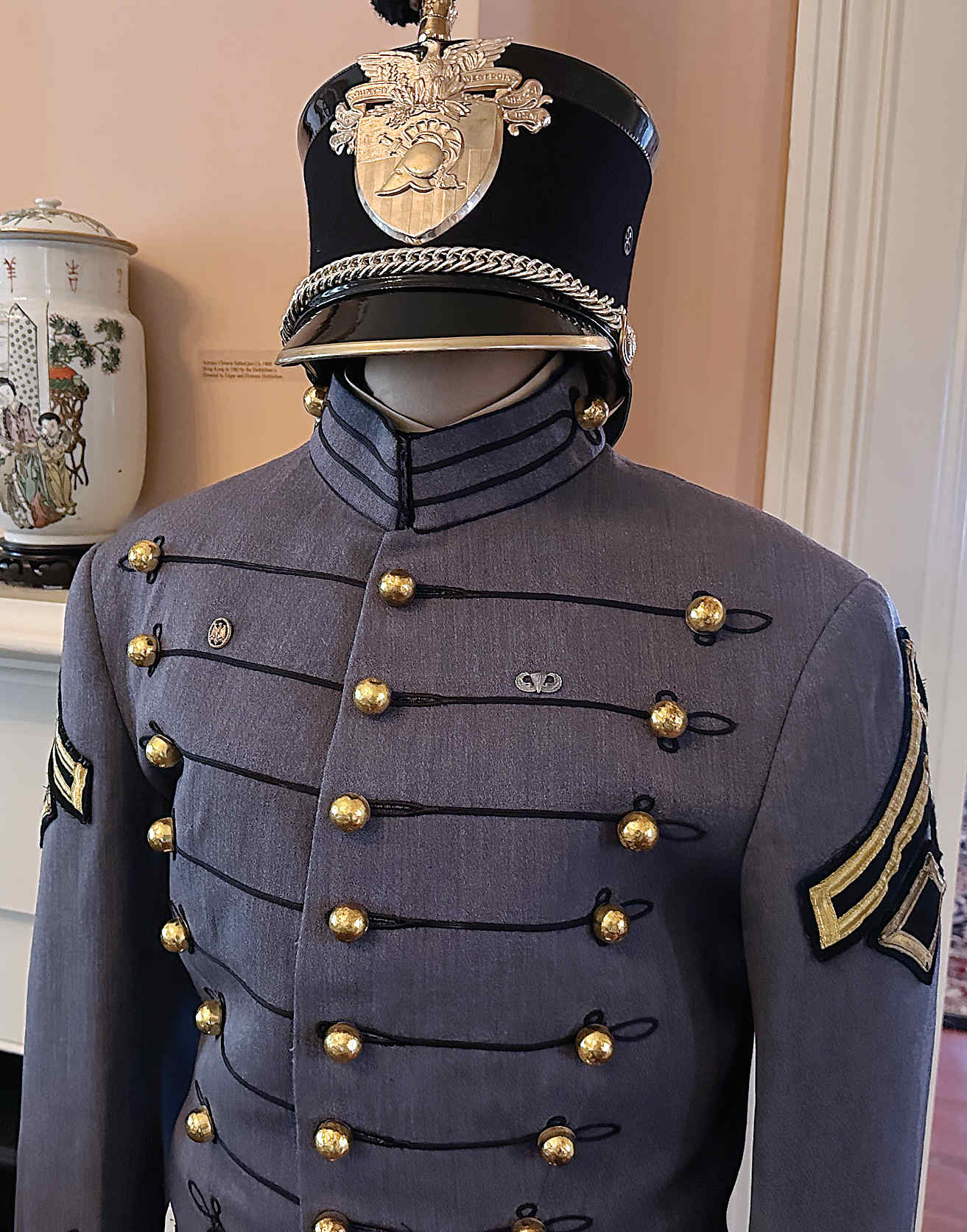 A West Point cadet dress uniform worn by Shane Buzza from 1984-88 is part of a military uniform exhibit in the Rodgers House.
 This “Eisenhower jacket” was worn by Frank F. Orr, a World War II military photographer.
 DJ Joel (left) and DJ Gil of radio station MIX 104.7 FM keep the tunes coming for fairgoers.
 A 260-year-old California juniper (right) is part of the bonsai exhibit in the Floriculture Building.
 People study a photo exhibit, an annual feature at the fair.
 Bob Erbe shows a bale of hay produced by the model hay baler (shown here) at the Agricultural History Project.
 After receiving decorative balloon hats from Jeremy Shafer the clown, these Pajaro Valley High School students are ready to sort trash and recycling at the fair.
 Pajaro Valley High School students Ezra Fernandez, Angie Herrera and Jarany Lopez separate trash, food waste and recycling during the fair as part of a new program by Watsonville Wetlands Watch.
 This firehead millipede, from Madagascar, has more than 400 legs and was on display in the Bug Barn.
Tech Bosses Warn U.N. AI Is “Risk to Humanity as a Whole”
Executives from America’s leading artificial intelligence firms are urging the United Nations to set global regulations for their burgeoning tech.
Both Anthropic CEO Dario Amodei and OpenAI CEO Sam Altman testified before the U.N. Security Council Wednesday, imploring the international conference to police the industry before it grows out of control.
“If managed poorly, I even believe AI could be a risk to humanity as a whole,” said Amodei.
Altman explained that he believed there were two ways that AI progress could go “very badly” for humanity.
“First, we could lose control of the future to AI,” said the ChatGPT creator. “The risk is that it moves so fast that people can no longer follow what’s happening or intervene when needed.”
The other risk, Altman said, was that AI could unjustly concentrate power within a small cadre of people.
“No one person, or company, or country should be able to use the most powerful AI models to impose their worldview on everyone else,” he continued. “A company or country that believes only it can be trusted with this technology, can use that belief to justify almost anything else. We have to eject that logic even when it’s convenient.”
Yet that’s not how the U.S. president has approached the issue. Donald Trump has insisted that the U.S. dominate the technology, convinced that it will be the “Greatest Economic Development Engine in History,” and has been dismissive of Silicon Valley’s myriad warnings.
Trump has a lot to politically—and personally—gain from championing AI. Days into his second term, the president unveiled a $500 billion public-private venture to support AI development. The project was dubbed Stargate and backed by OpenAI, SoftBank, Oracle, and MGX, an AI investment firm owned by the United Arab Emirates.
Trump’s 2026 financial disclosures also revealed that he’s invested a sizable sum in tech companies pursuing AI projects, spending millions of dollars on stock purchases for Oracle, Microsoft, Nvidia, Meta, Amazon, Apple, and Alphabet.
But Trump’s opinion on the matter is seriously at odds with that of the American public. Recent polling indicates that the vast majority of Americans, including Republicans, have no interest in permitting the tech industry to build AI facilities in their backyards. An August survey published by Heatmap revealed that 75 percent of the public opposes data center development in their communities.
And the rumors of AI’s deadly potential have some bite to them: Tech experts and European leaders are treating the concept of “killer robots” as more fact than fiction.
Is Taylor Swift’s 35th Version of LIFE OF A SHOWGIRL an Insult to Fans?
- We like Taylor Swift’s music well enough, but we have to ask: is releasing The Life of a Showgirl‘s 35th version an insult to fans?
- At one point or another, you’ve probably released enough variants of your album, and it feels like The Life of a Showgirl: The Encore is that limit.
- This massive amount of releases feels like it’s insulting to fandom and bad for the music industry (and any industry) as a whole.
Listen, I know this is a little bit off-topic for Nerdist dot com. We don’t really cover Taylor Swift. But we do cover fans and fandom. And let me tell you, if a TV series we write about was releasing its 35th version of practically the same episodes, I really feel like we’d have something to say about it. So, as a person who loves fans, I really have to wonder: is Taylor Swift releasing a 35th version of The Life of a Showgirl kind of an insult to the people who love her the most?
 Taylor Swift
I wouldn’t say I’m a Swiftie. But I went to the Eras Tour, and I enjoy Taylor Swift’s music. This is not a directed attack on Taylor Swift. Taylor Swift just happens to be the person who has released 27 physical editions (18 CDs, eight vinyl LPs, and one cassette) and seven digital download versions of the same album. And has now added one more to that total with the addition of four new songs, “Patient Zero,” “Cleveland!,” “Pink Clouding,” and “Babylon.”
But more to the point, I’m a Fannibal; I’m part of the Beautifully Unwell; I’m a huge The Lord of the Rings fan, and I’ve been in one fandom or another my whole life. I LIVE to buy merch. At points in the heights of my fannish love, I might have bought anything from my fandom of choice. (As long as it was cute.) I go to cons and buy fan art I don’t need all of the time. I understand fans live for merch and creators live to sell fans merch—that’s a natural part of fandom. But THIRTY-FIVE VERSIONS of an almost identical album? Where does putting out merch for your fandom end and taking advantage of your fandom begin? And yes, for now you can just listen to this album on Spotify, but we bet there will be ten different physical releases just around the corner.
And now, obviously, Taylor Swift isn’t making any single person buy all thirty-five versions of The Life of a Showgirl or however many editions of The Life of a Showgirl: The Encore there end up being. (The whole thing is strangely reminiscent of Avengers Endgame: Encore—something, we also, by the way, were not thrilled by). But when you have the love and obsession of so many fans, many of whom are young, you have a modicum of responsibility to not squeeze them for every penny or utility they’re worth. I mean, don’t we get enough of that from every angle? Do we really need it from beloved artists too? Obviously, Taylor Swift isn’t totally alone in this, other artists have put out quite a number of variants as well, of late, but none that I’ve seen get even close to this number.
It also feels especially bad when the most likely purpose of this The Life of a Showgirl: The Encore re-release is to artificially inflate sales or listens. And that’s not good for fandom, and it’s not good for the industry overall. As we talk about with streaming price hikes, password-sharing crackdowns, and ads, once one person starts pulling these kinds of shenanigans, other people are sure to follow. And that’s a journey that ends badly for the fans first.
Anyway, don’t come for me, Swifties. This isn’t a personal attack on Taylor Swift. But 35 releases of one album is a wacky thing to do! But hey, if it makes you happy, you can pre-order it today.
Rotem Rusak is the Editor-in-Chief at Nerdist. She is a great lover of the anti-hero and is always ready for a new ship to set sail. In her work, she likes to combine fandom passion with journalistic sensibilities. Follow her on Instagram.The post Is Taylor Swift’s 35th Version of LIFE OF A SHOWGIRL an Insult to Fans? appeared first on Nerdist.
Trump’s ‘big deal’ on Greenland is more of the same
During the United Nations meeting Tuesday, President Donald Trump signed a deal with Denmark and Greenland that gave us pretty much what we already had. Trump has been obsessed with annexing Greenland, even threatening to take it by force. While he pretended it was about security, it was clearly about his grander Vladimir Putin-like ambitions to expand the United States…
Empathy, socialism, and strange bedfellows
Empathy is a lot easier to offer when the problem shows up in your own backyard. Just ask the numerous MAGA farmers and ranchers being brought to bankruptcy or the brink of it courtesy of Donald Trump’s policy decisions. Janesh and Markos dig into conservatives discovering consequences in real time, and how “socialism” is no longer a four-letter word to the American voter in the latest…
Press freedom fire
A cartoon by Tim Campbell. Related | White House press ban renders Trump speechless…
Come Inside a Model Test Room at Disney’s Art of Animation Resort
- Nerdist was among a very small handful of media taken inside a remodeled room currently being beta tested in Art of Animation’s Little Mermaid building, something few people will ever see.
- We also saw concept art for the remodeled rooms planned for The Lion King building at Art of Animation.
- Nerdist’s Take: While seeing a model room few others will ever get a chance to experience was fun and informative, getting a new appreciation of the work Imagineers do was even better.
It’s impossible not to appreciate Disney Imagineering when you’re in the parks. They are the main attraction of any visit, and eery ride, land, restaurant, building, and piece of decor in the parks is a reflection of Imagineers. But recently I got a unique chance to see another way they influence a major aspect of any visit. Nerdist was among the small handful of press allowed into a model Little Mermaid room currently being tested at Walt Disney World’s Art of Animation Resort. And seeing it made me realize I wasn’t paying enough attention to all the ways Imagineers immerse you in a Disney story.
 Disney/Nerdist
Executives talk about Art of Animation with genuine reverence. Multiple cast members, independently of one another, used the word “special” to describe the large family-friendly resort when Disney hosted my family there recently. We were at Walt Disney World for “Stay in the Magic,” an event dedicated to highlighting the advantages of staying at a Disney property. During out visit I was also able to see something few, even those who work there, ever will: a model testing room.
Art of Animation opened in 2012 and has four different themed buildings of guest rooms. Three—Cars, The Lion King, Finding Nemo—feature family suites. The fourth is The Little Mermaid, which consists of standard rooms. Earlier this year, Disney announced that building would undergo a massive remodel. It’s the hotel’s first-ever major, top-to-bottom room refurbishment. (It’s also another project in what Walt Disney World’s ongoing focus to reinvest in classic rides and resorts. Recent examples include the major overhauls of Big Thunder Mountain and Buzz Lightyear’s Space Ranger Spin. Next year, a new version of the Carousel of Progress will also open at Magic Kingdom.)
 A current Little Mermaid room (Credit: Walt Disney World)
Back in May, when execs announced the refurbishment, these new rooms only existed in concept art. Now they exists as two fully furnished rooms inside the Little Mermaid building. Disney built them for beta testing. During our tour, hosted by the Imagineers leading the project, press was not given or allowed to take any images of the room because it’s not yet in its final version. But it is a full room. It’s been used by employees and their hosting families. Cast members, executives, and Imagineers have been staying there to see what works and what can be improved. What Disney ultimately settles on could be very different from what I got to see. But I doubt much will change.
The room is already a vast improvement over the current Little Mermaid rooms. (It’s no surprise this building is getting the first upgrade. It’s the one that needs it most.) Themed as an “Under the Sea” celebration, it’s full of character paintings on every wall. The aquatic color scheme is also lighter, brighter, and more varied than the current edition. The decor, while still overly playful, is also a significant upgrade. The model room hasn’t abandoned the joyful ethos of the current style, but it looks fancier and more expensive. The bureau is also much longer and that curtain divider for the bathroom is thankfully gone.
 Nerdist
There are also fun touches throughout, like how the bureau has fork handles, a wonderful nod to Ariel’s misunderstanding of human items. My favorite element was a multi-dimensional custom light fixture that looks like the sun reflecting from above the water. It’s one of the many small aspects that really sells the theming of the room. You’re meant to feel like you’re under the sea with Ariel and her friends and you do. Some of those sea creatures are also hiding in spots meant for little ones to find. I only saw them because Imagineers cited them as one of their favorite special parts. That led me to searching for them at a toddler’s eye level.
The room is also more practical while being even more fun for kids. The model room provides much more space than a current Little Mermaid room despite the size of the room not changing. To help make Ariel’s rooms feel bigger, they are turning one of the two Queen-sized beds into a Murphy bed. That’s a fun feature on its own, as my 5-year-old found when we showed him how the table in our Cars suite was secretly hiding a bed in the wall. (Guess where he insisted on sleeping after seeing that?) In a Little Mermaid room, during the day a Murphy bed will allow for both a lot more space and a place to sit and eat. It’s a much needed pragmatic improvement for adults that also makes it more enjoyable for kids.
To get a sense of the layout, you can see what the recently refurbished rooms at the neighboring Pop Century Resort look like. The model room follows this general design from Pop Century seen below. But Art of Animation’s model room is much more immersive, colorful, and kid-focused. The Little Mermaid room is geared for families with youngsters, which is what Art of Animation does best.
 Walt Disney World
After seeing the model room, we then headed to a presentation inside a current Lion King suite. It’s the next AoA building getting remodeled rooms. (The plan is to then do the same for the Finding Nemo and Cars buildings.) The new Lion King suite is still in the concept art stage. Imagineers say a model room is still at least a few months away. What we saw of the design is a more modern, more sophisticated, and lighter room. The current suites feature a very dark green, cartoon-like jungle vibe. This is what a current Lion King suite looks like. The decor had me singing “I Just Can’t Wait to Be King.” (I wish I were joking.) The art for the new design feels like the complete opposite. It’s much more modern, adult-oriented and calming.
 Walt Disney World
When I pointed this big difference between the old design and the new one to the Imagineer leading the Lion King project, she said that’s very intentional. She described the general idea as “whimsical but tranquil.” It was a perfect description for the concept. But that would be totally wrong to describe the model Little Mermaid room which feels like its hosting a party. And that’s the point.
Imagineers, who consult with their predecessors who designed the original rooms, aren’t trying to make every Art of Animation building the same with only the IP changing. They’re trying to create something unique in each so that every stay feels different. They’re also trying to provide options so every guest, each with their own needs and preferences, can find what works best for them. If you have very young kids, the new “Under the Sea” rooms will appeal to them more than the serene approach Disney is taking with its refurbished Lion King suites.
For some it won’t matter which room they book, and I get it. The parks are always and forever the main attraction of any visit, and some guests view their room as “the place they sleep” and nothing more. I don’t and never have. I like when my room has a clear theme and vibe. But after getting a peak behind the test curtain I realize that, even though I do care about my hotel, its theming, and those fun extra touches that envelop you in the Disney bubble, I wasn’t paying enough attention to a side of Imagineering I’ve taken for granted.
 Walt Disney World
Most (all?) of my conversations both with and about Imagineers has always been about what they do in the parks. But, like anyone who stays on property, the parks are just one aspect of any stay. The “story” of being at Disney doesn’t start or end when you enter or leave a theme park. It starts and ends in the place you start and end your day. And Imagineers put as much work, care, and passion into those resorts as they do the parks for that reason.
When I got back from my tour of the model Little Mermaid room and the Lion King suite refurbishment presentations, I started looking around my Cars suite. Despite it being my second time staying there I noticed things I never had before. There were fixtures I hadn’t paid attention to, both on the wall and on the furniture. I had somehow missed “obvious” things like the orange cone that holds up an end table. I had “seen” those elements dozens of times without processing them. The same was true when I then walked around the entire resort, something I hadn’t done before, the morning we left. I saw decorations and statues on buildings I had never thought to look at. I felt silly for having missed them, as though I had robbed myself of one of the best reasons to be on property.
Disney wanted press to see its model room to help publicize a big refurbishment coming to a signature resort. That was fun and informative, but it wasn’t what I found most interesting about the experience. Not as someone obsessed with Imagineering. After getting a chance to learn firsthand just how much storytelling, real-world testing, and tinkering goes into a single room in a single building at a single resort, I won’t make the mistake of taking that for granted again.
Mikey Walsh is a staff writer at Nerdist. You can follow Mikey on Bluesky at @burgermike. And also anywhere someone is ranking the Targaryen kings.The post Come Inside a Model Test Room at Disney’s Art of Animation Resort appeared first on Nerdist.
Watsonville reducirá las cámaras de vigilancia Flock de 37 a 20 y endurecerá las reglas sobre los datos

Esta traducción fue generada utilizando inteligencia artificial y ha sido revisada por un hablante nativo de español; si bien nos esforzamos por lograr precisión, pueden ocurrir algunos errores de traducción. Para leer el artículo en inglés, haga clic aquí.
Watsonville reducirá considerablemente la manera en que su departamento de policía utiliza las cámaras de vigilancia Flock, tras una discusión de casi cinco horas que por momentos fue tensa el martes por la noche.
El concejo municipal votó 5-2 a favor de una serie de cambios que incluyen reducir el número de cámaras de 37 a 20.
Otros cambios importantes incluyen reducir de 30 a siete días el período durante el cual el departamento de policía conserva los datos que las cámaras recopilan y que no han sido utilizados, antes de eliminarlos permanentemente. La ciudad también dejará de compartir sus datos con cualquier otra jurisdicción y exigirá una auditoría trimestral independiente sobre el uso de esta tecnología y de sus datos por parte del departamento de policía.
Las cámaras Flock son lectores automatizados de matrículas diseñados para ayudar a las fuerzas del orden y a los vecindarios a rastrear vehículos y resolver delitos.
La concejal Maria Orozco, quien propuso los cambios, dijo a Lookout el miércoles por la mañana que el concejo pudo llegar a un compromiso y abordar las preocupaciones planteadas por la comunidad.
Junto con Orozco, votaron a favor de los cambios Casey Clark, Vanessa Quiroz-Carter, Ari Parker y Jimmy Dutra. La alcaldesa de Watsonville, Kristal Salcido, y el concejal Eduardo Montesino votaron en contra.
El personal municipal también realizará encuestas sobre las cámaras Flock en cada distrito del concejo municipal para conocer la opinión de los residentes sobre esta tecnología, al mismo tiempo que investigará alternativas.
El personal también programará una reunión pública dentro del próximo año con el jefe de policía de Watsonville, Brian Shab, y representantes de Flock Safety, para que los miembros de la comunidad tengan la oportunidad de hacer más preguntas.
 Credit: Kevin Painchaud / Lookout Santa Cruz
“Los datos recopilados durante la reunión pública y mediante la encuesta específica de cada distrito, [el personal de la ciudad] también regresará con opciones para que sean aprobadas,” dijo Orozco. “Eso incluirá los programas de vigilancia vecinal. ¿Son efectivos? ¿Deberíamos recuperarlos?… También analizarán una red alternativa de cámaras. ¿Existe alguna otra opción que la comunidad considere más confiable?”
Orozco añadió que toda la información recopilada durante el próximo año ayudará al concejo municipal a decidir si mantiene las cámaras Flock restantes o las elimina por completo. El acuerdo de dos años de la ciudad con Flock Safety vence en septiembre del próximo año.
Shab le dijo a Lookout por correo electrónico que su departamento entiende las preguntas y preocupaciones de los miembros de la comunidad y que “están escuchando.” Agregó que el departamento considera que la decisión del concejo municipal ayuda a “equilibrar la seguridad pública con la privacidad y la seguridad.”
“Nuestro departamento está trabajando para implementar rápidamente esa directiva y garantizar que el uso de esta herramienta por parte del departamento siga siendo coherente con los requisitos y las expectativas establecidos por la ciudad,” dijo Shab.
El año pasado, el concejo municipal aprobó la renovación de su contrato con la empresa con sede en Atlanta y añadió 17 cámaras. La ciudad gasta $124,650 al año en su contrato con Flock, según Shab.
Incluso con la reducción del número de cámaras, Watsonville seguirá teniendo la mayor cantidad de cámaras de cualquier jurisdicción del condado de Santa Cruz; Capitola, la única otra jurisdicción del condado que cuenta con cámaras Flock, tiene 10. Santa Cruz votó en enero para retirar todas sus cámaras Flock.
Durante la tensa discusión del martes, Shab dijo a los miembros del concejo municipal que “Flock es una herramienta poderosa para las fuerzas del orden.” También abordó preocupaciones relacionadas con la privacidad, el uso indebido y las políticas del departamento para compartir datos.
“La responsabilidad del departamento de policía es utilizar esta tecnología de manera legal, limitada y transparente, con una supervisión significativa y consecuencias serias por su uso indebido,” afirmó Shab.
 Credit: Kevin Painchaud / Lookout Santa Cruz
Shab dijo que, durante el último año, de septiembre de 2025 a septiembre de 2026, la policía de Watsonville realizó 7,818 búsquedas en sus datos de Flock, las cuales ayudaron en 894 casos. Añadió que, aunque la tecnología no necesariamente resuelve los casos por sí sola, puede proporcionar a los agentes una “pista de investigación fundamental.”
También recibió críticas por utilizar ejemplos de casos que, según Montesino, apelaban a las emociones en lugar de “ceñirse a los hechos.” Montesino le dijo a Shab que no le gustaba la manera en que se había adornado la presentación, incluido el uso de fotografías de víctimas.
Parker también cuestionó a Shab con insistencia sobre el posible uso indebido de las cámaras Flock y sobre las estrategias que podrían implementarse para evitarlo. Algunas de las preocupaciones de los miembros del concejo antes de la reunión del martes se centraban en el posible error humano detrás del uso indebido de las cámaras y de sus datos.
Muchos de los casi 70 miembros de la comunidad presentes en la sala del concejo no parecían estar muy convencidos de que mantener las cámaras fuera una buena idea para Watsonville, principalmente debido a la desconfianza hacia Flock.
Quiroz-Carter, la única integrante del concejo que había expresado públicamente que preferiría eliminar por completo las cámaras, se hizo eco de esos sentimientos.
“Entiendo que todos quieren hacer algunos ajustes. Nadie quiere eliminarlas, pero en este momento, si no nos deshacemos de esto, va a ser realmente, realmente malo,” dijo Quiroz-Carter. “Seré completamente honesta. No quiero verlo. No quiero tenerlo. No creo que sea seguro. No me gusta. Pero si lo mejor que puedo hacer es lograr que hagamos algunos cambios, estoy dispuesta a hacerlo con mis colegas.”
Lourdes Barraza, organizadora de la sección de Watsonville de Get the Flock Out, dijo a Lookout que la decisión del concejo municipal en realidad no cambia nada y que tampoco la considera un compromiso.

“Tener 20 cámaras en lugar de 37 significa que seguimos siendo vigilados,” dijo Barraza. “Nuestra información sigue siendo recopilada. Nuestra información sigue siendo compartida, así que en realidad no resuelve nada.”
Barraza dijo que las encuestas por distrito serán una pérdida de tiempo si los residentes no están suficientemente informados sobre las cámaras Flock. Añadió que espera que una futura reunión pública incluya todas las perspectivas sobre el tema, y no solamente las de Shab y los representantes de Flock.
“Es necesario presentar ambos lados. Entonces, una vez que se presenten ambos lados y hagan una encuesta, creo que sería más útil,” dijo Barraza.
Después de la decisión del concejo, GTFO continuará educando a los miembros de la comunidad sobre las cámaras Flock y los problemas relacionados con ellas, dijo Barraza. Aunque no considera que la decisión de esta semana sea un compromiso útil, afirmó que la reducción del número de cámaras le indica que los miembros del concejo están comenzando a comprender los peligros de Flock.
The post Watsonville reducirá las cámaras de vigilancia Flock de 37 a 20 y endurecerá las reglas sobre los datos appeared first on Lookout Santa Cruz.