

‘Give us another chance’: Vance makes desperate plea to voters
Slippery Vice President JD Vance appeared on the “All-In” podcast this week in an effort to build on momentum—or lack thereof—after the GOP’s pathetic midterm convention. “Don’t give power to the people who caused the problems that we’re fixing,” Vance said. “Give us another chance or give us another couple of years to continue to work on the amazing things that we’ve been doing for the past…
Nvidia goes green to keep grid capacity from zapping its revenues
Noise wants to help everyday people become paid content creators
Stephen Colbert Denied Knowing CBS and Shaved His Beard in Late-Night Return
- Stephen Colbert returned to late night on Jimmy Kimmel Live.
- During his appearance, he shaved his beard, denied knowing CBS, and gave an update on his Lord of the Rings movie.
- Nerdist take: With a performance this good, maybe some executive will realize Colbert should be on every night.
Stephen Colbert’s run as a late-night host ended in May, but this week he got to celebrate with his staff one more time. The Late Show with Stephen Colbert‘s last season took home the Emmy for Outstanding Variety Series. But if anyone at CBS noticed or cared is of no concern to the network’s (no longer bearded) former employee. Colbert made it clear on Jimmy Kimmel Live during his return to late-night that he’s enjoying not working for that company he knows nothing about.
Stephen Colbert looked relaxed when he stopped by to visit his friend Jimmy Kimmel. And with good reason. The former late-night host said he doesn’t miss doing his show because its absurd cancellation gave him the “opportunity to not think about the news every day” and so he “took it.”
They two also discussed Colbert’s beard, which his wife hated. And since he promised to shave it if he won the Emmy he did exactly that on stage later in the interview. That should help restore the couple’s “smoochy time” as Colbert called it.
Speaking of that Emmy victory, whether or not CBS cares doesn’t matter to the man who led the award-winning series. When Kimmel asked if anyone from the network called to congratulate him, Colbert said, “I am not familiar with that organization. Thank you for asking!” But it turns out that unknown network did let Colbert keep 40 suits from the show, which he is willing to give away to any needy law school students.
 ABC
ABC
The two also talked about Colbert’s work penning a new Lord of the Rings movie. (Getting pulled over in New Zealand wasn’t directly related to his writing.) That’s a topic he refused to talk about with Steven freaking Spielberg. Colbert said he was so terrified about violating his NDA he wouldn’t give the iconic director any info when asked. Colbert now realizes that was a mistake. (Steven! Call Stephen!)
Not a mistake? Stephen Colbert coming back to late-night even if it was just for one night. But with a performance this good, maybe some executive will realize he should be on every night.
Mikey Walsh is a staff writer at Nerdist. You can follow Mikey on Bluesky at @burgermike. And also anywhere someone is ranking the Targaryen kings.The post Stephen Colbert Denied Knowing CBS and Shaved His Beard in Late-Night Return appeared first on Nerdist.
Top Health Nominees Break With RFK Jr. as Measles Cases Surge
Two nominees on course to help lead America’s public health policy have distanced themselves from Secretary of Health and Human Services Robert F. Kennedy and his anti-vaccine positions.
Dr. Nicole Saphier and HHS counselor Chris Klomp are on track to become the country’s next surgeon general and deputy HHS secretary, respectively. As such, both would work underneath Kennedy and his “Make America Healthy Again” agenda. Yet neither hesitated to rebuke the health secretary’s unscientific preachings during Senate confirmation hearings this week.
In one exchange with Republican Senator (and former physician and medical educator) Bill Cassidy, Saphier explained that not only she does “not believe the MMR vaccine to be lethal,” but also that she had “not seen reputable evidence that would suggest vaccines cause autism.”
“I believe the MMR vaccine is our greatest tool for combating measles,” elaborated Saphier, a radiologist and former Fox News contributor.
“That’s music,” Cassidy sighed.
“I do not believe childhood vaccines cause autism,” Saphier added.
Klomp similarly dismissed Kennedy’s hokum Tuesday, firmly endorsing the measles vaccine while describing the fight against the current measles outbreak as America’s chief public health priority.
“Unquestionably, the [measles-mumps-rubella] vaccine is the single most effective public health tool that we have against measles,” Klomp told Democratic Senator Ron Wyden.
The conspiratorial rhetoric of the anti-vax movement has had disastrous effects on U.S. inoculation rates, spurring a regional measles health crisis that has killed four people this year, a high not seen since 1992. Another 3,200 people have been infected, far exceeding the tally for 2025 by hundreds of cases.
According to CDC data, vaccination coverage for U.S. kindergartners fell by nearly three percent—from 95.2 percent to 92.4 percent—between the 2025-2026 school year and the 2019-2020 school year. The dip is more significant than it seems at face value: The lowered figures place the age groups below the threshold for herd immunity that would protect even unvaccinated members of a community (95 percent.)
Democratic officials have called for Kennedy to be removed from his post since letters emerged unequivocally tying his 2019 anti-vax propaganda trip to Samoa to a lethal measles outbreak that occurred on the island later that year.
Massachusetts Senator Ed Markey said in a statement that Kennedy “cannot be trusted to run HHS for even one more day,” while Hawaii Governor Josh Green—who personally witnessed the Samoan outbreak—said Kennedy needed to immediately resign “for the safety and health of our country.”
Maryland Senator Angela Alsobrooks told CNN that America’s current measles outbreak could be “tied directly to the horrific leadership of Secretary Kennedy.”
How Should THE MUPPETS Return to TV?
- Disney reportedly has no current conversations about bringing The Muppets back to TV, so we have some thoughts on what could work.
- We think The Muppets should do away with the variety-show series concept and instead focus on event-like Specials.
- We’d like to see The Muppets Star Wars, Avengers: The Muppets, Muppets vs. Alien vs. Predator, and other Muppet IP parody expansions.
- We’d also like The Muppets to come to own their own TV holiday specials.
- Learn More: We hoped in January that a new The Muppet Show Special could be a backdoor pilot to a Muppets TV series. But, so far, nothing has come of it.
This year’s The Muppet Show special garnered universal acclaim, huge ratings across ABC and Disney+, and four Emmys. You don’t have to be Dr. Bunsen Honeydew to calculate that all adds up to an unequivocal success. It also appeared to offer Disney an easy and obvious way to capitalize on a beloved asset after numerous missteps. The special starring Sabrina Carpenter was reportedly meant to double as a “backdoor pilot” to bring The Muppets back to TV. Since it took off, it would seem obvious there’s no secret to using The Muppets correctly. The best way is the one that has always worked best. Or at least you would think. A report from Deadline says “difficulties cracking a premise” means there are currently “no active series conversations” happening and no current plans to bring The Muppets back to TV. That simply doesn’t stand with us. But, thankfully, we have many suggestions on how The Muppets can return to television and be a smashing success. You’re welcome, Disney.
 Disney
As just about every fan has said, the premise of bringing The Muppets back to TV should obviously be “do The Muppet Show.” We agree, but a single series might be both too much and not enough. Because in a world overrun with entertainment options and short attention spans, the key to modern-day Muppets‘ success on TV might be making every release special. And there’s more than one way to do that.
No fan of Jim Henson’s iconic characters is going to be upset if Disney, 20th Television, The Muppets Studio, and Seth Rogen and Evan Goldberg’s Point Grey Pictures—all of which produced the Emmy-winning Variety Show winner—decide to give The Muppets Show a full-season order. We won’t. Our general rule is “the more Muppets, the better.” But in this case that might not actually be the best option. “More” Muppets on TV might ultimately lead to “less.”
Unlike when The Muppet Show debuted 50 years ago, it’s hard for any TV series to break through now. There are simply too many viewing options. Reboots of wildly popular shows don’t always return to a waiting audience. Even with an established format, the Muppets would also face a challenge most series don’t, specifically because of how much people love them. The Muppet Show will have to live up to viewers’ best memories, which are inherently skewed. We all remember the greatest, most iconic sketches and bits from the original series. But there’s also a lot of bad or mediocre stuff people have rightfully forgotten.
That’s the nature of a variety show. They are very hit-or-miss. When you had just three networks to choose from, that kind of inconsistency was easier to get away with. (There’s a reason the format is mostly a relic with only Saturday Night Live grandfathered in.) A new, younger audience unfamiliar with variety shows will be even harder to win over… Ultimately, the very thing that works about The Muppet Show could lead to a quick TV cancellation.
The easiest way to avoid the “misses” is to not do a full season. Instead, Disney should produce more specials, each of which would also have the added bonus of feeling like an event the way weekly episodes can’t. Ideally we’d get at least one special every three months, but we’re amenable to that for reasons we’ll soon explain. Specials rather than episodes would mean more time to develop the best possible scripts and sketches. It would also make it easier to get the biggest, most famous stars, drawing in even more new viewers who will then find out why every generation comes to love the Muppets. Instead of getting a lot of The Muppet Show and all the good, bad, and in-between that naturally comes with any variety series, we would only get the best possible version of them while also being extra excited when we do.
Like we said, though, “the more Muppets, the better.” We know from featured films like The Muppet Movie and The Muppets Christmas Carol, that they work on the big screen (when done right). But we want The Muppets to feel as ubiquitous across pop culture as they did for decades, which means more time on TV. But there’s no reason Disney needs to limit itself to just doing The Muppet Show.
The variety show is not the only television format that works for The Muppets. And their current owner—which owns ABC, a streaming site, and roughly a million IPs—could not be more ideal to make that happen because the Muppets are also great at parody. That’s something we want a whole lot more of.
 Disney
We should probably already have The Muppets Star Wars and Avengers: The Muppets. And where is our Muppets vs. Alien vs. Predator spoof? Avatar: The Muppets Take Pandora? Tron: Muppets is begging to be the funniest release of 2028. Miss Piggy was made to star in Desperate Housemuppets and Fozzi should host America’s Funniest Home Muppets Videos. Give us all of those as 45-minute releases that premiere on ABC before moving to Disney+. Disney can now essentially make a grown-up version of Muppet Babies.
Disney has also already shown, despite its many underwhelming attempts at Muppet TV shows, it can deliver a stellar crossover special. The fantastic Muppets Haunted Mansion is the only good Haunted Mansion movie. They should have already tackled Jungle Cruise and Pirates of the Caribbean.
Franchise parodies aren’t the only opportunity to give us more of Muppets, either. Disney should pick a holiday and let the Muppets own it. Give them Thanksgiving. Or maybe they can celebrate a different holiday every year so we always get something fresh and exciting.
In the meantime, have them make surprise appearances on Good Morning America and Jimmy Kimmel Live to promote both them and the network.
Instead of having “no active” conversations about The Muppets, Disney should be inviting creatives to constantly pitch their ideas. Fans have been doing that forever with their “one human, all Muppets” cast ideas. But Disney actually has the ability to bring those visions to life. And they should. A full season order of The Muppet Show might not make complete sense, but not getting The Muppets on TV makes no sense.
Mikey Walsh is a staff writer at Nerdist. You can follow Mikey on Bluesky at @burgermike. And also anywhere someone is ranking the Targaryen kings.The post How Should THE MUPPETS Return to TV? appeared first on Nerdist.
Pulley, a Carta rival, is shutting down
Trump Melts Down as Federal Reserve Defies Him on Interest Rates
President Trump had yet another predictable meltdown after his handpicked Federal Reserve Chair Kevin Warsh refused to lower interest rates—instead raising them for the first time in three years.
“Interest Rates in the United States should be 1%, or less, because we are the Best Credit in the World — BY FAR. Our Country is BOOMING with new Investment! If we stopped Trading with every country that we have a Deficit with, which is most of them, we would make, at least, 1.5 Trillion Dollars a year,” Trump wrote Wednesday afternoon on Truth Social. “The word ‘Deficit’ is nothing more than a fancy word for LOSS. We are ‘carrying’ almost every country in the World, and that cannot go on any longer. LOWER THE INTEREST RATES FOR THE UNITED STATES OF AMERICA, AND FAST!”
Lower interest rates are something Trump has demanded since he returned to office.
The Federal Reserve unanimously voted to increase interest rates by .25 percent, bringing its flagship rate to between 3.75 and 4 percent.
Trump’s demand for lower interest rates clearly fell on deaf ears, as Warsh told reporters after his rate hike announcement that he had “nothing” on “the discussion with the president.”
While used to lower inflation, raising interest rates also makes it more expensive to borrow money—something millions of consumers will be affected by, and right before midterm elections in November.
Q: What is your message to Trump who has called to cut interest rates and not raise them?
Fed Chair Kevin Warsh: I've got nothing for you on a discussion with Trump pic.twitter.com/zYksF3FQMg
Erika Kirk tries to get that bag
Honestly, Erika Kirk, widow of Charlie and current head of Turning Point USA, has a lot of gall, but we already knew that. She has just announced she’s considering legal action against Utah Valley University for “security gaps” over failing to protect Charlie Kirk. Here are her lawyers: “Through a series of stunning failures and reckless decisions, the UVU Parties created a foreseeable danger…
Anthropic and OpenAI want to embed safety evaluators. Will they really be independent?
Sony Nukes THE LAST OF US PART II Multiplayer Mod
- The Last of Us Part II modder Speclizer has had a multiplayer mod for the game in development since January 2026, and was expected to release sometime in September 2026.
- Sony reached out to mod developer Speclizer, requesting that he not release the mod.
- Nerdist’s Take: Sony is legally within their rights to issue a cease-and-desist to Speclizer, but given Naughty Dog’s The Last of Us Online was cancelled mid-development, the situation leaves a bad taste in the mouths of fans.
In January of 2026, modder Speclizer announced he was working on a mod for The Last of Us Part II that would allow for a multiplayer mode. The mod has gathered a lot of hype over the past nine months, with recent developer updates showing a working load-out system, a handsome collection of weapons and skills, five maps, and even a basic leaderboard. It’s no surprise the fan base is eager for a multiplayer mod, given that Naughty Dog’s own attempt at a multiplayer outing for the series, The Last of Us Online, was canceled back in 2023.
 Sony, Naughty Dog
Unfortunately, The Last of Us won’t be getting an official online multiplayer game, and it won’t be getting an unofficial player-made multiplayer mode either. Sony sent a letter to Speclizer requesting that he not release the mod. Speclizer elaborates in the following statement:
“Hey everyone, as you all know, the TLOU 2 multiplayer mod that has been in development since January was supposed to release this month. Unfortunately, I recently received a letter on behalf of Sony Interactive Entertainment requesting for the mod to not be released. Extremely sad that this never got to see the light of day, but I hope you’ll continue to follow me on to my next project, this time something of my own. Thank you all for the incredible amount of support over the last year. I hope to bring you something bigger and better soon!”
And so The Last of Us community lets out a big, “Come on, man!” at the last-minute rug-pull of the long-awaited multiplayer mod. Though I hate to ever say anything in Sony’s defense, they have a leg to stand on in this situation. While Speclizer’s mod was always going to be free to download and use, he does have a Patreon, which puts the situation in messier legal territory. It’s not the first time Sony’s pulled a mod, and it won’t be the last, but after the cancellation of The Last of Us Online when it was 80% of the way done, this one just hurts, y’all. It seems fair enough for Sony not to allow the multiplayer mod of the game to see the light of day, but can’t they see fans clearly yearn for an official version?
Jess Harshbarger writes about books, movies, TV, games, comics, and all things nerdy for Nerdist.The post Sony Nukes THE LAST OF US PART II Multiplayer Mod appeared first on Nerdist.
14 Cozy Movies That You Have to Watch This Fall
- These delightful and cozy movies will make you want to snuggle up on the couch with a warm drink and blanket this fall.
- From horror comedies like The Blackening to classic witchy tales like Hocus Pocus, there’s something for everyone on this list.
- Read More: If you are looking for something spooky to listen to, check out our interview with Nightlight Podcast and get into their chilling audio stories.
Halloween is right around the corner, so hopefully you’ve been fully enjoying your pumpkin spice lattes and fresh baked cookies. While a lot of people celebrate all things horror and downright terrifying in October, some of us just enjoy the overall vibes of Fall. Depending on where you live, it is time for cooler temperatures, state fairs, and falling leaves… or maybe you just like to imagine these things as you snuggle on the couch. Speaking of the couch, there’s no better way to spend a Fall night or chill day at home than cozying up with a good movie. If that’s your jam, check out these cozy fall movies that are currently streaming and enjoy your cup of tea.
RELATED ARTICLE
This Excerpt From Cozy Romantasy THE SPELLSHOP Will Enchant You The Gate (1987)A film about two kids who accidentally release demons from a hole in their backyard doesn’t sound very cozy up front. But its low-stakes horror elements combined with some humor and wholesome themes like the power of family make it a comfy watch on a chilly night. If you have kids who want to dip their toe into horror or you’re that kid at heart yourself, this is a great watch full of ‘80s nostalgia.
Where to Watch: Tubi
Halloweentown (1998) Disney
This is a classic cozy fall film that ‘90s kids love so much. (It’s me, I’m a ‘90s kid.) The magical place of Halloweentown full of wacky characters that embody the spirit of Halloween in a not-scary way combines with a coming-of-age story that pairs perfectly with some apple cider.
Where to Watch: Disney+
Practical Magic (1998)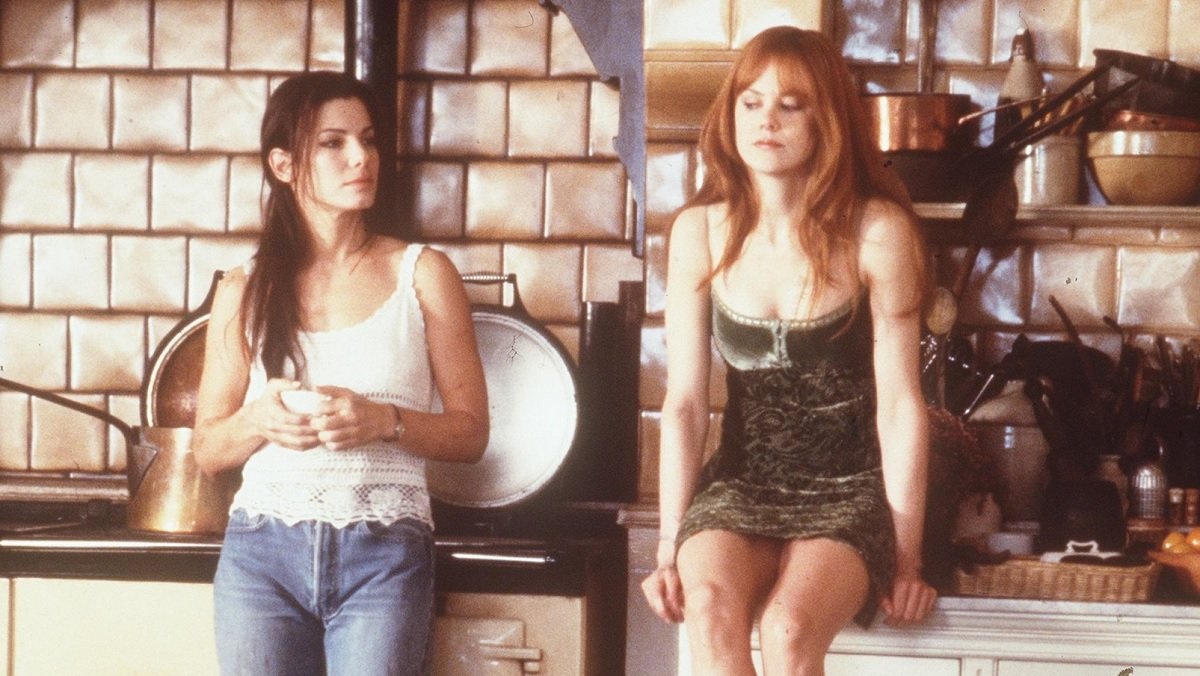 Warner Bros.
Who doesn’t love the Owens family full of witchy women? Practical Magic is a bit of a crime drama, a little supernatural fantasy, and a lot of fun. From those lovely spinster aunts to a dash of romance, this film is a concoction of good things with some pretty iconic performances.
Where to Watch: HBO Max
RELATED ARTICLE
The PRACTICAL MAGIC Aunts Are the Perfect Spinster Role Models Hocus Pocus (1993)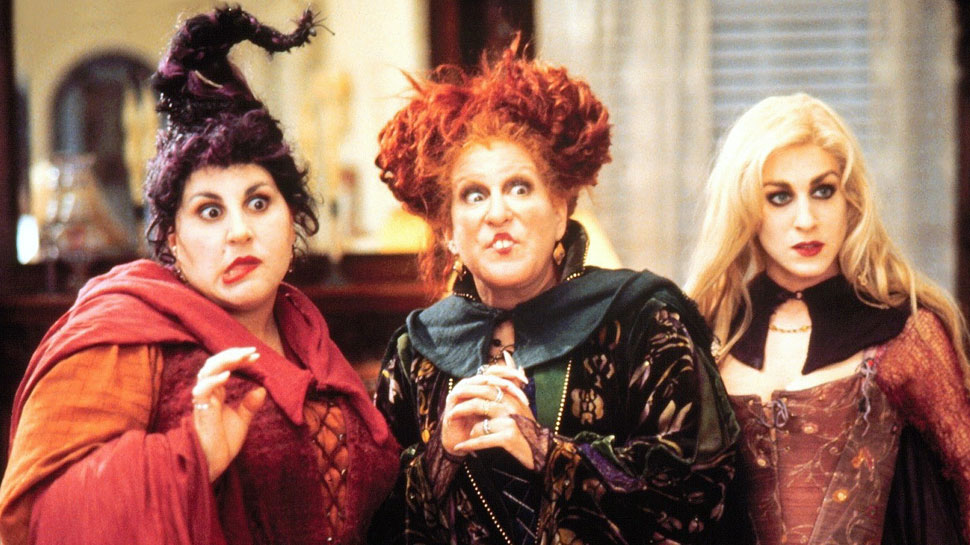 Disney
It doesn’t get much more cozy fall film than Hocus Pocus. And, while it was fun to see the Sanderson sister rise again in the sequel, the original film will always be the best. The images of kids riding their bikes through Salem while leaves shuffle around them and trick or treating makes you feel warm and fuzzy inside. Add that to the film’s inherent campiness and happy ending and you’ve got a winning combination.
Where to Watch: Disney+
Good Will Hunting (1997)If you’re looking for a cozy watch that’s far removed from Halloween and horror, but still gives you plenty of fall vibes and feels, then this is the one. The story of Will Hunting, a math genius working as a janitor, and his friendship with an MIT professor is a certified classic. Matt Damon and Robin Williams are pure magic together.
Where to Watch: Pluto and Paramount+
The Blackening (2022)The Blackening leans much more into comedy than it does horror with a funny premise. A group of Black college friends head to a cabin on Juneteenth weekend for fun… until a killer in blackface makes them play a deadly game. Yes, the film doesn’t take place during colder months but the many references to the horror genre and pop culture as a whole still make it feel cozy. We’d totally stay in that cabin if it weren’t a killing ground.
Deadly Blessing (1981)This film is far from one of Wes Craven’s most beloved and well-known efforts, but it is still worth watching. Religious sects, ancient evil, and murder sounds like a lot but it is surprisingly atmospheric and chill.
Where to Watch: Tubi
Scary Stories to Tell in the Dark (2019)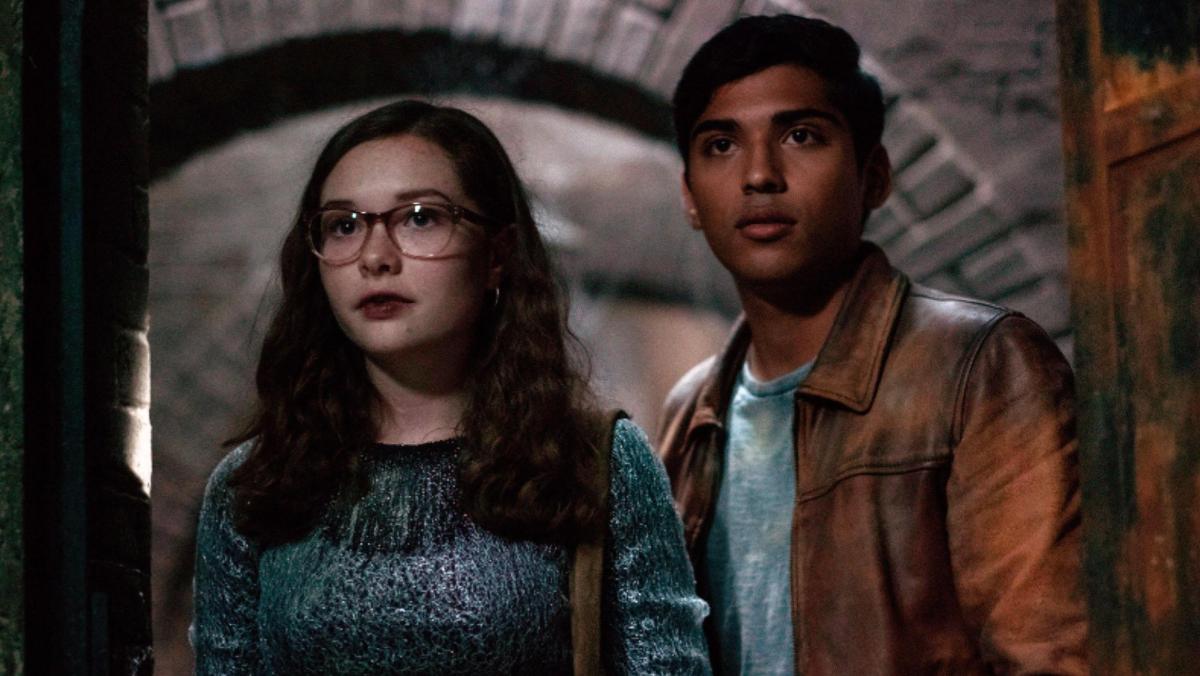 CBS Films
This is all about the nostalgia, baby. Many of us grew up reading those chilling tales and getting to see them come to life is a delight. The film itself takes place on Halloween night and amps up the creep factor without diving into a full-on bloody horror show. If you like just a bit of horror and want something spooky to watch with the kiddos, turn this movie on.
Where to Watch: Peacock
Knives Out (2019)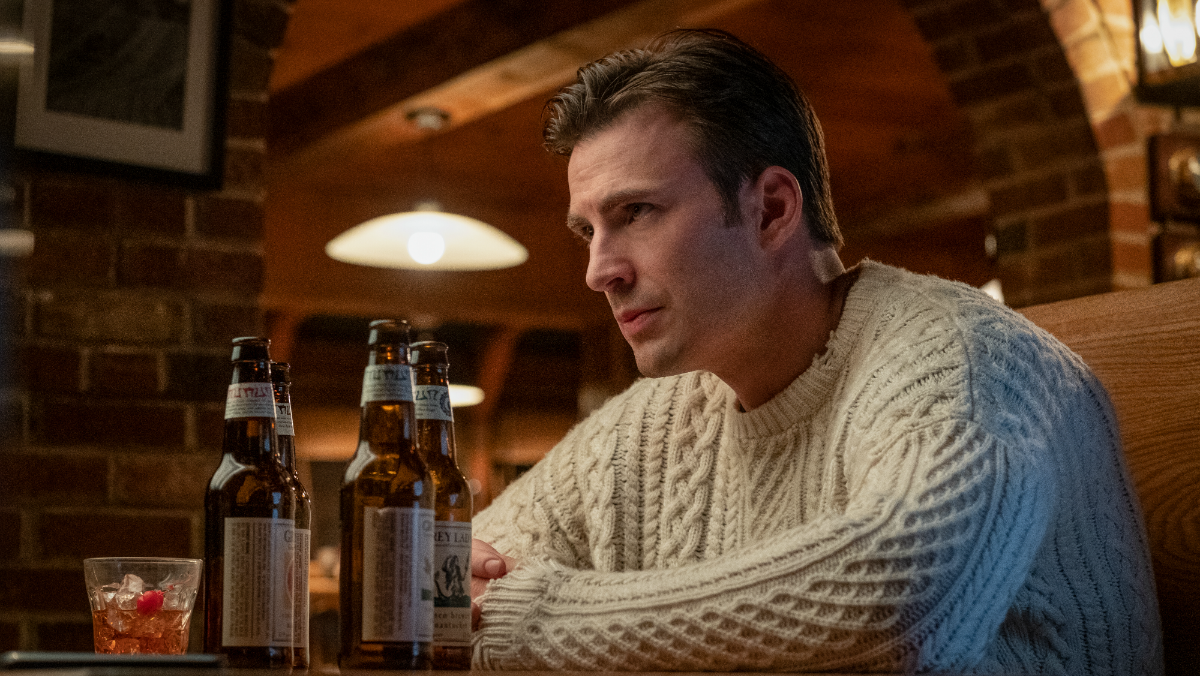 Netflix
Chris Evans in a cozy sweater in a whodunnit movie by Rian Johnson that also stars Daniel Craig as a detective with a ridiculous accent. That’s it. That’s all you need to know.
Where to Watch: For Rent on Prime Video
An American Werewolf in London (1981)Horror comedies are where it’s at for cozy fall movie viewing. And there’s nothing like this darling and damned funny flick. Two American students go on a trek in England only for a werewolf to attack and turn one of them into a beast under the next full moon. There’s comedy and shocking moments abound with just enough horror to satisfy your tastes, if that’s your thing.
Where to Watch: Sling TV
It’s the Great Pumpkin, Charlie Brown (1966)This will always be a classic for generations of kids to come. Charlie Brown and friends celebrate Halloween in style as Linus hopes to see the Great Pumpkin one day.
Where to Watch: Apple TV
Love Jones (1997)Romance drama, cozy poetry in a nightclub, steamy love scenes, and foggy runs through a park? Yes, please. Love Jones stars Larenz Tate and Nia Long as Darius Lovehall, a gifted writer, and Nina Moseley, a gorgeous photographer, who fall in love fast. Tensions between them arise with competing career goals and faces from the past coming into play.
Where to Watch: Pluto TV
Fantastic Mr. FoxThis stop-motion film has lots of colorful imagery as well as a host of funny furry characters that will spark so much joy. The story follows a fox family on the run. There’s nothing quite like this medium of storytelling, which feels inherently cozy no matter what the topic of the movie is.
Where to Watch: Disney+
The Curse of Bridge Hollow Frank Masi/Netflix
You’ll see a familiar face in this family friendly flick. Stranger Things‘ Priah Ferguson stars alongside Marlon Wayans as a dad and daughter duo who spend Halloween night trying to prevent their new small town from turning ghoulish. It’s a cute horror comedy with some genuinely great jokes and lore.
Where to Watch: Netflix
Originally published October 20, 2025.
Tai Gooden is the Features Editor for Nerdist, a fictional villain apologist, and a horror aficionado who is forever waiting for her trip in the TARDIS.The post 14 Cozy Movies That You Have to Watch This Fall appeared first on Nerdist.
Chokeholds, exit plans, and buyer’s remorse
On this week’s “Room Temp” podcast, Markos Moulitsas and comedian Janesh Rahlan discuss how President Donald Trump has started a war he clearly has no idea of how to finish, and how the fallout is hitting everything from global shipping to the gas pump. Meanwhile, Republicans are discovering that being stuck with him might be almost as bad as trying to escape him. “Keep in mind we still have…
AI slop
A cartoon by Jack Ohman. Related | Trump says he’s the only one smart enough to regulate AI…
Trump Officials Admit Planned Arch Would Ruin Everything Around It
The Trump administration is admitting that his proposed “Triumphal Arch” in Washington, D.C., will harm historical sites, but must be built anyway.
The Washington Post, citing a National Park Service document and email correspondence, reports that government officials fully acknowledge that the proposed arch, which would be built on the Memorial Circle traffic roundabout would overshadow the nearby Arlington National Cemetery and have negative impacts on other historic sites including the Lincoln Memorial.
The “adverse effects cannot be fully avoided,” an NPS document states, but there’s nowhere else that the arch can be built because “the proposed location at Memorial Circle is central to the undertaking.” The document is a proposed agreement that Trump officials want historical preservation organizations to sign as part of federal requirements.
“NPS recognizes that Memorial Circle is located within a highly sensitive historic and commemorative landscape and that the Undertaking’s location contributes to adverse effects to historic properties whose significance is associated with setting, design, feeling, association, spatial organization, circulation, and contributing views and vistas,” the document states.
The only remedies the White House is offering to these negative effects are new signs and webpages explaining the project to the public, managing construction so as not to interfere with burials at the cemetery, and documenting the surrounding landscape before beginning to build.
An email states that the NPS asked historical preservationists and other groups to review and sign the agreement by noon Monday, which would overcome legal hurdles and secure final approval for the arch. The White House hopes to submit the project to the National Capital Planning Commission for final approval as early as November.
Three veterans and an architectural historian have sued to stop the arch’s construction, and U.S. District Judge Tanya Chutkan last week ordered the government to give 48 hours before breaking ground on the project, which the Trump administration is fighting. But considering that the White House just admitted that the underlying reason for the lawsuit is valid, the arch may be tied up in court for a while.
U.S. Postal Service Chief Is Reportedly So Fed Up He Wants to Quit
Postmaster General David Steiner wants out.
The United States Postal Service chief told individuals close to him that he wants to resign from his post, according to a report from Reuters on Wednesday. “The message was, this isn’t what he signed up for, and he didn’t come on board to get beat up like this,” one source said.
This report comes as President Trump has been attempting to use the supposedly independent mail service to do his bidding in his last-minute midterm election interference, commanding them to only deliver ballots if they had a unique barcode and if states handed over voter lists to the agency. The Supreme Court struck that dream down on Monday, just two days before reports of Steiner’s discontent.
USPS has denied the report, saying it has “absolutely zero validity.”
Steiner was apparently most discouraged after an intense Senate hearing earlier this summer in which he essentially admitted under oath that USPS would bend the knee to Trump’s attacks on vote-by-mail.
Sen. Peters: "Yes or no, if a state refuses to turn their absentee voter list over to the federal government, will the Postal Service still mail their ballots under this proposed rule?"
Postmaster General David Steiner: "Under our proposed regulation, no." pic.twitter.com/4JYe7Jo450
However, sources familiar with Steiner’s plans told Reuters his discontent stretched back even further. The White House was making efforts to assuage Steiner since the end of last year, with donors even setting him up on a golf outing with Trump on one of his properties in Florida in December.
DC’s CLAYFACE Officially Rated R
- DC Studios’ Clayface has officially been rated R by the MPA.
- The rating is due to “strong bloody violence, gore, language, some nudity and brief drug use.”
- Mike Flanagan penned the script based on his love of the Batman: The Animated Series episode “Feat of Clay.”
- Nerdist take: We hope Clayface can bring back some of the juice to the DCU after Supergirl tanked.
Since James Gunn first announced DC Studios would make a Mike Flanagan-penned Clayface movie, he and co-studio head Peter Safran maintained that the movie would be a “Hard-R” body horror. We really had no reason to doubt them, but until it’s official, you never know. Well, now it is official (via DreadCentral). The MPA has given Clayface an R rating for “strong bloody violence, gore, language, some nudity and brief drug use.” If any supervillain deserves a violent, gory horror movie, it’s probably Clayface. Or, like, any number of other Batman villains, I suppose.
 Warner Bros/DC Studios
Clayface will be the third feature film under Gunn and Safran’s tenure at DC Studios. The first, Gunn’s own Superman was hit with critics and audiences, while Craig Gillespie’s Supergirl from earlier this year was…not. All of the TV series so far have been TV-MA for language and violence, so in many ways, Clayface fits more in with the DCU’s tone at the moment. But an R-rated horror movie, even one that takes place in Gotham City, is by no means a shoo-in for box office glory.
Matt Hagen (Tom Rhys Harries) is a heartthrob actor whose life and livelihood take a hit when mobsters beat his face to a pulp. He subjects himself to experimental drugs from fringe scientist Dr. Caitlin Corr (Naomie Ackie) and while at first it seems like everything is both hunky and dory, Hagen’s body begins to lose its structural integrity. It’s almost like his face becomes, well, like clay if you can believe it.
Other cast members include Max Minghella as Gotham Police Detective John Borelli, and Eddie Marsan, David Dencik, and Nancy Carroll in undisclosed roles. Could one of them play Commissioner Gordon? If anyone, I’d guess Marsan, but who knows?
RELATED ARTICLE
The CLAYFACE Movie Is Perfect for These Unsettling TimesClayface will hit theaters on October 23 and will surely bring the grossness. We hope it can bring back some of the juice to the DCU after Supergirl tanked.
Kyle Anderson is the Senior Editor for Nerdist. You can find his film and TV reviews here. Follow him on Letterboxd.The post DC’s CLAYFACE Officially Rated R appeared first on Nerdist.
CISA decides weekly vulnerability bulletin isn't necessary anymore
JD Vance Begs for Second Chance in Dumpster Fire Interview
“Give us another chance,” says Vice President JD Vance when asked about his midterm message to the American people.
The vice president joined the All-In podcast for a disastrous live interview Wednesday, during which he struggled to defend the Trump administration’s record on everything from the war in Iran to high rates of inflation.
“You promised that you wouldn’t start a foreign war. You promised that you wouldn’t start a foreign war in the Middle East, specifically,” co-host Jason Calacanis said. “Americans—specifically the people who voted for you, Mr. Vice President—are very upset about starting this war. What is your message to them?”
“We invite people into the coalition who disagree with us. You don’t have to agree with us on every single issue.” Vance responded, completely dodging the question. He failed to acknowledge Donald Trump’s repeated promises to stay out of the Middle East, including a pledge at the Republican National Convention two years ago: “With our victory in November, the years of war, weakness, and chaos will be over. I don’t have wars,” Trump said at the time.
“Wanting to keep the United States out of foreign entanglements does not mean that you can never use the military in order to accomplish the American people’s objectives,” Vance continued. “I think the president has actually done the responsible thing here, which is to try to ensure that world energy markets, despite Iranian terrorism, continue to get that flow of oil and gas.”
That “flow” Vance failed to mention, has resulted in the American people spending over $100 billion more at the gas pump since the war began seven months ago. (He also neglected to mention that oil was flowing just fine before Trump started his war of choice.)
“The alternative here, which is the United States effectively says to the Middle East, ‘You’re on your own,’ would mean necessarily a worldwide energy crisis,” Vance said, echoing his previous comments that Americans should be grateful gas prices aren’t higher.
The interview went even further off the rails when Vance was asked about his message to voters leading into the midterms elections this fall.
“Give us another couple of years,” Vance said. “Do you want to reelect the people who have made substantial progress, accepting there is still a lot of work to be done, or do you want to go back to the people who caused the problem in the first place?”
If Vance is trying to engender support for his historically unpopular party come November, “it could be worse” and “can we have re-do” are not exactly inspiring rallying cries.
“Rome wasn’t built in a day,” Vance said.