This week in Santa Cruz County business: Summit on economic opportunities for local arts; Verve workers reach tentative contract; voting underway for Lookout List
Loyalists Only, Please. Why Trump Surrounds Himself With True Believers
President Donald Trump’s second term has often felt like an exercise in mass distraction. As soon as he’s directing people to pay attention to one issue like the Iran war or immigration, he’s already moved on to false claims about widespread voter fraud, taking over Greenland, or building a massive arch in the nation’s capital.
jQuery(document).ready(function(){prx("https:\/\/play.prx.org\/e?ge=prx_149_8202af48-91dc-40fb-a0c5-f2e45db9dc99&uf=https%3A%2F%2Ffeeds.revealradio.org%2Frevealpodcast", "prx-1", "embed")});Subscribe to Mother Jones podcasts on Apple Podcasts or your favorite podcast app.
In the new book Regime Change: Inside the Imperial Presidency of Donald Trump, New York Times reporter and co-author Jonathan Swan has tried to make sense of Trump’s unprecedented tenure by bringing readers inside the room where major decisions happen. And Swan says the loyalists Trump has surrounded himself with in his second term have made Trump’s overwhelming and exhausting presidency possible.
“The word ‘loyalty’ almost isn’t strong enough to describe the bond that some of them have with him,” Swan says. “It’s a belief that this man is a figure of destiny, a figure of history, that God has put him here to save the country.”
On this week’s More To The Story, Swan talks about the immense challenges of covering the Trump administration, how the Jeffrey Epstein scandal sent the White House into crisis mode behind closed doors, and why he’s not eager to write another book about the president anytime soon.
Find More To The Story on Apple Podcasts, Spotify, iHeartRadio, Pandora, or your favorite podcast app, and don’t forget to subscribe.
Why Trump’s White House Reporter Ban Matters So Little
The most remarkable thing about President Donald Trump’s hissy-fit expulsion of CNN, Politico, and MS NOW from the White House grounds is how difficult it is to tell that they’re gone. That’s not to denigrate these three news outlets, two of which previously employed yours truly. (I was labor policy editor at Politico, and before that I wrote a web column on contract for MS NOW when it was called MSNBC.) My target rather is the press room inside which the White House beat reporters are confined. The dirty little secret of this prestige address has long been that very little news emanates from it.
One could almost state it as a mathematical formula: The value of White House reporting is inversely proportional to its physical distance from 1600 Pennsylvania Avenue. Bob Woodward and Carl Bernstein of The Washington Post broke the Watergate story, and then continued to own it, from half a mile away at the old Post headquarters on 15th Street. Maggie Haberman delivers the best Trump coverage of anybody from 225 miles away at the New York Times building on 8th Avenue. One current White House reporter told me that 90 percent of the job consists of working the phones.
It’s been a while since I’ve been inside the place, but the White House press quarters, which once housed a swimming pool, is a claustrophobic warren from which reporters are forbidden to stray. Even a chat with a senior press aide like Stephen Cheung requires an appointment; you can’t get into his upstairs office without one. Lower-level press aides situated in a room behind the famous podium are available, but they aren’t cleared to answer any but the most anodyne question.
The prestigious reporters reduced to a stenographic function within this veal cage feel infantilized and tend to get cranky. “Send the interns,” advised the New York University journalism professor Jay Rosen nine years ago. Nicholas von Hoffman set the scene for TNR four decades ago in his wickedly funny “The White House News Hole” (September 1982). The venerable Boston Globe White House correspondent Curtis Willkie told von Hoffman that “The White House press room is the only day care center in America Ronald Reagan hasn’t abolished.”
At the time von Hoffman and Rosen were writing there was still a White House daily briefing, but Trump got rid of those. Now the briefings occur once or twice weekly if they occur at all. These can sometimes possess value, if only by providing an occasion to observe which questions elicit “no comment.” Occasionally, too, reporters will get a background briefing in which some government official imparts actual information. But under Trump, the ritual combat has become so constant, with reporters routinely getting lectured about telling lies, hating America, and so on, as to render these briefings very nearly worthless. (Much the same performative nonsense has diminished congressional hearings, which have come to consist mostly of rude insults from administration officials alternating with orations and testy “yes or no?” interjections from members of Congress.)
To the limited extent access to the White House press warren benefits anybody, it’s TV reporters and producers. Now and then Trump will make himself available to a pool of 20 or so White House reporters at which he will yet again demonstrate his castration complex by snarling at some challenging question from a woman reporter. The resulting video will go viral. But how many times do we need to be reminded that Trump thinks all females are pigs? We’ve already seen him aboard Air Force One telling Bloomberg’s Catherine Lucey, “Quiet, piggy.” He’s also called woman reporters “stupid” and “ugly.”
At the moment, there is no TV pool, because the remaining news networks that participate in it (ABC, CBS, and Fox News) pulled out in solidarity with CNN, Politico, and MS NOW’s lawsuit demanding reinstatement. It quickly became apparent that the news networks possessed all the leverage. This was demonstrated most hilariously on Monday when the White House website’s livestream of a Trump gaggle, in which Trump cut the ribbon on a new White House helipad, was inaudible. The White House depends on TV technicians to capture Trump’s audio on such occasions; when the TV technicians aren’t there, this is what happens. But even after the White House fixes this technical problem, the fact will remain that Trump has lost access to a huge distribution network on which he relies to spread his utterances, however inane, across the globe. It was telling that none of the reporters who covered Trump yawping inaudibly into the wind tried to find out what the absent mics failed to pick up. Nobody gave a shit.
The dry run for Trump’s press expulsion was Defense Secretary Pete Hegseth’s Nebuchadnezzar-like expulsion of the press from the Pentagon. This occurred in three stages. Stage One, in May 2025, was an order requiring reporters to be escorted by a government official through parts of the Pentagon to which previously they’d enjoyed free access. Stage Two, in September 2025, was an order requiring reporters to give up all access to the Pentagon unless they signed an oath not to gather any information not released by the federal government. All the real reporters in the building, of course, refused to sign. Stage Three, in June 2026, was to declare the press office a classified space and bar reporters from it altogether. The last thing you want hanging around a press office is press.
Did the journalists thus expelled to Babylon sit down, weep, and hang their harps among the willows? They did not. If anything, they plucked their harps more vigorously, reporting that Hegseth ordered the survivors of an air strike against a Venezuelan boat to be killed; that an elementary school the United States bombed in Iran had been placed, erroneously, on a military target list; that the United States was fast running out of accurate long-range missiles in its war in Iran; and that the Pentagon forced out top leaders at Stars and Stripes in retaliation for a Stars and Stripes story reporting a decline in mental health aboard the USS Abraham Lincoln after 250 days at sea and 40 days of continuous combat operations. Many of these stories were broken by The Washington Post, which had its own Jeffuchadnezzar to contend with. If the ability to report big stories were wholly dependent on proximity, Seymour Hersh would never have broken the story of the My Lai Massacre via the ragtag Dispatch News Service.
It’s wrong for Trump to kick reporters out of the White House, and it’s also illegal; a Trump-appointed judge will almost certainly soon order the president to let them back in. Restoring access to CNN, Politico, and MS NOW will enable these news organizations to once again provide certain routine and unexciting coverage of the Trump White House; it may conceivably help reporters for those news organizations to cultivate a few sources. But the exile’s effect on meaningful news coverage is awfully close to nil, and the only party it punishes in any noticeable way is Trump himself.
Jonathan Majors Is Back. Yikes.
I believed in Jonathan Majors.
My introduction to the actor was The Last Black Man in San Francisco—a 2019 A24 film that explored gentrification, racial identity, and vulnerability. Majors’s widely lauded performance was perhaps best described by Rolling Stone as “both deeply sensitive and charmingly left-of-center.” President Barack Obama even placed the film on his annual list of favorite media in 2019.
That led to a genuine breakout. From HBO’s Lovecraft Country to Spike Lee’s Da 5 Bloods to Michael B. Jordan’s Creed III, Majors was on screens all across America, and quickly became the poster child for a kind of new Black masculinity. Major’s acting—and his carefully cultivated public image—seemed to call upon both the Black leading men of the past, particularly legends like Sidney Poitier and Denzel Washington, and the present. Here was a Black star for a new, post-Ferguson America. Here was the next great Black actor. The summer of 2020 only reaffirmed that, as he was announced as the next central villain of the Marvel Cinematic Universe. I wasn’t alone—many people believed in Majors back then.
Majors’s run came to an abrupt halt in March 2023, when he was arrested on charges of assault, strangulation, and harassment against his girlfriend at the time, the actress Grace Jabbari. He was ultimately convicted on two misdemeanor charges of assault and harassment and was mandated to attend a year of domestic violence counseling. Majors denied putting hands on Jabbari, and still does.
He was abruptly canceled—dropped from an ad with the U.S. Army, dropped by his agent, uninvited by the Met Gala, and most notably, cut from Marvel Studios. There were some strange, awkward attempts at a rebrand—and some did buy it—but it was nowhere near enough to return him to his ascendant status. Now Majors is trying a comeback—with an assist from conservative commentator Ben Shapiro, whose Daily Wire media company cast him in Run, Hide, Fight: Infidel, a clumsy work of right-wing agitprop in which terrorists infiltrate a college pro-Palestine protest and quickly starting massacring students.
White actors who get canceled and pop up at Mar-a-Lago or the RNC—think Rob Schneider, Rosanne Barr—often do so without much fanfare or discomfort because the cultural space they occupied before their cancellations was politically neutral at best. But this path hasn’t necessarily been open to Black canceled celebrities in the same way. The most famous brothers and sisters who have turned to Trump—like Nicki Minaj and Lil Wayne—have done so during career nadirs in which they had already been struggling to maintain any semblance of relevance they used to have.
Majors, whose fall from grace came at the peak of his career, is a new phenomenon. His previous cultural status, which heavily involved liberal identity politics, makes him particularly interesting in this regard. He spent his career enthusiastically pushing back on stereotypes surrounding Black masculinity, fully accepting the burden of representation placed upon him before he made his rightward pivot. Who better than the embodiment of soft Black masculinity to serve as the face of a low-budget work of conservative fantasy?
Majors is tall, strong-featured, and dark-skinned, but before his fall from grace he frequently depicted odd, eccentric, and sensitive characters—a combination that made many commentators and fans, myself included, see him as a cultural silver bullet against tired tropes surrounding static representations of Black men. This was most evident in his 2023 Ebony magazine cover story—perhaps the peak of his positive social capital. Majors appeared shirtless, lips pursed, draped over a lounge chair, holding two bouquets of roses, and surrounded by the petals. The headline read “Jonathan Majors: Hollywood’s Most Wanted.” The shoot immediately sparked homophobic backlash from parts of the online Black community, which further cemented Majors’s status.
“I knew that this was the response we would get,” Ebony editor in chief Marielle Bobo said at the time. “This was intentional, as the entire goal with the creative was to challenge stereotypes around Black masculinity.”
This past persona is what made his return to the silver screen in Run, Hide, Fight: Infidel so jarring: The film demands that he suppress the range, sensitivity, and eccentricity that made him so compelling in the first place.
Run, Hide, Fight: Infidel is a two-hour-long production that serves to stoke the average right-wing reactionary’s deepest, darkest fantasies. The radical Islamic terrorists who infiltrate a generic public university in Virginia make female students wear burqas, hang a trans student with the transgender flag, and slit the throat of the encampment leader because she doesn’t want to have babies with them. The group massacres hundreds of students, as dead bodies cover the campus quad by the end of the movie.
Majors plays Clay Saunders, a former Delta Force Agent turned public speaker who rails against the existential threat of Islam. “There are three ways Islam will conquer the West. Through immigration, through the wombs of our women, and by using our own Western freedoms against us,” Saunders says onstage at the school. “What makes them so dangerous is that their goals are not in this life, but the next.… Islam is not consistent with the fundamentals of Western values.”
His speech is then interrupted by terrorists who gained access to campus with the help of pro-Gaza encampment protests, who are then brutally murdered themselves by the terrorists for offenses like being gay, having blue hair, or speaking freely. The massacre continues until the film’s protagonist—the son of Saunders’s slain comrade back in the Delta Force—saves the day. Even if you are able to set aside the premise, the writing is piss-poor and rife with painfully antiquated clichés: An Asian student automatically knows how to defuse a bomb; an overweight Black security guard makes racially disparaging comic relief jokes (“I’m still looking for mine!” he says, when a lost child asks him for help finding her father); everyone portrayed in it is a diluted caricature of how the right wing sees them. And it somehow goes on for two hours.
In Saunders, Majors has gone from endlessly dynamic to completely static. In Lee’s Da 5 Bloods, Majors plays David, a progressive Morehouse graduate who accompanies his Trump-supporting Vietnam veteran father on a soul-searching trip back to the jungle where his closest friend (played by Chadwick Boseman) died fighting for a country that hated him. In The Harder They Fall, he plays the vengeance-driven Nat Love in a performance that stands head and shoulders above a cast full of Black Hollywood royalty. In Magazine Dreams, the last film he made before his cancellation, Majors portrays an autistic man with body dysmorphia who goes on to become a successful bodybuilder—at a massive cost. In these roles, Majors plays Black men who contain just as many multitudes as anyone else. Now, with Infidels, he’s nestling in to perhaps the most shameful stereotype of all: the “good” Negro. Clay Saunders is one-dimensional, gruff, robotic, violent, unchanging—all themes that have harangued Black men since their earliest depictions in American media.
While it was initially strange to hear of Majors’s choice to work with Shapiro’s company and conservative director Kyle Rankin, it seems like his cancellation has truly stuck, preventing him from reentering the mainstream.
“I think when that happens to an actor, most of Hollywood would be fine if they kind of go stand in the corner and stare at the wall for the rest of their life,” Rankin told me. “And I just think that it is a tragedy.… The left seems to love people that have served some time. And when they get out of prison, we can celebrate them, but we can’t celebrate someone who may have made a mistake.”
“When you do any movie, there’s a list of the four older—a little too old— white guys who you’ve seen in every goddamn direct-to-DVD,” Rankin said. “And then when [producer Dallas Sonnier] came into my office one day and was like, ‘Jonathan Majors,’ I’m like, ‘Is there even a chance? He’s an incredible actor.’ And he’s like, ‘Yes, because he’s been canceled, and he would still like to work.’”
Majors worked so hard that he broke a picket line, continuing to work after IATSE, a union that represents entertainment workers, called for a strike during production, citing several safety issues on set, including props falling on people. Majors and co-star JC Kilcoyne even fell six feet through a sheet of untempered glass at one point. Kilcoyne required stitches. Majors didn’t seem to care, and can be heard saying, “Use it!” to Rankin in the footage after the accident. Rankin dismissed the claims of an unsafe set, and claimed that Majors and Kilcoyne only fell “three feet off the ground, or two and a half feet, or something.” Asked about the strike, Rankin blamed it on a “gal in the makeup department.”
“She just started to be like, ‘You know what? I would like to flip this movie.’ I want health care or whatever it be. So she just started expounding that view to everyone and everyone who was listening, I knew none of this,” he continued. “I think the production was actually running quite well.” And while Rankin told me he and Majors never “talked politics,” Majors has given every indication that he was 100 percent committed to this comically bigoted, incredible bloated, career suicide of a film.
“He took his job of being number one on the call sheet very seriously,” Rankin continued. “He was lovely to the young cast, took them out for coffee. Would work out with them. He was always giving them advice if they sought it, and it was really lovely to watch.”
Infidels was genuinely hard to watch. There are certainly campy, absurd moments of humor that break through the fever dream (many of which were clipped and went viral almost immediately after the film’s release). The most widely circulated one features the Muslim antagonist kicking a pro-Palestinian student off of a roof for being gay (something the right often imagines Hamas doing to LGBT people who are pro-Palestine).
"This is my Citizen Kane" - Ben Shapiro pic.twitter.com/FyNm3wkGQU
— Shamoo (@ShamooYT) September 16, 2026But sitting with the context of what Majors’s career might have been makes it sad more than anything. Majors was one of the best young actors I’d ever seen on-screen, and now he’s been reduced to starring in cheaper, modern versions of Cold War and Iraq War propaganda—and on his own volition. This may very well be what he is for the rest of his career: shilling for right-wingers eager to exploit what still lingers from his previous status as a liberal darling.
It’s a strange feeling when an artist you admire becomes someone unrecognizable. Former Kanye West fans get it. Former Nicki Minaj fans do too. Majors’s about-face stings so much because he made us feel like he was ours—a Black man for the modern age who refused to be boxed in and understood the significance of that action. And he communicated that in every photo shoot, every interview, every careful, heartstring-tugging performance. It’s not an exaggeration. He was well on his way to being a Poitier and Denzel for my generation. I’ve never been more moved by any young Black actors. There are so many roles he’ll never get, performances we’ll never see, moments we’ll never feel. His career is relegated to racist, straight-to-digital drivel that he was a willing participant in. And it may be the only way he ever works consistently again.
There was one question that really jumped out at me while looking back on Majors’s 2023 soft Black masculinity run.
“What’s a question every man should ask himself?” asked Ebony’s Cori Murray. It’s the final question of the interview.
“Was it worth it?” Majors replies. “It highlights a certain amount of cognitive dissonance where you have to reflect. I don’t think men reflect enough.”
“I think if you ask yourself if it’s worth it before you act, you’ll be on the path, you’ll be on the proper righteous path. ‘Was it worth it?’ also speaks to the man you want to be—because that’s the meter you’re checking it against.”
I wonder if he thinks Infidels was worth it.
The Supreme Court Digital-Privacy Case That Could Go Either Way
Robert Bork never made it to the Supreme Court. President Ronald Reagan nominated him to a vacant seat in 1987, but the Democratic-controlled Senate voted against the prominent conservative legal scholar and judge over concerns about his views and jurisprudence. Next month, however, a strange piece of his legacy will go before the justices instead.
Salazar v. Paramount Global, which the court will hear on October 14, is a potentially significant case on digital privacy. If the justices side with the plaintiff, it could have dramatic consequences for the internet-advertising industry and its reliance on intrusive (and highly lucrative) targeting practices. What began with a Supreme Court nominee’s movie-rental history in the 1980s could reshape how Americans’ online habits are bought and sold by digital brokers in the 2020s.
Michael Salazar is a college-sports fan who obtained a subscription from Paramount to use a sports-video streaming service that it offered. He received the subscription, he told the courts, by signing up for the service’s email newsletter. Like other users, he viewed multiple videos on the site on his computer while subscribed to it. That computer also happened to be logged into Facebook at the time.
“Via tracking software Paramount installed on its website, Paramount disclosed Mr. Salazar’s personally identifiable information—including his Facebook ID and which videos he watched—to Facebook,” he explained in his brief for the justices. “Facebook and Paramount used this information to create targeted advertising, hoping to increase their revenues.”
This kind of surreptitious ad-oriented surveillance is an all-too-familiar experience for modern internet users. Salazar also alleges that it is illegal under federal law. He filed a lawsuit against Paramount that accused it of violating the Video Privacy Protection Act, which was enacted by Congress in 1988.
The VPPA allows “consumers” to sue “video tape service providers” for disclosing their “personally identifiable information” to third parties without their written consent. If the plaintiff prevails at trial, a federal court may award the “consumer” up to $2,500 in damages for each proven privacy breach, as well as other costs and fees, from the offending provider.
The law is a window into a bygone world on multiple levels. For nearly 200 years, Supreme Court nominations were typically low-key affairs, drawing public interest but not typically the lobbying and criticism that now follows every vacancy. Bork’s nomination in 1987 changed things. He was a key figure in the conservative legal movement in its early infancy in the 1960s and 1970s, championing originalism as the banner of a counterrevolution to the Warren court’s landmark liberal rulings.
Democrats and liberal interest groups lobbied hard to block his nomination. Bork made it easy for them. Bork had freely expressed his opinions on a variety of legal questions throughout his career, including on the Civil Rights Act of 1964, which he opposed, and then-recent Supreme Court rulings on contraception and abortion, which he condemned. The high court had grounded those rulings in a constitutional right to privacy that could be inferred from multiple constitutional amendments; Bork did not believe that it existed.
Modern Supreme Court nominations are a product of the Bork saga. Presidents choose them for their limited paper trails and their ability to avoid senators’ questions at their confirmation hearing. Bork’s paper trail took an unusual turn in 1987 after Michael Dolan, a reporter at the Washington City Paper in D.C., obtained a copy of his rental history from Potomac Video, a movie rental store.
The list of movies itself is fairly mundane. (You can now find it on Letterboxd.) It included films like Risky Business, Sunset Boulevard, Citizen Kane, and The Man With the Golden Gun—nothing controversial or salacious, just the popular middlebrow fare one would expect from a federal appellate judge in the 1980s. Bork’s viewing habits provided no real insight into his jurisprudence that could not already be gleaned from his ample public writings and comments.
Obtaining the list at all was its own statement. Dolan just walked into the now-defunct Potomac Video store in D.C. and asked the manager for a copy of Bork’s rental history, which the manager photocopied for him. The reporter later recounted a sense of relief that it didn’t include anything like pornography, which would become an issue in a Supreme Court nomination three years later. Dolan later recounted a conversation he had with his editor at the time.
Next day, while visiting Jack Shafer, I asked if an article on Judge Bork’s video rentals would interest him.
“You can’t do that, “ he said. “That’s illegal.”
“No, it isn’t,” I said. “Judge Bork said so.”
Okay, Shafer said. Write the story.
Congress, however, was less interested in the content of Bork’s rental history than it was in a reporter’s ability to obtain it. “After all, if a judge’s viewing habits were newsworthy, so were those of members of Congress,” The New York Times observed the following year. Lawmakers began crafting a bill that would make companies liable for disclosing video rental records without permission. Reagan signed it into law in 1988.
Brick-and-mortal video rental stores have now gone the way of Roe v. Wade. (Bork died in 2012, and Potomac Video closed in 2014.) But the VPPA endures. Congress even updated it in 2013 to address concerns by Netflix and other tech companies about their potential liability if users automatically shared their viewing habits on social media websites like Facebook or MySpace. Instead of requiring permission each time a user’s history is shared, a company only needs to obtain their permission once.
Paramount never obtained that permission, Salazar claimed, and so it is liable under the law. “Unauthorized disclosures of video-watching histories, meanwhile, offer ‘a window into our loves, likes, and dislikes,’” he told the justices, quoting from the Senate report that accompanied the VPPA’s passage. “Members of Congress believed watching films is an ‘intimate process’ that ‘fuel[s] the growth of individual thought’ and ‘should be protected from the disruptive intrusion of a roving eye.’”
As one might expect, Paramount disagrees with Salazar’s interpretation of the law. The company argued in the lower courts that the VPPA did not extend to him because Salazar was not a “consumer” under the act’s terms. The law defines a “consumer” as “any renter, purchaser, or subscriber of goods or services from a video tape service provider.” The company argued that the consumer in question must rent, purchase, or subscribe to “video cassette tapes or similar audio visual material” to qualify, not other “goods and services.” Since the videos he viewed were available for free, Paramount argued, they did not qualify.
Salazar argued that this interpretation defied the VPPA as written since its text does not impose such a limitation upon any claims. But the Sixth Circuit Court of Appeals disagreed. “Our approach is not just consonant with textualist interpretation, it is required by it,” Judge John Nalbandian wrote for a three-judge panel last year. “The pure definitional meaning of words in isolation shouldn’t be confused with the plain meaning of the text.”
Salazar urged the justices to overturn that ruling, arguing that the lower courts had improperly “replaced what Congress wrote in that definition”—of the word “consumer”—“with limiting language it did not include,” undermining the law’s breadth and purpose. “The language Congress writes into a statute is the law,” he argued in his brief. “Language it does not include is not the law. Those straightforward principles resolve this case.”
If Salazar were to prevail, it would have significant consequences for online advertising. A ubiquitous feature of the modern internet is companies using one’s browsing habits and history to build targeted advertising profiles, which are freely sold and traded among third parties. In a brief that unsuccessfully urged the justices to not take up the case, Paramount derisively described the VPPA as a “Blockbuster-era law” and complained that Salazar “seeks to transmogrify it into a prohibition against targeted advertising on the Internet.”
Other friend-of-the-court briefs dispute the scope of the potential fallout. The U.S. Chamber of Commerce also warned that adopting Salazar’s straightforward reading of the law would turn the VPPA into a “federal instrument for regulating—and in practical effect abolishing—the targeted-advertising model that underwrites much of the modern internet.” The Electronic Privacy Information Center, on the other hand, told the justices that Paramount (and other online-video companies) is “not under any obligation to use these [targeted] systems, and it can adopt more privacy protective techniques to integrate with its advertising and other vendors.”
The Supreme Court agreed to take up the case without a clear circuit split, suggesting a heightened level of interest from the justices. That does not necessarily bode well for Salazar. In its pre-argument brief, Paramount complained that VPPA claims like this one are increasingly common in the lower courts, blaming unscrupulous class-action law firms—a disfavored target in some justices’ eyes—and urging the justices to deliver a final word on the matter.
On the other hand, the Supreme Court has punched above its weight on digital-privacy issues in other contexts over the last two decades under Chief Justice John Roberts. The justices have given heightened Fourth Amendment protections to cell phones and required police to provide more particularized information to judges when obtaining geofencing warrants. This does not mean they have embraced an overarching right to privacy that Bork once rejected, of course, but they have ably applied old search-and-seizure principles to new technologies.
A ruling in Salazar’s favor would apply a law that Congress drafted to protect Americans’ private viewing habits to an even more intrusive system than existed in 1988 or 2013. If privacy was good enough for Robert Bork, maybe it’s good enough for the rest of us, as well.
Centrists Won’t Tell You Where “Moderating” on Trans Rights Ends Up
If the Democrats lose the upcoming midterm elections, our path out of competitive authoritarianism gets a lot longer, or disappears altogether. The political winds are at the Democrats’ backs, but the structure of our electoral system cuts against them. It could come down to a few close races. So the party is—very understandably—anxious to get its strategy right and not to leave gettable votes on the table.
And many centrist think tanks, columnists, and pundits have a pitch for an easy way to win more support: “Moderate” on trans rights.
This has been a perennial concern of the chattering classes for the entire Trump era, and the offer they put to Democrats is a seemingly attractive one: Remain supportive of a small and vulnerable segment of the population without seeming out of touch with much of America, in the words of Jonathan Cowan, president of Third Way. This was echoed more recently by Thomas Edsall, writing in The New York Times, who argued that Democrats voting to bar trans women from women’s sports would help them reconnect with the median voter.
And some Democrats are listening. California Governor (and possible presidential candidate) Gavin Newsom has had several stabs at “moderating” on trans rights. More recently, Representative Seth Moulton, running in a competitive primary against Ed Markey, argued that many Americans believe “that trans people should be protected,” but “when it comes to competitive sports, they feel uncomfortable.”
Overall, however, the party has not gone as far as the moderators feel is necessary. If they’re selling a train ride, Democrats will go a stop or two but then get off. They’ll mention the issue less, drop overtly “woke” language (if they ever used it at all), maybe even say something about women’s sports or young children medically transitioning and then backtrack, or partially backtrack. That’s it.
Perhaps that’s as far as they’re willing to go. Perhaps they get pushback from progressives who have no interest in getting on the train at all. Newsom dropped the centrist shtick and rebranded himself as an anti-Trump firebreather. Moulton lost his primary in no small part because liberal voters are currently in no mood to compromise with the right. Centrists, of course, have bemoaned this—with constant Republican attacks, Democrats, it’s claimed, risk looking out of touch if they don’t stay on the train and moderate further.
And with the pressure this high, they keep finding the odd Democrat who’ll listen, particularly those in front-line races. James Talarico, the Democratic candidate for Senate in Texas, recently reversed his position on trans participation in girls’ sports. This may not sound like that big a deal; the exact sort of compromise centrists are selling. Surely this is a fair trade for a red-state senator.
Just about every trans person I know thinks concerns about sports are misleadingly presented and vastly overblown. They also would trade restrictions here for broader social acceptance and inclusion in a heartbeat if they thought that was a deal that was on the table. They just don’t think that it is. And I think they’re correct to think that.
What centrists never mention is that we have a highly relevant case study, playing out in real time, of a major center-left party following their advice. The U.K. Labour Party is almost a “sliding doors” alternative timeline where democrats stay on the train. There are differences, of course, but both are the main center-left party in a historically two-party system and have had to grapple with a radicalizing right. Given our shared language and culture, they have often looked to the other for ideas on how to campaign or govern.
And yet, the centrist advocates in the United States of moderation never, ever, ever mention the Labour Party. Perhaps they’re just not familiar; Americans can be insular like that. But I suspect the elite ones are. People who read news every day will have followed the key test case for their strategy. But you’d never know it. The below may explain why.
As someone who’s been politically active in LGBT rights in both countries, let me tell you what happens if you stay on the train to its terminus, i.e., to caving in to the right on this issue. First, in today’s environment, where fascism has largely captured the right, once you show a willingness to back down, the pressure on you will increase, not decrease.
Trans rights didn’t use to be an issue at all in the U.K. In 2012, just 60 articles relating to trans people were published in the U.K. media. But our campaigning right-wing press (most notably The Times, the Telegraph, and the Daily Mail) saw an opening. While both main parties were nominally pro-trans rights, the conservatives were increasingly picking up American new-right rhetoric. Meanwhile, Labour, starting in 2019 under new leader Keir Starmer, pursued a strategy of affecting a more moderate image. Right-wing writers had already started anti-trans fearmongering, and after Starmer’s ascent, they massively ramped it up, averaging 20 articles a day on the topic by 2022, with even purportedly liberal outlets like The Guardian joining in.
“Can a woman have a penis?” became a favorite question of journalists to ask Labour leaders. Having already decided not to go too hard on “culture war” issues, they didn’t have the courage to just say “yes” or “that’s an ugly gotcha remark,” so they stalled and waffled. You could tell they hated the question. So interviewers kept asking it. Hardly responsible behavior from the media, but Labour had basically invited it by showing weakness, by flinching before they got hit.
Next, small compromises will become big ones, and far more quickly than you thought possible. The urge to moderate is unfalsifiable and insatiable. If it doesn’t work, you’re told to moderate more. The train stops will start racing past. Two years ago, Labour won an election on a moderately pro-trans platform, but the subsequent cave was fast: First, youth trans health care was criminalized; in time, adult care was being withdrawn. Destinations you were explicitly promised the train would not go begin to blur past before most people even have a sense of what’s happening.
A month ago, the Labour government’s Equality and Human Rights Commission, or EHRC, officially implemented a revised Statutory Code of Practice for Services, Public Functions, and Associations. The backstory and legal mechanics of this are complicated, but functionally it is one of the most authoritarian bathroom bans in the developed world. All institutions, public or private, must exclude trans people from single-sex spaces of their gender (a trans woman cannot use the women’s toilet) and may also exclude them from the spaces of their sex at birth (a trans woman also cannot use the men’s).
In addition to bars, coffee shops, restaurants, gyms, schools, universities, charities, and so on, this also applies to venues like hospitals. An oncology department that has men’ s and women’s wards will be forced to bar trans people from both—they should be put in a “side room,” said Mary-Ann Stephenson, the Labour-appointed chair of the EHRC, which wrote the Code of Practice. But these are in short supply and used for more rational purposes like severely immunocompromised patients. This is acknowledged by Labour members of Parliament, such as Kevin McKenna, to be unworkable and dangerous, but they’re doing it anyway.
There is good reason to worry that these changing rules will act as a green light to violent bigots across the country. In the U.K., both trans people and cis people who don’t fully meet their gender stereotype (for instance cis female cancer survivors who may have short hair or mastectomies) have reported a massive increase in abuse and harassment.
There is a human cost to all this. U.K. suicide hotlines are reporting a big spike in (adult) trans callers. Trans children are estimated to be taking their own lives at seven times the rate of their peers. Campaigners describe regularly hearing from parents sleeping at the bottom of their children’s beds, terrified of what they might do if left alone.
The train will never reach its advertised destination. At no point will there be any political payoff for any of this. How could there be? Centrists are right to say that the median voter has mixed views on trans rights. But they’re also not deeply considered views or high-salience ones. The trans panic is an elite fixation. Most mechanics in Ohio, or football fans in Wallsend, know very little about it and care even less. Centrists imagine swing voters who are deeply invested in “trans issues,” with nuanced, nonpartisan positions, and who are informed enough to respond to subtle changes in policy. There are not many people like this. Indeed, I’m not sure there are any.
Yes, Labour and the Democrats are both negatively defined as effeminate and queer—think of insults like “soy boy” or “cuck.” And yes, the attacks on trans people are part of this. But if centrists wanted to help, they could use their considerable media power to debunk right-wing lies or expose the gendered double standards in our politics. They don’t.
Labour’s strategy was one of compromise on culture-war issues to pull votes from Reform (the U.K.’s main fascist party). This was personified by the former chief of staff to the prime minister, Morgan McSweeny, who was generally thought to have dictated strategy during the Starmer years. The party should, he argued, focus on “hero voters”—white, working-class, social conservatives in “red wall” (think Rust Belt as an inexact analogy) areas of the country.
So far, they have attracted 0 percent of those voters (yes, zero, that’s the actual statistic). Meanwhile their share of gay and bisexual voters has plunged from 42 percent last election (itself arguably an underperformance) to 18 percent following their “moderation” on trans rights. There isn’t data specifically for trans people, but I assume it’s even worse. Not the only reason for Starmer’s apocalyptic unpopularity, but a clear contributing factor. So it doesn’t even work politically.
But the longer you stay on the train, the harder it is to get off. Starmer was recently forced out and replaced with Greater Manchester Mayor Andy Burnham. Yet even as this was happening, Labour pushed through the EHRC code described above. Their political strategy was obviously not working, but they remained locked into forcing trans people out of public life.
This has less to do with formal powers—Burnham could reverse all of this if he chose to—and is more a matter of psychology: Getting off the train and catching a return journey would require an admission that you fell for a very obvious con. People whose identity is rooted in being clever, savvy operators just can’t do that.
It would also require an admission that you brutalized a vulnerable minority for no good reason. And most people don’t want to think of themselves that way, so they just … keep going. Britain has gone from being one of the better developed countries for trans rights to being one of the very worst (currently ranked by ILGA World’s rainbow map with Russia and Hungary), yet Labour still blathers on about progress and equality and presents what it is doing as a careful balancing of rights.
Also, the U.K. has seen a wave of institutions rapidly fold in a way that will be difficult to reverse. On a battlefield of war, if the unit next to yours ran away, yours would too. No one wants to get shot at if the battle’s lost. And so, when the main center-left party fled the field, many other institutions decided they weren’t going to stand up to the anti-trans campaign’s considerable media and legal firepower. Even the largest British LGBT charity, Stonewall, signaled surrender, with its new chair expressing admiration for, and apologizing to, Harry Potter author J.K. Rowling—one of the figureheads and primary funders of the anti-trans side.
As you ride the train, at each progressively more indefensible stop, you’ll be told it’s the last one. But it won’t be. Labour thinks moving to the right on social issues takes them “off the table.” And this is at the heart of the centrist con: You can do this, they say, and still be a good person. You’ll make a few compromises, but you’ll “remain supportive,” and trans people will continue to be “protected,” as Jon Cowan and Seth Moulton respectively put it.
What will actually happen is you’ll do horrific things while delusionally maintaining the fiction of yourself as a good person. Labourites have not carefully balanced rights, they have not made an ugly compromise to defeat the fascist threat, or even cynically cemented their own hold on power. They have, in fact, just viciously attacked the rights, safety, and dignity of a minority group. And for the right, it will never, ever, ever be enough.
Bridget Philipson, the Labour minister who implemented the bathroom ban, said she was doing so, in part, because she didn’t “want trans people to be constantly on the front pages of newspapers” or “pilloried on social media.” Giving anti-trans campaigners what they wanted would, the logic goes, make them disappear. Feeding the wolf would starve it. Just do this, she effectively said, and the whole debate will be over.
It wasn’t, of course. Since then, the small but powerful anti-trans lobby has been emboldened to call for everyone in the country to need a digital ID stating their “biological sex” to access changing rooms, health care, and single-sex services and associations. It seems like every week we see another institution cave; Amnesty International withdrew a report on anti-trans groups under legal pressure, the Welsh health service abruptly stopped all adult gender-affirming operations, and new guidance was rolled out in U.K. schools that campaigners describe as segregation, as it will effectively prevent trans children from accessing toilets and changing rooms of either gender. It makes social transition much harder and more regulated and implies that such students are a safeguarding risk to their peers.
Much of the American progressive commentary in the U.K. (including my own) has focused on Labour as an exemplar of a poor political strategy, which it assuredly is. What I want to highlight here is the profound failing of moral wisdom: We are in a fight for free societies, for the rights of everyone to live as they wish—our goal is to win the battle, not make difficult issues go away.
Many readers, I suspect, will have a sense of just how dangerous the modern right has become. What I think is less understood is the enormous harm center-left elites can do when they adopt the wrong strategy for dealing with this unprecedented threat. You do not want to get on this train, be left on a battlefield when the general flees, or live in a country where the main center-left party suddenly starts persecuting minorities.
I’m not saying we should stop voting for Democrats. Much of the online discussion of Talarico’s comments centered around whether trans people and allies should abstain from voting (or vote third party) to pressure Democrats not to go down this track. My own view is that this is a mistake, at least in present circumstances. Not because we shouldn’t pressure the party—we absolutely need to—but because this is an ineffective tool for doing so.
Beyond the incredible harms of allowing Republicans to maintain congressional control, it just hasn’t ever worked. The main consequences of the left withdrawing support historically—from ditching Al Gore for Ralph Nader in 2000 to going “Bernie-or-Bust” in 2016—have been bitterness and mistrust that have made it harder for progressives to achieve their goals. We have a much better model of how to fight for a trans-inclusive party in Ed Markey’s recent primary victory.
And I think the direction of the Democratic Party is worth fighting for. They’re not Labour. Not even close. No national candidate supports a bathroom ban, and even those like Talarico who have moderated are a minority. The map of trans legal rights in the United States is a map of partisan control. When Democrats hold power, they protect or enhance trans rights. As I was writing this, Virginia Governor Abigail Spanberger reversed Republican restrictions on trans people’s participation in sports. Overall, weak-willed centrists are slowly losing the intraparty debate.
This analysis might seem strange to many on the American left who are used to thinking of the Democrats as centrist, weak, and feckless. But on this issue, they’ve managed—more or less—to hold the line where their international peers have not. Indeed, the party is now generally both more aggressive and more progressive than many of its international counterparts (center-left parties in two-party systems, center-to-left coalitions in multiparty ones). Back in March, every Senate Democrat—a group that to be sure includes several moderates—voted against a GOP amendment to prohibit transgender athletes from participating in girls’ or women’s sports.
This was not guaranteed to be the case in advance. Not turning on trans people was a choice party leadership, primary voters, and mid-level institutions made—and must continue to make. As long as the threat of fascism persists, there will be those urging us to run, to forget our values, and abandon our friends. And they will make it sound like reasonable pragmatism.
Hold the line, and have faith. We are in this together, and we will get through this together.
BigCommerce app breach spills Master of Malt customer data
Eight waste streams and one free Saturday – why does Santa Cruz County make legal junk disposal so hard?
Have something to say? Lookout welcomes letters to the editor, within our policies, from readers. Guidelines here.
Illegal dumping too often mars the Santa Cruz County landscape.
BT Tower's rooftop pool plan brings swimmers back down to earth
Trump Hits Record Poll Low as GOP Leaks Get Ugly: “Bottom Falling Out”
The polling just keeps getting worse for the GOP. A new Reuters survey finds Donald Trump’s approval at 32 percent—the worst in Reuters polling of both his terms. He’s at only 73 percent among Republicans, and on cost-of-living he’s at an astonishing 17 percent, another new low. This comes as a CNN poll finds voters souring on the war in unheard-of numbers. Meanwhile, panicky GOP leaks are turning into a flood: GOP operatives tell Politico that the races in North Carolina and Georgia are rapidly slipping away. Others privately admit Trump’s failures have left them badly on defense in red states and districts. One GOP operative candidly declares Trump is a huge problem: “The bottom is beginning to fall out.” We talked to Morgan Jackson, the veteran North Carolina Democratic operative on Roy Cooper’s Senate campaign. He explains why Trump’s collapse with independents is an underappreciated story, why what’s happening in North Carolina and Georgia could have major long-term political consequences, and why he still expects North Carolina to be very, very close. Listen to this episode here.
UK’s uncrewed experimental sub shows it can fire torpedoes
Why security belongs in the network
Shut up and calculate: Jev's new AI primitives for coders
In the age of AI, teaching networking principles remains more important than learning protocols
Slay Bar

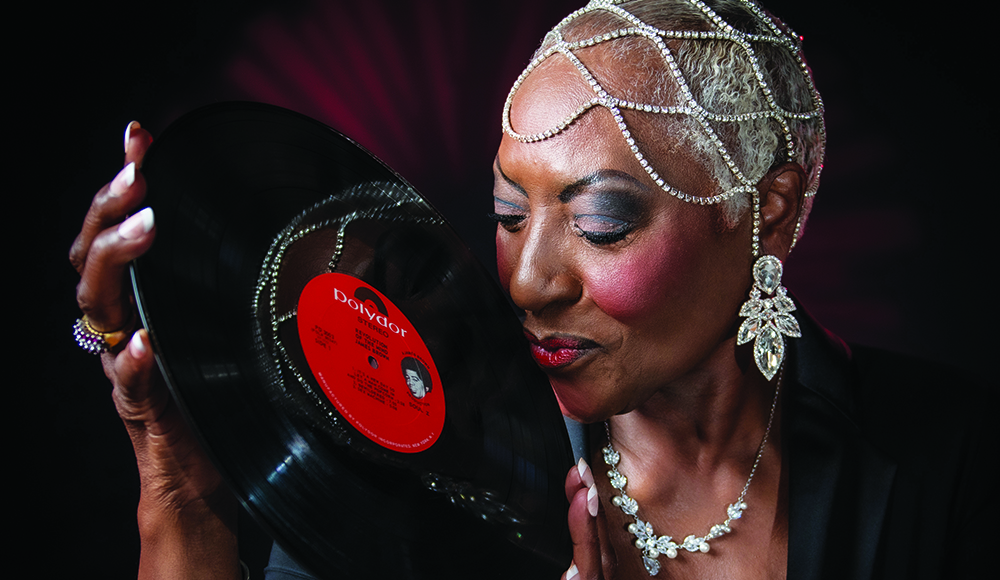
Godmother of Funk
Free Will Astrology

Wrap Star

Things to do in Santa Cruz