
Most people who quit M365 for Google do it out of spite, but there’s no ROI in that
Apple iPhone Duo makes developers think in folds
The latest AI doomsayer is China’s intelligence boss
COBOL dev won .Net hackathon with help from AI – and their CIO loves it
Supreme Court Blocks Trump’s Mail Ballot Scheme
President Donald Trump’s latest effort to steal the midterms has played out in plain view. His plan was to force states to conform to last minute, untested, and too-late-to-implement vote-by-mail requirements with the inevitable result of disenfranchising thousands, if not millions, of voters. The only thing Trump needed to launch this bomb into November’s elections was the go-ahead from the Supreme Court.
But on Monday evening, the court refused to okay the scheme. The brief, unsigned order stated that the Trump administration was unlikely to prevail in its argument that its US Postal Service rule limiting ballot delivery was legal, and that the harm of letting the rule take effect was too great.
As with so many of Trump’s corrupt and lawless actions—from his crypto schemes to bulldozing the East Wing of the White House—the president often carries out corrupt and illegal schemes in public. His plan to disrupt mail-in voting, which he perceives would harm Democrats more than Republicans, was the latest. By sanitizing the effort with the language of executive orders, rule-making, and court documents, the administration hoped to blind people to the election-stealing scheme underneath it all. It was an attempted heist in broad daylight.
In addition to the scheme’s illegality, officials said it would be impossible to implement in six weeks.
On Monday, only two justices publicly went along with this plan. In a dissent, Justice Samuel Alito, joined by Justice Clarence Thomas, argued that the government likely had the authority to regulate mail-in ballots in the way the administration tried. A third justice, Brett Kavanaugh, agreed, but said implementing it so close to the election would cause too much harm. That means there are likely three votes, if not more, that would side with a Trump administration push to implement its mail-in ballot rules for the 2028 elections and beyond.
Trump has been set on winning this fall’s midterms by any means for more than a year. Shortly after returning to power in 2025, he issued an executive order requiring citizens to show a passport or similar document to prove citizenship when registering to vote. But the president has no authority to interfere with states’ administration of elections, and a federal court blocked the order. Next, he pressed Congress to pass the SAVE Act, which would have similarly required documentary proof of citizenship. When that failed, he issued the March 2026 executive order that led to today’s court action, this time instructing the Postal Service to limit the delivery of mail-in-ballots by promulgating a rule that places new requirements on how states can send mail ballots. The rule, formally unveiled in late August, would have allowed the Postal Service to throw out thousands, even millions, of ballots that are legally cast. It’s an illegal power grab that states, election officials, and legal experts warned would cause a preventable and monumental disaster.
“The rule threatens to disenfranchise millions of elderly voters, disabled voters, military voters, and all others including the most vulnerable who depend on mail voting, in both red states and blue,” four experts wrote in an amicus brief to the Supreme Court. “This disenfranchisement risk is literal, not hyperbolic.”
The Trump administration even acknowledged the fallout. In asking the justices to allow the USPS rule to take effect, the administration downplayed it as merely imposing “modest envelope-design and addressee-information requirements.” But a few pages later, the brief argued that failing to swiftly implement the rule—an impossible feat so close to the midterms—would have disastrous results. Unless the rule takes effect immediately, “there is a grave risk that States may not have taken the necessary steps to comply…potentially depriving those States’ citizens of the ability to vote by mail.” In other words, even the administration knew that rushing out the rule would lead to mass disenfranchisement—it simply wouldn’t accept that that was a good reason to block implementation of its “modest” envelope requirements.
Though it help against Trump this time, the Supreme Court let the order get this far. On August 24, the court threw the midterms into turmoil by ruling that it was too soon for states to challenge the executive order because it wasn’t yet affecting the states. Justice Ketanji Brown Jackson denounced that ruling as a “Kafkaesque nightmare” that “contributes to pre-election chaos instead of quashing it.” The Postal Service had unveiled its rule on August 21, which specified that it will only deliver mail-in ballots if states both hand over their voter rolls to the Trump administration via an online portal that the Postal Service has yet to complete, and adopt new envelope and bar code requirements.
In addition to the Postal Service rule, Trump’s executive order instructs the Department of Homeland Security to create a nationwide database and individual lists of citizens in each state, presumably to limit who can vote. Such a system might be used to override state voter rolls with potentially inaccurate lists. That portion of the order was put on hold in a different legal challenge, but the administration has appealed to the Supreme Court, which will soon seperately decide whether DHS can use it. This means that the threat of administration meddling in the midterms through this executive order has not disappeared.
Trump’s executive order is a massive power grab that aimed to usurp states’ authority to run their own elections and radically transform the role of the Postal Service from delivering the mail to determining who receives a ballot according to Trump’s whims. “Never before has USPS attempted to interfere with elections in this way, let alone a fast-approaching election,” the 23 states challenging the rule told the court. “And nothing in federal law authorizes USPS to refuse to deliver ballots.”
In addition to the scheme’s obvious illegality, election officials have repeatedly told courts it would be impossible to implement six weeks before the midterms.
“In some States, unrebutted evidence establishes that compliance with USPS’ rule would be impossible ahead of the midterms, meaning that millions of voters would be unable to vote by mail and some would not be able to vote at all,” the 23 states challenging the rule wrote. “In the remaining States, there would be chaos—and a significant risk that millions more voters would be denied the ability to vote.”
A Postal Service whistleblower told Sen. Richard Blumenthal (D-Conn.) on August 31 that the new USPS system was “secretive, rushed, chaotic, and fundamentally flawed” and could lead to a “catastrophic failure which could derail the midterm elections.” As one example, the whistleblower said that if one ballot out of 10,000 failed to scan properly, all 10,000 ballots would be rejected. The whistleblower concluded that “potentially millions of American voters may not receive their mail-in ballot this election cycle in a timely manner, or at all.”
Election officials across the country and from both parties amplified these concerns.
“Even if state and local officials were somehow able to implement this new rule perfectly, there is a high risk of mistakes, incompetence, and delay on USPS’ part,” the 23 states opposed to the rule told the courts. “One statistic from USPS’ final rule illustrates how little the agency has thought all of this through. USPS estimates that its ballot-scanning process could take up to one minute per ballot. If that is right, it would take USPS approximately 43 years to scan all of California’s 23 million mail ballots, to say nothing of the time required to scan the millions of ballots mailed in other States.”
The opposition to the USPS rule didn’t just come from blue states. Top Republican election officials in Georgia, Kansas, Kentucky, New Hampshire, North Dakota, South Dakota, and Utah told the court that “neither election officials across the country nor USPS are equipped to successfully implement this Rule for the 2026 midterms.” The election administrators’ brief notes that mail-in ballots have already been sent in states including North Carolina, Delaware, and Alabama, and will soon go out in many other places. “Attempting to implement the Rule now will almost certainly lead to mistakes, delays, and confusion for both voters and election officials,” they wrote.
District Judge Indira Talwani, a Barack Obama appointee, first blocked Trump’s order in June in the 23 states that challenged it and extended that to a nationwide injunction in early August. “The Constitution does not grant the President any specific powers over elections,” she wrote. Following the Supreme Court’s decision on August 24 to allow the executive order to move forward, she specifically blocked the new USPS rule after a new challenge from states and voting rights groups, finding that states working “on a prescribed timeframe” would be “unable to pivot this late in the election cycle, nearly guaranteeing significant disenfranchisement.”
A unanimous panel of judges on the First Circuit Court of Appeals affirmed Talwani’s decision last Thursday. “We see no obvious error in the district court’s conclusion that allowing this Final Rule to be effective for the soon-arriving November 3 election will likely result in the disenfranchisement of millions of voters across the country while providing minimal—if any—gains in combating voter fraud,” they wrote.
On Sunday night, a Trump-appointed district court judge, Carl Nichols of Washington, D.C., also issued an injunction against the USPS rule. While Judge Talwani had only enjoined key parts of the USPS rule, Judge Nichols blocked the entire rule, writing that it exceeded “any conception of the outer bounds” of the agency’s authority.
Trump’s proposed system appeared designed to fail—which is exactly what the president wanted. One in 3 Democrats voted by mail in 2024, compared to 1 in 4 Republicans, according to data published by The New York Times. Trump was willing to disenfranchise a significant chunk of his own voters so long as more Democrats pay the price.
This Supreme Court has allowed many of Trump’s illegal actions to proceed, from deporting people without due process to building his ill-gotten ballroom. Massive chaos and disenfranchisement in the midterms, with the court’s imprimatur, proved beyond the pale. But the court has done the president and his party many favors this election cycle.
After all, the six conservative justices have already green-lit a key part of Trump’s effort to tilt the midterms in the GOP’s favor by destroying the Voting Rights Act and approving the unprecedented mid-decade gerrymandering that has allowed Republicans to draw 10 more GOP-friendly seats in the race for the House of Representatives. They’ve repeatedly overruled their own so-called precedents and allowed states like Louisiana and Alabama to cancel primaries and suspend elections in order to give Republicans as many extra seats in the midterms as possible.
Just last week, they intervened on the shadow docket to further boost the GOP’s fortunes by holding that political party committees, where Republicans hold a huge financial advantage over Democrats, should get the same discounted TV ad rates as candidates.
Trump’s Postal Service ruse will not take effect for the midterms. But the administration is likely to turn to other tactics, and the Supreme Court could be drawn into the fray. Trump may try to interfere in the midterms through actions like sending ICE to the polls, seizing ballots, or declaring a fake national emergency. After all, this is the same president who launched a violent insurrection to overturn an election. The president has long acted like he was above the law and dared the courts to stop him. He’ll almost certainly try it again.
Murray Street Bridge to reopen eastbound lane in late September

The eastbound lane of the Murray Street Bridge will be reopened on Sept. 28, the City of Santa Cruz announced Monday afternoon.
The bridge has been fully closed since June 10 due to major construction efforts, including installing piles and support structures on the south side of the bridge. Crews also completed a new sewer main on the north side of the bridge.
The nearly four-month closure was required because it was the project’s in-water construction period, the only time that the pile installation process is allowed.
While the project is making necessary updates to the bridge, the closure has come with its share of difficulties for residents. It shut down a major city artery, resulting in worsened traffic congestion and consistent struggles for surrounding harbor and Seabright businesses.
There are only two more planned short-term full closures of the bridge remaining — a one-week closure in February 2027 and a two-week closure in December 2027. The project is scheduled to wrap up in January 2028.
The post Murray Street Bridge to reopen eastbound lane in late September appeared first on Lookout Santa Cruz.
Microsoft drafts feel-good AI model guidelines and wants your input
Full overnight closure of Highway 1 near Aptos scheduled for Sunday and Monday

Highway 1 near Aptos will see overnight closures Sunday and Monday night for construction of a new pedestrian overcrossing at Mar Vista Drive. The overcrossing is part of a larger, multi-year effort to widen Highway 1, add auxiliary lanes and partial bus-on-shoulder lanes, and build new pedestrian infrastructure.
On Sunday, Sept. 20, northbound Highway 1 will be fully closed from 11 p.m. to 6 a.m. Travelers may take the State Park Drive off-ramp to Soquel Drive and take the Park Avenue on-ramp to continue on Highway 1.
On Monday, Sept. 21, southbound Highway 1 will be fully closed from 10 p.m. to 5 a.m. The detour will be at the Park Avenue off-ramp, which drivers can take to Soquel Drive, and then to the State Park Drive on-ramp to continue on Highway 1.
Directional signs will be posted for travelers before the areas under construction.
The post Full overnight closure of Highway 1 near Aptos scheduled for Sunday and Monday appeared first on Lookout Santa Cruz.
Is the New Magic of Disney Animation the Best Upgrade In Walt Disney World History?
- Nerdist got a sneak peek at Hollywood Studios’ new Magic of Disney Animation and it was definitely magical.
- The attraction is a celebration of not just art but the people who create it.
- Nerdist’s Take: The new Magic of Disney Animation building at Hollywood Studios might be the greatest upgrade in Walt Disney World’s history.
I can’t fully explain my reaction to Hollywood Studios’ new Magic of Disney Animation building without talking about what it replaced. Fortunately it’s easy to describe what Star Wars Launch Bay was like because words such as “underwhelming” and “disappointing” exist. The space was decidedly un-Disney, mundane rather than magical. The signature half of Launch Bay featured three character photo ops in an uninspired building with far fewer props, models, and decor from the galaxy far, far away than you’d expect. The other half, consisting of covered outdoor walls adorned with movie posters and artwork, was downright dank. The area was the easiest skip in the park, so it was very welcome news when Disney announced last year Star Wars Launch Bay was giving way to an attraction inspired by and named for what original stood there on opening day.
You don’t have to know or have visited any previous incarnation of that space in Animation Courtyard to enjoy what’s there now. I needed you to understand what occupied the spot just one year ago to understand what I’m about to say: the new Magic of Disney Animation might be the greatest upgrade in Walt Disney World History.
 Nerdist
Last week Walt Disney World hosted my family and I. During our visit we were among the first people outside the company to experience the finished Magic of Disney Animation building. I first visited the space in May when it was an active construction site. (At the time all I could think was, “They really think this will be ready by the end of summer?”) The space is the final and biggest aspect of the refurbished Animation Courtyard. The family-focused land, which added some needed open space to the park, was already a much needed upgrade to Hollywood Studios. But Magic of Disney Animation (MODA) was always meant to be the crown jewel in the project. It is exactly that.
The space—based on both The Walt Disney Animation Studios in Burbank and Dan Abraham and Trent Correy’s Emmy winning short Once Upon a Studio—is stunning. It’s vibrant, colorful, and energetic. The venue is essentially an interactive art museum. It invites you to look and explore just as much as it invites you participate. MODA is a celebration of all 64 and counting Disney animated films. Each movie, no matter how obscure or unloved, is represented in some way. More popular and important films and characters are obviously much more present.
It’s hard to capture in words just how much art there really is in this building. Everywhere you look, from the decorated walls and halls to the ceiling and carpets, is a celebration of art and creativity. There are paintings, sketches, drawings, storyboards, and animation cels that come to life. You’ll also find sculptures, recreated props, and entire spaces that pay tribute to different elements of animation. I could (and plan to) spend hours in there just wandering around finding details and touches I don’t even know I missed. Guests and media alike will need years to find all of the Easter eggs.
The overall effect is a building that feels intentionally timeless yet wholly timely. Whether intended or not, Magic of Disney Animation serves as repudiation of AI and the barons who want to replace actual artists with soulless plagiarism machines. It’s impossible not to feel the humanity of the venue, both for the 90 years of animation it celebrates and for the Imagineers and interior designers who brought this space to life. This is a place made by talented people to honor the talented people who inspired them.
NerdistIt’s also a place to have some fun, especially with youngsters. Magic of Disney Animation begins when you walk under a giant Mickey’s Sorcerer hat. It’s a recreation of the Roy O. Disney Building in Burbank. It’s also a replacement for a former divisive part of Hollywood Studios. That won’t be the case this time. The new sorcerer’s hat fits in a way that many thought the old one never did.
The entrance leads to the “Open House” courtyard. It offers a nice photo op but little else. The opening clearly seems to be an intentional understatement meant to serve as contrast to what awaits inside the two-level space. That’s where the color and vitality of MODA is immediately apparent.
 That Winnie the Pooh is part of the amazing custom rug I nerded out over.
To the left is the “Once Upon A Studio Theater” where a special version of the short screens. Inside the theater large framed animated images come to life and interact with the film itself.
 Nerdist
The theater’s lobby is just as fun. It looks like an gallery of pictures with three large interactive screens that let you play with either Baymax, Tangled‘s Maximus, or Kakamora before getting a photo. But those smaller framed pictures aren’t static. Without warning, collections of photos will start visiting and playing with one another. Combined with the couch in the center and places to plug in your phone charger, it’s an amazing spot to rest, cool off, and catch some unexpected mini shows.
NerdistFrom there you can head down to the lower floor where Hollywood Studios’ finally has a much-needed kids playground, the whimsical Alice in Wonderland-themed “Drawn to Wonderland.” It’s darker but still full of color. It features paintings, sculptures, a miniature tea party table, an Alice diorama, and custom lights/lighting (make sure to lift the big teapot for a very fun surprise). The whole area is a truly terrific tribute to the legendary Mary Blair as much as it is to the iconic film. One side is designed for very young kids/babies under two. The other side, meant for kids 2-5, is much bigger with more spaces to climb. It’s also where the tea party takes places and littles can go down a rolling slide. When they do the Cheshire cat sitting above in Tulgey Wood chimes in with commentary.
Click To View Gallery Nerdist
 Nerdis
 Nerdist
 Nerdist
 Nerdist
 Nerdist
 Nerdist
 Nerdist
 Nerdist
 Nerdist
My kiddo who just turned five and loves Alice in Wonderland didn’t want to leave. He just kept running up the ramp and into the tree house with his new friends who were just as delighted. Under normal circumstances I would have happily let him stay longer, especially since the play area is full of cushioned benches with power outlets below. Like so many of Walt Disney World’s upgraded attractions, MODA was designed with overheated/exhausted families visiting with little ones in mind.
NerdistI’m obviously biased as a dad who got to see his son enjoy “Drawn to Wonderland,” but I was in there earlier in the day without him and loved it all the same. It’s pretty to look at, like walking through an interactive love letter to Mary Blair. This was the part of Magic of Disney Animation I was most excited about after my site visit in May and it still exceeded my expectations.
What I couldn’t even come close to appreciating in the spring was the photo op section that takes up the majority of the lower level. Star Wars Launch Bay felt like meeting characters in an Imperial dungeon. The new “Off the Page!” feels like meeting characters inside a coloring book. Each of the six photo op spots celebrates a different aspect of animation. Mulan’s space is dedicated to “story,” Rapunzel “layout”, Chip n’ Dale ”hand-drawn animation,” Donald and Daisy ”computer animation,” Goofy ”lighting,” and Stitch ”effects.” Signage points this out, but some guests will probably miss the specific differences. What they won’t miss is each spot looks very different.
 Nerdist
On one end Mulan and Rapunzel, whose performers were both so playful with my son, meet visitors in booths behind hidden behind walls. This might sound bad, but it makes the actual meet-and-greet feel intimate and personal. Meanwhile the costumed characters are all out in the open, with Goofy’s space being the smallest and least developed. (It’s mostly just a nice photo and not much else.) Stitch has a much more massive wall with a beach scene on the far end. It is easy to miss because it’s around a bend. In between are big set-like spaces for the duos. And above all of them are beautifully lit walls full of drawings that give “Off the Page” the feeling of existing on a painter’s palette.
Overlooking the area is a brightly colored and decorated space with big glass windows as well as tables and cheers. Imagineers call it the Fish Bowl, an ode to the old viewing area when the building was an actual Disney animation studio outpost. It’s where guests could watch animators working on feature animated films like Mulan. The Fish Bowl now serves as a beautiful spot to admire “Off the Page!” for guests who might not be comfortable with the loud and boisterous activity below. That allows kids and adults who want to avoid the meet-and greets to still partake in a way that is comfortable for them. It’s one of the best touches in a venue that has so many great elements I can hardly keep track of them all.
 Nerdist
One spot I could never forget is the full-sized model of an old Animator’s Office that sits between the two floors. It features Stitch spinning around the empty office chair while Mushu and Cri-Kee play Fix-It-Felix Jr. arcade game. The rest of the space, which had adults gawking and geeking out like kids, is full of old ’90s VHS tapes, hidden characters (watch the trash barrel), stuffed animals, posters, a genie lamp that sometimes fills the room with smoke, and so, so, so much more.
 Nerdist
It’s also loaded with references to the artists who had their offices there in the original Magic of Disney Animation building. Opposite is also a wall with storyboard art from three major films. But every room and hallway is covered in different kind of artwork.
NerdistAbove the path between the Fish Bowl and Animator’s Office is a lost and found where an animatronic Figaro sleeps among missing items from Disney movies. It’s easy to miss. I know because despite someone telling me to look for it I missed it originally. (Fortunately I did not later that night.) The fun collection features a full-sized Black Cauldron, Eeyore’s tail, and lots more.
 Nerdist
Before we get to my favorite spot, it’s worth taking a walk through the “Galleries.” The first room has small movie posters for every Disney animated film, Once Upon a Studio‘s Emmy, and an installation with displayed artwork for the next Disney animated film. Right now, that is Hexed. That gallery will obviously change when a new animated featured is on the horizon and Hexed gets incorporated into the space permanently.
 Nerdist
Past that is a room full of “props.” You’ll find items like Winnie the Pooh’s honey pot, Jiminy Cricket’s Conscience Badge, and Maui’s massive hook. There’s also Cinderella’s glass slipper and Beast’s enchanted rose.
 Nerdist
I am sorry to say that room leads to one of the nicest merch stores in all of Walt Disney World. It’s themed, bright, colorful, and there’s already some great custom MODA items to buy. (The good news for me is that we weren’t allowed to purchase anything during the media event. The only thing that will hold you back is your self-control. Good luck!)
 Nerdist
The Fish Bowl also lead to “Olaf Draws!,” the final room in Magic of Disney Animation. It’s my favorite. It’s also proving to be the most debated aspect, though not by anyone I spoke with who also got to experience it. The area features an animatronic Olaf who can’t draw. Instead, the class is led by one of nine famous Disney animators, each of whom teaches you how to draw a different iconic Disney character via a pre-taped video. These classes double as shows. The artists interact with Olaf (voiced by Josh Gad) with unique scripts and banter that made me laugh in all four of the classes I got to try.
It’s so good. So, so good. Each lesson is genuinely funny and engaging, both because of how hilarious Olaf is and because the animators share personal stories about their own Disney history and their work for the company.
The attraction is based on Disney California Adventure’s Animation Academy, and that’s why some aren’t happy with Walt Disney World’s version. DCA’s features an in-person artist who leads the class. Some Disney fans are upset the company replaced people with an animatronic and pre-taped lessons. In a vacuum I get it, I really do. But Olaf Draws! does not exist in a vacuum. It’s one aspect of a large space that celebrates artists. It also employs far more cast members than Star Wars Launch Bay ever did.
Click To View Gallery Nerdist
 Nerdist
 Nerdist
 Nerdist
 Nerdist
 Nerdist
 Nerdist
The presence of Olaf also works to pull in kids in a way a grownup often can’t. As much as my son loves me, I promise if Olaf came to our house he’d listen to the snowman before he listened to me. Olaf holds their attention while also easing the tension of trying to draw a picture.
Some people won’t care how wonderful the experience is, they’d still prefer a human. That’s totally fair. But all I can say is that I loved it. I loved all four classes I got to do and I can’t wait to do the other five. I also want to redo the four I experienced. Next time I don’t even need to draw to have fun. I’d be happy to simply go in and watch Eric Goldberg’s lesson without participating. It’s surreal watching the man who drew Aladdin‘s Genie talk about drawing the Genie while he does exactly that. (Imagineers said Goldberg improv’d with Olaf while recording his lesson. Knowing that makes the whole thing even better.) “Olaf Draws!” is one of the best stage shows at all of Walt Disney World. The fact it also doubles as an actual drawing class is why it’s incredible.
NerdistI can see how it will also lead to a potential complaint about Magic of Disney Animation. The overall space certainly isn’t small, but outside of “Off the Page,” each space is. On busy days to get a spot in a class for “Olaf Draws,” guests will need to sign up for an in-person virtual queue. It’s something WDW sometimes employs for new, popular non-ride attractions. That could make nabbing a spot in a class both difficult and annoying. (Imagine getting your call back during a seated meal?) And even if you do get in, there are a limited number of the small Frozen-inspired kids sleigh tables in the front. Same with the single bench behind them where grownups can draw while also keeping an eye on children. Everyone else has their own mini animator’s desk with a lamp in the otherwise darkly lit room.
The atmosphere of the room is both whimsical and surprisingly cool, but it won’t feel that way if your kid is upset they’re not at a sleigh. Same with the intimacy of Olaf Draws! The smaller room helps make the experience feel special, but if not for the limits of the pre-existing space it seems certain Disney would have at least added another row or two.
 Nerdist
One of the best aspects of Magic of Disney Animation will also be the cause of another headache. It will lose a little magic when it’s near or at capacity. It definitely wasn’t during the event I attended. But because it invites you to linger, a lot of people will do that. And anyone who spends time in art galleries knows that it’s a lot nicer to have a quiet room with space to meander than it is to be packed in with a mob.
Of course, that’s true of everything at Disney. The nearby Toy Story Land in Hollywood Studios is a lot more fun the rare times it’s not absolutely slammed. (Though being stuck in a packed MODA with be a heck of a lot easier thanks to air conditioning.)
NerdistThat also brings me to maybe the biggest compliment I can give Magic of Disney Animation: it’s a non-ride attraction worth rope-dropping. It’s so wonderful, so gorgeous, so vibrant, so full of art and experiences to seek out, that it’s worth getting inside the space before the crowds arrive. I know, that seems absurd. You’re going to rush to an interactive gallery when Slinky Dog will instantly be 90 minutes all day? Yes. Seriously. Because while you might wait a long time to get on Rise of the Resistance later, the ride itself will remain the same until close. You’ll always escape the First Order in a prison transport with seven other people. Walking around MODA with ease won’t be something you can always do. Especially now that it’s officially open. Every day more and more people are going discover just how much there is to discover.
Considering everything this refurbished space is and everything Star Wars Launch Bay wasn’t, is that enough to make Magic of Disney Animation the biggest upgrade in Walt Disney World history? Yeah, maybe. I know that might sound like hyperbole, but the worst part of Hollywood Studios is now among the park’s best. It went from mundane and forgettable to magical and memorable.
Obviously, there’s no way to actually answer the question of what is truly WDW’s greatest upgrade ever. But it’s enough that Magic of Disney Animation is worthy of being considered for that title. And that’s true because it’s worthy of the art and artist it celebrates.
Mikey Walsh is a staff writer at Nerdist. He drew a good Stitch and Mickey, a mediocre Olaf, and an iffy (at best) Genie. You can follow Mikey on Bluesky at @burgermike. And also anywhere someone is ranking the Targaryen kings.The post Is the New Magic of Disney Animation the Best Upgrade In Walt Disney World History? appeared first on Nerdist.
HBO Max Reddit account compromised to serve ClickFix attacks
Apple pies, monster trucks & live music: Don’t miss the 2026 Santa Cruz County Fair

Get ready for five days of classic fair fun! The 2026 Santa Cruz County Fair returns Sept. 16-20 with live entertainment, carnival rides, local food, community traditions and plenty of surprises.
This year’s theme, “Apple Pies and Starry Skies,” celebrates the homegrown traditions of the Fair and the natural beauty of the Watsonville fairgrounds.
Rev your engines for Monster XIf you like your entertainment loud, the Monster X Tour is bringing two nights of high-octane action to the Fair on Sept. 16 and 17.
 The Ferris wheel spins at the 2025 Santa Cruz County Fair. Credit: Kevin Painchaud / Lookout Santa Cruz
Watch 10,000-pound monster trucks crush cars and compete in racing and wheelie contests. Come early to meet the drivers, get autographs and snap photos, then take your own ride on a real monster truck during the Pit Party.
The Monster X Tour will also deliver jaw-dropping freestyle action. Additional tickets are required for Monster X Tour shows.
Local stars take the stageThe Fair is keeping its concert lineup close to home this year, with three nights of music celebrating local roots and regional favorites.
On Friday, Sept. 18, Watsonville native Andy Vargas, the lead singer of Santana, will perform with his band. His father, Javier Vargas, a longtime mariachi musician and Santa Cruz County Fair staple, will join him for featured songs.
On Saturday, Sept. 19, Santa Cruz native and American Idol alum James Durbin returns to the Fair with The Lost Boys.
“I am very proud of being a born & raised Santa Cruz local,” Durbin says. “I’m also very proud to be a 3rd generation resident of Watsonville.”
Durbin will return to the Fair’s Amphitheater Stage, where he has performed before, alongside his wife, Heidi, and their three children, who he says they are raising in the community.
On Sunday, Sept. 20, Los Mismos will take the stage. The celebrated Regional Mexican group emerged from the remaining members of the legendary band Los Bukis and has become one of the genre’s most recognized and enduring acts.
Look up at the starsThe Fair is also reaching for the stars this year.
In honor of “Apple Pies and Starry Skies,” UCSC Astronomy and Lick Observatory will host a booth featuring several telescopes throughout the Fair, including the Unistellar eVscope, Sky-Watcher telescope and Seestar S50 smart telescope.
Fairgoers can even capture their own image of the Moon. Use the Seestar app to take a photo through the telescope, and volunteers will email the image to you as a keepsake.
Experience a true community fairFor generations, the Santa Cruz County Fair has brought the Pajaro Valley community together. About 65,000 people attend the annual event to celebrate the creativity, talent and hard work of their friends and neighbors.

Across the Fairgrounds, you’ll find exhibits and competitions featuring agriculture, horticulture, livestock, poultry, home arts, amateur wines, fine arts, LEGOs, poetry, youth displays, handspun and handwoven crafts, quilting, photography, floriculture, collections and more.
Hundreds of volunteers help bring each department and exhibit building to life, while local children and adults put their creativity and passion on display through their entries.
And, of course, there’s plenty to see and do beyond the exhibits.
Take a spin through the carnival midway, watch a drone show, catch a magic or kids’ show, cheer on horse shows or professional wrestling, enjoy a circus, see tractor parades, listen to live music, watch dance performances and encounter roving entertainment throughout the Fairgrounds.

Then come hungry. From funnel cakes and cinnamon rolls to fried artichokes and BBQ kabobs, the Fair offers the sweet and savory treats you can only get once a year.
It’s no surprise that readers of the Santa Cruz Sentinel have voted the Santa Cruz County Fair “Best Annual Event in Santa Cruz County” for three consecutive years.
Join the community Sept. 16-20 at the Santa Cruz County Fairgrounds in the heart of the agriculturally rich Pajaro Valley and experience “Apple Pies and Starry Skies” for yourself.
Ready for Fair season? Get tickets, explore the entertainment lineup and plan your visit at santacruzcountyfair.com.
GET YOUR TICKETS HERE!
The post Apple pies, monster trucks & live music: Don’t miss the 2026 Santa Cruz County Fair appeared first on Lookout Santa Cruz.
Stop Trying to Sell Us Chris Brown’s Redemption Arc
“Your courage is contagious.”
In May 2026, while staring directly into the eyes of three of the survivors of Jeffrey Epstein—during a congressional hearing on the late financier’s sprawling web of rape, trafficking, and abuse—that’s what Rep. Jasmine Crockett said.
“I’ve been smiling probably more than I’m supposed to as I’ve sat here because y’all bring me so much joy. And let me tell you why,” she added. “The reason is this: because in spite of this incompetent government, y’all do not back down.”
Four months later, Crockett would take to the mic to express her joy once again, not at a congressional hearing but at the Texas AT&T Stadium, to bestow honors on a man who, in 2009, choked his then-girlfriend to the point that she “began to lose consciousness.”
On Sunday, the Texas Democratic representative joined Chris Brown onstage to sing his praises while awarding him recognition in the congressional record during the Texas stop of his joint tour with Usher.
View this post on Instagram“We’re experiencing Black joy to the highest degree,” crowed Crockett, flanked by fellow Rep. Venton Jones.
For those not in the know, Chris Brown is a decorated R&B singer who’s been performing since he was a teen. Known for his smash songs, “Run It,” “Loyal,” and “Forever,” he’s been a staple of the genre for decades.
Nowadays, Brown is known less for his radio hits and more for the hits he allegedly bestowed on dozens of individuals, dating all the way back to 2009 when he brutally assaulted Rihanna, then his girlfriend. But his legal problems didn’t stop there. Over the past fifteen years, Brown has racked up so many convictions and allegations of assault and drug use that there’s an entire Wikipedia page dedicated to his legal issues.
Most notably, Brown has a long track record of alleged violence against women specifically. In 2009, he pleaded guilty to assault against Rihanna, whom he repeatedly struck, bit, and choked during an argument. In 2017, his then-girlfriend, Karreuche Tran was granted a restraining order against him after he threatened to “beat the s— out of” her in text messages. She also accused him of punching her in the stomach twice and pushing her down the stairs, which Brown has denied.
In 2018, a woman sued Brown for sexual assault in a case that settled out of court in 2020. In 2024, ID dropped the documentary Chris Brown: A History of Violence, in which several alleged victims of the singer came forward, including a woman who said Brown raped her in 2020 on Sean “Diddy” Combs’ yacht.
Brown’s penchant for violence has followed him throughout his entire career, but has somehow done absolutely nothing to stop dogged public support for the singer, especially among Black women.
Actress Keke Palmer attended Brown’s “Breezy Bowl” in 2025 despite interviewing Tran about Brown’s alleged assault against her in 2014. Throughout the 2020s, stars like Lizzo, Ciara, and Kelly Rowland have all given Brown his flowers. He’s collaborated with the likes of Normani, Chloe Bailey, and Cassie, who’s testified that Diddy sexually abused and exploited her.
But what separates Crockett from those figures is her status as a politician and her past use of her position to support victims of sexual violence. Throughout her career, Crockett rarely, if ever, shied away from calling out the Republican Party’s racism and misogyny. She’s steadfastly called out the Department of Justice’s failure to release the Epstein files and done the same with Trump for his sexual misconduct during his second presidency.
To (rightfully) lambast your colleagues for supporting a sexual abuser, only to have those politics fly out the window for something so inconsequential, is, on its face, a baffling choice. Saying Trump’s White House is covering up the Epstein files scores you viral clips circulated on the evening news. Calling survivors of sexual exploitation “courageous” leads to comments calling you “inspiring” and “OUTSTANDING.”
Apparently, it’s easier to denounce abusers when it’s politically advantageous.
Work breakfast @ Mestre – Venezia


Trump’s Voter Fraud Quest Is Turning Illegal, Whistleblower Says
A whistleblower has alleged that federal investigators violated state law in a desperate attempt to find proof of President Trump’s baseless claims of voter fraud.
Agents at the Department of Homeland Security have been posing as voters, entering people’s personal voting information (like Social Security number and date of birth) into public-facing state websites, and using that to determine if they are eligible to vote or note—all in about 12 minutes thanks to their 40-person-a-day quota. Many states have laws indicating that only the actual person voting may input their own information into said public-facing sites, making the agents’ actions potentially illegal.
These questionable tactics make the “Unlawful Voter Initiative” launched by Trump two weeks ago an extremely tenuous endeavor,
In the report, compiled by the government watchdog group the Democracy Defenders Fund, the whistleblower also alleges that the agents’ rushed data collections may be rife with inaccuracies. The “alien identification numbers” of people who entered the U.S. as noncitizens are still listed on their records—even if they became a full citizen years ago. The hasty nature of DHS’s efforts may result in people who are well within their right to vote as citizens are flagged as “unlawful voters.” The report also notes that some of the agents themselves began to grow concerned about using people’s personal data, and hesitated to identify individuals as unlawful voters
DHS in a statement argued that it is well within its rights to peruse the intimate voter data of millions of Americans because “It’s not rocket science; it’s an easy step to secure our elections.”
“I do think the American people value keeping their personal information private,” said Senator Alex Padilla, whom the report was delivered to on Sunday. “The other thing that’s concerning here, that the American people who would be offended by, is the knowing inaccuracy of what they’re doing, whether it’s the data or their sham analysis. It’s going to produce false positives.”
Weird Al’s Short About the Human Brain Online After 17 Years
- A lost educational comedy film made by “Weird Al” Yankovic about the human brain, which once played at state fairs, finally debuts online after 17 years.
- Al’s Brain: A 3-D Journey Through the Human Brain was made back in 2009, and features cameos from Sir Paul McCartney and Patton Oswalt.
- Nerdist’s take: This is a fun throwback to the late 2000s’ 3D craze, and we’re glad this once-lost media is no longer lost.
“Weird Al” Yankovic has been a music and pop culture icon for over forty years. All thanks to his parody songs receiving mainstream radio play starting in the ’80s. But ever since “Eat It,” poking fun at Michael Jackson’s “Beat It” in 1984, he’s been a household name. He even starred in his own movie once, the off-the-wall comedy UHF. But did you know he also made a 3D comedic educational film about the wonders of the human brain, that played at state fairs around the country, back in 2009? For years, the film was thought lost. But via Noise11, we’ve learned that Al finally uploaded Al’s Brain: A 3-D Journey Through the Human Brain online after 17 years. You can now watch the full 10-minute video below:
Because this was a “Weird Al” Yankovic project, music had to play a role. For this film, Al wrote and performed “The Brain Song,” which is exactly about what it sounds like. Al later included the song in Medium Rarities, included in his Squeeze Box: The Complete Works of “Weird Al” Yankovic box set. But the film it came from was essentially missing for years. Somehow, Al got one of music’s most iconic names to cameo, as Sir Paul McCartney himself pops up. If only for a very brief moment.
 YouTube/alyankovic
Also featured in Al’s Brain are Patton Oswalt, Tim Heidecker, Eric Wareheim, ’90s official sexy poster boy Fabio, and others. The whole video has some CGI animation that is, shall we say, very of its time? Actually, it looks more like it’s from the late ’90s than even 2009. But maybe “Weird Al” Yankovic was working on a budget here? Still, it’s a fun little video that breaks down the functions of the human brain in a way that everyone, especially young kids, can understand. And we’re glad folks can watch it whenever they want to now.
Eric Diaz is a staff writer at Nerdist and a Swiss Army knife of fandoms. Eric loves DC, Marvel, horror movies, and even Star Wars and Star Trek equally.The post Weird Al’s Short About the Human Brain Online After 17 Years appeared first on Nerdist.
Oracle celebrates banner quarter with another round of layoffs
First-Look Image: Philomena Cunk Returns in CUNK ON CINEMA
- Diane Morgan’s clueless Philomena Cunk returns in the first image from her new series about the history of movies, Cunk on Cinema.
- The show will see Morgan’s reporter investigating the history of movies and interviewing Michael Bay and Benedict Cumberbatch.
- Nerdist’s Take: We thank everyone who was willing to speak with Philomena Cunk for Cunk on Cinema.
Philomena Cunk has learned everything there is to know about Britain, earth, and life. Or, at least she’s learned everything she can. Now she’s ready to set her sights on a topic that actually matters: movies. And the first image from Cunk on Cinema shows Diane Morgan’s confused reporter is ready to get hands on when she interviews Michael Bay, Benedict Cumberbatch, and other industry professionals, her typical hard-hitting, clueless questions.
 BBC/Netflix
The BBC has shared the first photo from its upcoming three-part series Cunk on Cinema. It features Morgan’s Philomena Cunk looking through a camera, which we can almost certainly assume she knows almost nothing about. Fortunately, we know a lot about what we can expect when Charlie Brooker and Mogan’s Cunk on Cinema premieres. Here’s how the BBC describes the latest special, which follows Cunk on Britain, Cunk on Earth, and Cunk on Life:
The three-part series will uncover the invention of the camera, to the New Wave filmmakers of the 60s, right up to the entrance of CGI and what the future of AI holds. Cunk will attempt to demystify it all while sitting in lumpy seats with stale popcorn, asking herself where did cinema come from? And why? What does it want? And why can’t it tell us?
During the show, Philomena will sit down with director Michael Bay, actor Benedict Cumberbatch, composer Daniel Pemberton, writer Steven E. de Souza, cinematographer Seamus McGarvey, critic Mark Kermode, filmmaker Mark Cousins, Sight and Sound magazine’s managing editor Isabel Stevens, Empire Magazine‘s editor at large and author Helen O’Hara, critic Catherine Bray, and BFI’s Bryony Dixon.
RELATED ARTICLE
Benedict Cumberbatch Confirms Doctor Strange’s Imminent ReturnWe pity all of them. We also thank all of them for sitting down with our favorite reporter. And we’ll get to see Philomena Cunk’s unique interview style “soon” when Cunk on Cinema arrives on Netflix outside of the UK and Ireland, where it will instead debut on BBC iPlayer and BBC Two.
Mikey Walsh is a staff writer at Nerdist. You can follow Mikey on Bluesky at @burgermike. And also anywhere someone is ranking the Targaryen kings.The post First-Look Image: Philomena Cunk Returns in CUNK ON CINEMA appeared first on Nerdist.
JD Vance Fights With a Heckler in the Middle of a Campaign Event
While at a campaign rally in Kansas for incumbent Republican Senator Roger Marshall, Vice President JD Vance was interrupted by a heckler.
“He sues his patients!” the protester shouted while Vance spoke at the MAGA Inc. event in Olathe, Kansas, Monday. A New York Times report last week exposed Marshall for suing patients who couldn’t pay their bills while he was a practicing ob-gyn prior to his political career (and even during the first few years he was in Congress).
“I see we have, I see we have a guy who is protesting,” Vance said as the pro-Trump crowd chanted “USA” and the heckler was escorted off of the premises by security. “You know, the last time I gave a speech and we had a guy who was interrupting, he had the common courtesy to bring a Mexican flag so we knew where he stood.”
Not a great sign that Vance is getting heckled in Kansas. pic.twitter.com/WEtue8xzlY
— Acyn (@Acyn) September 14, 2026“Now this guy, this guy, I’m telling you, ladies and gentlemen, here’s what happened, is he decided to come in and lie about my very dear friend Doc Marshall, because the reality is that Doc Marshall has stood up for everyday Americans every single day he’s been in the United States Senate,” Vance continued.
Marshall was attacked by his Democratic opponent, pastor Adam Hamilton, during a debate at the Kansas State Fair on Saturday over the lawsuits.
“There are 2,000 verses in the Bible that speak to caring for the poor,” Hamilton said. “This is not happening under this man.”
Marshall struggled to speak over a loud and unfriendly crowd in the rest of the event, saying that he engaged in “common business practices” and claimed that his hospital “would go a year before we’d ever send somebody over” to litigation. However, the Times reporting found multiple instances of patients who were sued just months after their appointment.
While Kansas hasn’t elected a Democratic senator since 1932, they elected a Democratic governor, Laura Kelly, in 2018 and reelected her in 2022. In a year where the incumbent president and the Republican Party are historically unpopular, Marshall’s medical lawsuits could sink his chances.
Photo Gallery Sept. 14, 2026
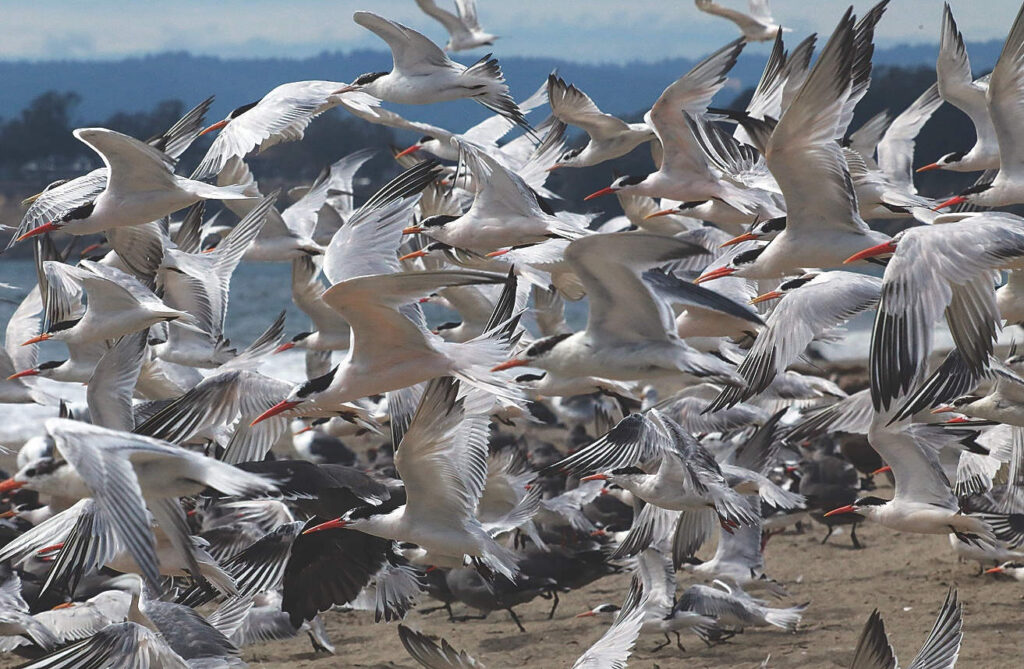
These are a collection of images from our photojournalist Tarmo Hannula that did not make it into stories, but we think should be enjoyed. Do you have a photo you’d like to be considered for our gallery? Send it to ed****@********an.com.

PILED HIGH Metal hoops, used to build hoop houses for agricultural needs, are stacked up on a farm in Watsonville.
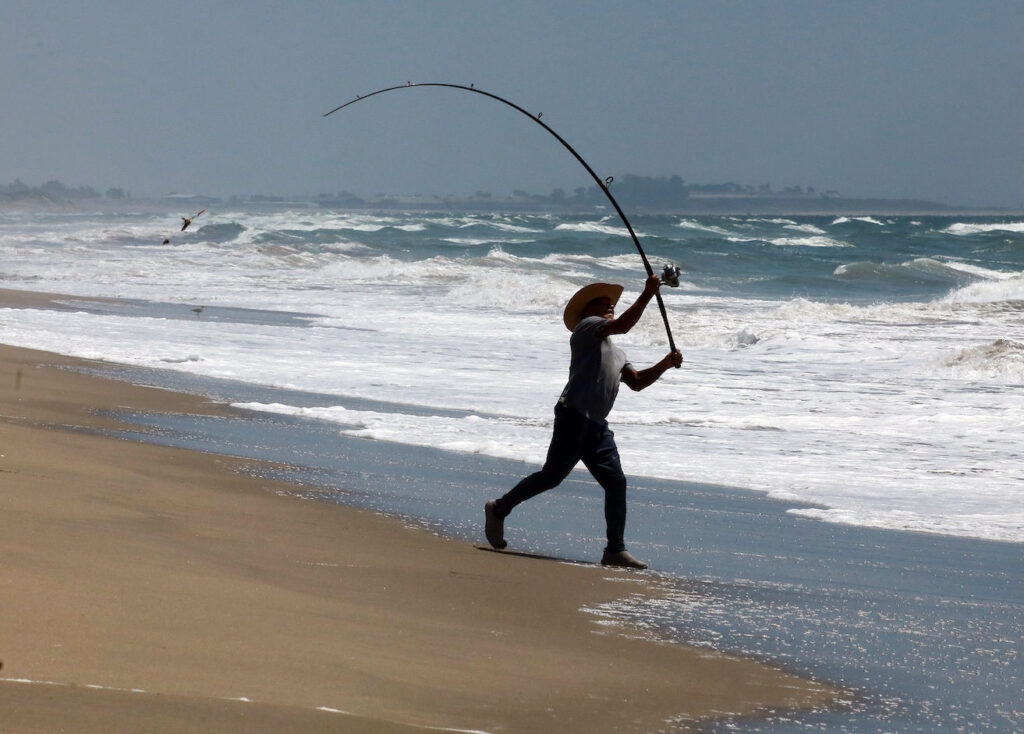
HOOK AND LINE An angler casts his line out to sea from the shoreline of Palm State Beach in Watsonville.
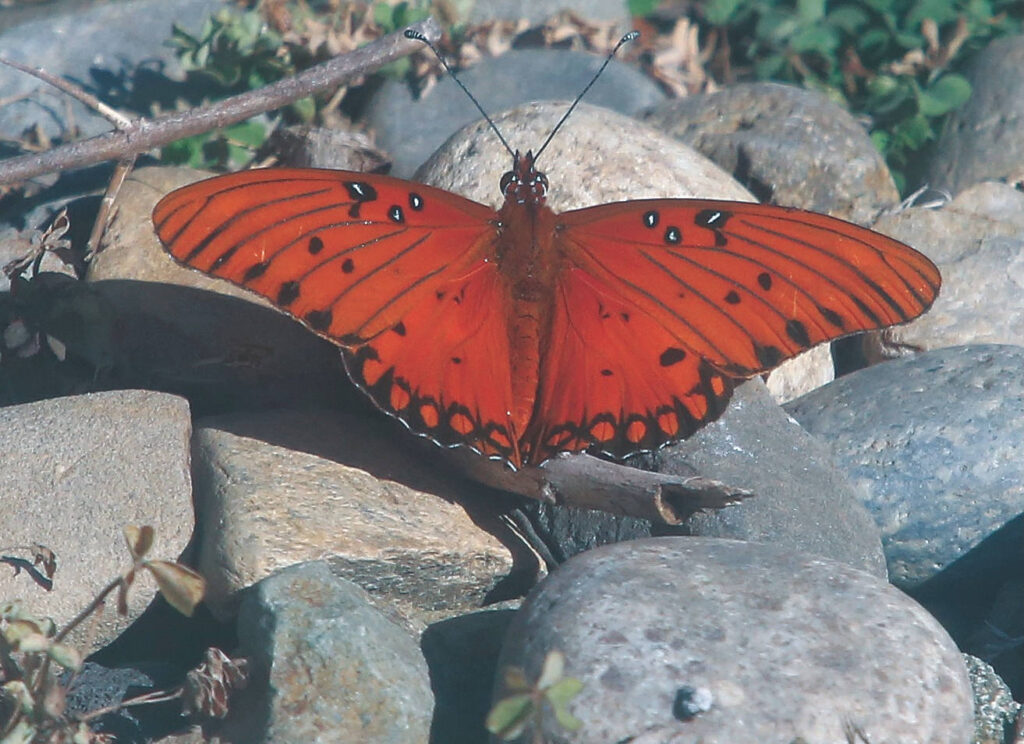
TOUCHING DOWN A Julia butterfly lights on a bed of stone in Pajaro Village.

CHANGES The growing skyline of Santa Cruz is seen in March 2025.
Woman flips car on Clifford Avenue

Watsonville Police investigate a two-vehicle crash Monday morning on Clifford Avenue at Lassen Way. Around 10:40am, a woman was driving a Nissan Rogue SUV east on Clifford Avenue on the 100 block. For unknown reasons she lost control and sideswiped a parked Honda Civic. The impact pitched the Nissan onto its roof, where it blocked both lanes. The driver crawled out of the SUV uninjured, Watsonville Police said.