
Manus seeks $4B valuation in new $500M fundraise as it resumes independent ops
Fire breaks out at Moss Landing battery plant
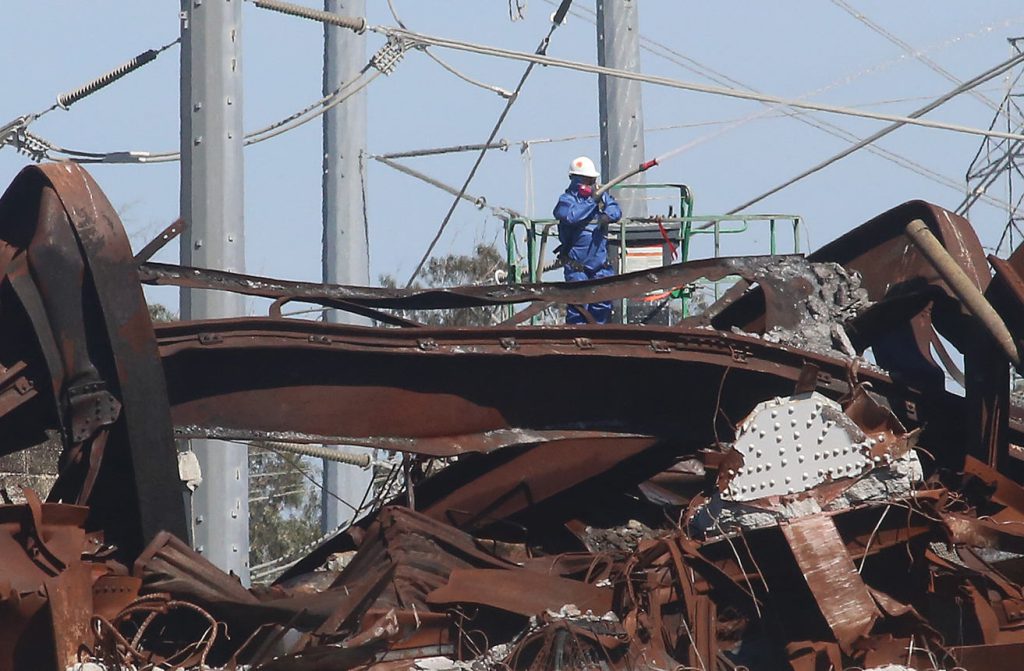
The Monterey County Sheriff’s Office has issued a shelter-in-place order for the area within one-third of a mile of 7301 Highway 1 due to a fire at the battery energy storage facility.
The fire was initially reported just after 6:15am. North County Fire is responding to the incident.
It is burning inside a structure that was significantly damaged during the January 2025 Vistra battery fire and involves batteries damaged in that incident.
Officials said the current fire is significantly smaller and less complex than the January 2025 blaze. Based on current conditions, they expect it could burn itself out within 24 hours.
The order was issued as a precaution due to smoke and potential hazardous materials associated with the fire. Residents are being asked to stay inside until further notice.
Officials are asking residents to close all windows and doors, avoid the area and not go outside to observe the fire or smoke. Additional precautions from North County Fire include:
• Turn off heating, air conditioning, fans and other systems that bring outside air indoors.
• Keep people and pets inside.
• If you are driving in the affected area, leave if you can safely do so.
• Follow instructions from emergency personnel.
The California Highway Patrol has implemented a hard closure of Dolan Road between Highway 1 and Via Tanques Road. Highway 1 remains open.
The Vistra fire involved numerous large lithium-ion batteries containing nickel, manganese and cobalt and sent toxic black smoke into the air for days. The incident sparked widespread public concern and increased scrutiny of plans for battery energy storage system facilities, including a proposed project on Minto Road near Watsonville.
FBI: Fake cop and government impersonation scams cost victims $1.6B
Family offices are clamoring for AI investments
South Korea won’t help dig Trump out of his Iran war mess
South Korea’s president said on Friday that his nation will not help President Donald Trump to wage war against Iran. The rejection represents another fractured relationship with a close ally that has occurred under Trump. “There won’t be deployment that would involve or enter war. I can tell you that very clearly,” President Lee Jae Myung said at a press conference. “We won’t deploy military…
USPS Deals Trump’s Efforts to End Mail-in Voting Another Huge Loss
The U.S. Postal Service has stopped work on a system to process statewide lists of registered voters after the Supreme Court blocked President Donald Trump’s order to limit mail-in voting.
Postmaster General David Steiner told the Associated Press Thursday that the agency was complying with the Supreme Court’s order. “There’s an injunction so we’re not doing anything,” he said.
In March, Trump signed an executive order requiring the USPS to only deliver mail-in ballots if they had a unique barcode and if states handed over lists of registered voters. Following the Supreme Court’s ruling last week, USPS sent a memo to all employees on Wednesday clarifying that the agency would “not be enforcing any of these new rules in the 2026 federal election.”
“First and foremost, for Election Mail it is business as usual,” the memo stated. “We continue to follow established protocols, and we remain entirely focused on our core mission: delivering the mail safely and securely for voters and election officials across the country.”
After being thrust into the national spotlight by a president intent on interfering in his country’s own federal elections, Steiner reportedly told people close to him that he’d had enough and was looking for an escape hatch from the supposedly independent federal agency.
While this particular saga may be over for now, Supreme Court Justice Brett Kavanaugh suggested that Trump’s rule might land more favorably with the high court if he introduced it not so close to an election.
Trump Expands His Plan to Have Data Centers Take Over Public Lands
President Trump is looking to potentially build 12 new data centers on federal public lands—something the vast majority of Americans are against, regardless of political affiliation.
The Washington Sun reported Friday that the Bureau of Land Management is considering placing centers on 17,600 acres of public land in six states: Arizona, Idaho, Nevada, Oregon, Utah, and Wyoming. Local leaders told the publication they weren’t aware of the proposal. Valar Atomics, Copia Power, Rhea Data, and Arevia Power are the companies behind the push. It’s unclear how the nearly 18,000 acres will be divvied up among the 12 proposed centers.
The BLM argues that the plans are for the greater good, brushing off environmental and aesthetic concerns while claiming that its review process will “protect natural resources while enabling responsible infrastructure development that can deliver benefits to the American people” like “expanded broadband capacity, improved electrical reliability, and support for growing technology-driven economies.”
Trump has spent months defending AI and data centers, becoming even more vocal over the last week. Others aren’t convinced.
“If there are places where communities think it is appropriate to build data centers, focus on those,” Center for Western Priorities conservation group director Aaron Weiss said. “The Trump administration needs to stop cutting the public out of public land management. The solution is more public notice and more opportunities for stakeholders to shape projects on the front end.”
This move comes as backlash against data centers hits a fever pitch.
Over 500 counties or municipalities have either restricted or entirely banned data center development this year. And according to Data Center Watch, at least 75 projects worth a collective $130 billion were interrupted in the first quarter of 2026.
“Ongoing data center build-out represents a culmination of everything that has made the U.S. economy so harshly unequal moving in right next door,” wrote The New Republic’s Kate Aronoff. “Inside its proverbial walls are local entrepreneurs, offshore middlemen, and multinational corporations that can exploit state-sanctioned tax shelters, financial engineering schemes, and regulatory arbitrage to rapidly accumulate wealth on the basis of having started off with a decent amount of it.”
Now, in the face of this obvious opposition, with midterms drawing closer by the day, Trump wants to put 12 more on public lands.
“If there were to be more [data centers], I honestly don’t know what that would even look like,” Idaho Sierra Club Director Lisa Young told the Sun. “Would that mean even more gas plants? Would that mean turning back on coal plants longer? What does that mean for our water resources? It’s honestly kind of apocalyptic to think about.”
FBI, Coast Guard boarded hacked oil tankers heading towards US coast
The Kennedy Center Is Just Trump’s Latest Hostage
Donald Trump has in lurched, in short order, from would-be savior to abductor of the Kennedy Center, replacing vows to restore the facility’s greatness with a threat to demolish it if he can’t put his name on it.
Construction crews fenced off the center on Wednesday, making it the latest in a series of Washington landmarks where Trump’s grand renovation plans have devolved into stalled construction projects that have left public facilities closed to the public.
“It’s death by a thousand cuts,” one DC resident said.Video by Sonel CutlerTrump told reporters Wednesday that the Kennedy Center might be “ripped down” if his administration did not receive “recognition” for working to improve it. Later he was photographed studying a poster board that appeared to say, “Kennedy Center DEMOLISHED.” A spokesperson for the center countered Thursday that “nothing is being demolished.” And US District Judge Christopher Cooper, who previously ruled that Trump’s name must be removed from the facility’s wall, ordered the administration to provide 30 days’ notice before making any major physical changes to the building, including demolition.
Still, the performing arts venue is shuttered. After securing $250 million in congressional funding and vowing to “bring it to a higher level than it ever hit”—marble armrests; performances like Les Miserables; “NO MORE DRAG SHOWS”—Trump has not improved the Kennedy Center. He has closed it and threatened to raze it.
This is part of a pattern. Trump’s costly campaign to make Washington “safe and beautiful” is floundering, with projects stalled in the face of legal challenges and construction flaws. As criticism mounts, fences have risen across the nation’s capital, with parks closed down indefinitely.
With the Kennedy Center, and DC generally, it’s hard to avoid the similarity to a creepy courtship. Imagine Taxi Driver’s Travis Bickle, were he the president. If he can’t possess it, he threatens to kill it.
In June, the White House touted the reopening of the Lincoln Memorial Reflecting Pool. That followed repairs to its filtration system and installation of “American flag blue” liner by firms awarded no-bid contracts to complete the work before July 4. Trump celebrated the work, claiming, falsely, that prior presidents spent more money on less successful repairs.
But after the lining peeled and pool filled with algae, the pool closed for further fixes. Trump, without evidence, blamed knife-wielding vandals for the problems. And the Justice Department issued criminal charges against three people who had removed pieces of liner from the pool for allegedly defacing it.
The DOJ later dropped those charges, acknowledging that evidence showed flawed construction caused the pool’s problems. The pool’s main contractor has agreed, telling the government in progress reports that errors by its own workers caused the pool liner to peel.
The reflecting pool has remained drained since July. And the National Park Service has erected fencing cutting off the landmark and nearby walkways from public access. Signs on the fences, echoing Trump, assert that the government is “repairing areas damaged by vandals and completing a historic effort to clean, fix, and beautify the Lincoln Memorial Reflecting Pool”—and fault past administrations for “neglecting this iconic national landmark.”
To the east, even more of the National Mall— a mile-long stretch—is also closed until January for “turf restoration.” That includes the area that was used to host Trump’s controversial Great American State Fair this summer. The Park Service has not attributed the closure to the fair.
South of the White House, the Ellipse, a park area along National Mall, has mostly remained fenced off since June, when a UFC Fight Trump hosted at the White House on Trump’s birthday damaged the grass there. The Park Service says the Ellipse is closed “because of events happening in and around the White House.”
On the other side of the White House, Lafayette Park, where the administration recently spent $17.4 million through a no-bid contract to repair two ornamental fountains, is also surrounded by fences. That closure is supposed to be temporary, but the Trump administration has proposed permanently fencing off the park— often a gathering spot for protesters—to improve security.
At White House itself, Trump’s beloved ballroom is moving ahead. But high fences around Lafayette Park and the rest of the White House perimeter mean the unpopular project, partly paid for with public money, is cut off from taxpayers’ view.
Open or closed AI? Nvidia’s Nader Khalil and Sydney Sykes take on one of the decisions shaping next-gen startups at TechCrunch Disrupt 2026
Admins, you've been warned: The clock is ticking on Edge's IE Mode
Fire reignites at Moss Landing battery plant; Monterey County officials issue shelter-in-place order

Monterey County officials have issued a shelter in place for residents near the Moss Landing battery plant after a fire broke out at the facility early Friday morning.
Crews from the North County Fire Protection District of Monterey County responded to the fire shortly after 6:15 a.m., finding smoke coming from the north side of the facility. Firefighters are evacuating the plant and “accounting for personnel while working to stabilize the incident,” according to a Facebook post by Cal Fire.
The California Highway Patrol has closed a portion of Highway 1 between Dolan Road and Via Tanques Road.
The Monterey County Sheriff’s Office issued a shelter-in-place order in the surrounding areas, and recommends that residents close all windows and doors, turn off heating, air conditioning and other systems that bring outside air indoors and to not go outside.
The 300-megawatt facility caught fire on Jan. 16, 2025. The facility contained 100,000 lithium-ion batteries, and nearly 55% of the batteries were damaged after the incident. Cleanup efforts at the facility were underway, led by the U.S. Environmental Protection Agency.
This is a developing story; check back for updates.
The post Fire reignites at Moss Landing battery plant; Monterey County officials issue shelter-in-place order appeared first on Lookout Santa Cruz.
Meta’s Muse hits Mac, letting the AI take actions on your computer
I’m so mad that I love Orion’s $2,195 AI mattress pad
The Surprising Issue Dividing Senate Dems Right Now
You’re reading The TNR Blue Book. Get daily scoops, strategy, and developments inside the liberal ideas factory delivered right to your inbox. Sign up for free.
Inside Washington
The surprising issue dividing Senate Dems right now
While Americans worry about sky-high gas prices and AI safety, the Senate has its sights trained on something entirely different—the world of college sports. Though it might seem like an odd focus for the upper chamber in the last few weeks before the October recess, a bill is sparking substantive disagreements over antitrust policy, racial justice in sports, and workers’ rights.
The bill dividing Democrats is the Protect College Sports Act, which the Senate voted to advance on Thursday. The bill attempts to regulate the lucrative world of college sports by setting a cap on payments to athletes, placing a five-year limit on playing eligibility, and giving the National Collegiate Athletic Association, or NCAA, an antitrust exemption. Supporters of the bill say that it will bring order to the world of college sports, setting rules on how athletes can use the transfer portal, stopping a “spending spiral” by schools, and putting an end to lawsuits on these issues.
The bill easily passed the vote to consider it, with 77 votes for it and just 22 against it; 19 Senate Democrats voted against the bill alongside three Republicans, moving them closer to a final vote on the legislation. “I think the bill is necessary, and it’s not a perfect bill,” said Michigan Senator Gary Peters, who voted for it. “I don’t think we’d ever be able to come up with a perfect bill.”
Senator Chris Coons of Delaware, an outspoken Democratic supporter of the bill, agreed that the bill does more good than harm. “On balance, this is a compromise that secures a lot of significant benefits and protections for college athletes,” he told The New Republic on Thursday. When asked what he thought about his colleagues who were concerned about the antitrust exemption, he mumbled wryly: “Good for them.”
Anti-monopoly advocates worry that the antitrust exemption takes power away from student athletes, who in recent years have benefited from competition between schools trying to woo them onto their teams with cash deals. In 2025, the settlement of a 2020 lawsuit gave Division I schools the right to pay players directly. But before student athletes gained the right to make money from their work on the court or field, coaches and athletic directors took home the most cash. “The players were getting pennies on the dollar,” said Sandeep Vaheesan, the legal director at the anti-monopoly organization Open Markets Institute. “Even though they were the ones really generating all this money.”
Vaheesan, along with lawmakers like Senator Chris Murphy of Connecticut, are concerned that this legislation could reverse these recent financial wins for student athletes. “I think we’re going to rue the day we gave an antitrust exemption this big to the colleges,” Murphy said. “It’s going to result in a huge cost increase for consumers and for folks who follow college sports on TV.”
Asked why he thought the bill was passing with the support of some of his fellow Senate Democrats, Murphy said: “The Power Five schools have a lot of influence. They’ve spent millions and millions of dollars on lobbying.”
Coons argued that the bill isn’t too deferential to the interests of colleges. “They did not get the definition of college athletes as never being employees, which was one of the top asks of the conferences and colleges,” he said. “That was a concession to those of us who are strong supporters of organized labor and want to retain the possibility to organize.”
Meanwhile, all five of the Senate’s Black members—Republican Tim Scott and Democrats Cory Booker, Raphael Warnock, Lisa Blunt Rochester, and Angela Alsobrooks—opposed the bill. The NAACP’s president and chief executive strongly opposes the legislation. “Sharecropping is over,” he said on a media call this week. “We should not ask athletes, particularly Black athletes, to generate revenue on the football field or basketball court and then share in none of the revenue.”
“It does raise concerns about how committed members of the Senate, including Senate Democrats, are to the well-being and welfare of workers,” Vaheesan said.
—Emma Janssen
Outside Washington
Surging gas prices are dominating headlines this week, particularly across the Midwest. In Michigan, gas prices jumped 22 cents from Wednesday to Thursday, drawing worryingly close to $5 a gallon, with further hikes predicted. (Average prices in Minnesota rose 14 cents in the same 24-hour period. In Cincinnati, Ohio, prices jumped 25 cents overnight between Tuesday and Wednesday.) At the Detroit Free Press on Thursday, Frank Witsil reported new calculations from Brown University professor Jeff Colgan estimating that since the start of Trump’s war on Iran, American households have paid on average $826 more on gas than they would have without the conflict. Susan Tompor of the same paper reported a troubling new trend of free gas and free groceries scams. “This summer,” writes Tompor, “the Better Business Bureau Scam Tracker page received reports from consumers who complained that they received postcards claiming they qualified for valuable gas and grocery gift cards and vouchers,” from the mysteriously named “AAPP”—which can look like “AARP” if people are reading quickly. Those who followed the instructions “complained that they lost money once they paid a $5 processing fee. Some consumers saw additional unauthorized charges of $46 or more being taken out of their accounts.” Analysts predict that prices will remain high for months to come—with record diesel prices rapidly affecting the rest of the economy via their impact on trucking and farming.
In case you missed it: Arizona Republicans are pushing ahead with subpoenas for Governor Katie Hobbs, state Attorney General Kris Mayes, their staff, and others over events from 2022 that The Arizona Republic first reported in 2024. Specifically: The state’s Department of Child Safety, per Axios reporter Jeremy Duda’s retelling of the somewhat tangled tale, “granted a previously rejected rate hike to Sunshine Residential Homes after the group home provider gave $400,000 to Hobbs’s inauguration fund and the Arizona Democratic Party.” Mayes’s office concluded a two-year investigation last month finding no “evidence of the necessary quid pro quo to support a bribery charge,” per the final memo. But GOP State Senator Jake Hoffman says the investigation was phony and incomplete, and now the hearing at which Hobbs and others will be compelled to testify is scheduled, Duda reports, for “eight days before early voting begins and five weeks before the election.” Hobbs and her running mate, former GOP Mesa Mayor John Giles, have consistently led Republicans Andy Biggs and running mate Sine Kerr in recent polls, but the margins have varied widely from poll to poll. While the Cook Political Report moved the race from “toss-up” to “lean Democrat” in July, their race summary still rates Hobbs “the most endangered Democratic incumbent.”
—Heather Souvaine Horn
The Ideas Factory
The Center for Biological Diversity is suing the Trump administration “for withholding public records detailing the efforts of politically appointed industry insiders at the Environmental Protection Agency to reapprove the dangerous, drift-prone pesticide dicamba,” according to the org’s press release. Dicamba is typically applied to crops that have been genetically modified to resist it, so that it kills the weeds but not the crops. But it also has a habit of “drifting” from its initial area of application and killing other crops, as well as wildlife. Plus it’s repeatedly been linked to increased risk of cancer in humans. “If you’ve done nothing wrong, then you have no reason to withhold public documents,” CBD’s environmental health science director Nathan Donley said in the press release. CBD was also part of a coalition of groups that sued the Trump administration in February, challenging the initial reapproval.
Friday at 1 p.m., a webcast at the Center for Strategic and International Studies asks: “Is U.S. Economic Diplomacy Up to Speed?” The question may feel bleakly comical against the backdrop of Trump tariffs, the economic shocks of the Iran war, and speculation that Canada might join the EU just to piss Trump off. But Enoh T. Ebong, Allison Lombardo, and Jonathan Gandomi, according to CSIS’s event summary, will focus on a broader, more process-oriented issue: whether the State Department is ready to participate in a new era of negotiations over “critical minerals supply chains … technology standards,” and more. “While the State Department’s role has expanded significantly,” the organization’s event summary states, “its internal structures have not kept pace, leaving expertise fragmented across nearly 20 agencies without strong coordination.”
—Heather Souvaine Horn
In Closing
Good Week/Bad Week
Good Week: Macklemore
Sure, the middling rapper got booted from his supporting slot on Ed Sheeran’s tour because of his pro-Palestinian statement during a performance at New Jersey’s MetLife Stadium—that’s bad news for him financially. But his righteous stance is being applauded worldwide, and other Sheeran opening acts followed suit. Plus, when was the last time everyone was talking about Macklemore? (Never.)
Bad Week: Ed Sheeran
We knew his music was an abomination. Now we know that his politics are too. Booting an artist from your tour because he said “Free Palestine” does not make you “apolitical”; it makes you an explicit opponent of Palestine’s self-determination, and a craven lickspittle of the corporate entertainment complex.
—Ryan Kearney
Political Trivia Question of the Day
With Texas on our minds: Three speakers of the House in the twentieth century, all Democrats, hailed from Texas. Who were they? One is really hard—he was speaker for just one term. One was speaker for nearly two decades. The third’s tenure ended in (ginned-up) scandal. (Sign up for The TNR Blue Book to find the answer in Tuesday’s newsletter.)
Fuggler x DC Comics Gives Us ‘Funny Ugly’ Super Monsters
- Fuggler “Funny Ugly Dolls” are giving us cutely hideous versions of Superman, Batman, Joker, and Harley Quinn.
- This collaboration with Fuggler and DC Comics makes some of the most famous comic book characters ever into something adorably hideous.
- Nerdist’s Take: The Fuggler x DC by ZURU Funny Ugly Monster plushies are a perfect gift for the DC fan in your life who likes things a little weird.
By now, you’ve probably seen the Fuggler plush dolls. While not the pop culture phenomenon of Labubu, at least not yet, Fuggler stands for “Funny ugly dolls.” Wait, what did you think the “fu” stood for? Something a little more off-color? Regardless, these plush toys with human-like teeth are enough to give you nightmares, and also make you want to cuddle with them afterward. And now, the Man of Steel, the Dark Knight, and the Joker and Harley are getting Fuggler plushies all their own, as the company has introduced Fuggler x DC by ZURU Funny Ugly Monster plushies. You can check out several images in our gallery below:
Fuggler x DC by ZURU Funny Ugly Monster Plushies Click To View Gallery DC Comics/Fuggler
 Fuggler/DC Comics
 DC Comics/Fuggler
 Fuggler/DC Comics
These new DC Comics x Fugglers 9″ plush toys are the perfect size and made from super soft plush. And some of them even come with a rare Butt-on Hole. Yes, we said Butt-on hole. (You with your mind in the gutter again. Think of the children!) 1/24 Fugglers will come with one of these rare Butt-on Holes. Each toy has human-like teeth, which are disturbingly realistic. In this assortment, the heroes are creepy, the villains are creepy, it’s equal-opportunity ugly for everyone. According to Fuggler, these are “the monsters you know and loathe, DC Comics-style.” Maybe we’re suckers for hard luck cases, but we only love, not loathe.
DC Comics/Fuggler
The Superman Fuggler toy looks like a cross between the Man of Steel, Krypto the Superdog, and maybe Superman’s weird doppelganger Bizarro. And Batman looks a lot like Beavis of Beavis and Butthead fame. Joker looks the most like the Joker we know, as we’re all used to the Clown Prince of Crime with a big, disturbing grin. But Harley Quinn looks very nightmare-inducing with those teeth. She’s as creepy as her beloved Mr. J for once. You can order each of these Fuggler x DC by ZURU Funny Ugly Monster plushies now for $36.98 by clicking right here.
This post has affiliate links, which means we may earn advertising money if you buy something. This doesn’t cost you anything extra, we just have to give you the heads up for legal reasons. Click away!
Eric Diaz is a staff writer at Nerdist and a Swiss Army knife of fandoms. Eric loves DC, Marvel, horror movies, and even Star Wars and Star Trek equally.The post Fuggler x DC Comics Gives Us ‘Funny Ugly’ Super Monsters appeared first on Nerdist.
Trump Uses His Power Over DOJ to Make Getting the Worst Guns Easier
For all his belaboring of the supposed national rise in crime, Donald Trump is the reason why “gangster weapons” will proliferate on the streets.
The president reportedly ordered the Justice Department not to appeal an August court ruling that effectively allowed Americans to buy, sell, and own short-barreled rifles, short-barreled shotguns, and silencers.
At the time, U.S. District Judge James Wesley Hendrix—a Trump appointee in the Northern District of Texas—ruled that most firearm restrictions enacted in the wake of the 1934 National Firearms Act were unconstitutional.
Several insiders that spoke with CBS News Thursday said that Trump himself directed the DOJ not to get involved in the matter. Trump also reportedly promised some Republican lawmakers that he would not allow the agency to undermine the ruling.
“Letting the lower court ruling stand runs counter to the recommendations of some career and politically appointed lawyers at the Justice Department across multiple offices who disagree with the court’s opinion, several of the sources said, adding that they have warned it is already beginning to adversely impact federal firearms prosecutions across the country,” CBS reported.
Some of the network’s sources noted that the president’s order—and the internal decision to follow it—upends the DOJ’s “duty to defend,” a long-standing legal principle that requires the agency to do everything within its power to defend the constitutionality of congressional legislation.
A Justice Department official told CBS News that it does not plan to appeal the ruling. A spokesperson for the agency added that the Department of Alcohol, Tobacco, Firearms and Explosives “will issue guidance soon to implement the court’s order.”
The ruling did not apply to AR-15s or Glock pistols, which are regulated under a different federal law that also bans the sale of guns to convicted felons.
“Anyone who would have been prohibited from buying a firearm under the old structure is still prohibited from buying a firearm under the structure that now exists after the federal district court’s decision,” said a White House spokesperson in a statement to the network. “All federal criminal statutes imposing additional charges or penalties for the unlawful possession of a firearm remain in place and will continue to be enforced by federal law enforcement.”
Robinhood’s Abhishek Fatehpuria on winning the modern financial consumer at TechCrunch Disrupt 2026
Florida could be in play thanks to Trump’s screwups
Over the last decade, Florida has quickly morphed from what was once a bellwether swing state into a GOP stronghold, as right-wing retirees migrated to the Sunshine State and Latino voters started trending toward Republicans. But President Donald Trump’s second term has been such a disaster that even Florida is turning away from the GOP, with the state’s gubernatorial and Senate contests now…
Put the billionaires on a leash

This paywall-free newsletter, which takes on scary billionaires, is made possible by paid subscribers.
No ads. No corporate sponsors. We only have you.
If you can, please become a paid subscriber today. Give us a year—and we’ll give our would-be tech overlords a fight they won’t believe. Click here to join.
What’s going on with all this AI apocalypse “slowdown” talk?
On Tuesday, I joined Lawrence O’Donnell on MSNOW’s The Last Word to discuss the AI companies’ sudden shift:
To me, the real risk of AI is the power that it grants to this small handful of billionaires who have clearly aligned with Trump and will now try to realign behind Democrats if we're allowed to have free and fair elections.And that’s why I wrote my book. It’s about these apocalyptic, dangerous, anti-democracy ideas coming out of Silicon Valley. And I don't deny that AI could be powerful in many different ways. But I think that power and the danger is going to come from the people designing it to be dangerously powerful.
And so that’s really where we need to have the control. It’s time for Washington to put the billionaires on a leash and make sure they're not running around doing these end of the world scenarios for the sake of profit that, by the way, hasn’t shown up yet.
Click here to watch the full interview: “A.I. CEOs are on an 'APOCALYPSE TRIP,' says tech journalist.”
The Nerd Reich LIVE in New York CityOn Wednesday September 23 at 6:30 p.m., I’ll join Tech Policy Press for a live podcast recording in New York City. Join us for a discussion of The Nerd Reich and Silicon Valley’s effort to eat our government whole.
Click here for ticket information.
Are you in NYC? Hope to see you there!
An Evening with Gil Durán · LumaJoin Tech Policy Press editor Justin Hendrix and Data & Society director of research Alice Marwick for a live podcast conversation with Gil Durán, author of…On Sunday, September 20 I’ll be at the Baltimore Book Fest. Tickets here.
The Nerd Reich Climbs the ChartsOne month after its release, The Nerd Reich remains on the New York Times bestseller list. This week, it also surged to #5 on the Amazon bestseller list. Bookshop.org has it on backorder.
But don’t worry—there’s more on the way.
The success of this book is far beyond anything I could have imagined. It is stirring debate, shifting media narratives, and flying off of shelves. Jesse Welles even wrote a song about it!
I couldn’t have done it without you, my most loyal readers. If you’ve already read the book, please tell everyone you know about it.
Word of mouth is powerful. We’re proving that media and political gatekeepers can’t stop the truth from reaching the public.
And if you haven’t bought the book yet, please buy it today wherever books are sold! Please buy it at your favorite local bookstore, or use this Bookshop link to support local bookstores and this newsletter.
Every copy sold is a vote to force journalists and politicians to talk about Silicon Valley’s war on democracy.
They can ignore some of us, but they can’t ignore all of us.
More to come—soon!