
From first users to billions: Google’s Robby Stein joins TechCrunch Disrupt 2026
Iran war has cost US $43.6B—plus $6 diesel and a possible fuel shortage
The Pentagon on Friday told congressional leaders that the Iran war has so far cost American taxpayers $43.6 billion, Punchbowl News reported, a whopping $5 billion more than the nonpartisan Congressional Budget Office estimated in a report earlier last week. To put that number into perspective, it would have cost $30 billion for Republicans to extend Affordable Care Act subsidies for a year.
Schneider says hotter coolant can make AI datacenters less thirsty
Trump Invents Ridiculous New Excuse to Build His Ugly Arch
President Donald Trump announced that he wants to build a military complex in a public traffic circle—as part of a strange bid to save his plans for his Triumphal Arch.
Trump wrote on Truth Social Sunday that he plans to build a “top grade Military Complex/Triumphal Arch” in order to store and launch drones that would be guarded by snipers. The president claimed the project came “at the strong request of the United States Military” and was for “National Security purposes.”
It was immediately clear that this was a terrible idea.
Virginia Representative Don Beyer called Trump’s plan “idiotic,” and pointed out that establishing a drone launching site so close to Ronald Reagan National Airport was incredibly dangerous. FWIW, planting snipers in an active traffic circle doesn’t sound like a great idea, either.
The decision to loudly declare the construction of a military storage facility within spitting distance of the Pentagon also doesn’t seem like the best way to safeguard national security—so what exactly is Trump up to?
Trump’s announcement comes after the National Park Service warned that the Triumphal Arch would be harmful to other historical landmarks, including the nearby Arlington Cemetery and the Lincoln Memorial.
Similarly to Trump’s controversial White House ballroom, which he claimed will provide a secure underground facility in case of a national emergency (even though one already exists), it appears that the president believes that tying his frivolous construction projects to national security will help them actually get built.
But Trump’s reason for all these construction projects is much more pathetic: He thinks that no one will honor him after he’s gone.
Kit Harington Thinks a Jon Snow Sequel Could Still Work (…Sigh)
- Kit Harington is still open to the idea of doing a Game of Thrones sequel series following Jon Snow.
- Harington told Happy Sad Confused podcast that he feels more comfortable returning to the character of Jon Snow and this universe after some time away.
- Nerdist’s Take: Sure, people would watch a Jon Snow sequel, but we really don’t need one. Let it go!
Sometimes, a spinoff series can work, even when it should’ve happened years ago. Agatha All Along managed to accomplish this with a successful series that came four years after WandaVision. And, VisionQuest hopes to do the same this year. But, this is also Marvel that we are talking about. Other franchises usually don’t have such luck, especially when the overall universe has far moved past those characters and there’s no real need for more story. That’s the case with Game of Thrones and the Jon Snow sequel that never was. For some reason, Kit Harington believes a Jon Snow spinoff series could still work and we just wish everyone would leave that in the past.
 HBO
HBO
Back in 2022, there was news about a Jon Snow series being in development. It was supposed to follow him after the events of Game of Thrones as he lived in exile beyond the Wall after killing Daenerys. But it seemed to never quite leave that stage as we moved on to spinoffs like House of the Dragon. Harington spoke about it on Happy Sad Confused’s podcast, saying that the show was developed and he feels like it could be a good time for him to return to the role.
“We developed it two years or so,” Harington said. “I still think there’s a world in which something could work. I wouldn’t have gone into it in the first place if I didn’t. But I was very insistent at the start — as was HBO and George R.R. Martin — of like: ‘If we don’t find the right thing, let’s not do it. It’s much better if we don’t.’ After a little while of of thinking about it — it kind of was me — [I said], ‘This isn’t quite the right [story].’”
RELATED ARTICLE
Kit Harington on Awkward Kiss with GOT Sis Sophie TurnerHe said that he felt more comfortable with the character and returning to the role at this point in his life. Of course, we can’t hate on him for wanting to return to a universe that will certainly make him lots of money. There are a lot of Jon Snow fans who would want to see this. But, to be honest, it just feels unnecessary at this point. Fans are into House of the Dragon and A Knight of the Seven Kingdoms and want fresh stories in Westeros with new characters. Game of Thrones told its complete story and ended in 2019. Let it go. Please.
Tai Gooden is the Features Editor for Nerdist, a fictional villain apologist, and a horror aficionado who is forever waiting for her trip in the TARDIS.The post Kit Harington Thinks a Jon Snow Sequel Could Still Work (…Sigh) appeared first on Nerdist.
Major TV Networks Band Together in Boycott After Trump’s Ban on CNN
The entire presidential television press pool has agreed to suspend their coverage in the wake of President Trump’s decision to ban CNN, Politico, and MS NOW from the White House.
The TV press pool specifically is made up of five networks: Fox, ABC, CBS, NBC, and CNN. The networks rotate their coverage, and CNN had been assigned to cover Trump on Monday. But a White House email on Sunday listed neither CNN nor any of the other networks as TV pool. Indeed, all five networks have banded together to protest the ban on CNN.
That means none of the major outlets will broadcast Trump’s visit to New York on Monday ahead of the United Nations General Assembly this week. Conservative outlet Real America’s Voice—host of The Charlie Kirk Show—will be the only station working in the out of town pool and traveling with the president.
”This is to advise that, effective today, the TV pool will not be covering events designated as pool coverage of the President,” said Fox News’s Bryan Boughton, who serves as television pool chair. “This follows the White House’s position preventing CNN from fulfilling its assigned pool duties. There will be no replacement pool put in place.”
The five networks later released a joint statement.
“The public has a vital interest in receiving accurate, independent information about its government,” it read. “No administration should restrict a news organization because it objects to its reporting.”
CNN, Politico, and MS NOW have already filed a lawsuit against Trump’s ban, writing Monday that “without notice or process, the White House revoked our journalists’ credentials because it objected to our reporting. Left unchallenged, this threatens press freedom and the public’s right to independent journalism free from government interference.”
“This is not a tantrum by three media outlets who are upset because they can’t get into the White House or the Oval Office.... This is a serious concern for the public, because an attack on one outlet is an attack on everyone, no matter where that outlet falls on the political spectrum,” CBS News senior White House correspondent Weijia Jiang said Sunday on Fox News. “America cannot have state TV.... That’s what makes America America.”
This story has been updated.
Meet the next wave of VCs judging Startup Battlefield 200 at TechCrunch Disrupt 2026
What Natalie Harp Showed Trump Before He Banned CNN from White House
Moments before Donald Trump banned three of America’s biggest news organizations from the White House Friday, he was chatting with Natalie Harp.
His beloved executive aide had reportedly shown Trump a compilation of coverage from MS NOW in which several broadcasters flamed Trump’s administration. The president was already irate that his executive decisions (most notably, the financially deleterious and illegal Kennedy Center rebrand) did not have more defenders, but the clips pushed his mounting frustrations to a “fever pitch,” The Wall Street Journal reported Sunday.
Hours later, Trump banned MS NOW from the White House, alongside CNN and Politico.
The unprecedented move caught most of the White House by surprise, according to sources that spoke with the Journal. Nonetheless, they immediately got to work putting Trump’s plan into action. By Saturday, the outlets’ reporters were officially barred.
A White House official noted that senior staffers were with the president when he made the announcement. One senior official was exasperated when they spoke to the Journal, remarking that the ban would do little to improve the tone of Trump’s press coverage.
“Media Outlets shouldn’t be able to constantly write or report FICTION and LIES when they’re covering the President of the United States, the Trump Administration, or the United States of America,” Trump wrote on Truth Social Friday. “Other Fake News Media Outlets to follow.”
Trump did not identify specific stories that he felt fell into that category, though earlier in the day, he lamented online that “CNN is so dishonest.”
“Everything they say is slanted against the Republican Party,” Trump wrote. “They are truly FAKE NEWS!”
Trump has floated the idea of banning news entities from the White House several times before, but he never actually went through with it. That was reportedly thanks to his aides, who were previously able to convince him that there were other, less obvious avenues to restricting access to the executive mansion, such as limiting reporters’ participation in the press pool.
But Trump has made it his mission since he first descended the golden escalator at Trump Tower in 2015 to sow public distrust in America’s news institutions. Time and again he has said the less-than-devotional coverage of his political campaigns, his fraudulent business practices, his dubious personal connections, and his presidential administrations are tantamount to “fake news.”
In recent years, Trump has aggressively pursued legal action against several major news entities, including The New York Times, The Wall Street Journal, The Washington Post, ABC News, and CBS News (as well as the broadcaster’s parent company, Paramount). He also sued the Des Moines Register, its parent company Gannett, and pollster J. Ann Selzer in December 2024, retroactively claiming that presidential polls the paper had published prior to Election Day were election interference.
Corridor raises $25M seed to build a health benefits brokerage for SMBs
Brad Pitt Rocks ’70s Style in THE FURTHER MIS-ADVENTURES OF CLIFF BOOTH’s Trailer
- Hollywood needs a fixer who will do whatever it takes to get the job done in the new trailer for The Mis-Adventures of Cliff Booth starring Brad Pitt.
- The sequel to Quentin Tarantino’s Once Upon a Time…In Hollywood comes from director David Fincher and Netflix.
- Nerdist’s Take: As unlikely as The Mis-Adventures of Cliff Booth might be, this trailer makes us think it might also be very good.
It’s still hard to believe a Quentin Tarantino film is getting a sequel directed by David Fincher, especially when it will also see Brad Pitt reprise his Oscar-winning role. But this Once Upon a Time in…Hollywood followup is definitely happening. We know because Netflix keeps releasing trailers for it. And the latest look at The Further Mis-Adventures of Cliff Booth makes us think as unlikely as this movie might seem, it might also be pretty good.
David Fincher directing a ’70s-style Hollywood noir featuring a charismatic character of dubious morality is very much “our jam.” We’re still just in shock that film is a follow-up to one of Quentin Tarantino’s best films. The fact this is a sequel doesn’t mean it can’t be great, though. The cast certainly is. While Pitt is reprising his cocky stuntman Cliff, a new unseemly group of figures is getting in on the fun. The film also stars Elizabeth Debicki, Scott Caan, Carla Gugino, Yahya Abdul-Mateen II, Matt Groove, and JB Tadena.
What is bringing Cliff back to the Hollywood limelight this time. According to Netflix, a story of “murder, blackmail, theft, extortion” will see Booth as a “fixer” solving problem his “unique (occasionally extralegal)” way. Here’s the film’s official description from Tudum:
He’s curious when he gets a call from talent agent Karen Crosby (Debicki), on behalf of her client, TV megastar Charlie Peters (Caan) — a man known for doing his own stunts. And he’s further entertained and intrigued when he meets other characters in Charlie’s world, from his knowing wife Toni (Gugino) to pro football champion turned screen star Roderick “Hot Rod” Harrison (Abdul-Mateen II). Then there are the Verdusco brothers ( Groove and Tadena), mysterious gangsters causing mayhem across the city. What was once a fairytale is now a crime story — a cocktail of violence, ambition, and desire that could only happen in LA.
 Netflix
The Further Mis-Adventures of Cliff Booth will race into action exclusively for two weeks in IMAX theaters on November 25. It will then kick into action on Netflix on December 23. We’re certain of it. This might seem like an unlikely sequel, but it’s definitely real.
Mikey Walsh is a staff writer at Nerdist. You can follow Mikey on Bluesky at @burgermike. And also anywhere someone is ranking the Targaryen kings.The post Brad Pitt Rocks ’70s Style in THE FURTHER MIS-ADVENTURES OF CLIFF BOOTH’s Trailer appeared first on Nerdist.
Can the author of ‘Dopesick’ topple a House Republican?
Beth Macy is a journalist by trade. Through books like “Dopesick” and “Raising Lazarus,” the 62-year-old has spent the past few decades interviewing and writing about Virginians, many of whom have been touched by the ongoing opioid epidemic. But now a lot of people “don’t want to talk about the opioid epidemic anymore because the country’s on fire,” she told Daily Kos in a virtual sit-down.
Amazon shows Meta's Muse AI shopping agent the door
Situation Worsens After Horrifying ICE Shooting of DoorDash Driver
The man Immigration and Customs Enforcement shot and wounded in Austin, Texas, in the middle of a DoorDash delivery was not allowed to see his wife before federal agents moved him to an undisclosed location.
Wilber Rafael Garcés Perez, 28, an asylum-seeker from Venezuela, was delivering food at 1 p.m. when he encountered ICE agents, who reportedly shot him in the torso. It’s not confirmed what happened in the lead-up to the shooting, or what his condition is at this time.
“Today at 12:30, Wilber called his wife to tell her that he had been shot,” his attorney, Kate Lincoln-Goldfinch, said in an interview with KHOU-11. “And he was yelling in agony, and the call cut off. That was all she knew.”
Lincoln-Goldfinch posted on X that the hospital did not allow Garcés Perez’s wife access to him or “meaningful details on his condition,” and ICE later moved him to an undisclosed location.
“We not only were lied to and told that he wasn’t there, but we were thrown off the hospital grounds by several officers who treated us as trespassers,” Lincoln-Goldfich told NBC News.
NBC News said that social media video showed a dark SUV stopping in front of a blue sedan, and a person exited the SUV. Three gunshots were reportedly heard as the person approached the sedan.
A DHS spokesperson said that Garcés Perez had a final order of removal and entered the country illegally during the Biden administration, but did not say if there was body camera footage or if Garcés Perez has a criminal record. His lawyer said he entered the country legally and had a valid work permit.
Monday morning traffic: Pedestrian hit in Watsonville; Hwy 1 closed for paving

This post is updated throughout the day to reflect the latest incidents. It was last updated at 6:31 a.m..
Here’s what’s happening on the roads this morning…

▼︎ new incidents
Road incidents as of 6:30 a.m. on September 21- A vehicle hit a pedestrian at 100 Crg12 in Watsonville / Pajaro at 6:26 a.m. today. Emergency services were on their way.
- South Highway 1 at Park Avenue in Capitola / Soquel is facing closures for paving work. The closure is expected to end at 7:01 a.m. on Nov. 19.
- There is one-way traffic control on North SR-236 at Boulder Brook Drive in San Lorenzo Valley because of pavement repair. This is expected to end by 1:59 p.m. today.
- Highway 9 at Pool Drive in San Lorenzo Valley has alternating lane closures because of bridge work. This will continue until April 30, 2027, at 6:59 a.m.
Disclosure: Traffic incidents are partially generated by artificial intelligence. We are constantly working to improve the accuracy and quality of our AI-generated content. However, there may still be errors or inaccuracies. If you have any questions or concerns, please contact us.
The post Monday morning traffic: Pedestrian hit in Watsonville; Hwy 1 closed for paving appeared first on Lookout Santa Cruz.
In a hard-fought New York house race, the environment is on the ballot
Democratic nominee Cait Conley will face incumbent Republican Mike Lawler in NY-17, one of the nation’s most closely watched House races. Here’s where the candidates stand on the environmental issues defining the district. By Leana Carbonez for Inside Climate News The Hudson River bisects New York’s 17th Congressional District, with basalt bluffs lining its western bank 40 miles…
Trump Lashes Out as CNN, MS Now, and Politico All Sue Him
CNN, MS NOW, and Politico are suing President Trump after he banned them from the White House on Friday.
“We are filing a lawsuit today to protect our First Amendment rights and defend the principle that the government does not decide what the press reports or publishes,” they announced Monday morning. “Without notice or process, the White House revoked our journalists’ credentials because it objected to our reporting. Left unchallenged, this threatens press freedom and the public’s right to independent journalism free from government interference.”
The outlets are suing the president and his top advisers, and asking a Washington, D.C., judge to quickly intervene to restore their access to the White House after they were denied entry on Saturday.
Trump quickly responded to news of the lawsuit just hours later.
“The White House is not instituting an assault on the Free Press, something which I cherish. It is instituting an assault on the FAKE NEWS, something that has grown like Cancer in our beloved United States of America,” he wrote on Truth Social. “It is corrupt, purposeful, pervasive, fully coordinated, and totally out of control. It is a threat to our National Security, and must be stopped, NOW!”
This is a culmination of Trump’s long-waged war against the media, particularly with CNN. He has already sued The New York Times, The Wall Street Journal, The Washington Post, ABC News, and CBS News for perceived slights and alleged inaccuracies—all while even more blatantly biased outlets like Fox News, One America News, Newsmax, and other right-wing networks are allowed unfettered treated with legitimacy and respect.
Clop gets a taste of its own medicine after ShinyHunters hijack leak site
Large language muddle
For a better understanding of LLMs in general and the so-called “rogue a.i. agents” specifically, I highly recommend the work of Cory Doctorow, Ed Zitron, and Cal Newport. As always, if you find value in this work I do, please consider helping me keep it sustainable by joining my weekly newsletter, Sparky’s List! You can get it in your inbox or read it on Patreon, the content is the same. Don’…
NASA gives SpaceX a billion reasons to keep flying Crew Dragon
Bracing for El Niño: County looks to better forecasting, more alerts, road work
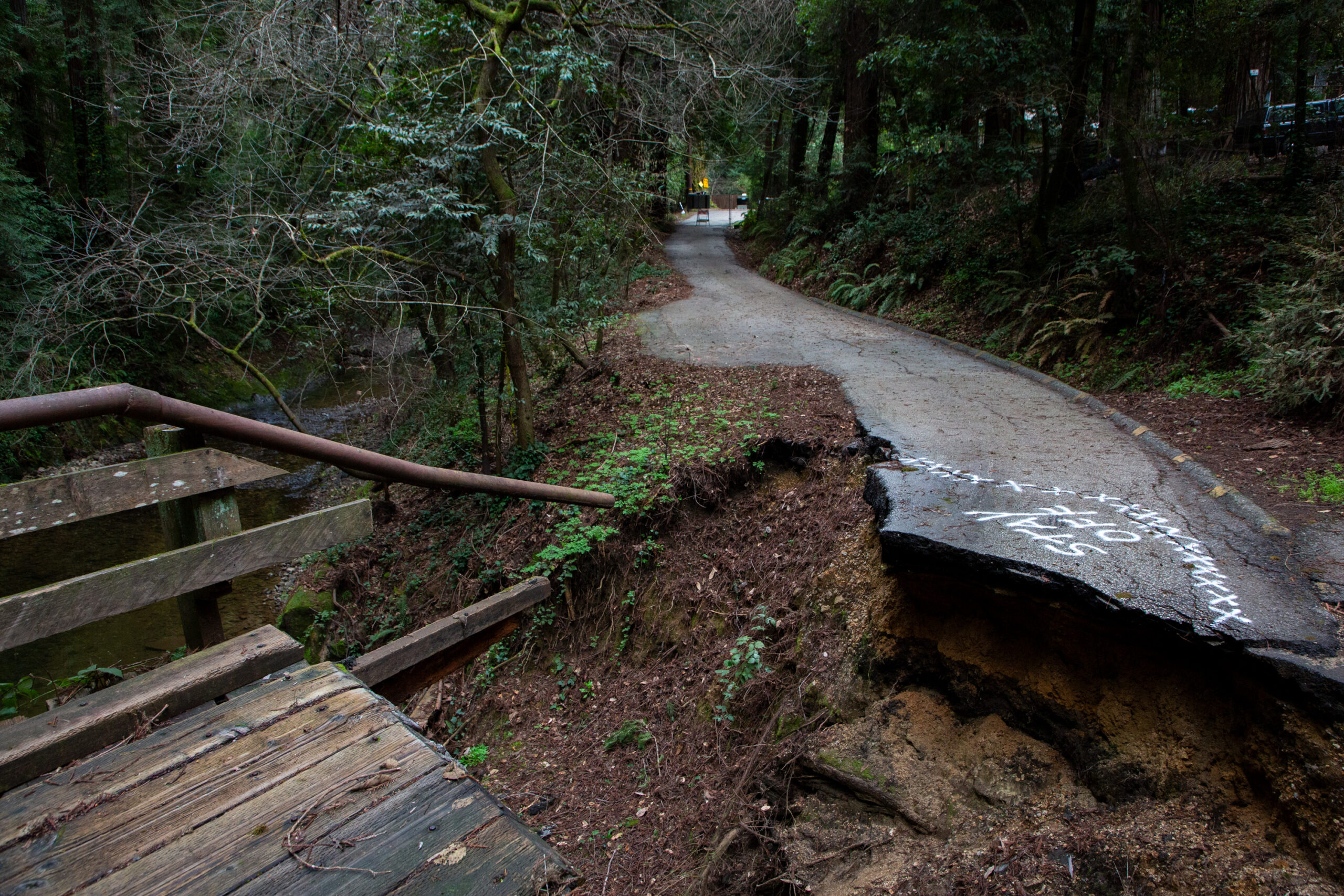
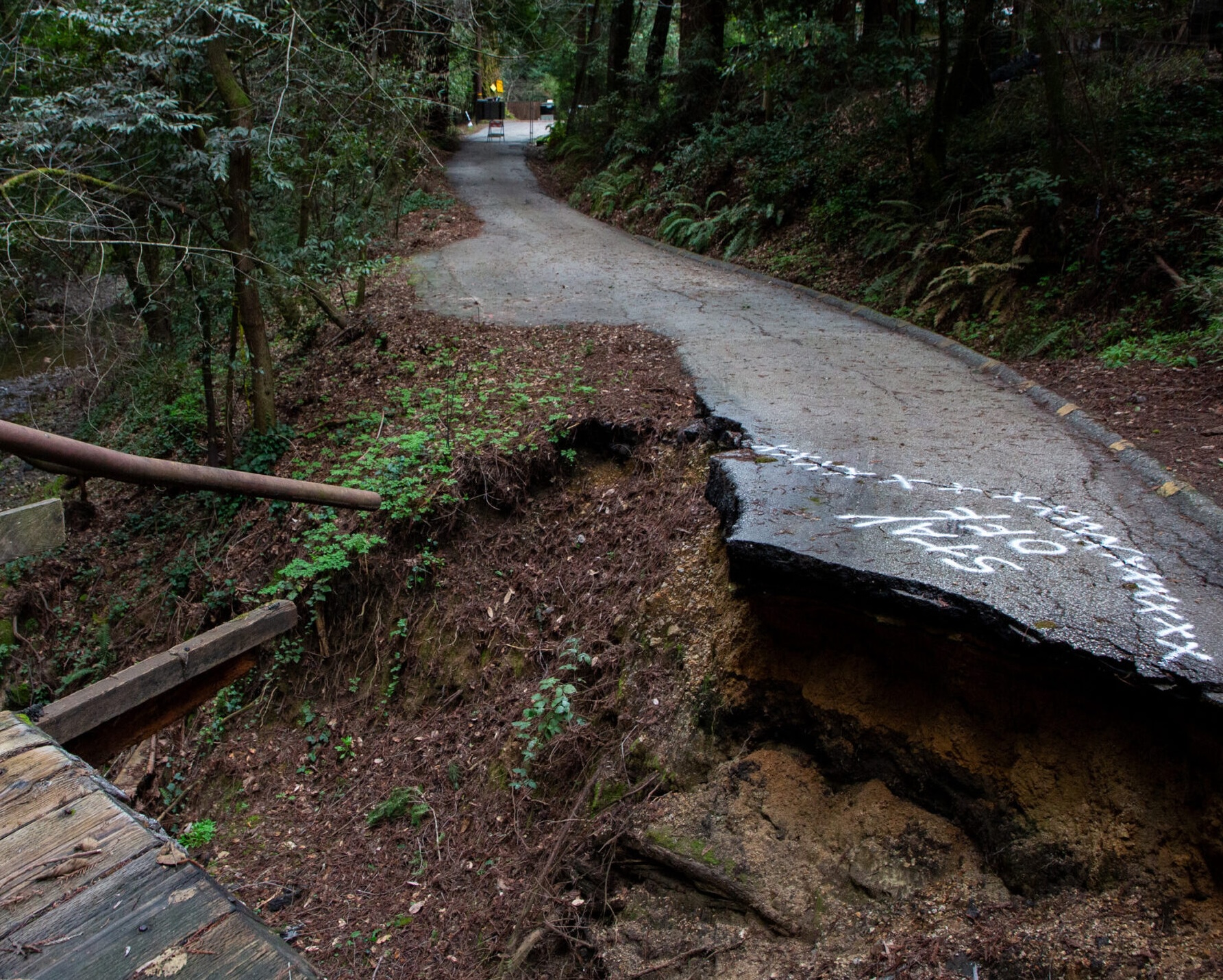
Part of Lank Tree Lane in Boulder Creek collapsed during heavy rain in February 2025. (Amaya Edwards — Santa Cruz Local/CatchLight Local file)
Santa Cruz County emergency resources- Read the county’s El Niño guide for residents.
- Access the CruzAware portal to register for alerts (portal de registro en Español).
- See rainfall reports and water levels of local creeks and rivers on OneRain.
SANTA CRUZ >> Climate experts warn that California’s Central Coast will likely see an increased risk of severe weather events this winter as a result of a “very strong” El Niño weather pattern. Local officials are making preparations for potential flooding and erosion throughout the county.
“What we know to be true is that a single storm, or a collection of storms, can impact our community and our county significantly,” said Dave Reid, director of the Santa Cruz County Office of Response, Recovery, and Resilience. While leaders can’t know exactly when or how the winter weather will pan out until it comes, Reid hopes that improved efforts in forecasting, infrastructure preparation and alerts will help residents stay safe.
El Niño, which is characterized by warmer than average sea surface temperatures in the South Pacific, typically brings an increased risk of extreme weather to many areas of California. But this year, “sea surface temperatures are as high as we’ve ever seen,” said Michael Beck, Director of UC Santa Cruz’s Center for Coastal Climate Resilience.
El Niños are typically forecasted when these sea surface temperatures are persistently 0.5 C° above normal for an extended period. However, this year temperatures have exceeded 2 C° above normal, prompting its classification as a “super” El Niño event. “That’s what’s really driving the concern about this year’s El Niño — the conditions for it to be an exceptionally strong one are there.”
(function() { window.mc4wp = window.mc4wp || { listeners: [], forms: { on: function(evt, cb) { window.mc4wp.listeners.push( { event : evt, callback: cb } ); } } } })(); Stay informed on Santa Cruz County’s biggest issues. Santa Cruz Local’s newsletter breaks down complex local topics and shows residents how to get involved. Email address:mc4wp.forms.on('subscribed', function(form) { // gtag.js if(form.id == '6954') { gtag('event', 'subscribe', {'event_category': 'newsletter_prompt', 'event_label':'top_of_story'}); } }); Leave this field empty if you're human:
On top of stronger waves and storms, high water temperatures are expected to raise water levels by 6-12 inches.
“We’re already seeing 9 [inches],” Beck said. He noted that this increase in water level is of particular concern when it coincides with king tides, the year’s highest tides expected during the winter, usually starting in November.
Powerful waves, higher sea levels and strong storms bringing lots of rain are all possible with El Niño, potentially affecting residents from Pajaro to Bonny Doon, Reid said.
“Everybody in the county is subject to some level of impact,” he said.
Different regions in the county will each have their own localized risks to look out for. In coastal neighborhoods, high seas and strong waves mean a higher likelihood of coastal flooding, especially in less protected areas like Rio Del Mar. While many of these neighborhoods like Pleasure Point have armoring — reinforcements like sea walls or revetments designed to prevent coastal erosion — high wave energy is still expected to increase the risk of erosion.
Increased precipitation, on the other hand, means a higher risk for flood-prone low-lying communities near the Pajaro and San Lorenzo rivers as well as Corralitos creek. In the mountains, increased rainfall can cause soils to saturate, leading to a higher potential for landslides and road failures.

The Pajaro River levee failed in March 2023, displacing thousands of residents in Pajaro. (Amaya Edwards — Santa Cruz Local/CatchLight Local file)
While the county’s wet season can be expected to start around November as usual, seasonal rainfall is expected to be above average starting in December, according to the National Oceanic and Atmospheric Administration.
The county’s Community Development & Infrastructure Department is preparing roads in unincorporated county areas by clearing culverts, drains, bridges and roadside ditches to ensure water has a place to go.
So far, county workers have completed about 215 miles of roadside ditch clearing, said Alex Sandoval, the department’s maintenance superintendent. The target is 250 miles of ditch clearing, which he hopes they’ll complete in the next month and a half.
“Ditch clearing is one of the biggest efforts that we can do to reduce flooding, reduce storm damage, and control water conveyances through our system,” he said.
Both Reid and Sandoval hope to improve the county’s ability to respond to major weather events. The last El Niño, which came in 2016, brought an estimated $9 million in damage to Santa Cruz County as a result of severe weather, while 2023’s atmospheric rivers caused an estimated $27 million in damages.
Reid said his teams are putting more resources and attention into forecasting weather conditions and providing information to residents. They’ve used Measure Q money to develop monitoring tools for Corralitos Creek, which flooded in 2023.
“That will give us an opportunity to communicate with the public faster and earlier, based on what we’re seeing from rainfall and storm and river response,” Reid said. His teams also expect to send more frequent alerts through CruzAware, a service that sends email and text alerts to Santa Cruz residents, to keep the community up to date on weather conditions.
“First and foremost, I would say now’s the time to be prepared,” said Beck, the UCSC climate expert. “In all likelihood, this is going to be a very tough winter for us.”
While getting ready for what could be a very destructive winter is essential to keeping residents safe, Beck also said that this El Niño season is an opportunity to think more long-term about preparing for effects brought on by climate change.
“This does give us a pretty good picture of what we’re likely to see in the coming future on a regular basis,” he said.
Questions or comments? Email info@santacruzlocal.org. Santa Cruz Local is supported by members, major donors, sponsors and grants for the general support of our newsroom. Our news judgments are made independently and not on the basis of donor support. Learn more about Santa Cruz Local and how we are funded.
Learn about membership Santa Cruz Local’s news is free. We believe that high-quality local news is crucial to democracy. We depend on locals like you to make a meaningful contribution so everyone can access our news. Learn about membershipThe post Bracing for El Niño: County looks to better forecasting, more alerts, road work appeared first on Santa Cruz Local.