
Firefox 156 arrives with a forest of forks in its wake
Did My IUD Make My Depression Worse?
After Mother Jones senior reporter Julia Lurie had her IUD removed, she was surprised to find that she felt happier and calmer than she had in years.
jQuery(document).ready(function(){prx("https:\/\/play.prx.org\/e?ge=prx_149_cdfafffc-12f6-4ef1-b46f-305a3648980b&uf=https%3A%2F%2Ffeeds.revealradio.org%2Frevealpodcast", "prx-1", "embed")});Subscribe to Mother Jones podcasts on Apple Podcasts or your favorite podcast app.
Her experience made her wonder: What does the science say about how hormonal birth control affects mood? And in a moment when contraceptives are so politicized and misinformation is rampant, is it possible to talk about the side effects of birth control without giving ammunition to those who want to get rid of it altogether?
In talking with scientists, doctors, and public health experts, Lurie learns that for years, research has found that people on hormonal contraceptives are much more likely to experience depression, suicidality, anxiety, insomnia, and other effects rarely discussed by the doctors who prescribe them.
“For some women, it can be an almost overnight change,” says OB-GYN and contraceptive researcher Dr. Ojvind Lidegaard.
This week on Reveal, we explore the gaps in women’s reproductive health, from contraceptives to menopause.
India forces caller-ID apps to feed spam reports to telcos
Your Questions About Trump, Putin, and Russia’s Election Interference Answered
On Friday morning, I hosted a Reddit AMA, in which participants could ask me anything. But the questions were practically all related to my new book: How Russia Won: Donald Trump, Vladimir Putin, and the Fight for America. The queries were smart, and none were vituperative—which was surprising given that this topic has become so toxic because of Trump’s BS insistence that “Russia, Russia, Russia” is a Deep State “hoax” and “witch hunt” orchestrated to destroy him. Here’s an excerpt of the Reddit conversation. You can learn more about the book at HowRussiaWon.com.
With Russia’s equivalent of midterm elections happening today, tomorrow, and on Sunday, what do you think the level of US interference in Russia’s election is?
Also, historically—say, from the 1990s to now, if we take Russia’s interference in the US as 100 percent—where would you put US interference in Russia? Are the methods employed similar? Different?
DC: We know that historically, Russia has long accused the US and the West of intervening in its domestic affairs. And indeed, throughout the Cold War, the US ran covert actions around the world that intervened in elections and operations that helped overturn democratically elected governments (such as in Iran, Guatemala, and Chile).
But I’ve seen no evidence that the US is doing anything like that in recent years in Russia. Of course, there are intelligence operations that target Russia and Putin. But given that Russia is a closed society, without free media, in which dissidence is crushed and critics imprisoned and killed, there’s much less opportunity for the sort of information operations that Russia can target at an open society like the US and European nations.
Are there signs that the war with Ukraine has affected their ability to interfere with our election due to the allocation of resources?
DC: After Putin’s full-scale invasion of Ukraine in February 2022, much of the Russian disinformation operations focused on the war.
Two main lines of false narrative were purported corruption (Zelenskyy is using millions of dollars to buy yachts!) and the bogus charge that the US was running bioweapons labs in Ukraine—an allegation that Tucker Carlson, Tulsi Gabbard, and other MAGA/right-wing influencers embraced and amplified (as I detail in my book).
But during the 2024 campaign, Russian intelligence pivoted to direct its disinfo ops toward the US election—to disparage Biden and then Harris and Walz. And in recent days, we have seen one of those disinfo networks—dubbed Matryoshka—which I wrote about in the book, start to target the midterms to disparage Democrats and encourage votes for the GOP.
Do you have specific examples of what these disinformation campaigns looked like, what each of their intents was, and the platforms they used to do so?
The book is full of examples. Here’s one: During the 2024 campaign, a Russian disinformation operator—an American fugitive cop living in Moscow named John Mark Dougan—appeared on a show on Rumble, a conservative video platform, hosted by a QAnoner and presented a man (in silhouette with his voice altered) who claimed he had been a Kazakhstan exchange student at the Minnesota high school where Gov. Tim Walz had once taught and coached football.
This anonymous person said Walz had inappropriately touched him. This baseless allegation—it turned out there were no exchange students from Kazakhstan at the time—was then spread across a network of phony websites set up by Dougan that had real-sounding names: The Boston Times, the New York News Daily, the Miami Chronicle, and was soon picked up by American social media users and went viral across assorted social media platforms.
“The best disinformation ops produce false narratives that become embraced and spread by authentic accounts—that is, real Americans.”
Eventually, Jack Posobiec, a MAGA influencer who gave us the bonkers Pizzagate conspiracy theory and was then working for the Trump campaign, and Candace Owens, another MAGA influencer, amplified this allegation. It’s a good bet that this baseless charge was seen by over 10 million Americans.
Now, how do you stop something like that? Well, social media platforms could do moderating. More importantly, political operatives and influencers could behave more responsibly. I know. Hah! Not in the world of Trump. But we also can try to encourage everyone to be more discerning in what they pass along. Again, hah! This is a problem. Disinfo ops work best when the phony narratives are embraced and transmitted by real people. How to stop that is a challenge.
When Russia interferes using influencers, are the influencers even aware? Or does Russia just pump money into influencers they believe have the talking points that disrupt or push their agenda?
DC: The best disinformation ops produce false narratives that become embraced and spread by authentic accounts—that is, real Americans.
And we have seen numerous cases in which Russian disinfo slipped into US social media is then widely amplified by MAGA influencers and even Republican officeholders. The book is full of examples of this. And there’s the Tenet Media case, in which RT, the Russian state-controlled propaganda outlet, funneled $10 million to MAGA influencers, including Benny Johnson and Tim Pool, who claim they did not know the exorbitant payments they were receiving—far above normal levels—came from Moscow.
But you have to ask: Why was Russia willing to provide millions to these pro-Trump influencers? What does it say about their role in the information ecosystem?
Trump lifted restrictions on using US-supplied weapons for long-distance strikes inside Russia proper, including providing targeting assistance. The blockade of Venezuela saw a further crackdown on the shadow fleet, further restricting Russia’s export capacity. The Russia-friendly Assad regime in Syria has collapsed, and the Russian forces stationed there have been forced to flee.
Why exactly do you think Putin is a fan of Trump despite all that?
DC: I think the answer is obvious. Putin’s key goal is to weaken and divide the Western alliance. Trump is single-handedly doing that, dumping on NATO, threatening Canada, and declaring his intention to grab Greenland. He has cut back on assistance to Ukraine and provided Putin plenty of leeway in that war. Remember when Trump said he would end that war in 24 hours? Well, he has barely tried.
“Russia’s interventions in the 2020 and 2024 elections were all aimed at harming the Democrats and helping Trump.”
And most recently, he has sided with Putin, with his son-in-law declaring Ukraine should give up land to end the war—Putin’s position. And Trump has definitely weakened the US. Look at the recent news about countries pulling out of their investments in the US. Our position throughout the world is weaker. Our economy is weaker. Trump denigrates American democracy, which is a key part of Putin’s message: You cannot rely on democracy; you need autocratic leadership to have a strong nation.
True, not everything Trump has done has been to Putin’s benefit. He attacked an ally of Putin: Iran. But that has created such upheaval and weakened the US military that it has had benefits for Putin, including raising the value of Russia’s oil reserves.
Does Russia want a specific party in power? Or just to sow division and chaos?
DC: It’s pretty clear that when Russia started to mess with US elections in 2015, its aim was to sow discord and impede the Clinton campaign. Putin hated Clinton—especially for criticizing the 2011 Russian parliamentary elections as fraudulent (which they probably were).
But as Trump became the nominee, the Russian operation included in its goals boosting his campaign. The evidence for this is pretty solid, as I explain in the book. That was the finding of the intel community in early 2017. And the Senate Intelligence Committee released a massive bipartisan 966-page report in August 2020—which got little attention—on the Russian attack on the 2016 election that concluded Putin’s aims had included helping Trump.
Who was chair of the committee at the time and signed off on this conclusion? A guy named Marco Rubio. And, as I detail in the book, Russia’s subsequent interventions in the 2020 and 2024 elections were all aimed at harming the Democrats and helping Trump. Though they do like to increase discord and conflict, as well.
Did you get to work with Nick Offerman for the video about your book?
DC: I did, and it was both a joy and a thrill to work with him as he recorded the narration, particularly because he asked for notes on his reading of the lines and generously considered suggestions from me and our producer.
Tilly Norwood’s press tour is going about as well as you’d expect for an AI
A startup that builds other startups raised $100M, and is all-in on physical AI
Another Moss Landing Fire
Anthropic is operating a lab that conducts biology experiments
AI Hallucination Nearly Triggers US Military Operation
Trump’s latest attack on the press is beyond chilling
In his latest attack on the First Amendment, President Donald Trump announced Friday that he’s “banning” three news outlets from the White House—Politico, CNN, and MS NOW. “I am proud to announce that, effective immediately, I am banning Fake News CNN, MSNOW (who recently changed their name from MSNBC due to lack of viewership and credibility!), and Politico (The recipients of an illegal and…
Republicans’ midterm messaging
A cartoon by Brian McFadden. Support my Patreon for early access and exclusives. Follow me on Mastodon, Bluesky, or at my website. Related | Trump’s midterm convention wasn’t just a flop—it was an omen…
MAGA’s newest nonsensical enemies: Cheese and Meryl Streep
The political right is having a full online meltdown over cheese and … American treasure Meryl Streep? If you’ve kept your ear to the proverbial social media ground, then you might have heard the MAGA community up in arms about Tillamook Cheese’s new halal labelling and Oscar winner Meryl Streep’s newest role in “Narnia: The Magician’s Nephew.” If you’re not extremely online…

 2026.08
THE VAMPIRE LESTAT Film Would Have Skipped the Rock Star Angle
- Neil Jordan’s proposed film adaptation of Anne Rice’s The Vampire Lestat would have skipped the rock star angle, and given us a vampiric road trip.
- Neil Jordan talks about the unproduced script he wrote for the sequel to Interview with the Vampire, which would have focused on Lestat’s 18th-century life in France, and his time as an actor. There would have been an element where Lestat drives Christian Slater from New Orleans to L.A.
- Nerdist’s take: We’re fascinated by the potential of this unmade sequel, and wish we’d had this instead of the 2002 Queen of the Damned movie.
When the film adaptation of Interview with the Vampire came out in 1994, it survived months of scrutiny from both the fans and the press. Probably more than almost any movie of the same era. It went on to receive solid reviews, and raves for Kirsten Dunst’s performance as the child vampire Claudia. Warner Bros. tried to get a sequel in development right away, based on Anne Rice’s first sequel, The Vampire Lestat. But Tom Cruise passed on returning to the role. But before he did that, Interview director Neil Jordan took a pass at a script for The Vampire Lestat. And he’s finally revealed to Nerdist what that script would have covered:
I was never in love with the idea of Lestat as a kind of David Lee Roth figure. So, no rock star persona, I was never in love with the image of him as a rock star. But when they asked me to write a script for The Vampire Lestat, I did go back. I really got fascinated with the whole thing, with Anne’s epic about how Lestat was turned into a vampire when working at the Commedia dell’arte in Paris, then taken by this strange man, and running from wolves. The script was mainly about Lestat’s 18th-century France experience. With some flash-forwards to Daniel Malloy being driven from New Orleans down to Los Angeles and stuff like that.
 Warner Bros.
This is the most anyone has learned about what the follow-up to Interview with the Vampire would have looked like. It’s probably shocking to many, especially after The Queen of the Damned movie and AMC’s The Vampire Lestat leaned into musician persona. However, Lestat’s MTV era really only covered about the first 20 pages of the novel, and perhaps the last 20. The majority of Rice’s book is Lestat recounting his life in 18th-century France, his vampiric transformation, and learning undead history. Which is what it seems Jordan’s movie would have maintained as the narrative.
 Warner Bros.
Interestingly, it also seems like Jordan’s proposed film would have had some kind of undead road trip framing device. As fans might recall, Interview with the Vampire ends with Tom Cruise’s Lestat, somehow returned to his old self, popping up in the backseat of Daniel Molloy’s (Christian Slater) convertible. He bites him, and the dialogue suggests he’s going to grant his wish and make him a vampire. The two drive off on the Golden Gate Bridge, and we have no idea what happens next. The 2002 Queen of the Damned movie is not in continuity with Jordan’s film. And this event does not happen in the book at all.
Nerdist’s Take: Neil Jordan’s The Vampire Lestat Is the Undead Road Trip Film We’re Dying to SeeWhile the ship has long since sailed on a direct sequel to Neil Jordan’s Interview with the Vampire with that same cast, it would be fascinating if someday someone picks up that storyline and continuity, only with different actors. The Vampire Lestat disclosing his life story to a captive Daniel Molloy on a cross-country road trip? We’d love to see it. Eventually, someone else will pick up the baton of this universe once AMC is done with it. It would be fascinating to see a legacy sequel so many years after the original left us with that cliffhanger ending.
Eric Diaz is a staff writer at Nerdist and a Swiss Army knife of fandoms. Eric loves DC, Marvel, horror movies, and even Star Wars and Star Trek equally.The post THE VAMPIRE LESTAT Film Would Have Skipped the Rock Star Angle appeared first on Nerdist.
Anthropic’s first embedded evaluator is … Accenture?
What Else Is the Pentagon Hiding From Us?
More US military personnel have reportedly died during the ongoing Iran war than the Pentagon has shared publicly, the latest and most serious evidence of the Trump administration’s ongoing cover-up around disastrous military failures in that conflict.
In a Washington Post report released Friday, six US officials with knowledge of internal Defense Department data on military casualties, attested that at least 22 service members have died. The Pentagon’s public database reports 14 military casualties as of Friday as a result of Operation Epic Fury, which began with the first US and Israeli strikes on Iran in February. Four more deaths are labeled in a separate category, “Overseas Operations,” despite the Defense Department previously reporting 18 deaths related to Iran.
In July, the New York Times reported that one reason the Trump administration removed four service members who were killed days earlier from the casualty list—three in Jordan and one in northern Iraq—was that they died after the president declared a ceasefire in April.
One official told the Post that the four additional deaths were not all directly tied to the Iran war, but included military personnel who were separately stationed in the Middle East.
When a US service member’s death is formally accounted for, the military initiates an investigation to determine whether they died while performing official duties. The evaluation directly affects the amount of benefits their families receive.
The listed cause of military deaths directly affects the amount of benefits that their families receive.
The Trump administration also appears to be hiding the extent of damage to US military bases. Earlier this week, CBS News shared photos leaked by active service members of a destroyed Boeing aircraft in an Air Force base in Saudi Arabia. Other photos show destroyed buildings and military barracks at the base. Camp Buehring, a US staging post in Kuwait, had damaged aircraft, as well as armored vehicles, that the administration had not previously acknowledged.
In addition, the Defense Department’s inspector general released a report earlier this week that the war in Iran “has resulted in strategic inventory shortfalls and revealed industrial base bottlenecks for munitions resupply.” In the first four months, the inspector general valued the cost of military operations at $33.4 billion, not accounting for costs of damaged facilities, while the Trump administration struggles to accelerate weapons production—a move that the report says has “significant lead times.”
Trump’s attempts to conceal those failures—with even less believable claims that the US has “wiped every single force in Iran out very completely” or that the war is “pretty much” over—are prolonging a war that the White House seems determined to lose, and that has killed thousands of people across the region.
Anthropic decides to support OpenAI's markdown instructions spec
Oh great, Pete Hegseth is pushing the ‘High-T Department of War’
Defense Secretary Pete Hegseth is a rare mix of doofus and menace, and nowhere is that so evident as in how he’s keeping himself busy while his and President Donald Trump’s dumb war in Iran continues to careen right off the rails and into the Strait of Hormuz. But hey, why focus on things like that when you could spin up a giant new medical testing and monitoring requirement to make sure your…
Monterey County officials continue to monitor Moss Landing fire; shelter-in-place order still in effect
Monterey County officials say they are continuing to monitor a still-smoldering fire that started early Friday at a battery storage facility in Moss Landing.
The fire began in an old scar burn from a building damaged in the original blaze in 2025, according to County of Monterey spokesperson Nick Pasculli. That fire was larger and caused an area-wide evacuation.
Battery fire no longer a threat, officials say
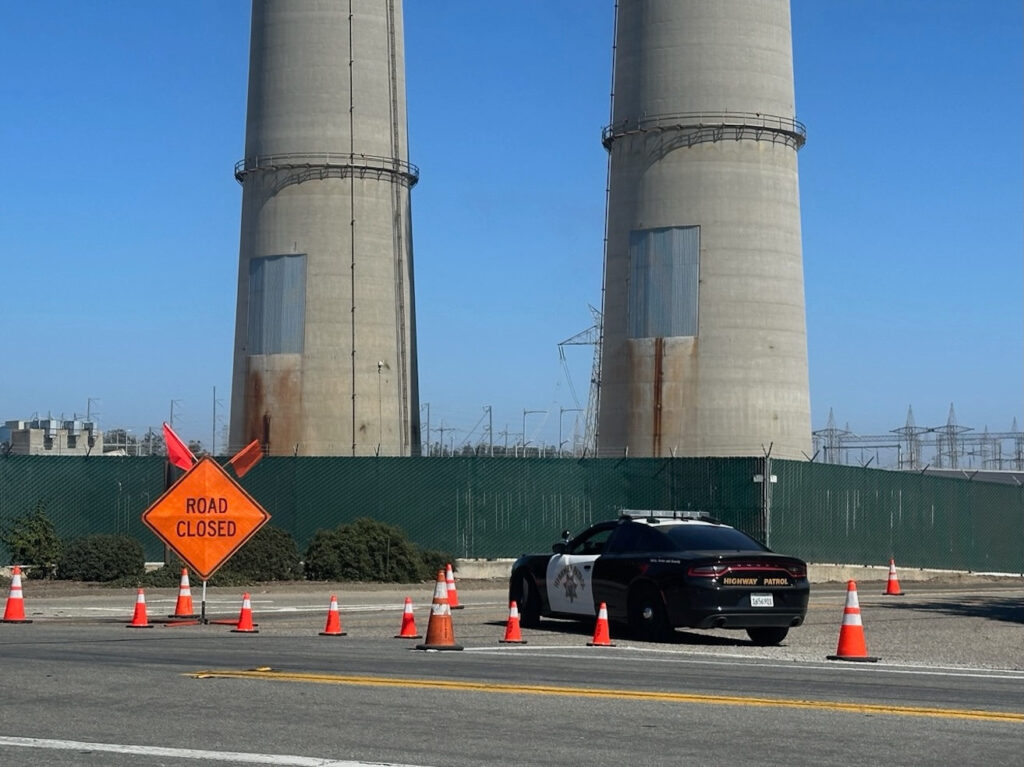
Monterey County officials said at noon Friday that the latest fire at the Vistra battery energy storage facility in Moss Landing was no longer an active threat to the surrounding community.
Officials said there was no active fire and no indication that hazardous materials from the incident posed a danger to nearby residents.
The update came during a noon Zoom press conference attended by several officials, including Monterey County Supervisor Glenn Church, North County Fire Protection District Interim Chief Jess Cortez, representatives from the U.S. Environmental Protection Agency and Vistra, and Andres Rosas of the Monterey County Sheriff’s Office.
“At this particular point in the incident, there is no active fire,” Cortez said. “It is hot, smoldering at this particular point, but the incident is still within a scope that it could decrease or continue going.”
Officials continued to monitor the facility and conditions surrounding the site.
The fire comes as crews are working through the final and most difficult phase of cleaning up the Vistra facility following the massive January 2025 fire.
On Sept. 8, the EPA announced that crews had begun demolishing portions of the fire-damaged battery storage building to reach severely damaged batteries and other material that had previously been inaccessible.
Under EPA oversight, Vistra is removing and processing the remaining batteries and fire debris for transport to approved disposal facilities. Severely damaged batteries are being treated on-site before being transported.
During the work, crews are conducting air monitoring and sampling, fire and smoke watches, water collection and testing, battery temperature monitoring and dust suppression, according to the EPA.
The agency said damaged lithium-ion batteries pose an ongoing fire risk and can produce hydrogen fluoride and other flammable or toxic gases when they burn.
The January 2025 fire occurred in Vistra’s 300-megawatt battery energy storage facility, which contained about 100,000 lithium-ion battery modules. The EPA estimates about 55% of them were damaged.
Since then, nearly 40,000 intact batteries have been removed, de-energized and transported to EPA-approved recycling facilities in Nevada and Ohio.
The remaining cleanup is expected to be completed by mid-2027.
Church thanked responding agencies Friday for quickly gathering information and providing updates to the public. But he said the latest incident renews concerns about the safety of battery energy storage systems.
“I’m deeply disappointed and frustrated that we’re experiencing yet another fire at the Vistra facility in Moss Landing this morning,” Church said. “The fire is alarming for the community, and brings once again to the forefront that safety must be paramount in every way we deal with battery energy storage systems.”
Church said the incident underscores the volatility of lithium batteries, particularly during cleanup operations.
“While we need reliable and efficient battery energy storage systems, the key is that they really must be safe at all times, whether in an operation or in a cleanup as in this case,” he said.
According to Church, the batteries were charged, but they were not in operation with the state grid. That has been shut down since January 2025. Neither Vistra nor PG&E have connected to the grid since the fire.