
Freak Flag Flying

Rotary Club of Freedom to host annual Uncork Corralitos fundraiser for local nonprofits

The `Rotary Club of Freedom` will host its annual Uncork Corralitos fundraiser Saturday, Oct. 17, bringing together local wine, food, music and community support for three Santa Cruz County nonprofit programs.
The event will run from 1 to 4 p.m. at Alladin Nursery, 2905 Freedom Blvd. in Watsonville, in the Aptos Hills-Larkin Valley area.
Guests can sample wines from local wineries, breweries and cideries while enjoying appetizers and live music from Ripatti & Rose. The event also will give attendees an opportunity to stroll through the nursery grounds and spend an afternoon supporting local organizations that serve children and families.

Organizers will direct all proceeds from the fundraiser to three programs:
- Youth Resource Bank, which provides vulnerable local children with essentials such as school supplies, clothing and medical needs that traditional funding does not cover.
- Camp Erin, a Hospice of Santa Cruz County program that gives children and teens who have lost someone significant a weekend space to grieve and connect with others experiencing similar losses.
- WCH Foundation’s “A Safe Start” program, which works to address inequities in maternal health and newborn care and support healthy beginnings for newborns and young families.
Sandy Petznick, president of the Rotary Club of Freedom, said the fundraiser gives residents a chance to enjoy an afternoon together while supporting organizations that help local youth.
“Uncork Corralitos is more than just a wonderful afternoon in a beautiful setting,” Petznick said. “It’s an opportunity for our community to come together and provide critical funding for organizations that act as a safety net for our youth. Every ticket purchased helps us make a direct, tangible difference in a child’s life right here in Santa Cruz County.”
Event detailsWhat: Uncork Corralitos fundraiser
When: Saturday, Oct. 17, 2026, from 1 to 4 p.m.
Where: Alladin Nursery, 2905 Freedom Blvd., Watsonville
Features: Wine, beer and cider tastings, appetizers, live music and a community gathering
Tickets are limited, and organizers expect the event to sell out. Attendees can also learn about sponsorship opportunities through the event page.

The post Rotary Club of Freedom to host annual Uncork Corralitos fundraiser for local nonprofits appeared first on Lookout Santa Cruz.
County Fair sees 11% growth in attendance numbers

More than 55,000 people attended the Santa Cruz County Fair this year, an 11% jump from last year.
The number includes paid attendance from the public as well as the fair’s long list of volunteers, said fair spokesman Ron Haedicke.
“There were no major incidents and we had a great fair,” Haedicke said.
From a large cluster of amusement park rides to a 400-legged millipede, a litter of piglets, equestrian competitions, silkie chickens, quilt making, bonsai trees, monster trucks, apple pies, pickled vegetables and Lego collections, the fair spread its colorful feathers far and wide this year.
“We are incredibly grateful for the community’s response to this year’s Santa Cruz County Fair,” Santa Cruz County Fairgrounds CEO Dori Rose Inda said. “… Throughout the five days you could feel the energy and enthusiasm across the fairgrounds. At its heart, the fair is about celebrating agriculture, youth, creativity, tradition and community—and bringing people together.”
Inda said the fair’s success wasn’t due to any one attraction, but rather the thousands of people who participated, volunteered, exhibited, competed, performed and “enjoyed being part of our community.”
In the Fine Arts Building, Donna Giubbini, chair of Fine Arts, said her crew took in more than 500 works of art, from children’s creations to professional paintings, sculptures, wood carvings and ceramics.
A total of 24 students from Pajaro Valley and Watsonville high schools, led by the local environmental nonprofit Watsonville Wetlands Watch, volunteered to divert food waste and help fairgoers properly sort their waste at more than 10 stations around the fairgrounds.
“For many fairgoers, festive food is one of the highlights of the event, yet much ends up in the trash,” WWW Communications Director Brooke Sampson said. “In the US, about 30-40% of food goes to waste.”
She said students sorted trash, food waste and recyclables to help keep unnecessary waste out of the landfill.
#tdi_1 .td-doubleSlider-2 .td-item1 { background: url(https://pajaronian.com/wp-content/uploads/2026/09/tractor-parade-80x60.jpg) 0 0 no-repeat; } #tdi_1 .td-doubleSlider-2 .td-item2 { background: url(https://pajaronian.com/wp-content/uploads/2026/09/Military-uniforms-80x60.jpg) 0 0 no-repeat; } #tdi_1 .td-doubleSlider-2 .td-item3 { background: url(https://pajaronian.com/wp-content/uploads/2026/09/military-uniforms-FRank-orr-80x60.jpg) 0 0 no-repeat; } #tdi_1 .td-doubleSlider-2 .td-item4 { background: url(https://pajaronian.com/wp-content/uploads/2026/09/DJs-80x60.jpg) 0 0 no-repeat; } #tdi_1 .td-doubleSlider-2 .td-item5 { background: url(https://pajaronian.com/wp-content/uploads/2026/09/bonsai-80x60.jpg) 0 0 no-repeat; } #tdi_1 .td-doubleSlider-2 .td-item6 { background: url(https://pajaronian.com/wp-content/uploads/2026/09/art-viewers-80x60.jpg) 0 0 no-repeat; } #tdi_1 .td-doubleSlider-2 .td-item7 { background: url(https://pajaronian.com/wp-content/uploads/2026/09/ag-history-proj-80x60.jpg) 0 0 no-repeat; } #tdi_1 .td-doubleSlider-2 .td-item8 { background: url(https://pajaronian.com/wp-content/uploads/2026/09/litter-pickup-kids-2-80x60.jpg) 0 0 no-repeat; } #tdi_1 .td-doubleSlider-2 .td-item9 { background: url(https://pajaronian.com/wp-content/uploads/2026/09/Liter-pickup-kids-1-80x60.jpg) 0 0 no-repeat; } #tdi_1 .td-doubleSlider-2 .td-item10 { background: url(https://pajaronian.com/wp-content/uploads/2026/09/bug-barn-80x60.jpg) 0 0 no-repeat; } 1 of 10 A line of early-day tractors travels through the fairgrounds during a parade organized by the Agricultural History Project.
 A West Point cadet dress uniform worn by Shane Buzza from 1984-88 is part of a military uniform exhibit in the Rodgers House.
 This “Eisenhower jacket” was worn by Frank F. Orr, a World War II military photographer.
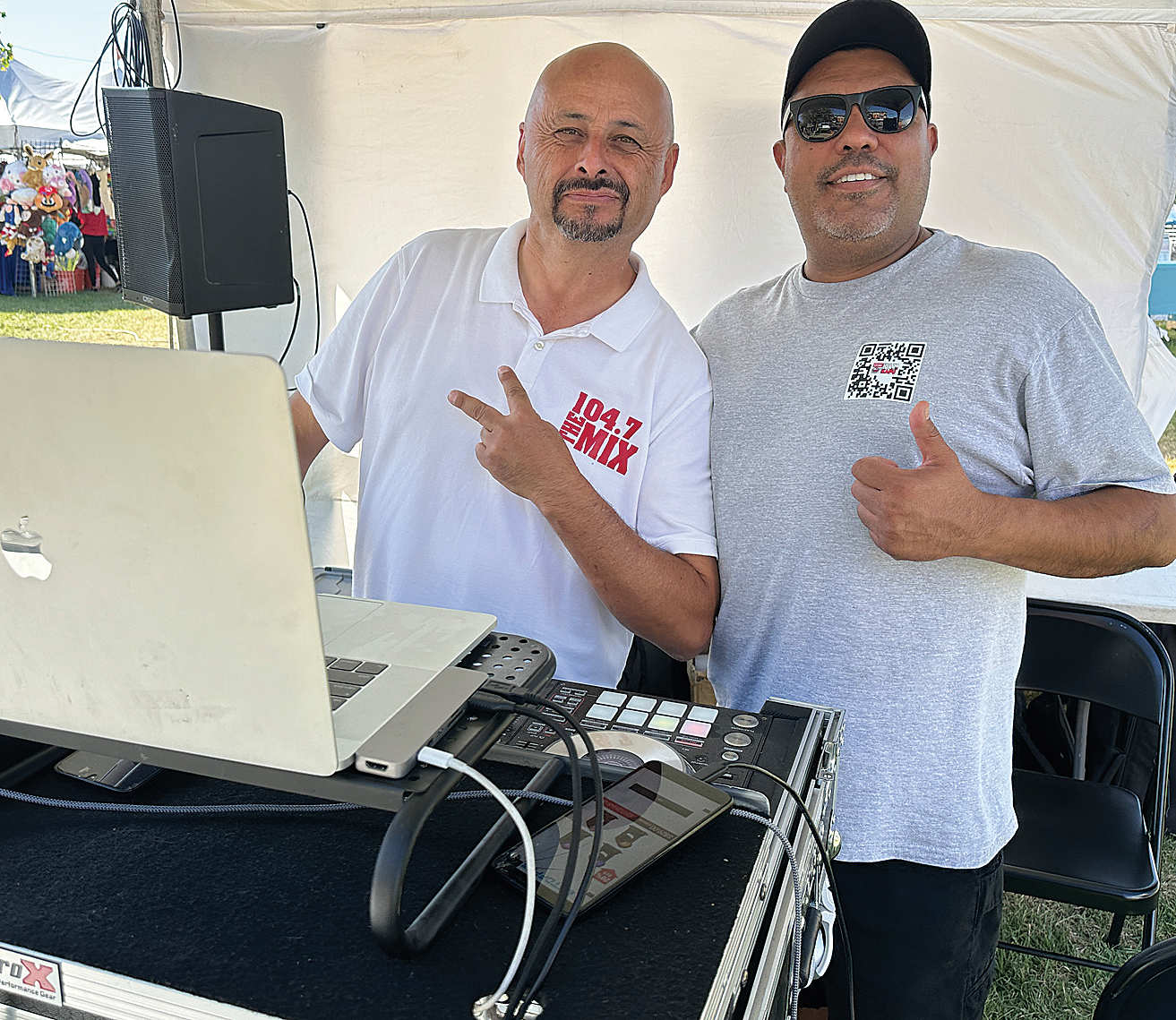 DJ Joel (left) and DJ Gil of radio station MIX 104.7 FM keep the tunes coming for fairgoers.
 A 260-year-old California juniper (right) is part of the bonsai exhibit in the Floriculture Building.
 People study a photo exhibit, an annual feature at the fair.
 Bob Erbe shows a bale of hay produced by the model hay baler (shown here) at the Agricultural History Project.
 After receiving decorative balloon hats from Jeremy Shafer the clown, these Pajaro Valley High School students are ready to sort trash and recycling at the fair.
 Pajaro Valley High School students Ezra Fernandez, Angie Herrera and Jarany Lopez separate trash, food waste and recycling during the fair as part of a new program by Watsonville Wetlands Watch.
 This firehead millipede, from Madagascar, has more than 400 legs and was on display in the Bug Barn.
Watsonville reducirá las cámaras de vigilancia Flock de 37 a 20 y endurecerá las reglas sobre los datos

Esta traducción fue generada utilizando inteligencia artificial y ha sido revisada por un hablante nativo de español; si bien nos esforzamos por lograr precisión, pueden ocurrir algunos errores de traducción. Para leer el artículo en inglés, haga clic aquí.
Watsonville reducirá considerablemente la manera en que su departamento de policía utiliza las cámaras de vigilancia Flock, tras una discusión de casi cinco horas que por momentos fue tensa el martes por la noche.
El concejo municipal votó 5-2 a favor de una serie de cambios que incluyen reducir el número de cámaras de 37 a 20.
Otros cambios importantes incluyen reducir de 30 a siete días el período durante el cual el departamento de policía conserva los datos que las cámaras recopilan y que no han sido utilizados, antes de eliminarlos permanentemente. La ciudad también dejará de compartir sus datos con cualquier otra jurisdicción y exigirá una auditoría trimestral independiente sobre el uso de esta tecnología y de sus datos por parte del departamento de policía.
Las cámaras Flock son lectores automatizados de matrículas diseñados para ayudar a las fuerzas del orden y a los vecindarios a rastrear vehículos y resolver delitos.
La concejal Maria Orozco, quien propuso los cambios, dijo a Lookout el miércoles por la mañana que el concejo pudo llegar a un compromiso y abordar las preocupaciones planteadas por la comunidad.
Junto con Orozco, votaron a favor de los cambios Casey Clark, Vanessa Quiroz-Carter, Ari Parker y Jimmy Dutra. La alcaldesa de Watsonville, Kristal Salcido, y el concejal Eduardo Montesino votaron en contra.
El personal municipal también realizará encuestas sobre las cámaras Flock en cada distrito del concejo municipal para conocer la opinión de los residentes sobre esta tecnología, al mismo tiempo que investigará alternativas.
El personal también programará una reunión pública dentro del próximo año con el jefe de policía de Watsonville, Brian Shab, y representantes de Flock Safety, para que los miembros de la comunidad tengan la oportunidad de hacer más preguntas.
 Credit: Kevin Painchaud / Lookout Santa Cruz
“Los datos recopilados durante la reunión pública y mediante la encuesta específica de cada distrito, [el personal de la ciudad] también regresará con opciones para que sean aprobadas,” dijo Orozco. “Eso incluirá los programas de vigilancia vecinal. ¿Son efectivos? ¿Deberíamos recuperarlos?… También analizarán una red alternativa de cámaras. ¿Existe alguna otra opción que la comunidad considere más confiable?”
Orozco añadió que toda la información recopilada durante el próximo año ayudará al concejo municipal a decidir si mantiene las cámaras Flock restantes o las elimina por completo. El acuerdo de dos años de la ciudad con Flock Safety vence en septiembre del próximo año.
Shab le dijo a Lookout por correo electrónico que su departamento entiende las preguntas y preocupaciones de los miembros de la comunidad y que “están escuchando.” Agregó que el departamento considera que la decisión del concejo municipal ayuda a “equilibrar la seguridad pública con la privacidad y la seguridad.”
“Nuestro departamento está trabajando para implementar rápidamente esa directiva y garantizar que el uso de esta herramienta por parte del departamento siga siendo coherente con los requisitos y las expectativas establecidos por la ciudad,” dijo Shab.
El año pasado, el concejo municipal aprobó la renovación de su contrato con la empresa con sede en Atlanta y añadió 17 cámaras. La ciudad gasta $124,650 al año en su contrato con Flock, según Shab.
Incluso con la reducción del número de cámaras, Watsonville seguirá teniendo la mayor cantidad de cámaras de cualquier jurisdicción del condado de Santa Cruz; Capitola, la única otra jurisdicción del condado que cuenta con cámaras Flock, tiene 10. Santa Cruz votó en enero para retirar todas sus cámaras Flock.
Durante la tensa discusión del martes, Shab dijo a los miembros del concejo municipal que “Flock es una herramienta poderosa para las fuerzas del orden.” También abordó preocupaciones relacionadas con la privacidad, el uso indebido y las políticas del departamento para compartir datos.
“La responsabilidad del departamento de policía es utilizar esta tecnología de manera legal, limitada y transparente, con una supervisión significativa y consecuencias serias por su uso indebido,” afirmó Shab.
 Credit: Kevin Painchaud / Lookout Santa Cruz
Shab dijo que, durante el último año, de septiembre de 2025 a septiembre de 2026, la policía de Watsonville realizó 7,818 búsquedas en sus datos de Flock, las cuales ayudaron en 894 casos. Añadió que, aunque la tecnología no necesariamente resuelve los casos por sí sola, puede proporcionar a los agentes una “pista de investigación fundamental.”
También recibió críticas por utilizar ejemplos de casos que, según Montesino, apelaban a las emociones en lugar de “ceñirse a los hechos.” Montesino le dijo a Shab que no le gustaba la manera en que se había adornado la presentación, incluido el uso de fotografías de víctimas.
Parker también cuestionó a Shab con insistencia sobre el posible uso indebido de las cámaras Flock y sobre las estrategias que podrían implementarse para evitarlo. Algunas de las preocupaciones de los miembros del concejo antes de la reunión del martes se centraban en el posible error humano detrás del uso indebido de las cámaras y de sus datos.
Muchos de los casi 70 miembros de la comunidad presentes en la sala del concejo no parecían estar muy convencidos de que mantener las cámaras fuera una buena idea para Watsonville, principalmente debido a la desconfianza hacia Flock.
Quiroz-Carter, la única integrante del concejo que había expresado públicamente que preferiría eliminar por completo las cámaras, se hizo eco de esos sentimientos.
“Entiendo que todos quieren hacer algunos ajustes. Nadie quiere eliminarlas, pero en este momento, si no nos deshacemos de esto, va a ser realmente, realmente malo,” dijo Quiroz-Carter. “Seré completamente honesta. No quiero verlo. No quiero tenerlo. No creo que sea seguro. No me gusta. Pero si lo mejor que puedo hacer es lograr que hagamos algunos cambios, estoy dispuesta a hacerlo con mis colegas.”
Lourdes Barraza, organizadora de la sección de Watsonville de Get the Flock Out, dijo a Lookout que la decisión del concejo municipal en realidad no cambia nada y que tampoco la considera un compromiso.

“Tener 20 cámaras en lugar de 37 significa que seguimos siendo vigilados,” dijo Barraza. “Nuestra información sigue siendo recopilada. Nuestra información sigue siendo compartida, así que en realidad no resuelve nada.”
Barraza dijo que las encuestas por distrito serán una pérdida de tiempo si los residentes no están suficientemente informados sobre las cámaras Flock. Añadió que espera que una futura reunión pública incluya todas las perspectivas sobre el tema, y no solamente las de Shab y los representantes de Flock.
“Es necesario presentar ambos lados. Entonces, una vez que se presenten ambos lados y hagan una encuesta, creo que sería más útil,” dijo Barraza.
Después de la decisión del concejo, GTFO continuará educando a los miembros de la comunidad sobre las cámaras Flock y los problemas relacionados con ellas, dijo Barraza. Aunque no considera que la decisión de esta semana sea un compromiso útil, afirmó que la reducción del número de cámaras le indica que los miembros del concejo están comenzando a comprender los peligros de Flock.
The post Watsonville reducirá las cámaras de vigilancia Flock de 37 a 20 y endurecerá las reglas sobre los datos appeared first on Lookout Santa Cruz.
Sheriff opposes placement of sexually violent predator Michael Cheek in Santa Cruz Mountains
Santa Cruz County Sheriff Chris Clark is opposing the proposed placement of a man designated as a sexually violent predator at a home in the Santa Cruz Mountains, citing concerns about the remote location and potential difficulties for law enforcement.
The Santa Cruz County Sheriff’s Office learned this week that 25237 Terrace Grove Road in Los Gatos, within Santa Cruz County, has been proposed as a residence for Michael Cheek. The property is in a remote area off Soquel San Jose Road.
Cheek was convicted of kidnapping, rape and forcible oral copulation of a 21-year-old woman in Santa Cruz County in 1980. Before he began his sentence, Cheek was transferred to Contra Costa County to face allegations that he violated the terms of his probation.
Cheek has been designated a sexually violent predator, and his placement at the property requires court approval.
Clark said his office assessed the property and surrounding area and determined that its location could pose problems for monitoring Cheek and responding to potential violations.
“The concerns are specific and serious,” Clark said.
The sheriff said the home is surrounded by dense forest and steep terrain and has limited road access. Unreliable cellular and GPS service could interfere with electronic monitoring and communication with law enforcement, while narrow roads, abandoned structures and recreational vehicles could complicate a search or apprehension, he said.
Clark also said schools, a Girl Scout camp, a church, a public park and residential neighborhoods are nearby, and routes to and from the property pass locations where children and families gather.
According to Clark, Cheek committed crimes in Santa Cruz County but has never lived in the county and has no known family or support network here.
“That does not mean the people he harmed, or the community where those crimes occurred, should be asked to carry the risk of his placement here,” Clark said.
The proposed placement will be considered during an Oct. 30 hearing at 1:30pm before Santa Cruz County Superior Court Judge Nancy De La Peña in Department 6.
Members of the public can submit written comments before Oct. 30 by emailing SV*@***ao.us or mailing them to the SVP Unit, Santa Cruz County District Attorney’s Office, 701 Ocean St., Room 200, Santa Cruz, CA 95060.
Watsonville to cut Flock surveillance cameras from 37 to 20, tighten data rules
Sheriff opposes proposed Santa Cruz Mountains placement of convicted rapist Michael Cheek

Santa Cruz County Sheriff Chris Clark is strongly opposing a proposed plan to place convicted rapist Michael Cheek in a Los Gatos property in a remote area of the Santa Cruz Mountains, he announced in a media release Wednesday morning.
Cheek was convicted in 1980 of kidnapping a 21-year-old woman at Seacliff State Beach and raping her at gunpoint. He escaped custody a year later, and was later convicted of committing a nearly identical crime against a 15-year-old in Lake County.
“The concerns are specific and serious. The home is surrounded by dense forest and steep terrain, with limited road access. Unreliable cellular service and GPS coverage could interfere with electronic monitoring, communication about a violation, and a timely law enforcement response,” Clark said. “Narrow roads, abandoned structures, and recreational vehicles in the area could further complicate a search or apprehension.”
Clark also said that there are schools, a Girl Scouts camp, a church, a public park and nearby neighborhoods where families live, and that routes that run to and from the property pass places where children and families frequently convene.
“Mr. Cheek committed crimes in Santa Cruz County. That does not mean the people he harmed, or the community where those crimes occurred, should be asked to carry the risk of his placement here,” he said. “He has never lived in this county and has no known family or support network here. For survivors of sexual violence, this proposal may bring painful memories back into their daily lives. For families living near the proposed home, it raises serious safety concerns.”
Cheek has been in state custody since 1981 and has been in a Fresno County state hospital. He was cleared for release in 2019, but the state was unable to find a placement for him in a community setting.
Proposals to place Cheek in a Watsonville hotel or Santa Cruz hotel were withdrawn earlier this year after community pushback. A previous plan to release him to a supervised home in Aptos also failed, again due to community opposition. The sheriff’s office asks that those who wish to provide comments send them to SVP@scdao.us or mail them to the Santa Cruz District Attorney’s Office.
A placement hearing is scheduled for Oct. 30 at 1:30 p.m. in Santa Cruz County Superior Court.
Have news that should be in Lookout Briefs? Send your news releases, including contact information, to news@lookoutlocal.com.
MORE LOCAL COVERAGEThe post Sheriff opposes proposed Santa Cruz Mountains placement of convicted rapist Michael Cheek appeared first on Lookout Santa Cruz.
Wednesday morning traffic: Ramp closure on Highway 1 and Park Ave.; Highway 9 lane closures

Here’s what’s happening on Santa Cruz County roads this morning…

▼︎ new incidents
Road incidents as of 6 a.m. on September 23- The on-ramp from Park Avenue in Capitola to Highway 1 is facing closures because of paving work. The closure is expected to last until Nov. 19.
- There are alternating lane closures on Highway 9 at Pool Drive in the San Lorenzo Valley because of bridge work. The closures are expected to continue until April 30, 2027.
Disclosure: Traffic incidents are partially generated by artificial intelligence. We are constantly working to improve the accuracy and quality of our AI-generated content. However, there may still be errors or inaccuracies. If you have any questions or concerns, please contact us.
The post Wednesday morning traffic: Ramp closure on Highway 1 and Park Ave.; Highway 9 lane closures appeared first on Lookout Santa Cruz.
Live Oak’s new superintendent has a plan — and it starts with 15 minutes with every teacher
Santa Cruz mayoral candidates Ryan Coonerty, Ami Chen Mills face off tonight in Lookout forum
This week in Santa Cruz County business: Summit on economic opportunities for local arts; Verve workers reach tentative contract; voting underway for Lookout List
Eight waste streams and one free Saturday – why does Santa Cruz County make legal junk disposal so hard?
Have something to say? Lookout welcomes letters to the editor, within our policies, from readers. Guidelines here.
Illegal dumping too often mars the Santa Cruz County landscape.